
Technology
15:22, 28-Mar-2019
Another Chinese private company fails to launch carrier rocket
Updated
22:43, 28-Mar-2019
 ["china"]
Share







Copied
00:57
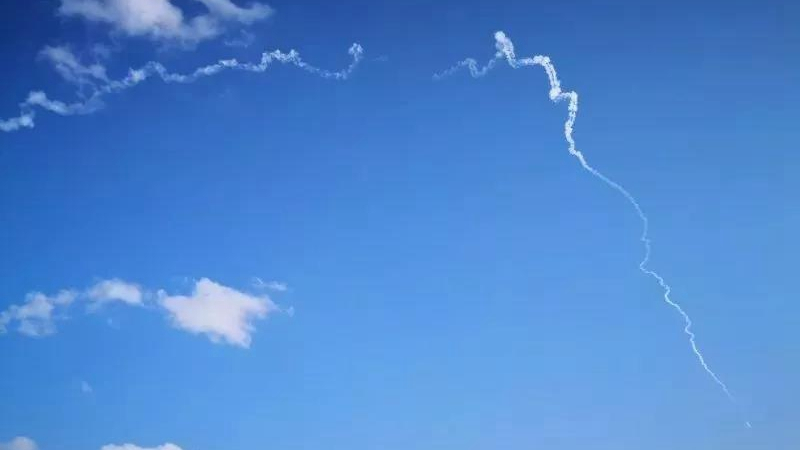
A China-based private space company failed to send its satellite into space via their self-developed carrier rocket, according to Science Daily on Wednesday.
After lifting off from the Jiuquan Satellite Launch Center in northwestern China at 17:39 BJ time for dozens of seconds, the four-stage solid propellant rocket with its Lingque-1B satellite left a complicated trajectory in the sky and went out of sight.
It said that the rocket lost control after its first-stage separation, and the details of this failure are still under investigation, the official said.
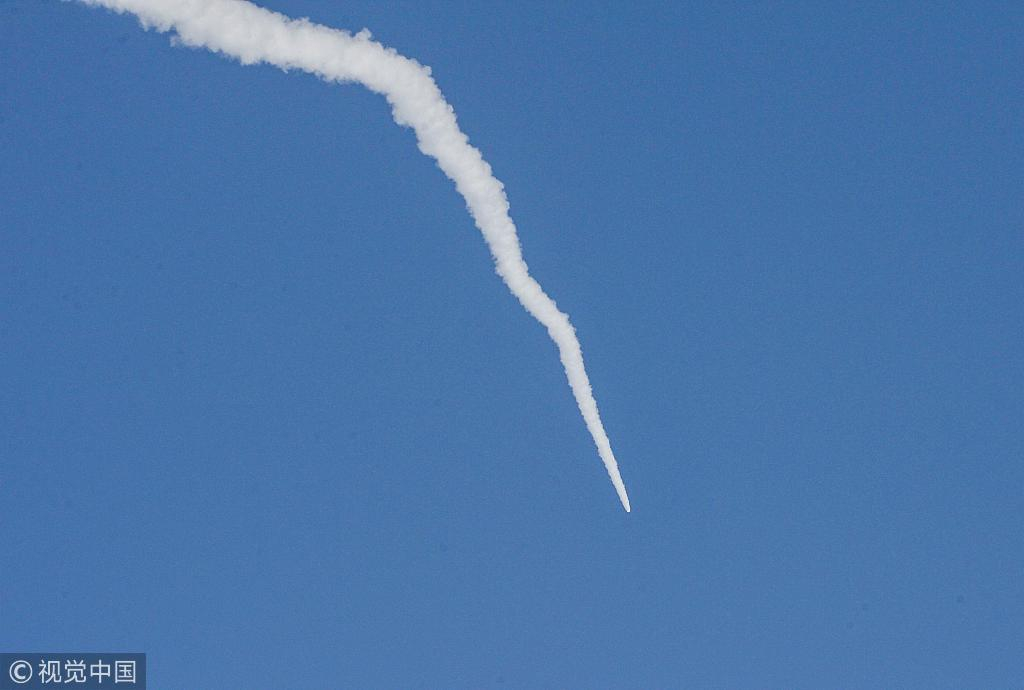
OneSpace's OS-X successfully launched from a launch center in northwest China, September 10, 2018. /VCG Photo
OneSpace's OS-X successfully launched from a launch center in northwest China, September 10, 2018. /VCG Photo
The company OneSpace which is responsible for the launch has two rocket series, the OS-X and the OS-M. The former series offer aerospace services for scientific research while the latter is used to launch small satellites.
The failed mission this time was via its first of the OS-M series. The 19-meter-tall, 20 metric ton OS-M can carry a 100-kilogram payload to sun-synchronous orbit, 500-kilometer away from the Earth, the company said.
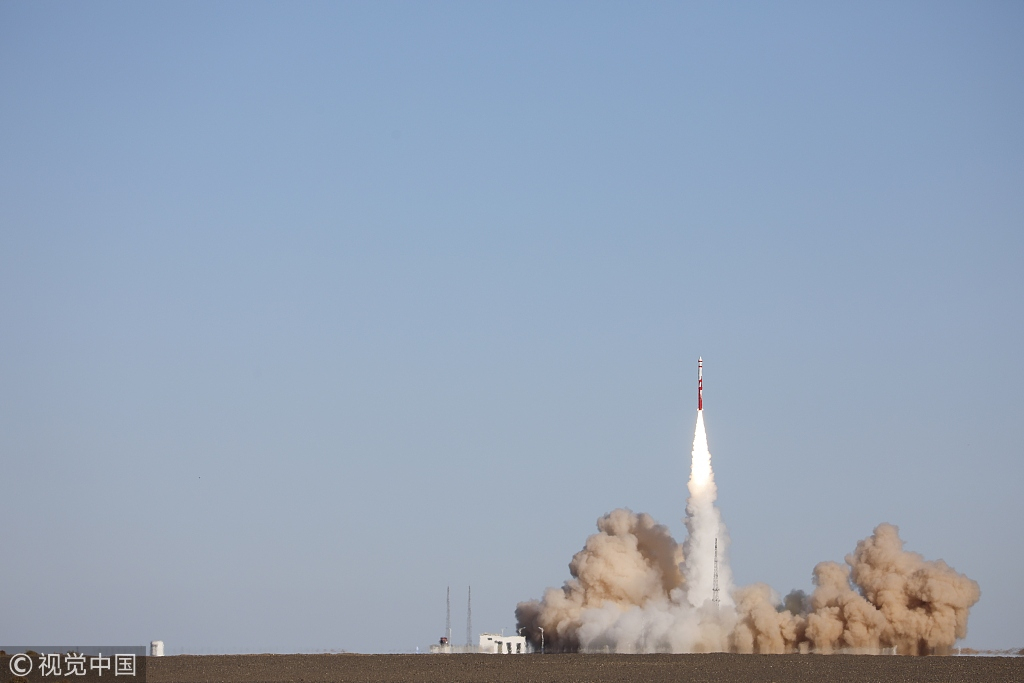
China's first privately-developed carrier rocket ZQ-1 failed to enter the earth's orbit after it lifted off from Jiuquan Satellite Launch Center in northwest China, October 27, 2018. /VCG Photo
China's first privately-developed carrier rocket ZQ-1 failed to enter the earth's orbit after it lifted off from Jiuquan Satellite Launch Center in northwest China, October 27, 2018. /VCG Photo
A blow or a catalyst to China's private space industry?
This is the second time that a privately-owned company in China failed in its attempt to launch a carrier rocket after a commercial rocket developed by another privately owned company – Landspace went wrong at the third-stage separation in 2018.
Space missions are challenging tasks. The U.S. company SpaceX experienced several failures before its Falcon rocket made it to the sky.
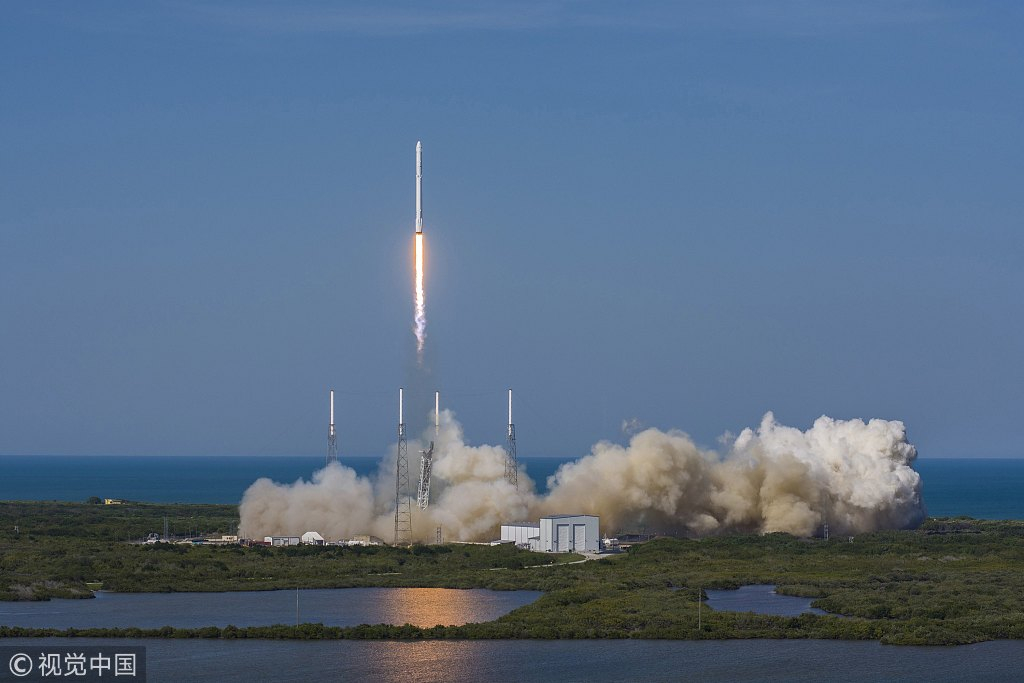
A SpaceX Falcon 9 rocket blasts off from Cape Canaveral, Florida, April 8, 2016. /VCG Photo
A SpaceX Falcon 9 rocket blasts off from Cape Canaveral, Florida, April 8, 2016. /VCG Photo
Blue Origin, founded by Amazon CEO Jeff Bezos in 2000, has invested hundreds of millions of U.S. dollars into R&D annually, also struggled to take their rockets into orbit.
Huang Zhicheng, a Chinese aerodynamicist and expert in the space industry, told the media that private companies should not worry about the failures in the earlier stage, and just see it as a new attempt.
"This is not a race. Companies should not be eager to be the first. The OneSpace has already made two successful launches within a short time span, they should treat equally as usual," he added.
The Chinese government has been encouraging private investors to participate in its push in a bid to commercialize some aspects of the space industry since 2014.
In the following years, the authorities have published several announcements to boost investment in private sectors.
In 2016, the government has listed the space industry in the country's overall development strategy to facilitate development in agriculture, telecommunication, fishery and forestry industries.