
Tech & Sci
17:14, 13-Jul-2018
China International Robot Show: What’s the smart thinking on AI?
Updated
16:59, 16-Jul-2018
 ["china"]
Share







Copied
04:00
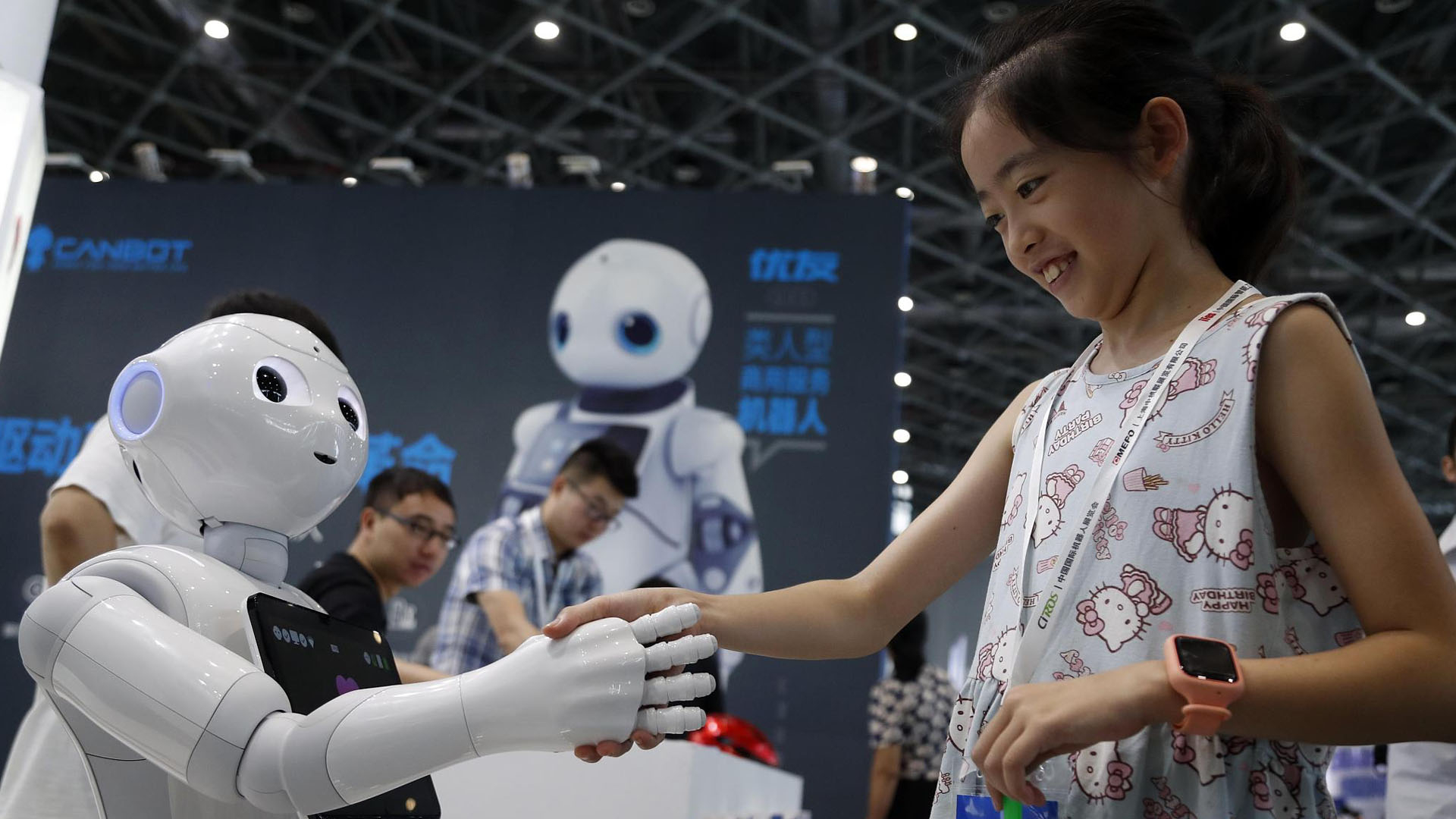
Want to see the latest in robotics?
I did, so I visited the China International Robot Show in Shanghai, where some 2,000 of China’s newest service and industrial robots were on display. Greeting, sweeping, flying, teaching, and of course, manufacturing. It was a little like walking through a mechanical zoo, only that the exhibits weren’t the ones facing an uncertain future.
But what I soon came to realize on my visit was that the biggest advance in robotic technology is something that one can no longer see: it’s what is in their minds. The most advanced tech on display at the show was all connected using cloud technology, and controlled using artificial intelligence or AI.
Take “Pepper” for instance (as seen below). Pepper can dance and sing, but that’s really old and not what this robot is designed to do. Pepper is essentially a smart receptionist able to identify people on sight, work out what their needs are, and then solve the problem or send that person to a human being who can. If Pepper isn’t entirely sure of a situation, Pepper will consult with a human overseeing operations back at base. The manufacturers tell me Pepper is likely to be soon deployed in some offices and hospitals.
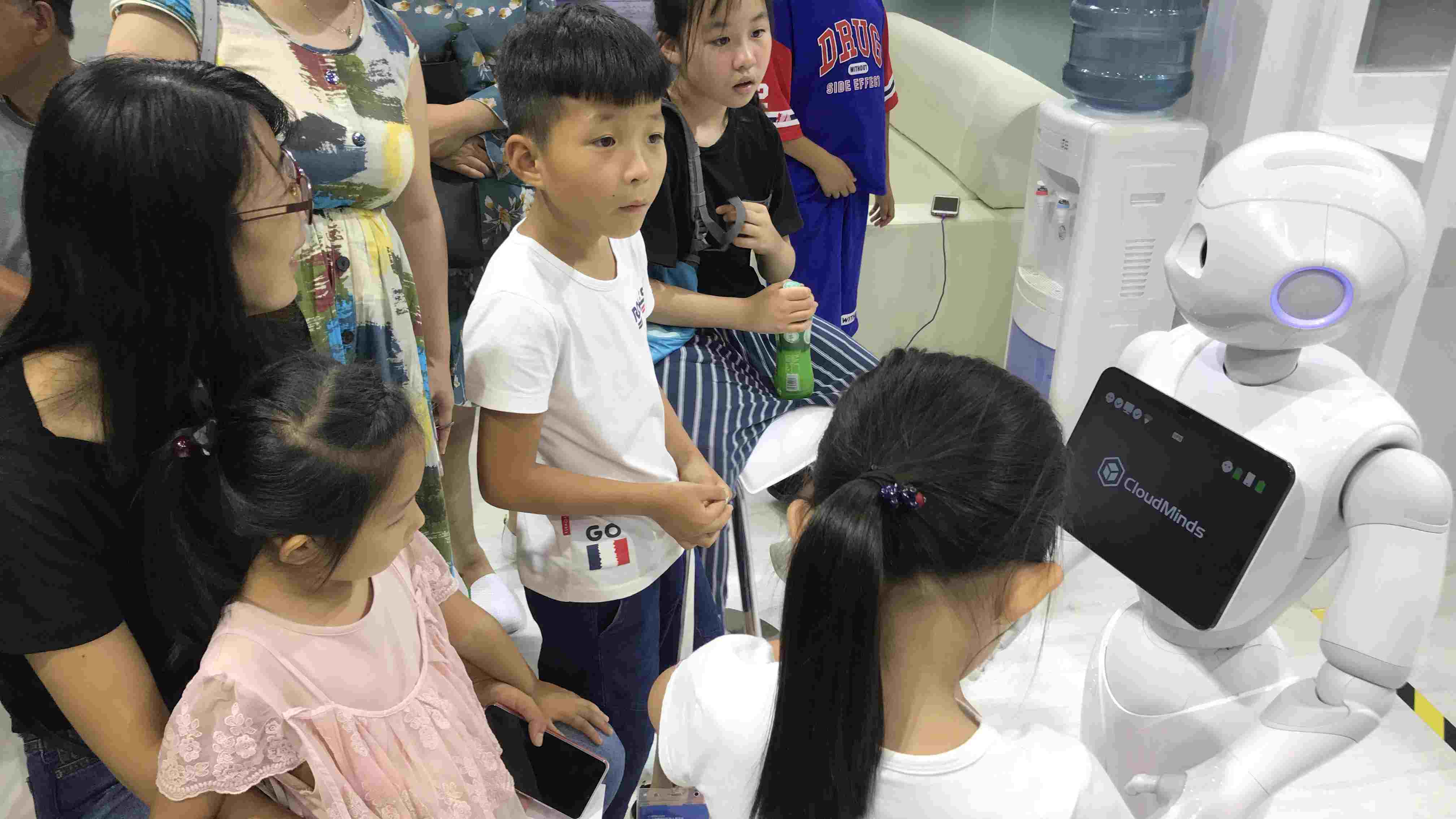
'Pepper' meets the generation that will grow up alongside robots. Photo: Yao Chin/CGTN
'Pepper' meets the generation that will grow up alongside robots. Photo: Yao Chin/CGTN
The artificial intelligence that helps Pepper and other robots think is advancing at such speed that when I asked the director of the Japan Robot Association if he could tell me what the latest capability of AI was, he told me it had already moved on from the day before.
AI will lead to changes in how we work, and unforeseen changes in how we live. As we move from wondering what robots might be able to do, to wondering what they can’t do, the philosophical debate over living in a world alongside robots has become a practical concern.
One of the world’s greatest minds, Professor Stephen Hawking issued this warning just months before he died: “Success in creating effective AI, could be the biggest event in the history of our civilization. Or the worst. We just don't know. So we cannot know if we will be infinitely helped by AI, or ignored by it and side-lined, or conceivably destroyed by it.” But he went on to say, "I am an optimist and I believe that we can create AI for the good of the world. That it can work in harmony with us. We simply need to be aware of the dangers, identify them, employ the best possible practice and management, and prepare for its consequences well in advance.”
The conversation about AI and the future of robots is getting louder. All the while, the robots just carry on working, deaf to it all.
So, go visit a robot show for yourself, and you’ll see what I mean. And as you marvel at their latest applications and capabilities, and ask yourself if you feel so smart as a human being for inventing AI, you’ll realize the fourth industrial revolution is well underway. And it’s up to us all to make sure we benefit from it.