
World
13:26, 12-May-2018
UNICEF warns of children's crisis in DRC's Kasai
 ["china"]
Share







Copied
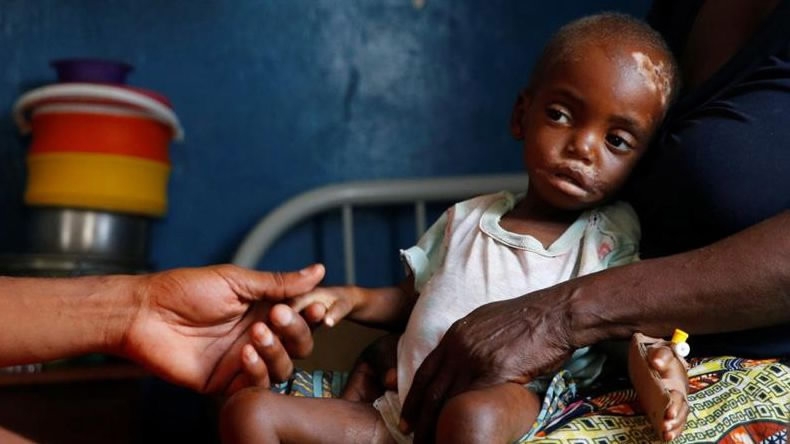
The United Nations Children's Agency (UNICEF) on Friday warned of a children's crisis in the Kasai region of the Democratic Republic of Congo (DRC) as a result of conflict and displacement.
While the security situation has stabilized in parts of the Kasai region and displaced populations have begun to return to their communities, humanitarian conditions remain critical, said UNICEF in a report.
More than 770,000 young children are malnourished, including 400,000 children, a staggering 10 percent of all children under the age of 5, who urgently need treatment to recover from severe acute malnutrition.
Overall, 3.8 million people are in need of humanitarian assistance in the five provinces of Kasai.
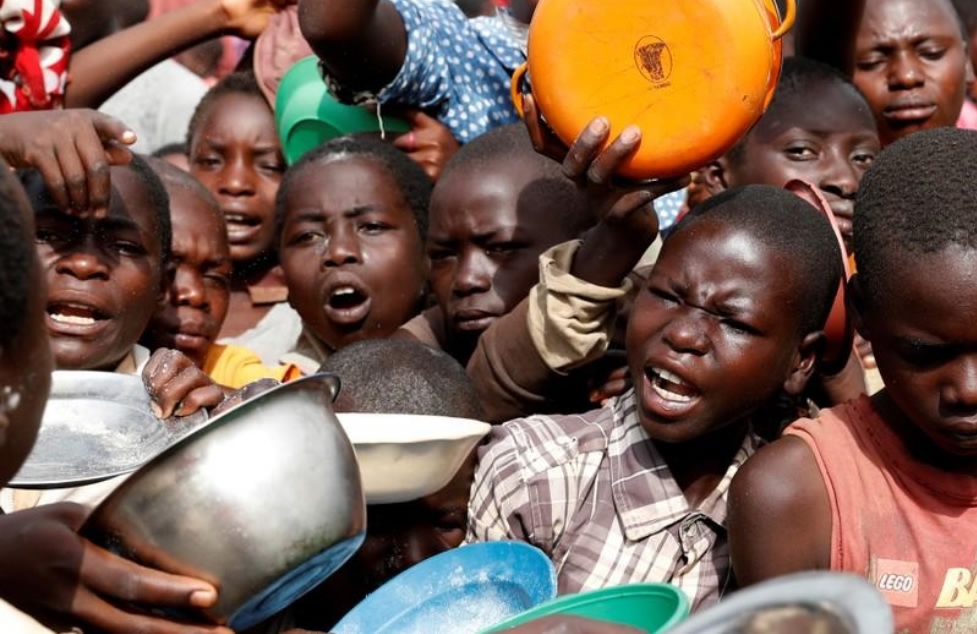
Internally displaced people wait for food distribution at an internally displaced persons (IDP) camp in Bunia, Ituri province, eastern Democratic Republic of Congo, April 12, 2018. /Reuters Photo
Internally displaced people wait for food distribution at an internally displaced persons (IDP) camp in Bunia, Ituri province, eastern Democratic Republic of Congo, April 12, 2018. /Reuters Photo
Violence initially flared in the Kasai region in August 2016, sparked by tensions related to the recognition of customary power in Kasai-Central province. The violence spread rapidly during the first quarter of 2017.
Existing intercommunity tensions became part of a wider conflict involving militias, armed groups and security forces across the region.
Beyond the threat of malnutrition, the children of the Kasai region face a continuing health crisis. Many young children missed out on scheduled vaccinations, making them even more susceptible to deadly childhood diseases, it said.
Since January 2017, a measles outbreak has led to 9,219 reported cases and 41 deaths.
Cholera has also emerged in four of the region's five provinces. Nearly 5,000 cases have been reported, leading to at least 263 deaths, an alarmingly high fatality rate.
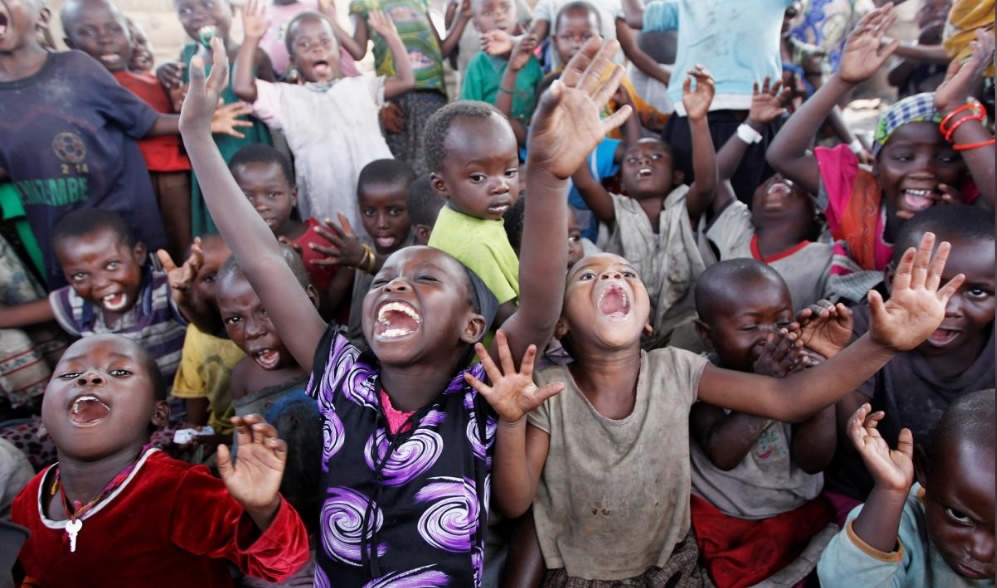
August 7, 2013: Congolese children, displaced by fighting in North Kivu, play at the child friendly space (CFS) within Mugunga III camp for the internally displaced people near Goma, eastern Democratic Republic of Congo. /Reuters Photo
August 7, 2013: Congolese children, displaced by fighting in North Kivu, play at the child friendly space (CFS) within Mugunga III camp for the internally displaced people near Goma, eastern Democratic Republic of Congo. /Reuters Photo
Fortunately, the epidemic has subsided thanks to treatment centers becoming operational in hard-hit areas, as well as intensive efforts to find and chlorinate water sources suspected of spreading cholera, said the report.
Perhaps the most horrifying aspect of the crisis in Kasai is the use of children by militias, it said.
At least 60 percent of the region's militia forces are composed of children, according to the inter-agency Global Education Cluster and Global Protection Cluster.
The militias use children to fight and kill, or to act as human shields. All of them have to endure what is commonly known as a "baptism ritual" in which would-be soldiers, regardless of age, are forced to drink alcoholic potions, sometimes containing ground human bones, and eat human flesh or insects to acquire supernatural powers that are believed to protect them during combat, said the report.
To support its programs for the children of Kasai in 2018, UNICEF has appealed for 88 million US dollars, which to date is only 25 percent funded.
Source(s): Xinhua News Agency