
Opinions
10:17, 15-Jun-2018
The Heat: What’s next after Trump-Kim summit?
 ["china"]
Share







Copied
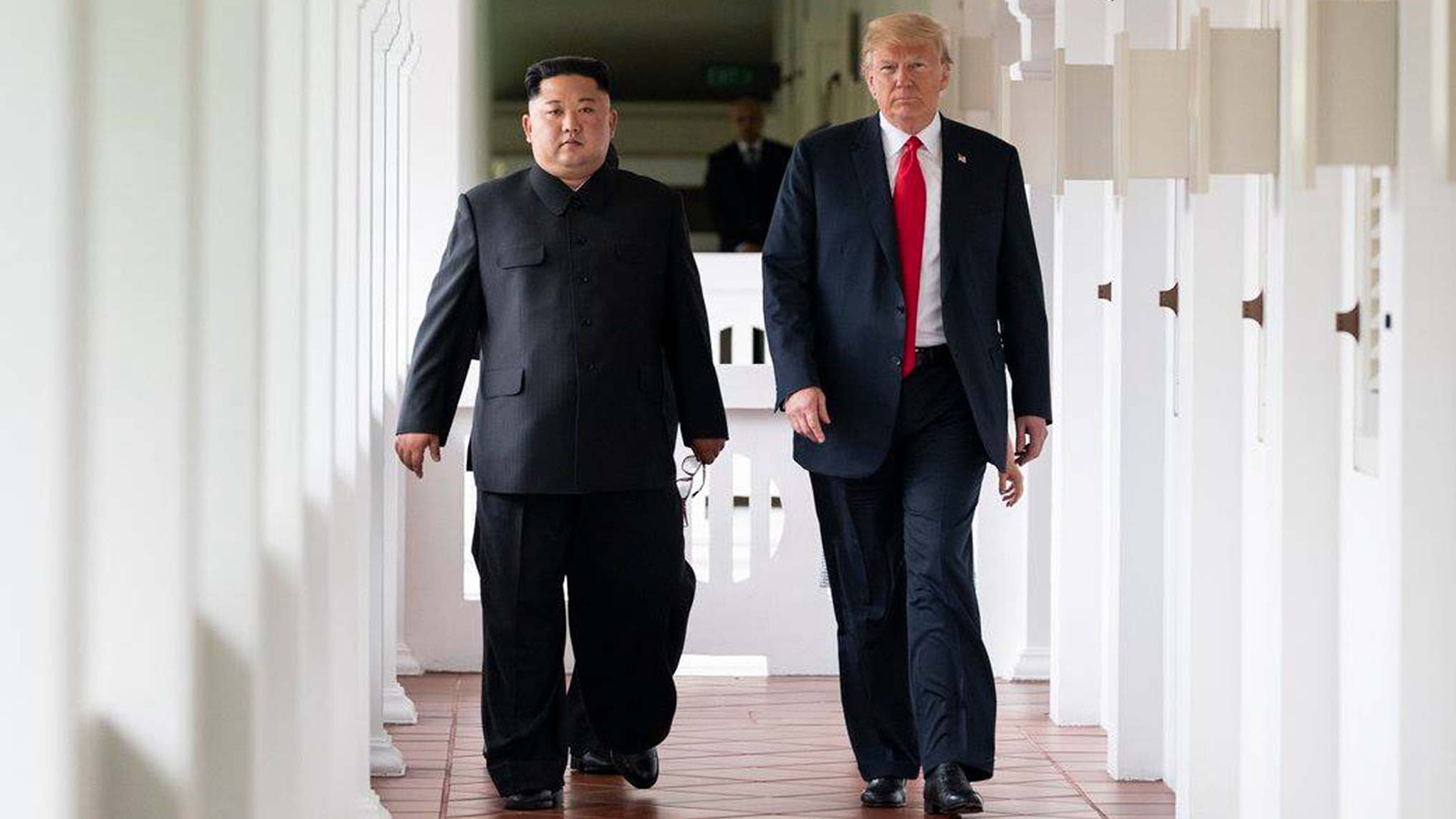
The United States will suspend its joint military exercises with the Republic of Korea (ROK) as long as good-faith negotiations continue with the Democratic People's Republic of Korea (DPRK).
US President Donald Trump made the announcement at a press conference in Singapore without consulting the ROK beforehand. He called the military drills “very provocative” and said that ending the “war games” would save the US “a tremendous amount of money.”
There were talks that the ROK was blindsided by the announcement, but from their perspective, it might be an acceptable situation.
Myung-koo Kang, a professor of political science at Baruch College of the City University of New York, said that it was in accordance with the Panmunjom Declaration, where ROK President Moon Jae-in agreed to build mutual trust with the DPRK, and the people of the ROK also seem to support the peacemaking process.
“There was a huge local parliamentary by-election immediately after the Trump-Kim summit,” Kang said. “The ruling party got a landslide victory. It’s the biggest victory since the mid-1990s.”
However, the statement has raised concerns within the United States. Some critics portrayed Trump’s decision as a significant concession, saying that he was giving away things without getting anything solid in return.
Rodger Baker, a senior vice president of strategic analysis at Stratfor, disagreed with such opinions. He argued that President Trump clearly set a precondition and he wouldn’t negotiate without a worthwhile quid pro quo.
“He didn’t actually give away anything,” Baker said. “It’s not necessarily a major loss and it doesn’t eliminate the day-to-day training and interoperability of the Korean army and the United States army. What it does is to remove probably two of the major exercises.”
Kang agreed with Baker, saying that the suspension is just a temporary condition. If there is no progress in terms of denuclearizing, the military exercise will be resumed. He also pointed out that instead of picking the winner or loser of the Trump-Kim summit, people should pay more attention to the long-term gain and the pursuit of peace.
01:38
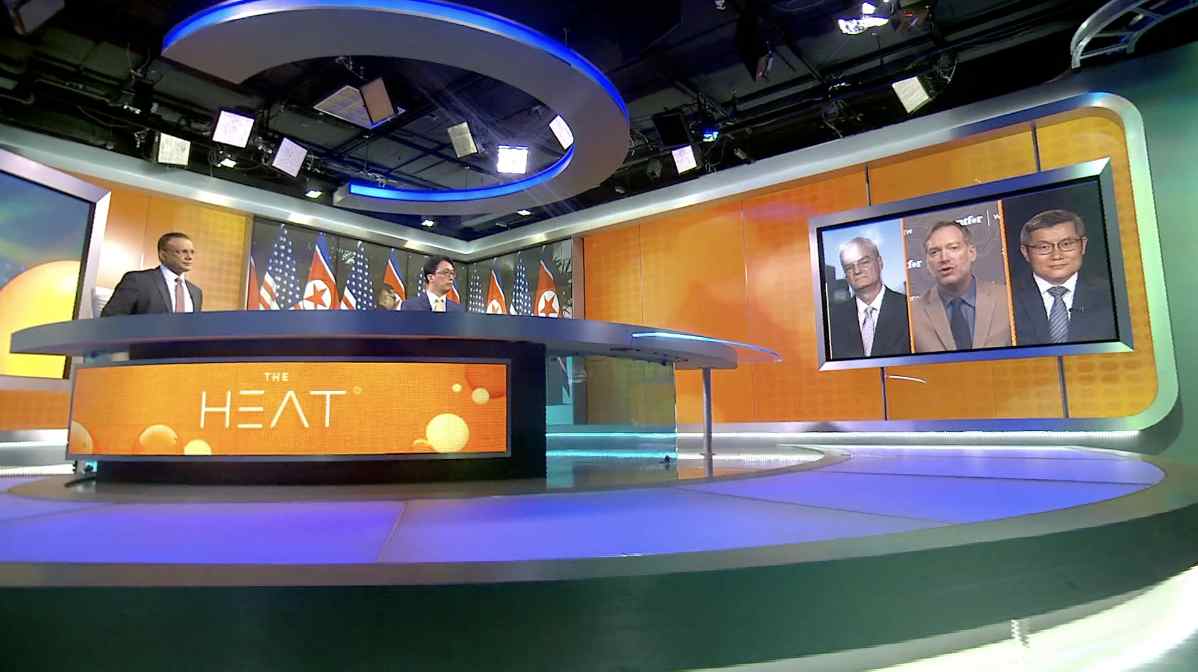
“How can we increase the collective benefit through this in a diplomatic or peaceful process, I think that is much more important,” Kang said. “And the summit meeting was such a turning point.”
This is not the first time the US has negotiated with the DPRK. In 1994, the Clinton administration and the DPRK signed the Agreed Framework, calling an end to Pyongyang’s nuclear program and aiming to normalize US-DPRK relations, but it eventually failed. However, experts told CGTN that things are not the same today.
“The North Koreans (DPRK) have achieved the nuclear capacity,” Baker said. “They can mount a nuclear weapon on a missile. Even if it can’t hit the continental United States, it can certainly hit their neighbors, so we're not at a stage of 'they might develop weapons in the future, let’s work on that,' we're at a stage of 'they have weapons,' and that changes the seriousness and the way the United States has to look at this. It’s not a future problem, it's a now problem.”
Baker also mentioned that there were changes in leadership and the structure of the international system. The United States now has an unconventional president not constrained by traditional politics and the Korean Peninsula has leaders who are willing to create a common bond between the two countries. Besides, with the presence of a rising China, the pursuit of peace seems to be more achievable.
“In China, this summit has been given very high remarks,” said Song Zhao, the Washington bureau chief for Shanghai Wen Hui Daily. “I think China’s position is exactly in the middle. From one angle, we will continue to persuade the DPRK to suspend the nuclear tests and to completely eliminate the nuclear capacity. From another angle, we have to continue to lobby America to stop the hostile attitude and remove these economic sanctions.”
Hugh Dugan, a fellow at the Center for UN and Global Governance at Seton Hall University, said that as an international player, China might be very concerned that the DPRK would slowly orbit outside of Chinese influence. However, Zhao offered a different view.
“I think China has a tremendous leverage upon the DPRK,” Zhao said. “If the negotiations between America and the DPRK go smoothly, we will be able to provide a lot of economic assistance and we can do more trade with Koreans in the north. That is our leverage. I don’t think the DPRK is expecting much US investment in their country.”
Right now the US president is back in Washington and he has tweeted that the DPRK is no longer a nuclear threat. Meanwhile, his top diplomat, US Secretary of State Mike Pompeo, prepares to brief officials in Seoul about the Trump-Kim meeting after his visit to China.
“There will be a menu of things coming forward within the next week,” Dugan said. “This administration planned very seriously for this event, and I believe that’s just the beginning of what we’ll see as other implementable steps that are action-oriented are going to be on a time schedule."
The Heat with Anand Naidoo is a 30-minute political talk show on CGTN. It airs weekdays at 7:00 a.m. BJT and 7:00 p.m. Eastern in the United States.