
Business
18:55, 24-May-2018
Vanguard China chief: Bright future ahead for mutual funds
 ["china"]
Share







Copied
03:34
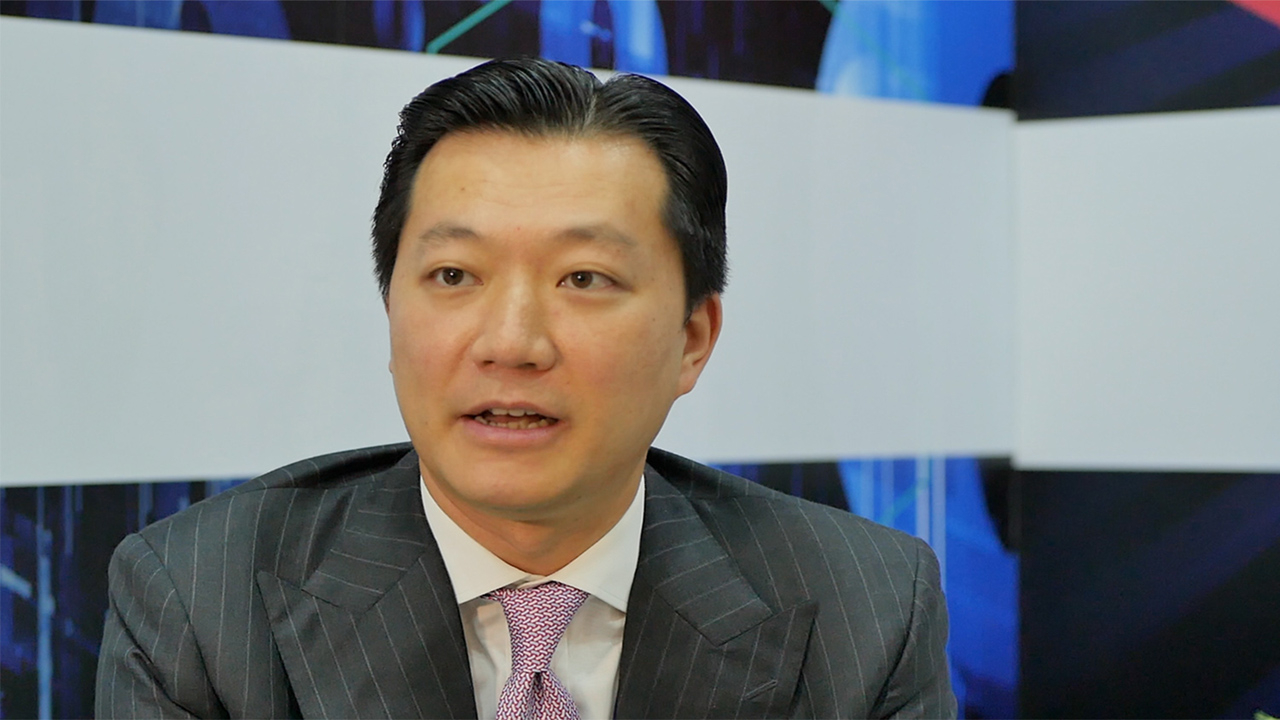
As part of China’s latest efforts to reduce leveraging in the financial sector, authorities have unveiled sweeping new rules to better regulate asset management businesses, with a series of measures which are poised to shake up the 15-trillion-US-dollar market.
Would the new rules affect the way international funds invest in China? How will the new rules reshape the industry?
CGTN spoke to Lin Xiaodong, country head of Vanguard China and chairman of Vanguard Investment Management (Shanghai) Limited, on the sidelines of the Tsinghua PCBSF Global Finance Forum, to hear his views on the above questions.
Vanguard Group is the world’s largest mutual fund holder and the second-largest provider of exchange-traded funds (ETFs). Vanguard included China as part of its global emerging market (EM) index fund in June 2015, and has approximately five billion US dollars invested in China, accounting for 5.6 percent of the overall EM fund.
Isn’t 5.6% relatively low for China?
“MSCI included China A-shares in the MSCI Emerging Market index at 0.75 percent, so our weighting is much higher than that at the moment,” Lin told CGTN.
“We believe this 5.6 percent is a very reasonable rate according to market liquidity and accessibility for foreign investors to invest in China.”
MSCI, a US-based creator of widely-watched stock indices, will add 234 China-listed A-shares to its EM benchmark in a two-step process in June and September.
MSCI’s EM index comprises of funds with total assets under management surpassing 1.6 trillion US dollars. When Chinese shares are added to the index, money following the benchmark will have to buy Chinese stocks to avoid deviation.
How will new asset management rules affect Vanguard’s China portfolio?
“I don’t think we would adjust the investment portfolio based on the market change in the regulation or any potential accessibility increase,” said Lin, adding that “Vanguard tends to have a long-term investment strategy, trying to ignore short-term market noises or short-term market movement.”
What do the new rules mean for the finance industry?
Lin said that he expected the new rules to give investors a better understanding of the balance between risks and return and help them in building a long-term investment perspective.
The new regulations remove implicit principal guarantees and the tacit rule of bailout guarantees for wealth management products, amid mounting concerns over debt levels and banks’ off-balance-sheet lending in the world’s second biggest economy.
“We believe investors will focus more on the traditional equity market and bond market, and get more used to this NAV [net asset value] type of products, rather than principle-guaranteed or return-guaranteed products.”
Instead of offering a guaranteed principle repayment or rate of return, financial institutions are required to offer yields based on the NAV of the products they issue, to reflect the risks and return of the underlying assets.
This move is likely to prompt a shift toward more transparent and mature mutual fund products.
Lin went on to say “right now the mutual fund industry accounts for 5-6 percent of Chinese household wealth. We believe with the new asset management rules, mutual funds will take up a much larger proportion of household wealth in China as in other developed markets in the long term.”