
Opinions
13:20, 23-Aug-2018
Opinion: Race against time: Are more people separated by the Korean War able to meet their relatives while alive?
Updated
12:52, 26-Aug-2018
 ["china"]
Share







Copied
03:44
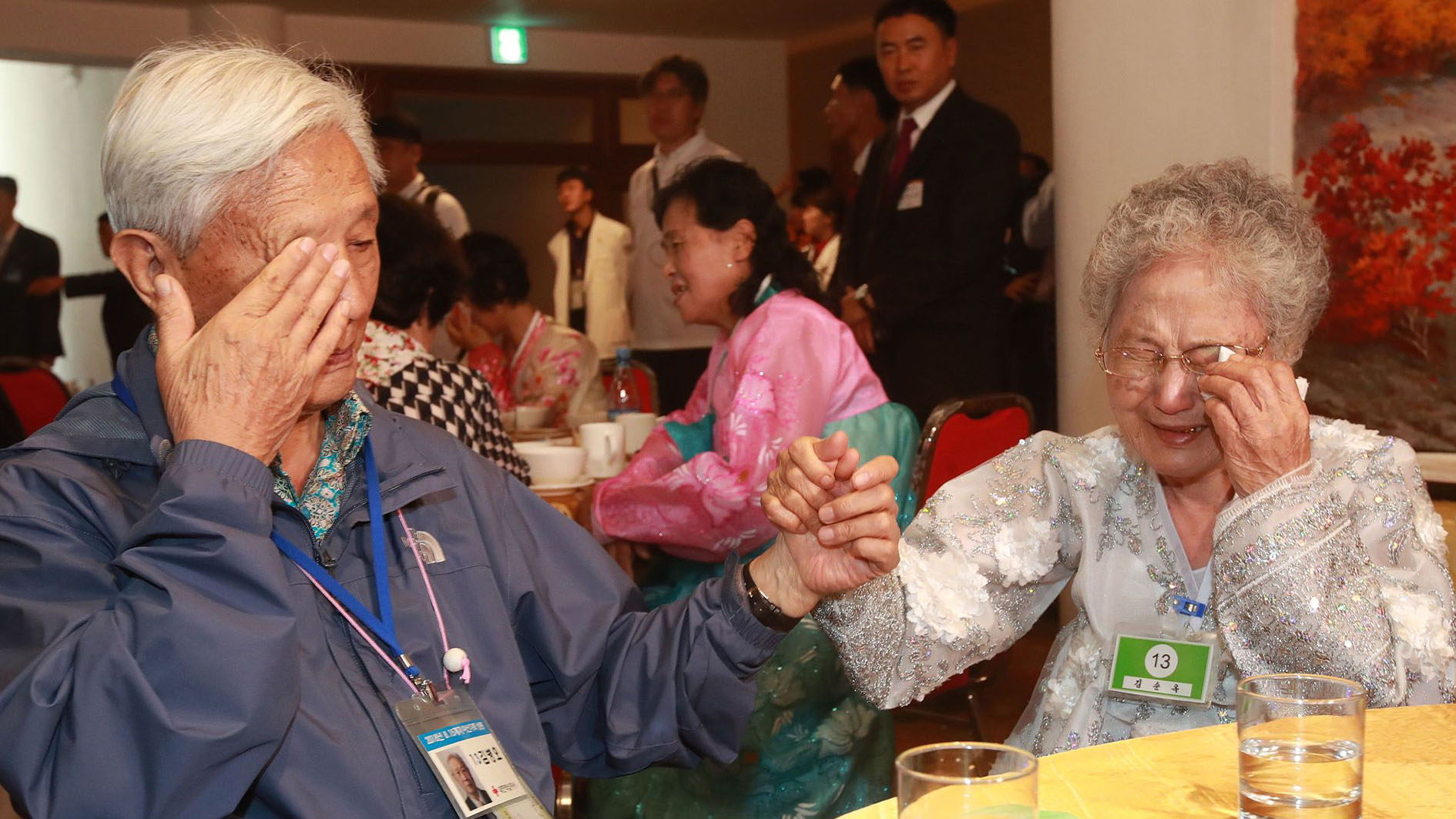
South Korean families have returned home after an emotional three-day reunion with their DPRK relatives, in which they saw each other for the first time since they were wrenched apart by the Korean War for more than six decades.
About 330 South Koreans from 89 families, said tearful goodbyes to their 185 relatives in the DPRK after the short reunions in the tourist resort of Mount Kumgang. The reunions, which began in 1985, can be a traumatic experience, say survivors, who know they are unlikely to see their relatives any more as many are in their 80s or older and first-timers traditionally have priority for reunion visits.
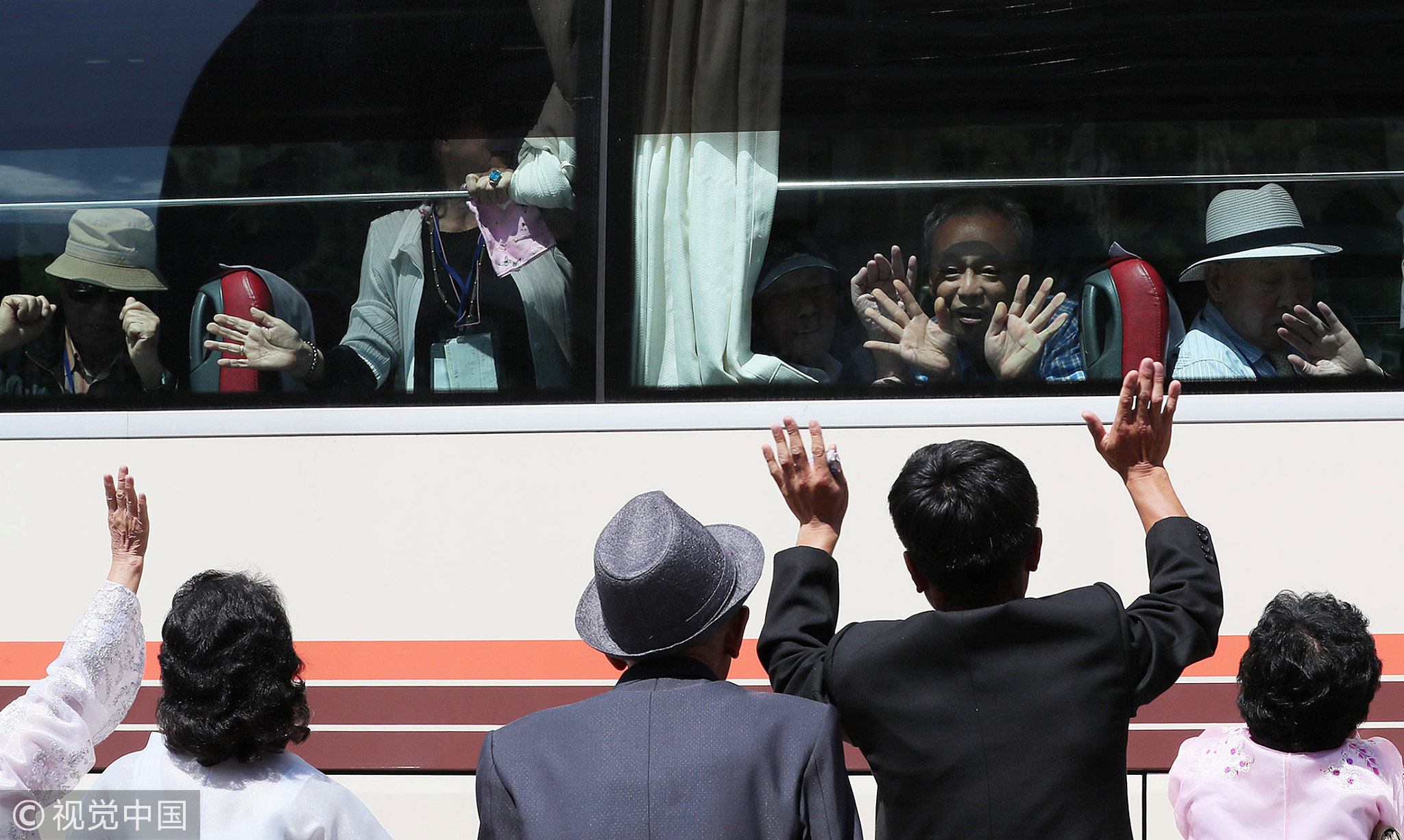
Residents from DPRK bid farewell to their South Korean family members as they leave after a reunion at Mount Kumgang resort, DPRK, August 22, 2018./VCG Photo
Residents from DPRK bid farewell to their South Korean family members as they leave after a reunion at Mount Kumgang resort, DPRK, August 22, 2018./VCG Photo
They were granted permission to meet their relatives for only 12 hours during the three-day reunions. The lucky one are chosen by lottery. There are still nearly 60,000 South Koreans who have been waiting for the occasional cross-border reunions. Seoul has been pushing for making such meetings regularly. But can this happen, and how significant would it be for the future of the Korean Peninsula?
Yang Xiyu, a senior fellow at the China Institute of International Studies, thinks more family reunions are possible especially after inter-Korean relations are getting warmer. As athletes from two sides are competing as one in several events in the ongoing Jakarta Asian Games and DPRK leader Kim Jong Un and South Korean President Moon Jae-in are to meet next month, Yang said it is now much easier for the two sides to hold more reunion meetings.
As family reunions are part of people-to-people exchanges between the two coutries, it could also help boost bilateral ties. Yang believes reuniting families separated by the Korean War, which has not officially ended, could help heal the scar left on the two countries. Meanwhile, more than just bringing people together again, the two sides are also aiming to end the war that has caused such pain.
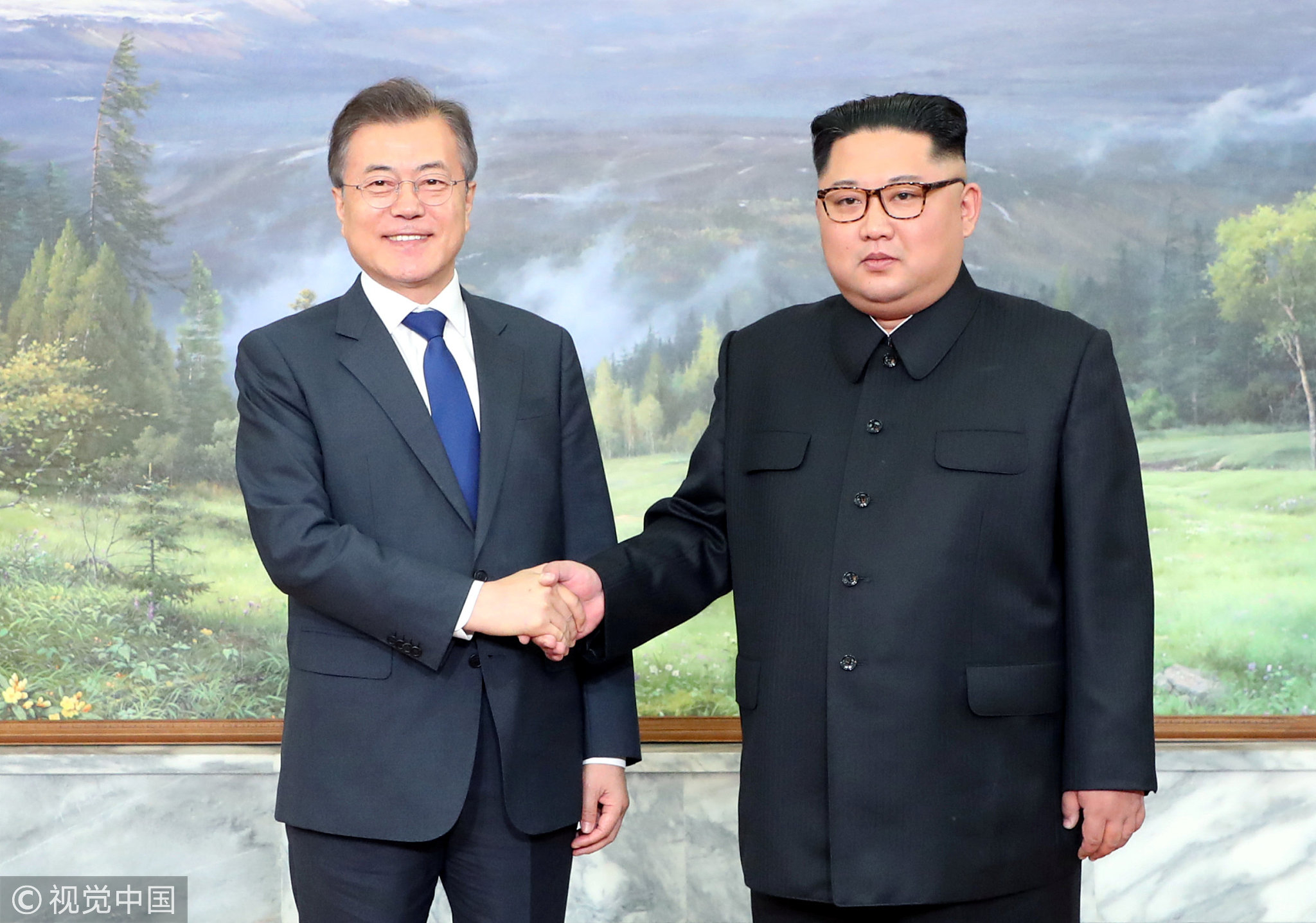
South Korean President Moon Jae-in shakes hands with DPRK leader Kim Jong Un during their summit at the truce village of Panmunjom, DPRK, on May 26, 2018. /VCG Photo
South Korean President Moon Jae-in shakes hands with DPRK leader Kim Jong Un during their summit at the truce village of Panmunjom, DPRK, on May 26, 2018. /VCG Photo
Both countries want to put an end to the war as soon as possible, but the US isn't so keen. Why is that? According to Yang, it is because of the DPRK's and the US' different priorities in their diplomacy. Yang said bringing about the termination of the Korean War should not have been difficult, but the main obstacle comes from Washington. Yang said Washington wants Pyongyang to denuclearize first before talking about ending the war while Pyongyang thinks ending the war should be the first step.
Moreover, Yang said that as the two countries lack mutual trust, it’s very hard for them to negotiate and achieve a satisfying result. Though leaders from the two countries have held a historic summit in Singapore in June, Yang thinks they still have not accumulated enough ground to achieve consensus on the issue. Yang suggested that the US be more flexible and realistic facing the two countries’ strong will to end the war and use it as a platform to further push for peace on the peninsula.
*Asia Today is a 30-minute daily news magazine program airing at 1100 GMT and 1900 BJT. Aiming to tell Asian stories from an Asian perspective, Asia Today provides news and in-depth coverage on various topics from across the continent. Asia Today also runs special series covering a wide range of issues of concern to people in Asia.