
World
10:52, 26-Apr-2018
Discrimination against Muslims getting worse in US
 ["china"]
Share






Copied
04:03
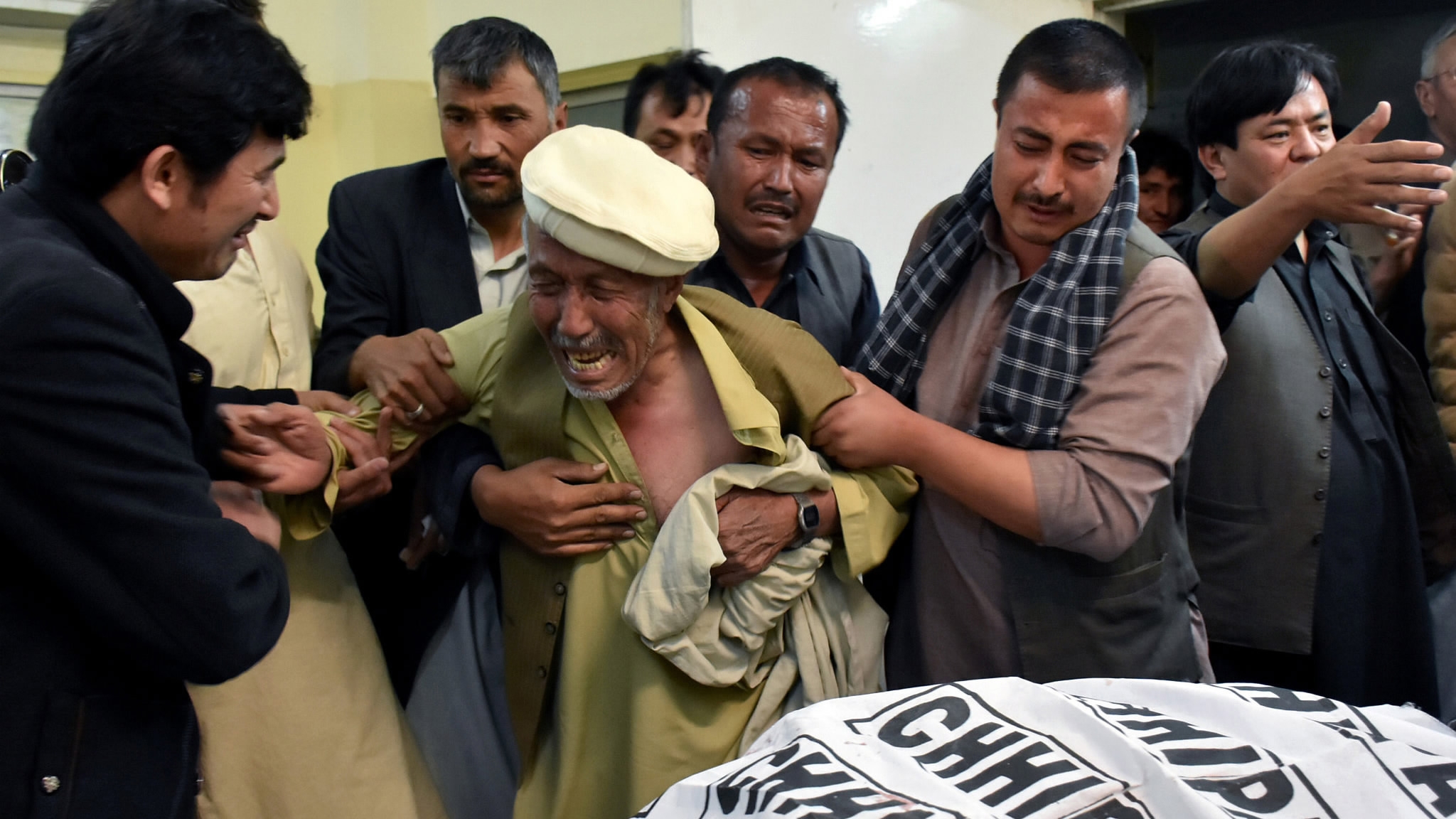
The Muslim population is less than one percent of the population of the United States. In recent years, this group has encountered increasingly serious discrimination.
According to a survey by the Pew Research center in early 2017, nearly three quarters of adult American Muslims indicate there is a lot of discrimination against Muslims in American society. And more than half of Muslims believe that being a Muslim in the United States has become more difficult in recent years.
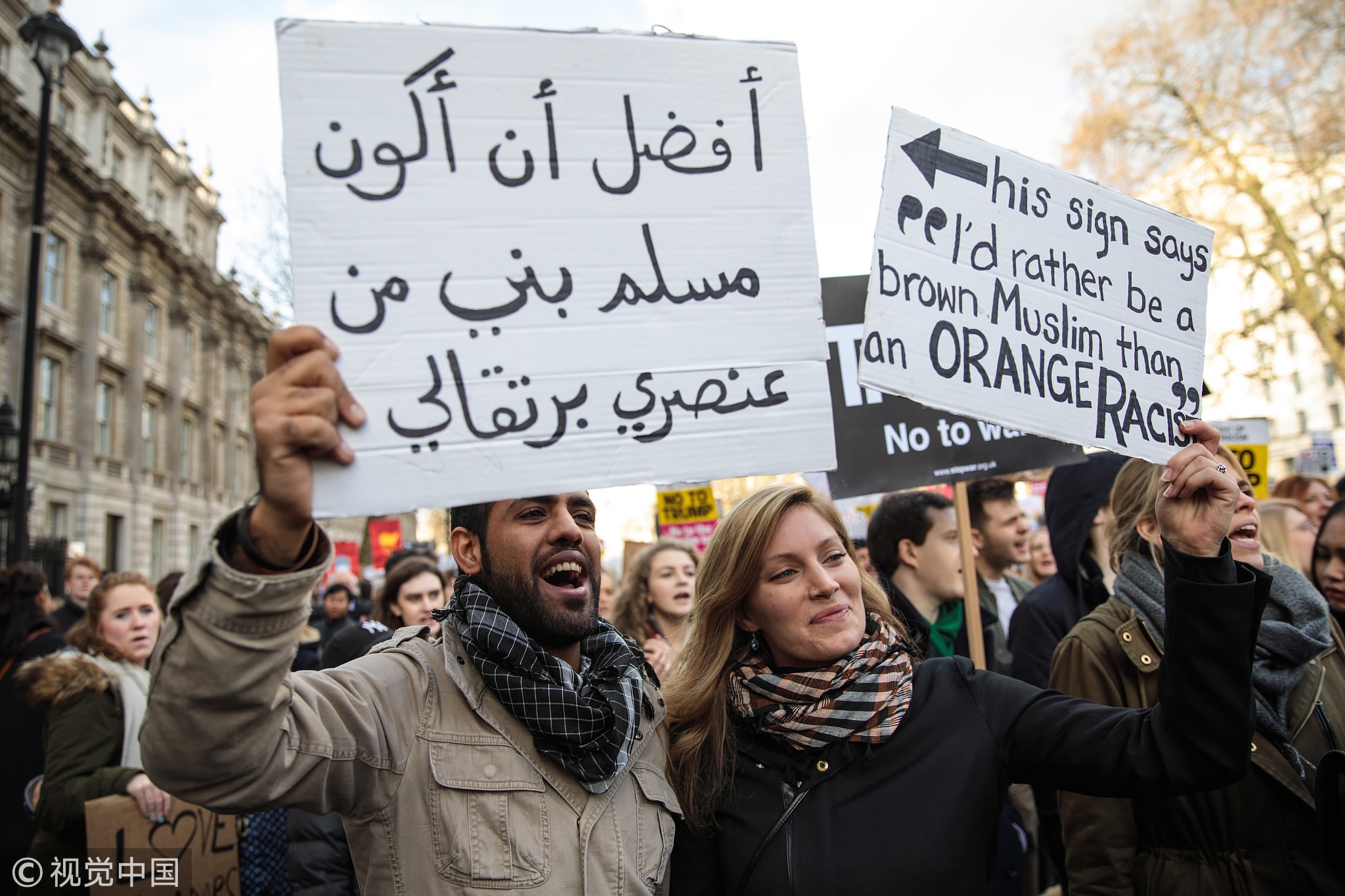
February 4, 2017: Protesters holding placards take part in a demonstration against US President Donald Trump on Whitehall in London, England. /VCG Photo.
February 4, 2017: Protesters holding placards take part in a demonstration against US President Donald Trump on Whitehall in London, England. /VCG Photo.
"(People used to think) if a Christian committed a crime, maybe he was mentally sick; if African Americans are guilty, maybe he is a criminal; if a Muslims does it, he is a terrorist,” said Hossein Goal Falls, a local American businessman.
The United States has an increasingly negative view of Islam, a sharp rise in religious discrimination, and an increase in insults and attacks on Muslims.
Things seem to be getting worse since Donald Trump issued the ban halting all refugee admissions and temporarily barring people from seven Muslim-majority countries on January 27, 2017.
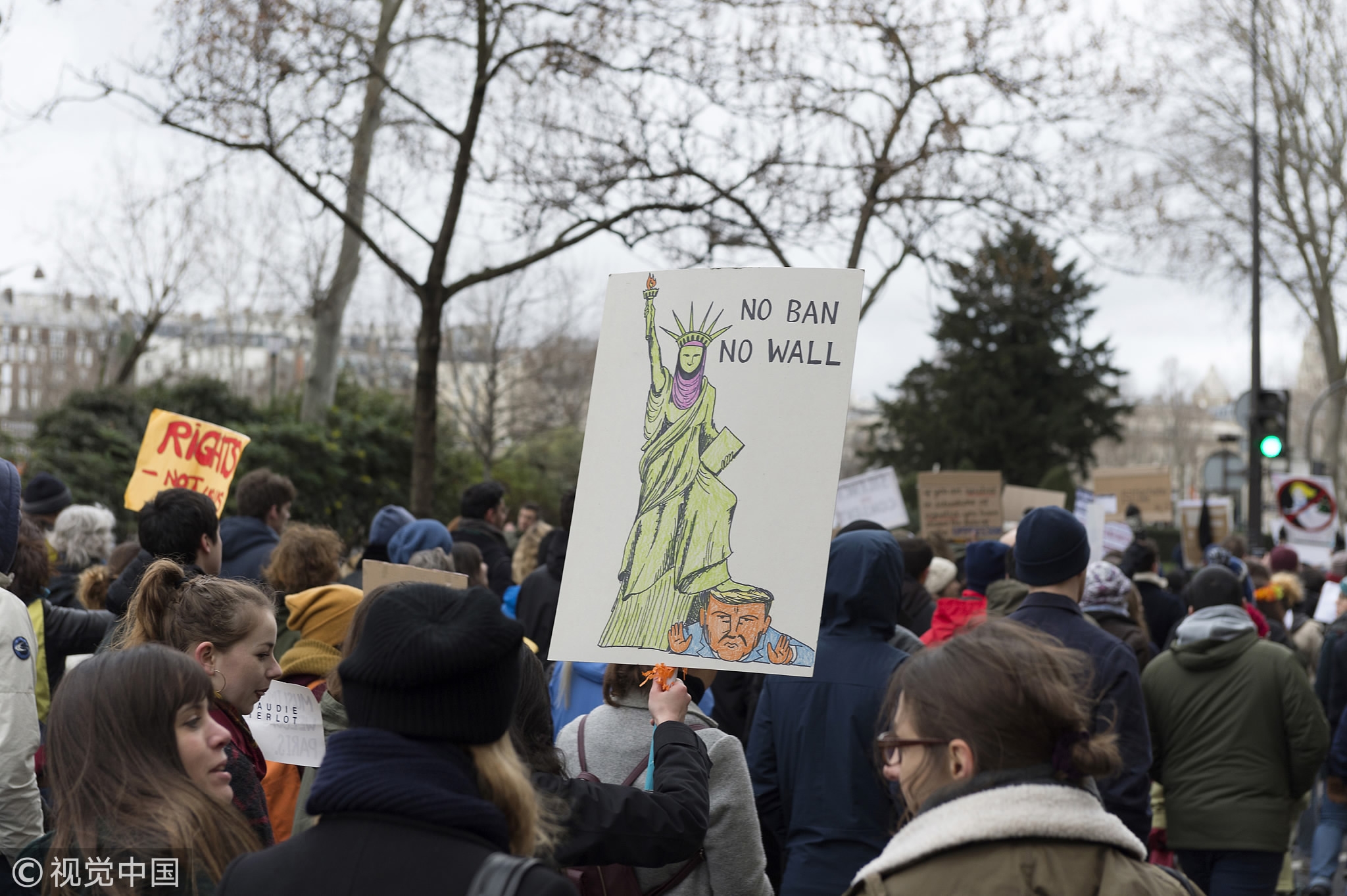
February 4, 2017: Protesters attend a demonstration against Donald Trump on the Trocadero in Paris, France. /VCG Photo.
February 4, 2017: Protesters attend a demonstration against Donald Trump on the Trocadero in Paris, France. /VCG Photo.
This move sparked numerous protests and legal challenges.
“I think it is ridiculous, some of my friends are Muslims. I don’t agree with that! How can you ban them based on their religion? Not all Muslims are terrorists! It is not the fault of religions. Wrong! This ideology is wrong!" said a British citizen.
Not only ordinary people, but many US officials also expressed their strong indignation.
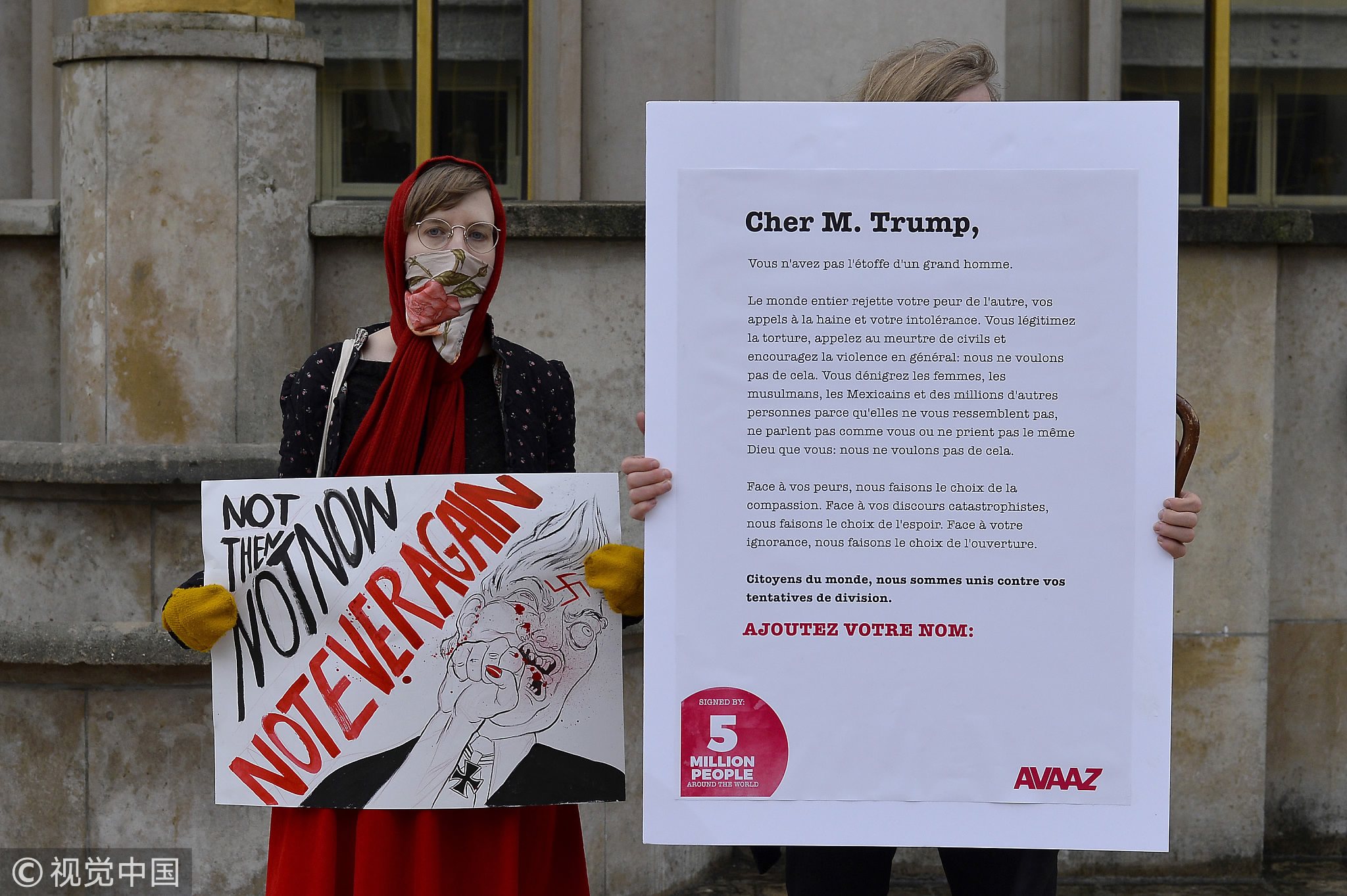
February 4, 2017: Protesters hold placards during a demonstration against Donald Trump in Paris, France. /VCG Photo.
February 4, 2017: Protesters hold placards during a demonstration against Donald Trump in Paris, France. /VCG Photo.
"This (Muslim) ban violates the core principles of the United States, ignoring US commitments to international law and violating the US Constitution's provisions on the protection of (minorities). In the final analysis, this ban is for Islamic beliefs," said Diane Feinstein, a senior US Senator.
In response to the protests, Paul Ryan, speaker of the House, expressed his support to Trump’s executive order.
"There is nothing wrong with taking a pause and making sure the proper vetting standards are in place. So we do not have the problem like France, which had been attacked with terrorists."
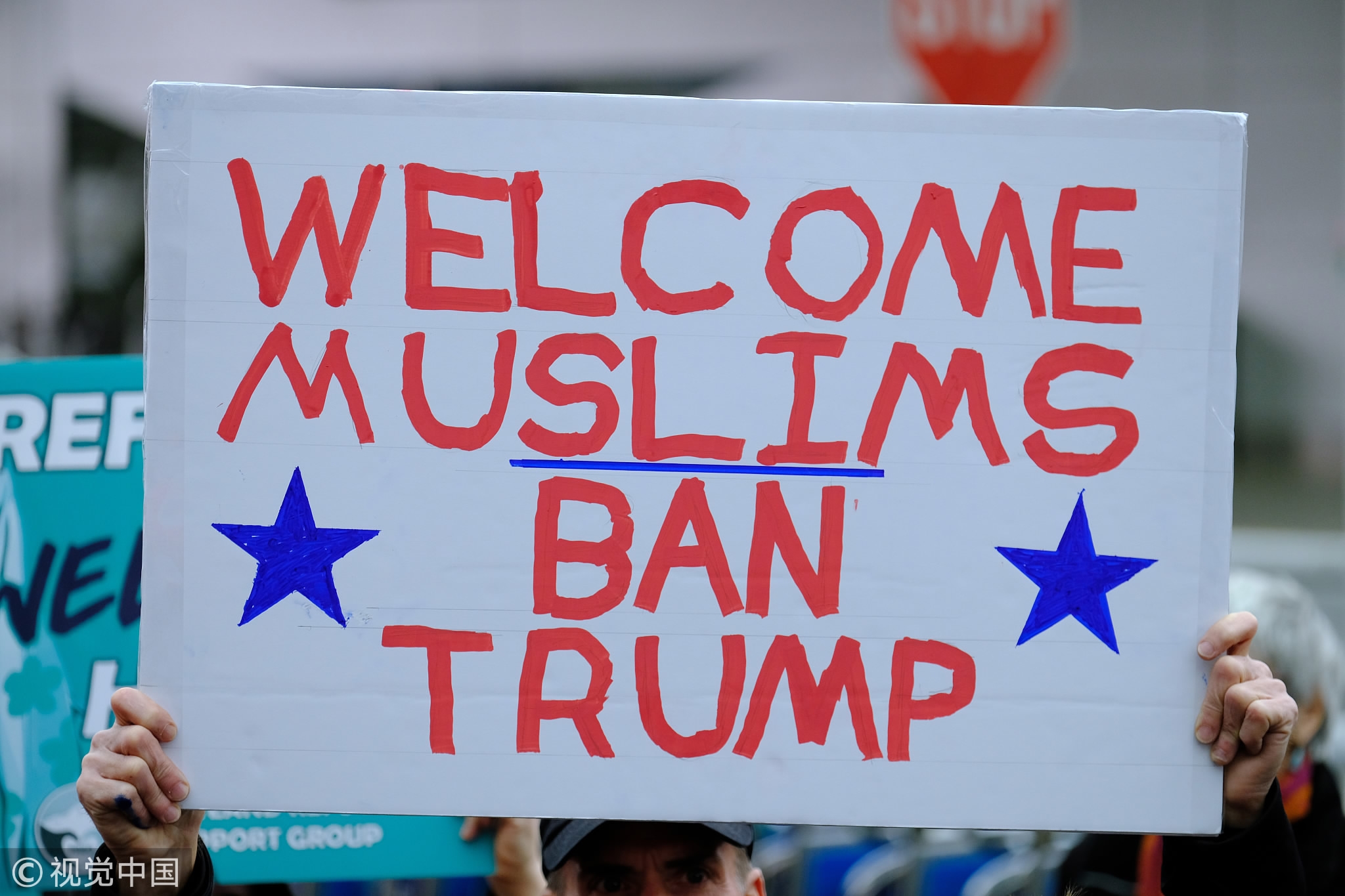
January 27, 2018: Protesters demonstrate at Portland International Airport in Portland, Ore., one year after President Donald Trump implemented the Muslim ban. /VCG Photo
January 27, 2018: Protesters demonstrate at Portland International Airport in Portland, Ore., one year after President Donald Trump implemented the Muslim ban. /VCG Photo
"To be clear, this is not a Muslim ban, as the media is falsely reporting," President Trump said in a statement released on Facebook.
Trump and his supporters say the controversial executive order is to "make America great again", and he cited the attacks of September 11, 2001. But none of the 19 hijackers who committed the attacks are from any of those countries.
No matter how the Trump administration defends itself, it is impossible to deny the fact that being a Muslim in the United States is becoming increasingly difficult.