
World
22:53, 26-Jun-2018
UK, allies seek to boost powers of chemical arms watchdog
Updated
22:31, 29-Jun-2018
 ["europe"]
Share






Copied
Britain, the US and their allies are seeking to empower the world's global chemical watchdog with authority to identify those behind toxic arms attacks.
A British-led proposal, which is backed by Western powers including France, Germany and the United States, but opposed by Russia, Iran, and Syria, was to be debated at a special session of the Organisation for the Prohibition of Chemical Weapons (OPCW) starting on Tuesday. The proposal would give the world body greater powers to assign responsibility for violations of the Chemical Weapons Convention.
"We want to empower the @OPCW to identify those responsible for chemical weapons attacks," British Foreign Secretary Boris Johnson said in a tweet.
Russia is ready for the debate to counter Britain’s initiative on expanding the powers of the OPCW, Russia’s Chief Negotiator, Deputy Industry, and Trade Minister Georgy Kalamanov said on Tuesday.
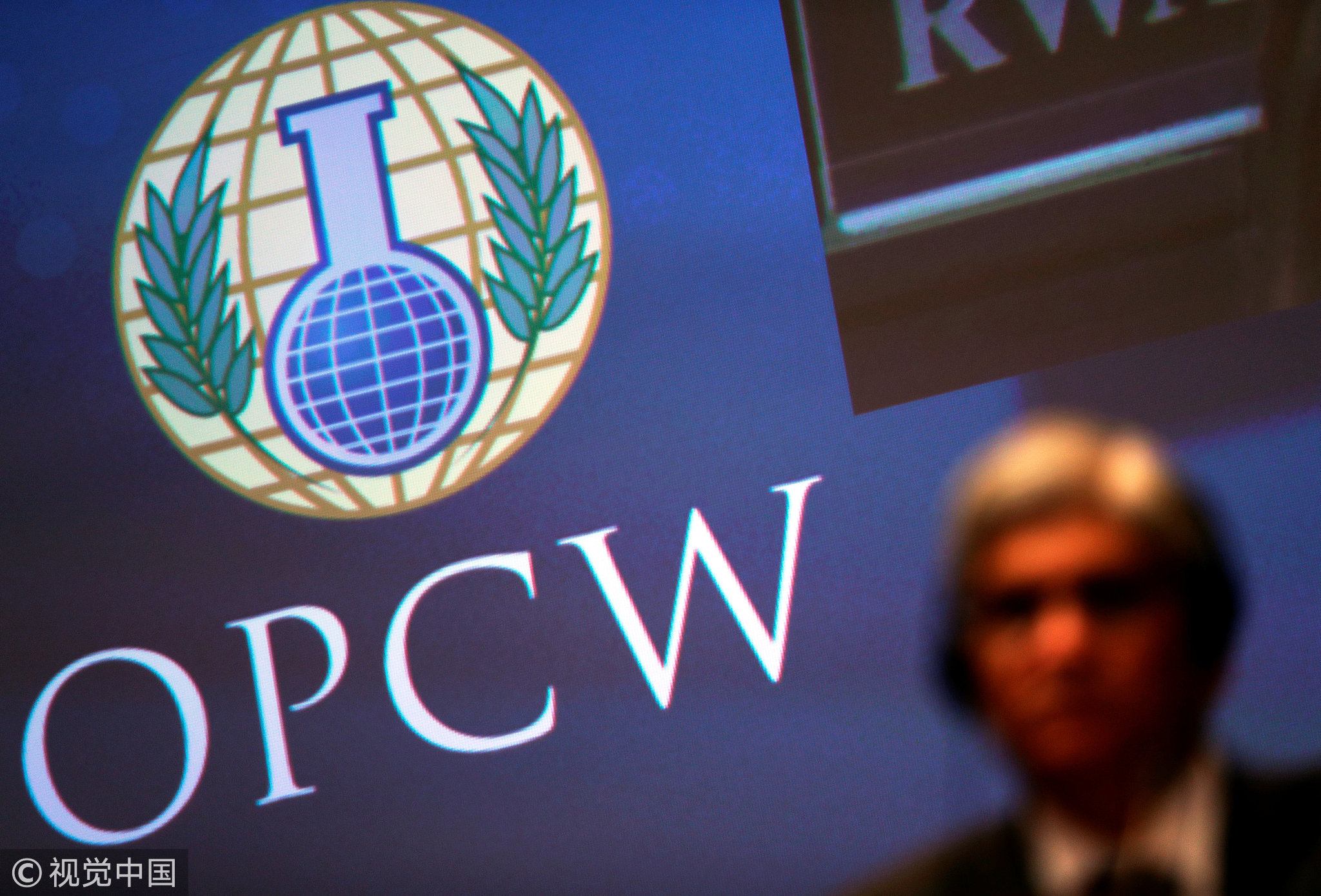
The logo of the Organisation for the Prohibition of Chemical Weapons (OPCW) is seen during a special session in the Hague, Netherlands, June 26, 2018. /VCG Photo
The logo of the Organisation for the Prohibition of Chemical Weapons (OPCW) is seen during a special session in the Hague, Netherlands, June 26, 2018. /VCG Photo
“Attribution goes beyond the mandate of the OPCW,” the Russian delegation said on Twitter. “The decision to create such a mechanism within the OPCW cannot be made at the special session” being held in The Hague.
But others, including France and the United States, believe it is time the organization's role evolved.
Tuesday’s meeting was stalled for nearly three hours by procedural bickering, with Russia and its allies questioning the rules on voting rights until the United States forced a vote to have the agenda adopted. It passed by a wide majority.
Russia and Indonesia submitted rival proposals, but Western diplomats said they were not believed to have strong political backing.
The British-led proposal is expected to be submitted by British Foreign Secretary Boris Johnson on Tuesday in The Hague and voted on by OPCW members on Wednesday. Decisions must win two-thirds of votes cast to be passed.
The meeting comes as inspectors from the OPCW are soon expected to unveil a long-awaited report into an alleged sarin and chlorine gas attack in April in the Syrian town of Douma.
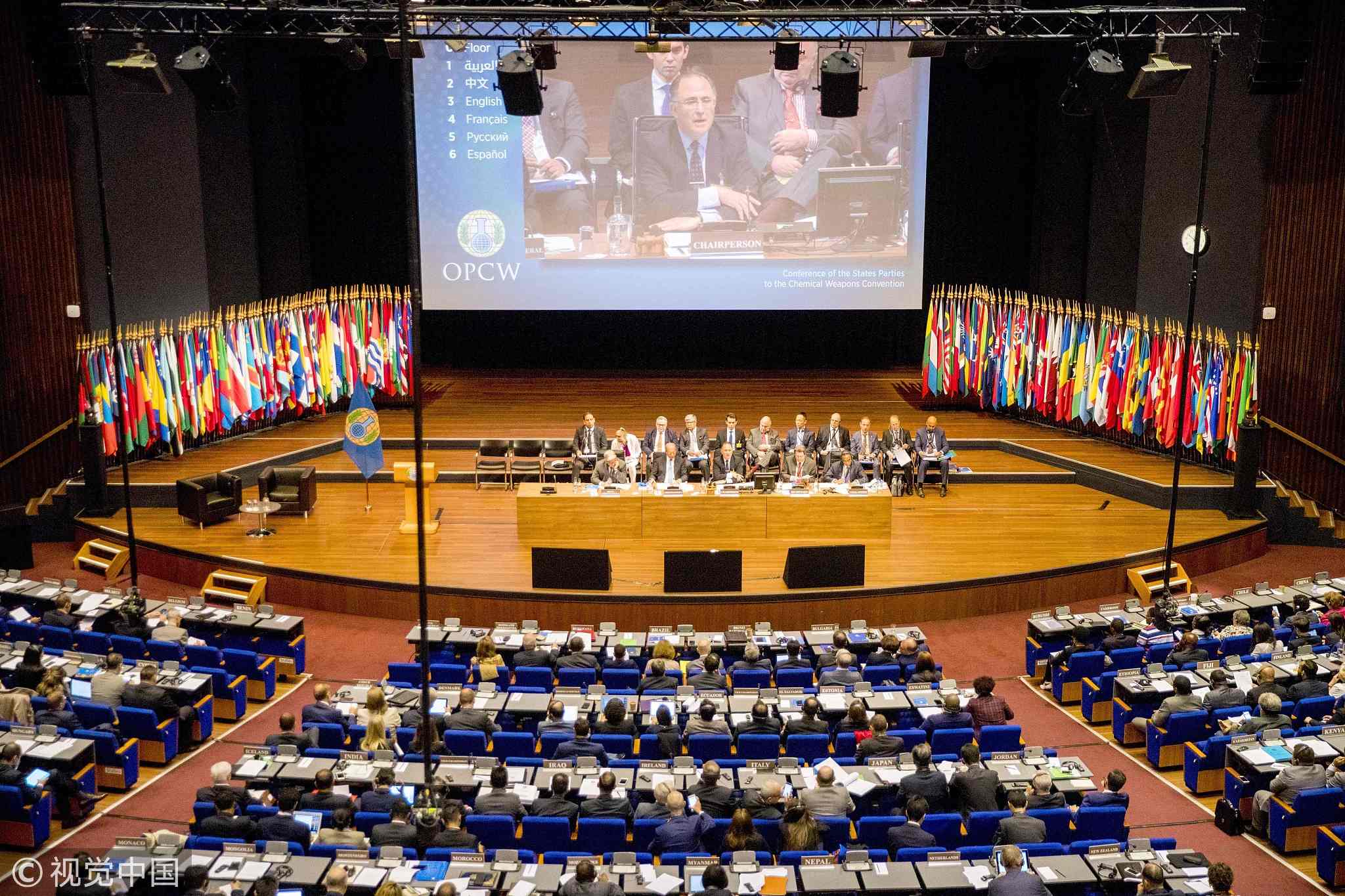
The opening of an extraordinary session of member-states of the OPCW, June 26, 2018. /VCG Photo
The opening of an extraordinary session of member-states of the OPCW, June 26, 2018. /VCG Photo
Western governments blamed Syrian President Bashar al-Assad and Russia for using chemical weapons in the protracted Syrian conflict. Both deny using chemical weapons.
Up to now, it has fallen to the United Nations, where a joint OPCW-UN team known as the Joint Investigative Mechanism (JIM) was created in 2015, to identify individuals or institutions behind chemical weapons attacks in Syria.
The JIM confirmed that Syrian government troops used the nerve agent sarin and chlorine barrel bombs on several occasions, while Islamic State militants were found to have used sulfur mustard.
But the JIM was disbanded last year after Moscow used its veto to block several resolutions seeking to renew its mandate beyond November 2017 at a deadlocked UN Security Council.
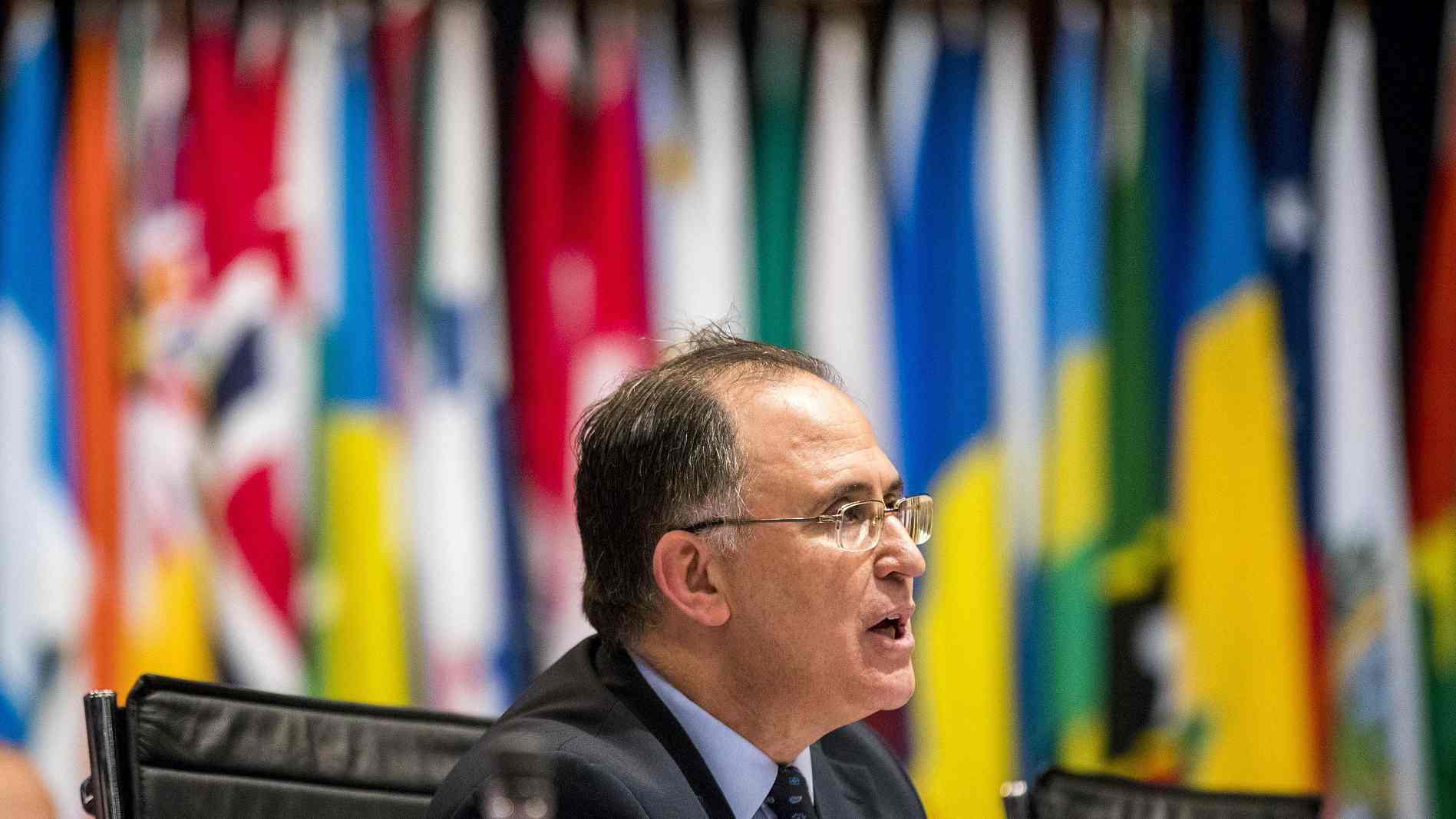
(Cover: Abdelouahab Bellouki, Morocco's ambassador in the Netherlands and chairperson of the special session of the OPCW opens the conference in the Hague, Netherlands, June 26, 2018. /VCG Photo)
7883km
Source(s): AFP
,Reuters