
Asia Pacific
13:42, 16-May-2019
Reporter's Diary: Meet Park, a grandma student in South Korea
 ["china"]
Share







Copied
02:45
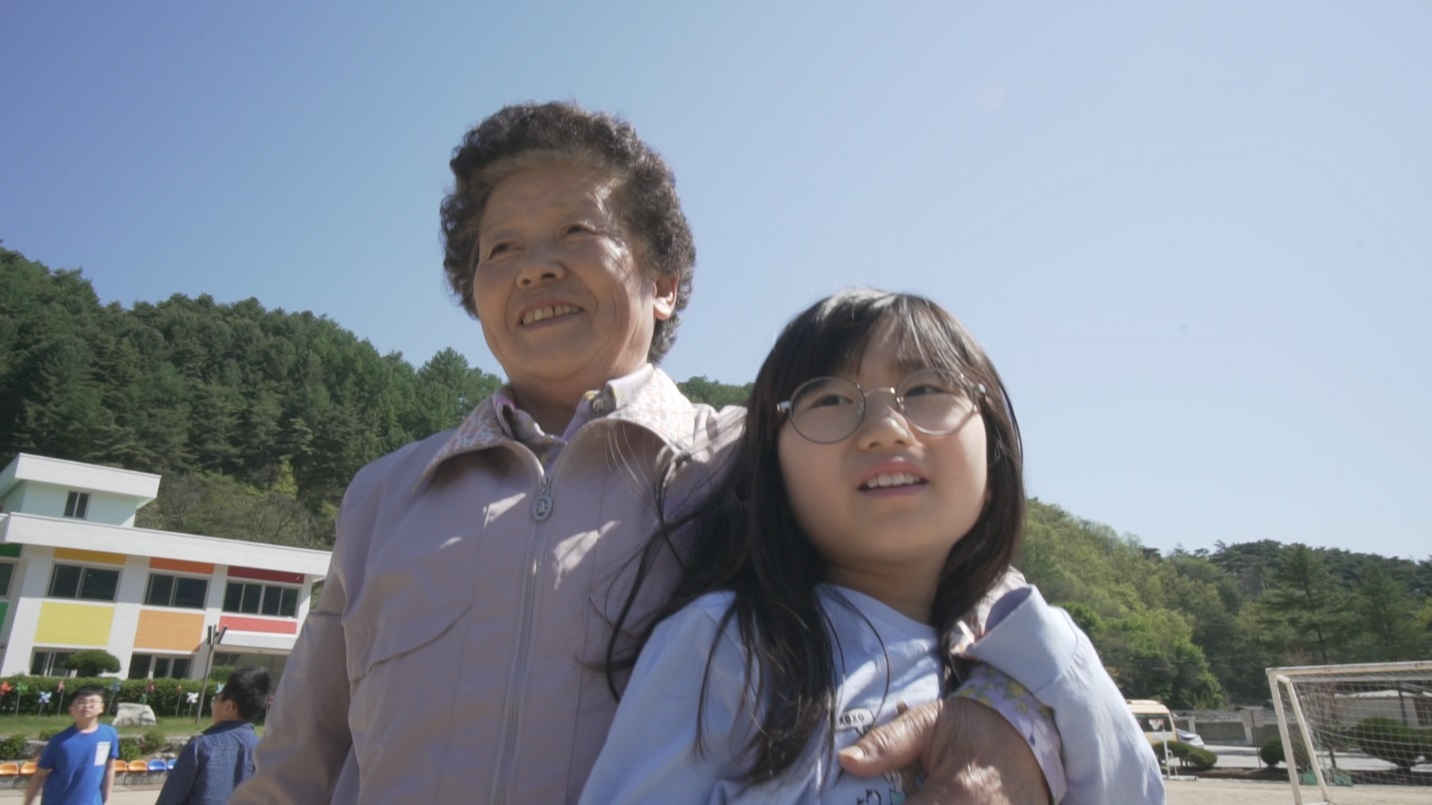
Every morning, Park Go-in has to go out into the field to water the crops. She's done this for as long as she can remember. Up and down, Park, now in her mid-seventies, gives water to rows of green buds that sprout out like infants reaching out for nutrients.
Farming is all that Park Go-in has always known. It's what her village is famous for. The town's green chili pepper is nationally recognized, and Park and others in the village have harvested and sold them most of their lives. But she had to rely on this hard work, supplemented by odd jobs in between harvest seasons, not out of desire but out of necessity. That's what got her kids an education, kept a roof over their heads and food on the table.
Eventually, it helped her to marry off her children, some who then uprooted their families to the city, and others who stayed nearby to start their own lives. But around this time last year, Park Go-in decided farming wasn't all she needed to know- at least, not anymore- that even at seventy-four, she could live her life for herself.
The decision came after a knock on her door, when the principal of Bangrim Elementary School came to pay her a visit. Park was familiar with the principal, as well as the school, as it was a staple in the community, having over an eighty-year history. But she also knew the school because of granddaughter, who was then in the third grade, had attended Bangrim.
The principal, Mr. Kwon, had a simple proposition: enroll in the school. In knowing she had to attend to the fields, he told her that she only had to come on rainy days or when she didn't have to work.
Park said she was hesitant at first, but she couldn't get the idea out of her head, intrigued by the thought that she could do something she had always dreamed of: read and write.
So she threw her hat in. Soon after, other older women around Bangrim Village, a town in the eastern part of South Korea, became primary students for the first time in their lives.
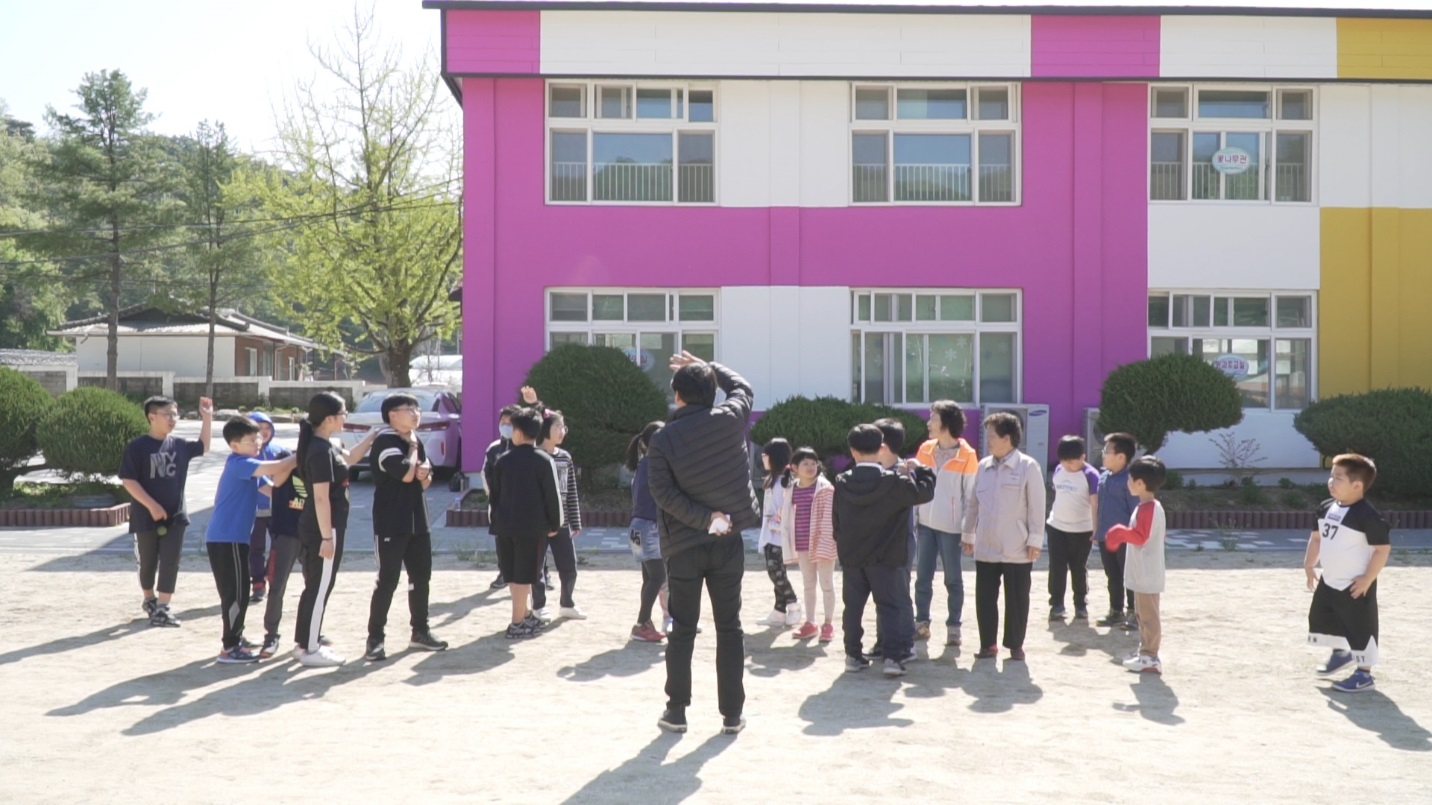
Students at Bangrim Elementary school line up during a physical education class, including 74-year-old Park Go-in and 65-year-old Park Kyung-soon. /CGTN Photo
Students at Bangrim Elementary school line up during a physical education class, including 74-year-old Park Go-in and 65-year-old Park Kyung-soon. /CGTN Photo
The program has been implemented across South Korea. As the country's birthrates reach a record low, there are not enough children to attend schools, especially in rural areas. Some schools have been forced to close their doors. Just twenty years ago, there were five elementary schools in Bangrim and only two remain.
To fill classrooms, and keep the school running, schools across the country are enrolling elderly women like Park to receive education.
Park Go-in said she never knew what a schoolyard looked like until she became a student herself. She was born shortly before the Korean War, when the country was one of the poorest in the world. Then at a young age, she lost both her parents. Taken in by her uncle and aunt, Park was forced to take care of the family, doing housework, while her older brother went to school. When he returned, Park said she would secretly watch him do his homework in envy.
Park's story, however, is a common one in South Korea. Elderly women's lives were mostly dictated by patriarchy and women like Park weren't given the same treatment as their male counterparts.
"Women in that era were expected to stay at home and support their families," said Professor Lee Sam-sik of Hanyang University. But now, as with many other incidences throughout South Korean history, Park Go-in and other older women are integral for the survival of the schools in their villages and their communities.
After about two hours of working in the field, Park Go-in packs her bag and walks roughly one hundred meters in front of her house where she's picked up every weekday by a yellow school bus carrying students of various ages. Until the 1990s, Bangrim Elementary had roughly 500 students, today the school only has 22.
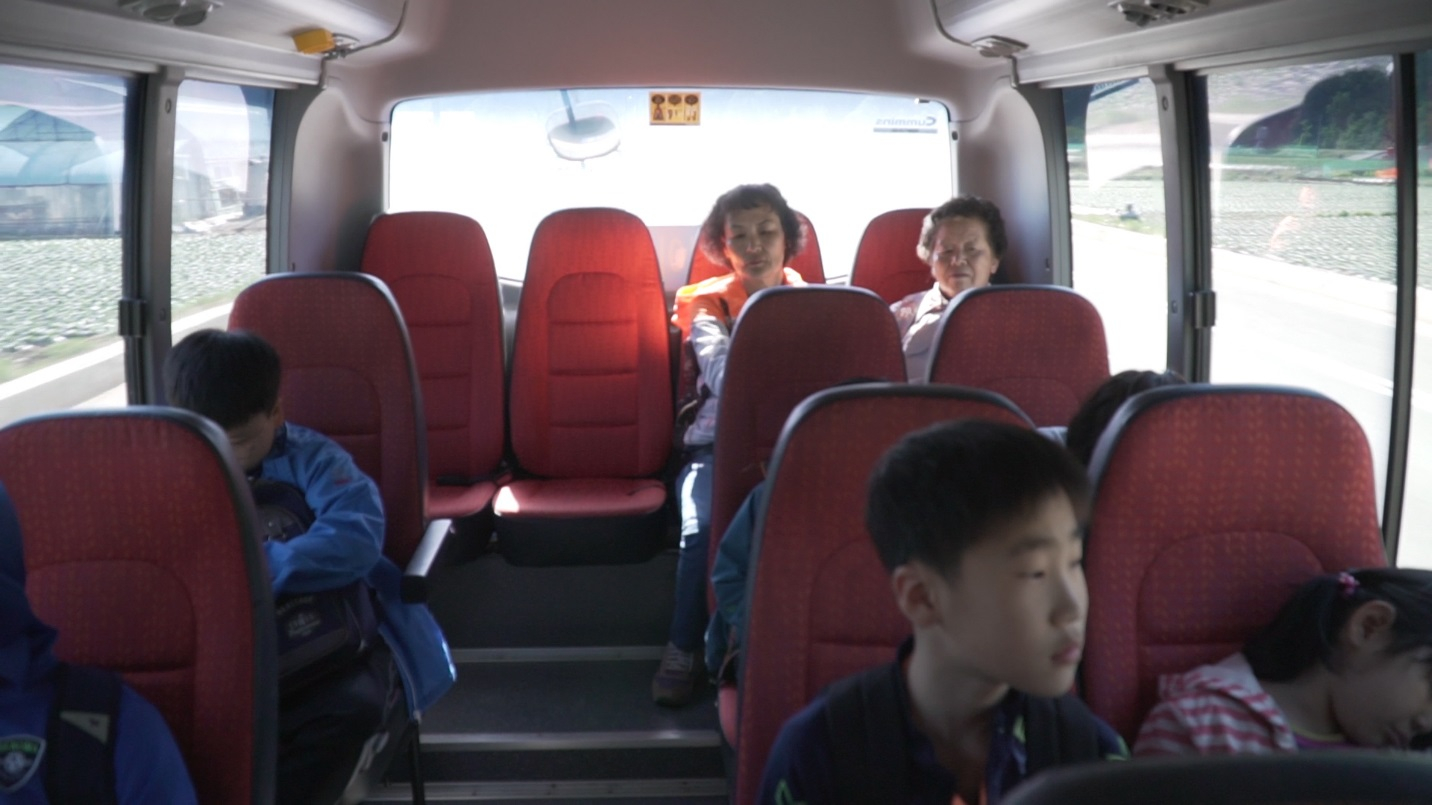
Park Kyung-soon (1st R) and Park Go-in (2nd R) sit at the back of a school bus. /CGTN Photo
Park Kyung-soon (1st R) and Park Go-in (2nd R) sit at the back of a school bus. /CGTN Photo
"I forget whatever I learn in the morning by afternoon," she told CGTN. "But I'm motivated to learn, even if it's hard. It makes me want to wake up every morning."
During the first period, Park and her class, with two children and three elderly, go over their homework and have basic conversation. In the next period, she practices Korean, writing and rewriting words in a lined-notebook.
"I must have been smart when I was little," Park said. "I learned how to write my family name just by watching my brother. But now, I can write my entire name by myself."
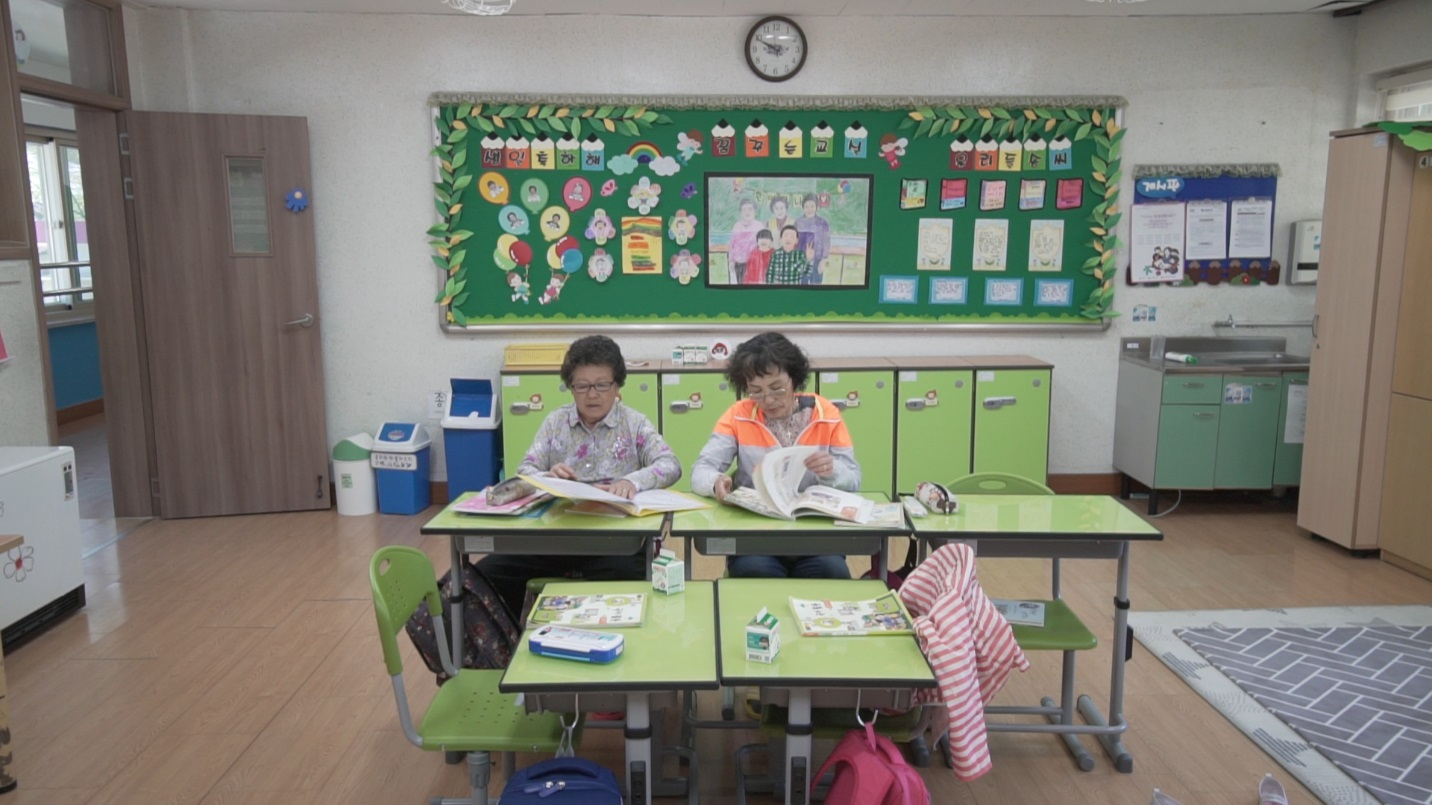
Park Go-in (L) and Park Kyung-soon (R) in their classroom. /CGTN Photo
Park Go-in (L) and Park Kyung-soon (R) in their classroom. /CGTN Photo
Apart from reading and writing, Park also has to try to keep up with her classmates during physical education. Despite her bad knees, she tries her best to run around with a smile on her face. But under her breath, she tells herself that this running will be the death of her.
"I can see they've grown happier," Mr. Kwon said. "And they're here because they want to be so even the younger students who don't want to learn, they're being motivated by their enthusiasm and willingness to learn."
Their enthusiasm is on display when they participate in theater class, using puppets to reenact a story about a caterpillar. While other kids compete, who can scream the loudest or who can run the fastest, Park and her older classmates laugh quietly, taking their time as if each little moment is precious.
The older students leave the school around mid-day. They have to go back to their jobs and make a living. But it's no longer to support their families but for their own survival.
It's a trend that's been rising at an alarming rate. The older generation, who helped build the country from one of the poorest in the world to the 14th-largest economy, are now left to fend for themselves.
Among advanced economies, South Korea has the highest rate of elderly poverty and suicide and it's expected to get worse, as the country has one of the fastest aging populations in the world.
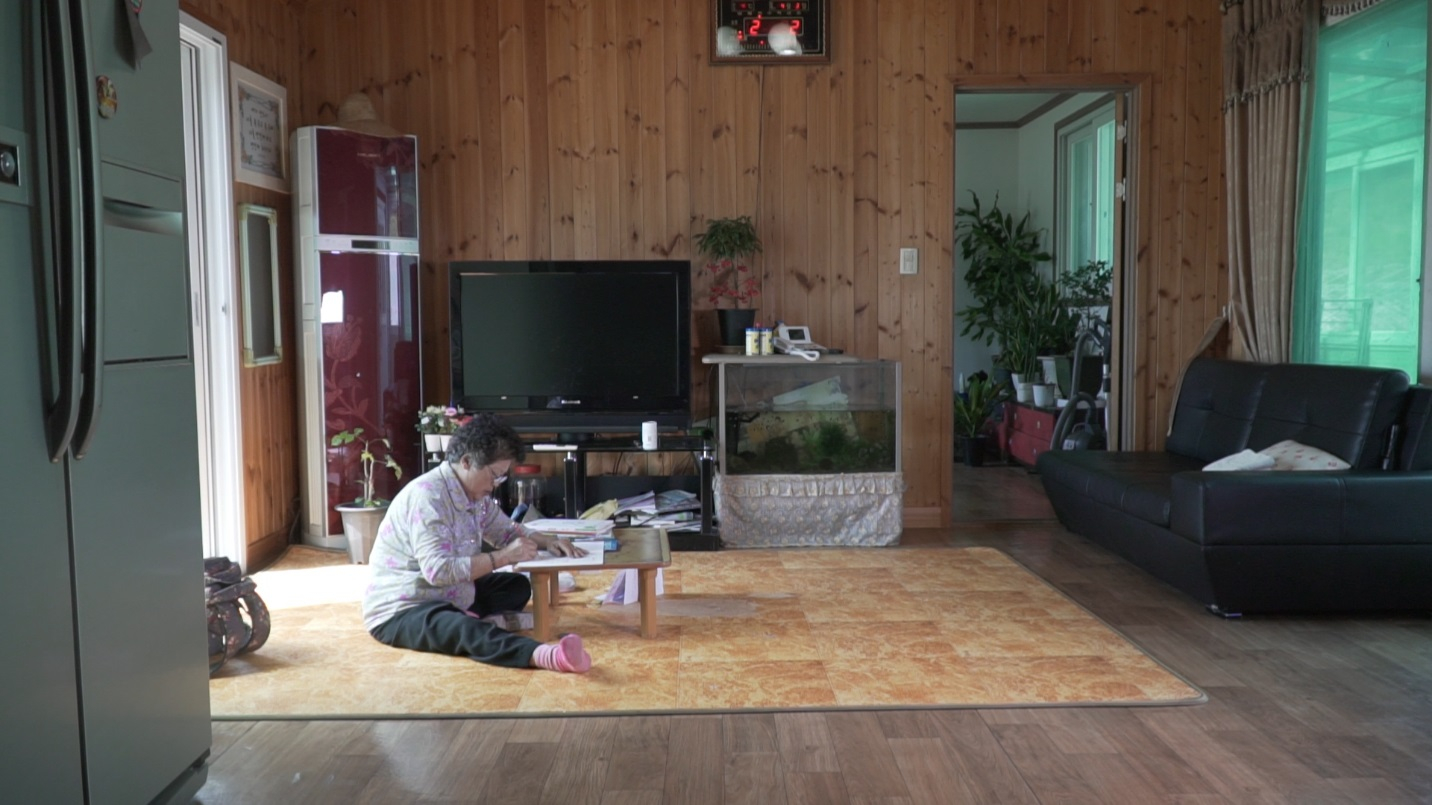
After finishing school and work, Park Go-in, 74, is doing her homework. /CGTN Photo
After finishing school and work, Park Go-in, 74, is doing her homework. /CGTN Photo
After checking on her crops, Park Go-in sits down to start her school homework. I asked her if she has any new dreams now that she can read and write. She scoffed at me, in a way only Korean grandmothers can, saying: "What new dreams can I have at this age? I'm just happy that I'm able to write my own name and walk around, reading the signs on the streets."
In her empty house, I asked her if it gets lonely. She brushed me off saying, "If you're going to ask me more questions, you should just leave." Then waving her hands, signaling for me to go, she took off her glasses and bid farewell, "I have to rest now because I have school tomorrow."