
Business
15:18, 20-Aug-2018
Expert: US multinationals, residents will suffer from tariffs
Updated
15:14, 23-Aug-2018
 ["china"]
Share







Copied
01:34
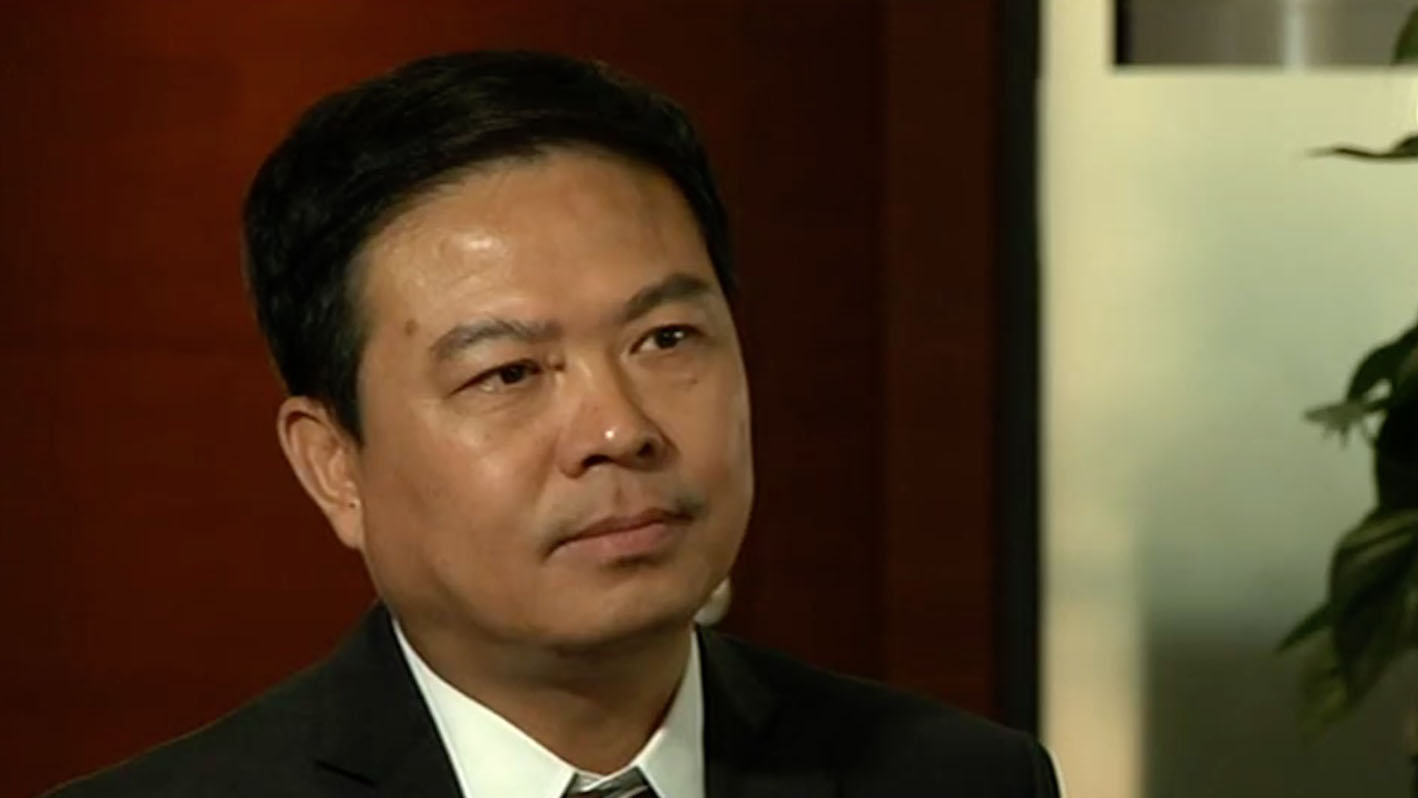
The Office of the US Trade Representative is holding another public hearing regarding proposed tariffs on about 200 billion US dollars worth of Chinese products. Some experts believe that both sides will pay the price rather than take any profit.
Tan Jian traveled between Beijing and Washington over and over again between October 2017 and August 2018. As director general of the Legal Service Department of the China Chamber of International Commerce, Tan represented the Chinese business community at three public hearings by the USTR. Now he is joining the fourth.
However, according to him, the section of the US Trade Act Trump is using to investigate China over technology transfers does not stand on solid ground.
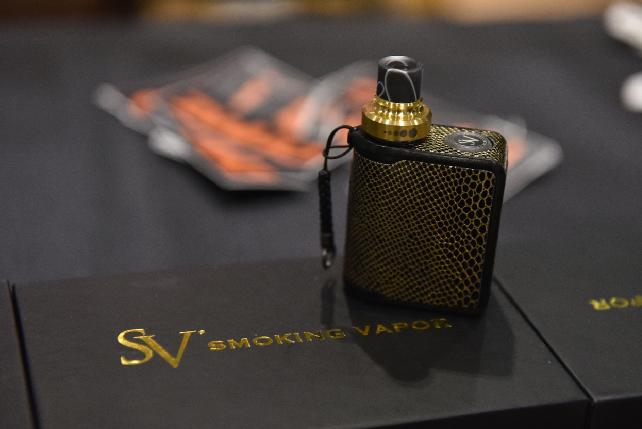
Chinese manufacturers own more than 20,000 intellectual property rights on e-cigarette products. /VCG Photo
Chinese manufacturers own more than 20,000 intellectual property rights on e-cigarette products. /VCG Photo
“As a domestic law, Section 301 now is above the international trade rules. China and other countries have delivered the request for consultation on Section 301 and Section 232,” said Tan.
The USTR has already authorized tariffs on about 50 billion dollars of Chinese products. Most items on these earlier lists do not directly affect American customers. Yet if the scale is to expand to 200 billion dollars, both Americans and US multinationals will suffer.
“First, living costs will jump for American customers, especially for low- and middle-income families. Second, American multinational corporations will bear the consequence of withering on the international market, due to the price of intermediate products being driven up. Third, some Chinese products dominate the US market, and will be hard to replace in a short time.”
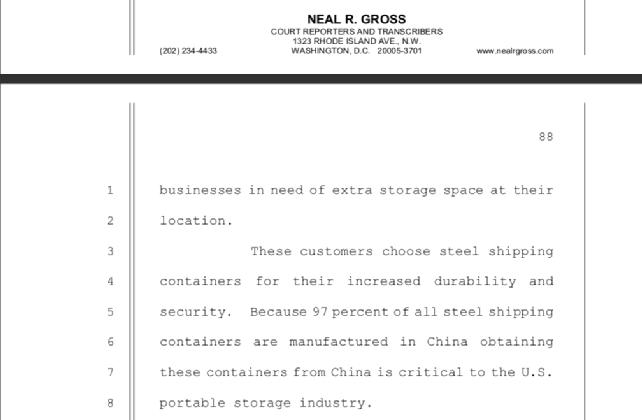
USTR screenshot of Section 301 hearing transcript on proposed tariffs on July 25.
USTR screenshot of Section 301 hearing transcript on proposed tariffs on July 25.
To better explain the third point, let’s take containers for example. In the second round of the trade war, the USTR proposed a tariff list targeting 284 import product lines, and finally removed five from it. One was intermodal shipping containers, 97 percent of which are made in China. There’s no replacement, and one question should be asked is: how could those steel boxes steal American IP and form compulsive technology transfer?
Tan Jian will attend this week's public hearing. The fate of many Chinese goods counts on it, and so do the finances of many American families and companies. While some might feel that the US profits from the trade war, no one can eventually stay out of it.