
Opinions
09:23, 18-Sep-2018
Opinion: Europe's far-right parties on the rise
Updated
09:12, 21-Sep-2018
 ["china"]
Share







Copied
01:11

With immigration influx from countries like Syria to Europe, the momentum of xenophobia opposing to these immigrations is also accumulating.
Sweden, widely regarded as the most progressive and tolerant country in the world, is embracing a Democrat party with neo-Nazi history with 18 percent of the vote. Similar cases have appeared across Scandinavia to Mediterranean counties.
Alternative for Germany, or often abbreviated as AFD, is a Deutschland party making big gains in this changing climate. Roland Tichy, the editor-in-chief of the conservative publication Tichy's Einblick, cited the ministry's words of referring to migration issue as "the mother of all problems."
"Germany has taken more than 20 million migrants, which requires a new land built up totally for them," said Roland. "This migration is happening fast, uncontrolled, and without limit. That's certainly causing fear to many."
According to Roland, the whole social system is under huge pressure, with schools, hospitals and asylums overwhelmed with migrants. Other than that, people also feared that these migrants with different religion and culture background will threaten the European value of democracy and the traditional Christian culture. To make the problem worse, the labor market has yet to come up with the plan to absorb these new arrivals.
"More than 60 percent of them cannot read or write or count," said Roland. "They don't speak the same language, either. Right now their unemployment is 90 percent, and the social security system is running out of money."
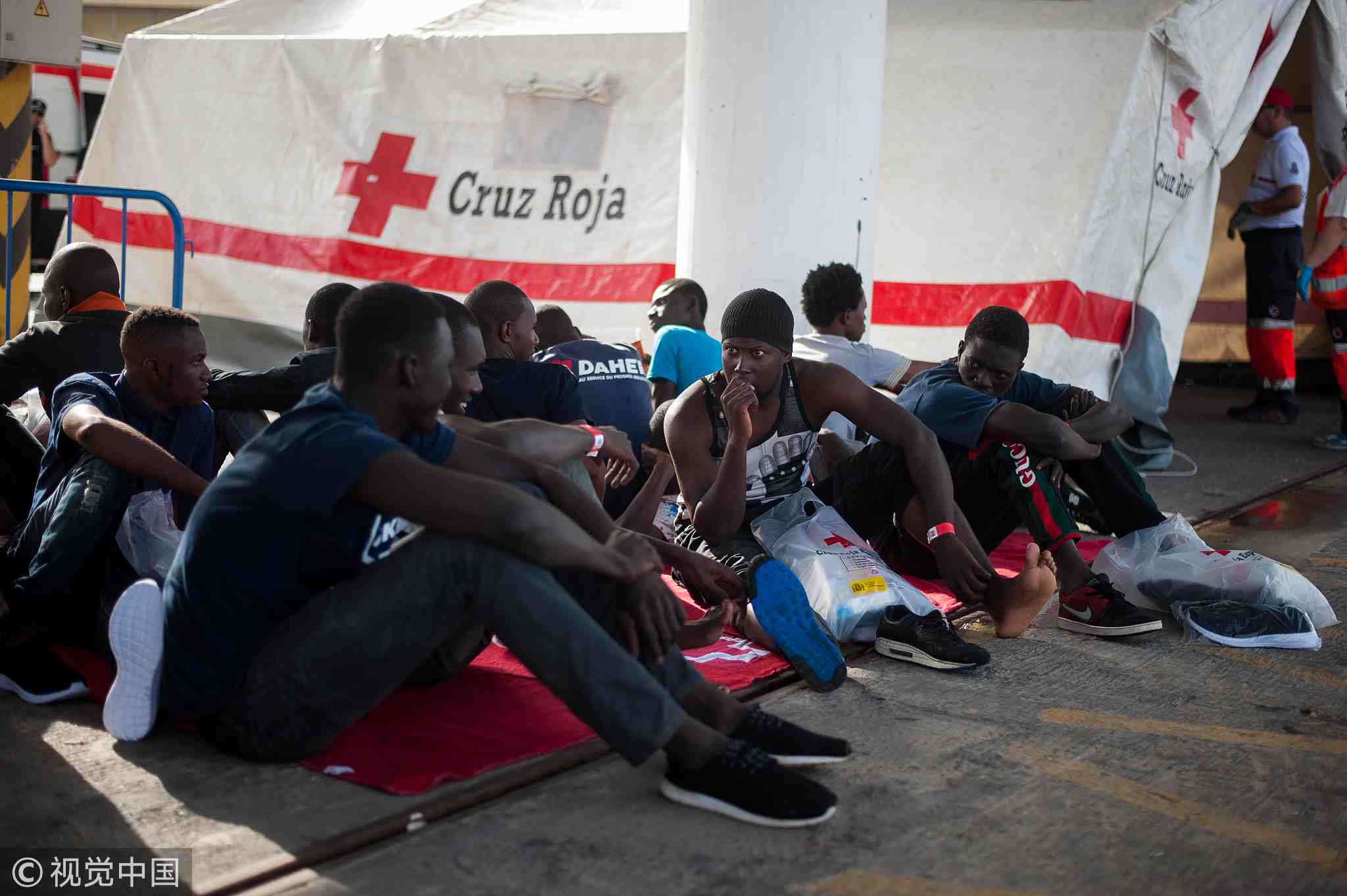
Migrants sitting on the ground, awaiting relief after their arrival at the Port of Malaga, Spain, July 7,2018 /VCG Photo
Migrants sitting on the ground, awaiting relief after their arrival at the Port of Malaga, Spain, July 7,2018 /VCG Photo
He criticized the government of Germany and Austria of opening its borders entirely without taking into serious consideration of how will they manage an influx of two and a half million people.
Matthew Karnitschnig, the chief Europe correspondent for POLITICO, pointed out that opposing views against migrations have been around for years, even before the Syrian war. However, it's the recent rise of migrant numbers in a short period that heated the conflict.
"The momentum has been building since the last election when Democrats improved by 5 percent," said Matthew. "However, it is now galvanizing the public and dominating the debate throughout the election campaign."
Based on his observations, Matthew suggested that what happened in Austria and Hungary was just part of the entire picture of how these furious voices have been changing the immigration policies in mainstream parties.
Of all the factors causing the present dilemma, the lack of participation of the European Union probably bears most blames. When Matteo Salvini, the leading power of the right-wing league party in Italy, came to power, it didn't surprise Matthew. He described Matteo as "the result of a failure of EU policy."
"Italy has been on the frontline of this crisis for a number of years," said Matthew. "During that time, the rest of EU just watched on the sidelines, leaving Italy on its own derives to deal with the crisis."
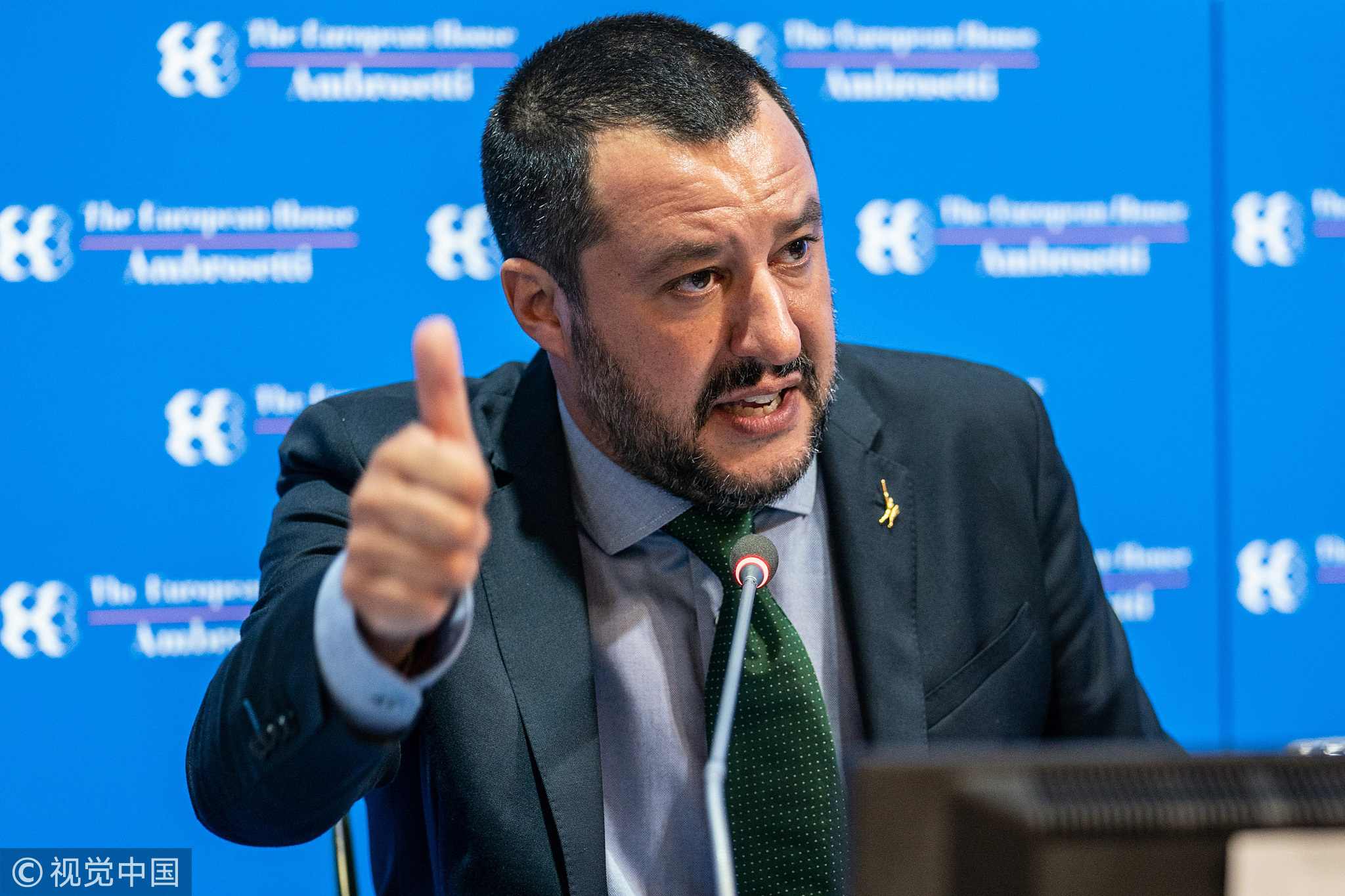
Matteo Salvini, Italy's deputy prime minister speaks during the Ambrosetti Forum in Cernobbio, Italy, September 8, 2018. /VCG Photo
Matteo Salvini, Italy's deputy prime minister speaks during the Ambrosetti Forum in Cernobbio, Italy, September 8, 2018. /VCG Photo
Remi Piet, a research fellow at the University of Miami, said that this dereliction of duty of EU over the years deepened its members' disillusion and dissatisfaction with the legitimacy of its foundation.
The EU was built with the goal of fostering common economic interest and protecting the population. However, the present picture is that its economic growth overall is way below many countries standards. Therefore, the conflict between parties are escalating and opinions are going on extremes for the upcoming 2019 EU election.
"On one hand, you have Austria and Poland looking for inter-governmental solutions rather than a federal model," said Remi. "On the other, you have Pro-European, central left and right leaders like Merkel who saw EU as the fortress that provides a security for EU values."
In fact, the influx of migrants has largely decreased in the last few months, but the fever on the topic is not going down, in part because some far-right parties are exploiting people's fears. Therefore, a reassurance of the EU value and an actionable plan to integrate migrants into the market is in urgent need.
However, there is good news to the issue. Emmanuel Macron, the French president, said that more migrants are welcomed into the country. Some analysts said that this generosity comes from France's lack of enough service labor in many workplaces.
Looking forward, the migration problem remains on the top of many countries' political agenda. Now, a question mark is being raised on the future of EU on whether it would survive the attacks from the rising far-right parties.
The Heat with Anand Naidoo is a 30-minute political talk show on CGTN. It airs weekdays at 7:00 a.m. BJT and 7:00 p.m. Eastern in the United States.
(If you want to contribute and have specific expertise, please contact us at opinions@cgtn.com.)