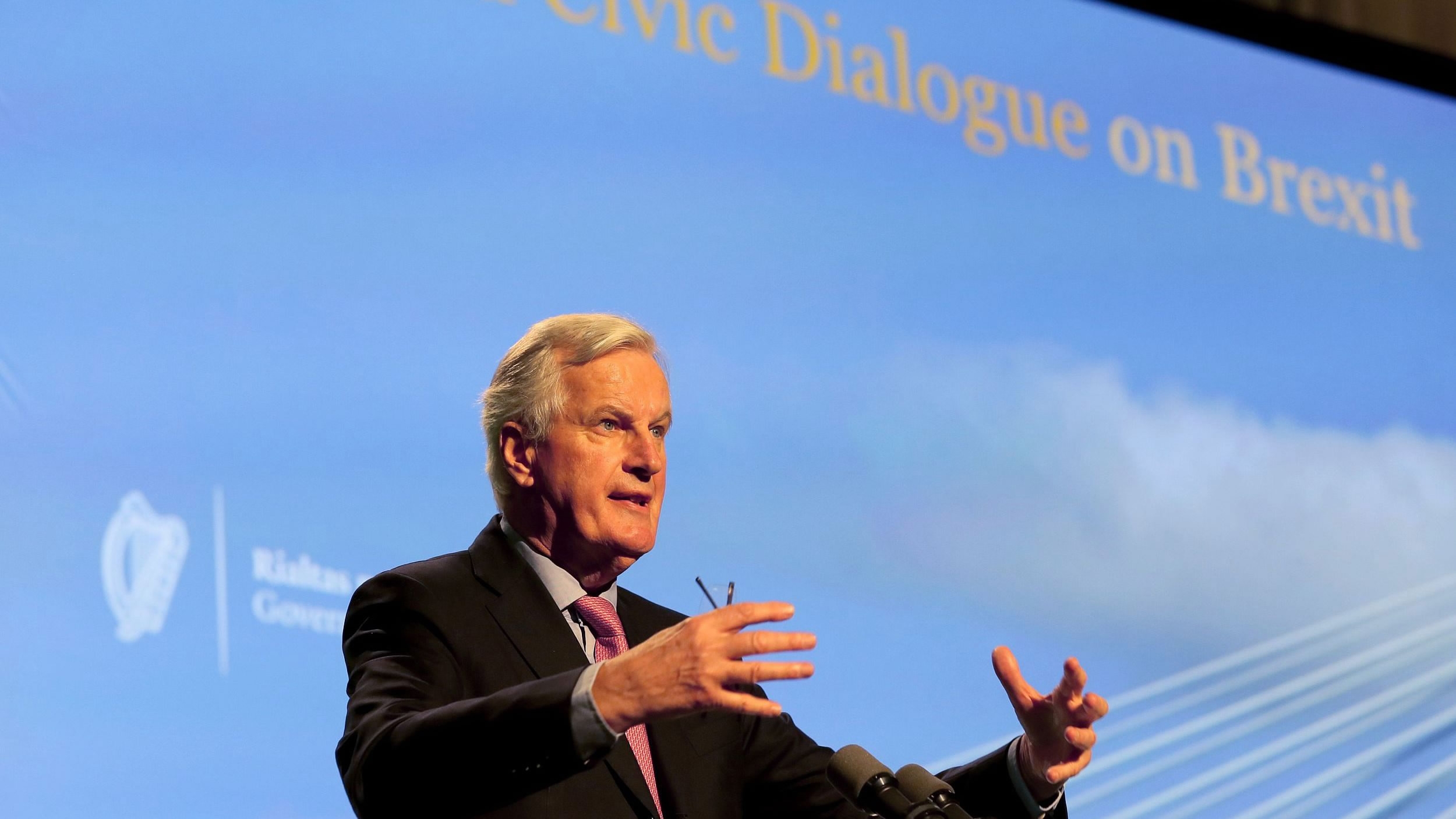
Britain's House of Lords voted on Monday to give parliament the right to block a "no-deal" Brexit as EU chief negotiator Michel Barnier warned negotiations with Britain were at risk of faltering over the Irish border issue.
The dual blows come at a tough time for Prime Minister Theresa May, who was forced into a mini-reshuffle of her top team on Monday. Her Conservative Party is expected to lose seats in local elections on Thursday.
Lords vote for right to say no
Members of the House of Lords, Britain's upper house of parliament, voted 335 to 244 for an amendment to give lawmakers the final say on the outcome of Brexit talks with Brussels – including staying in the bloc if they do not like the final agreement, potentially postponing Britain's departure from the EU.
Prime Minister Theresa May's government had previously indicated it would fight the motion when it returns to the House of Commons for debate in the coming weeks.
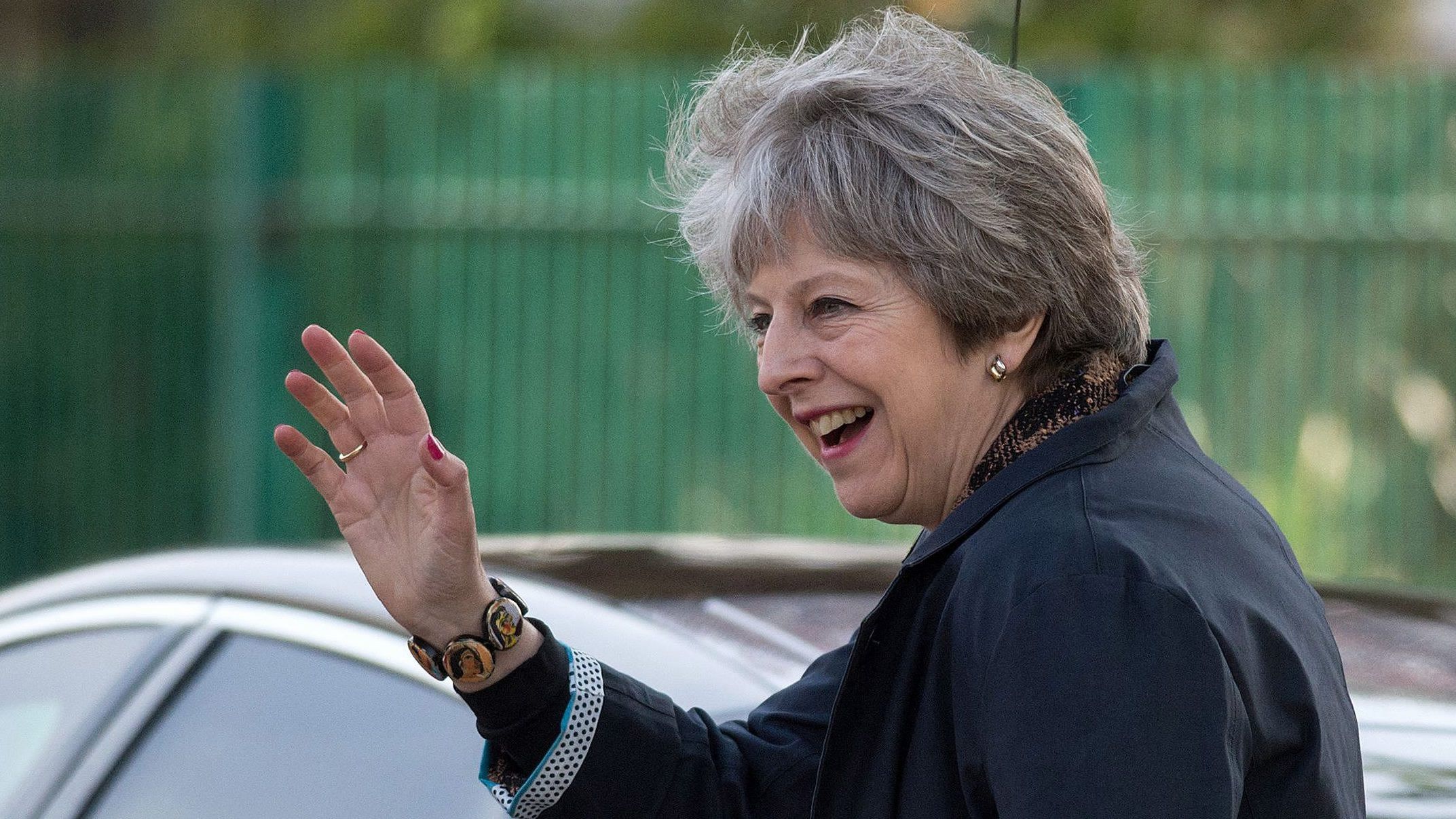
Britain's Prime Minister Theresa May waves as she leaves Brooklands Primary School in Sale, near Manchester, England, April 30, 2018. /VCG Photo
Britain's Prime Minister Theresa May waves as she leaves Brooklands Primary School in Sale, near Manchester, England, April 30, 2018. /VCG Photo
"What this amendment would do is weaken the UK's hand in our Brexit negotiations by giving parliament unprecedented powers to instruct the government to do anything with regard to the negotiations, including trying to keep the UK in the EU indefinitely," her spokesman said.
The government has promised MPs and peers they will be able to vote on the Brexit deal, which it hopes to strike in October, ahead of Britain's planned departure from the EU in March 2019. But if parliament rejects it, the only current alternative is to crash out with no deal.
Former Conservative party leader Michael Howard warned that the amendment "could and very probably would lead to not one but several constitutional crises."
Irish border 'risk'
May is already under pressure to come up with a solution to prevent a post-Brexit "hard" border between Northern Ireland and Ireland, with Barnier warning her on Monday that the clock was ticking.
At a press conference during his visit to Ireland, Barnier called for a "clear and operational solution for Ireland" to be included in the Brexit deal, adding: "Until we reach this agreement, there is a risk."
What's the problem? Northern Ireland will be Britain's only land border with the EU after Brexit. Both sides say they are committed to keeping the border with the Irish Republic open, but a solution is yet to be found. There are fears a return to checkpoints at the border could undermine the hard-won Good Friday peace agreement.
What are the possible solutions? A customs union – no tariffs on member states' goods and common tariffs on goods from outside – is one solution, but the UK government opposes this option. It argues that an EU-UK free-trade deal to be sealed by 2021 can solve the issue, and has previously suggested technology can be employed to create a seamless border.
Irish Prime Minister Leo Varadkar warned that Britain's "approach to negotiations will need to change in some way" if there is to be agreement over the issue.
London has committed to avoiding a border with checkpoints between Northern Ireland, part of the UK, and EU-member Ireland, which all sides agree is vital to maintaining the 1998 Good Friday peace accords.
However, Britain has also said it will not enter into a customs union with the EU post-Brexit, and has been urged to find a solution to reconcile the two positions.
DUP rejects 'backstop' plan
The EU has suggested a "backstop" proposal, in which only Northern Ireland would stay in a customs union with the EU post-Brexit. "We need to agree rapidly by June on several new points, on the scope of alignment, customs and regulations," said Barnier.
Britain wants to be free of the EU customs union in order to be able to strike trade deals with the rest of the world post-Brexit.
Barnier rejected claims that the backstop solution threatened Britain's sovereign integrity following criticism from Arlene Foster, head of Northern Ireland's Democratic Unionist Party (DUP).
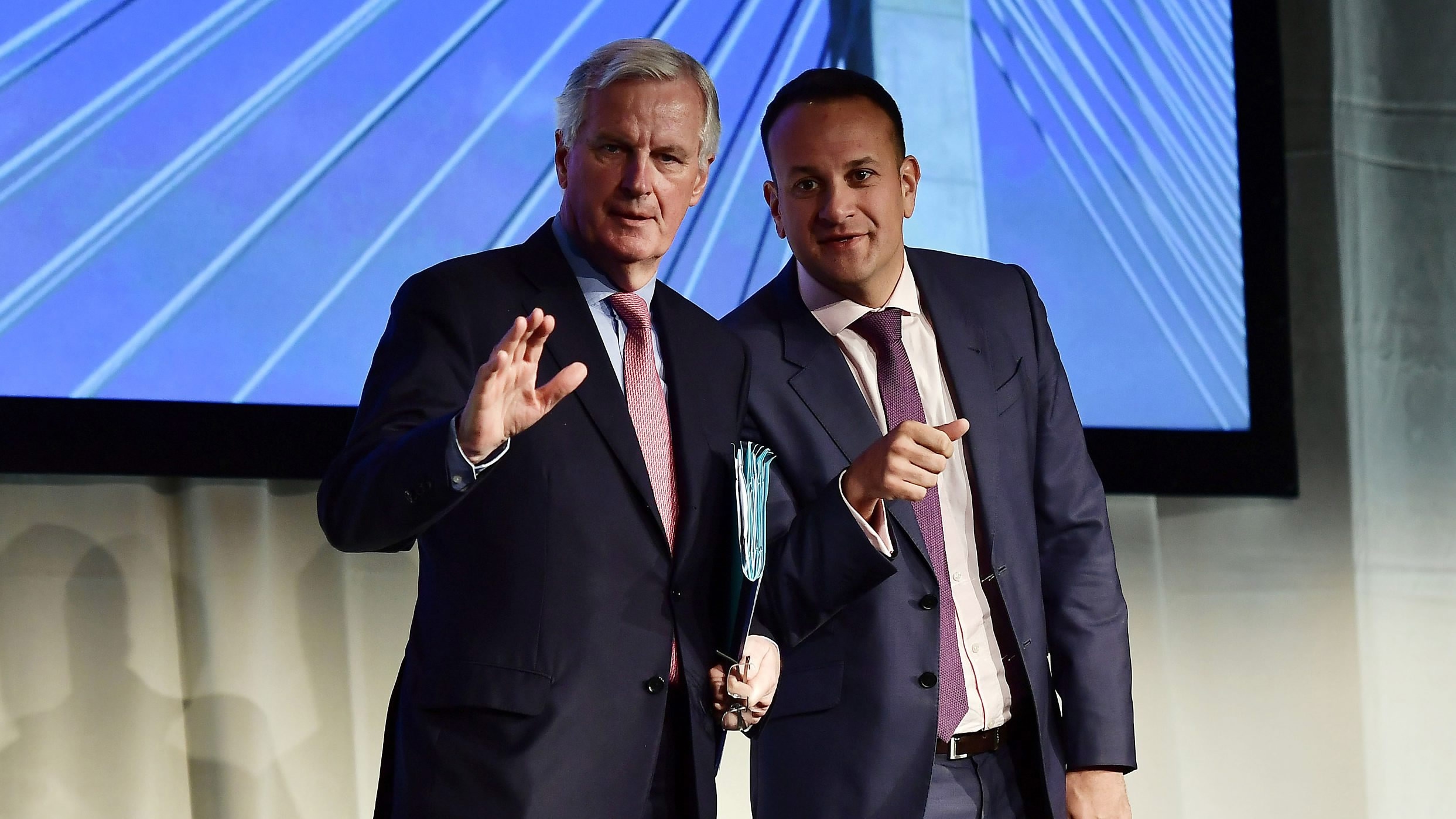
EU Chief Brexit Negotiator Michel Barnier (L) with Taoiseach Leo Varadkar, April 30, 2018, in Dundalk, Ireland. /VCG Photo
EU Chief Brexit Negotiator Michel Barnier (L) with Taoiseach Leo Varadkar, April 30, 2018, in Dundalk, Ireland. /VCG Photo
She said on Monday that Barnier's "proposal of us being in an all-Ireland regulatory scenario with a border down the Irish Sea simply does not work. It does not work constitutionally, politically and it certainly does not work from an economic perspective."
Barnier acknowledged the backstop proposal was "the subject of heated discussions in the UK," and said there were "three points to avoid any misunderstandings."
Firstly, he said both the EU and Britain were "firmly committed to a backstop" as a last resort, and secondly that the proposal was not part of a negotiation strategy. "We are not playing tactics with Ireland's vital interest," he insisted. Finally, Barnier said the backstop was needed "in order to respect the integrity of the single market and the EU's customs union."
Brussels has so far rejected London's technological solutions to avoid a hard border, piling the pressure on May.
Earlier this month, the House of Lords dealt the British prime minister another damaging defeat, passing an amendment to a key piece of legislation, requiring ministers to explain the steps taken to negotiate Britain's continued participation in a customs union.
(With input from agencies)

 ["europe"]