
Opinions
17:02, 07-May-2018
Opinion: China-Japan ties on track, with diplomatic momentum and fewer setbacks
 ["china"]
Share







Copied

Chinese Premier Li Keqiang is scheduled to pay an official visit to Japan from May 8 to 11, the first official visit by a Chinese premier to Japan in eight years. Could chilly relations between Beijing and Tokyo thaw with high-level exchanges?
China-Japan ties par for the course
In general, Beijing and Tokyo are striving to normalize bilateral relations since twists and turns in recent years have seriously undermined mutual trust, communication and cooperation.
The revived China-Japan ties reflect the approach of China’s good neighbor diplomacy, changes in Japan’s foreign policy and diplomatic breakthroughs in the region such as the inter-Korean summit and denuclearization efforts.
“Improving China-Japan relations require not just the right atmosphere, it also calls for commitment and vision,” Premier Li Keqiang said.
Carrying out the consensus of treating each other as partners for cooperation instead of threats is essential.
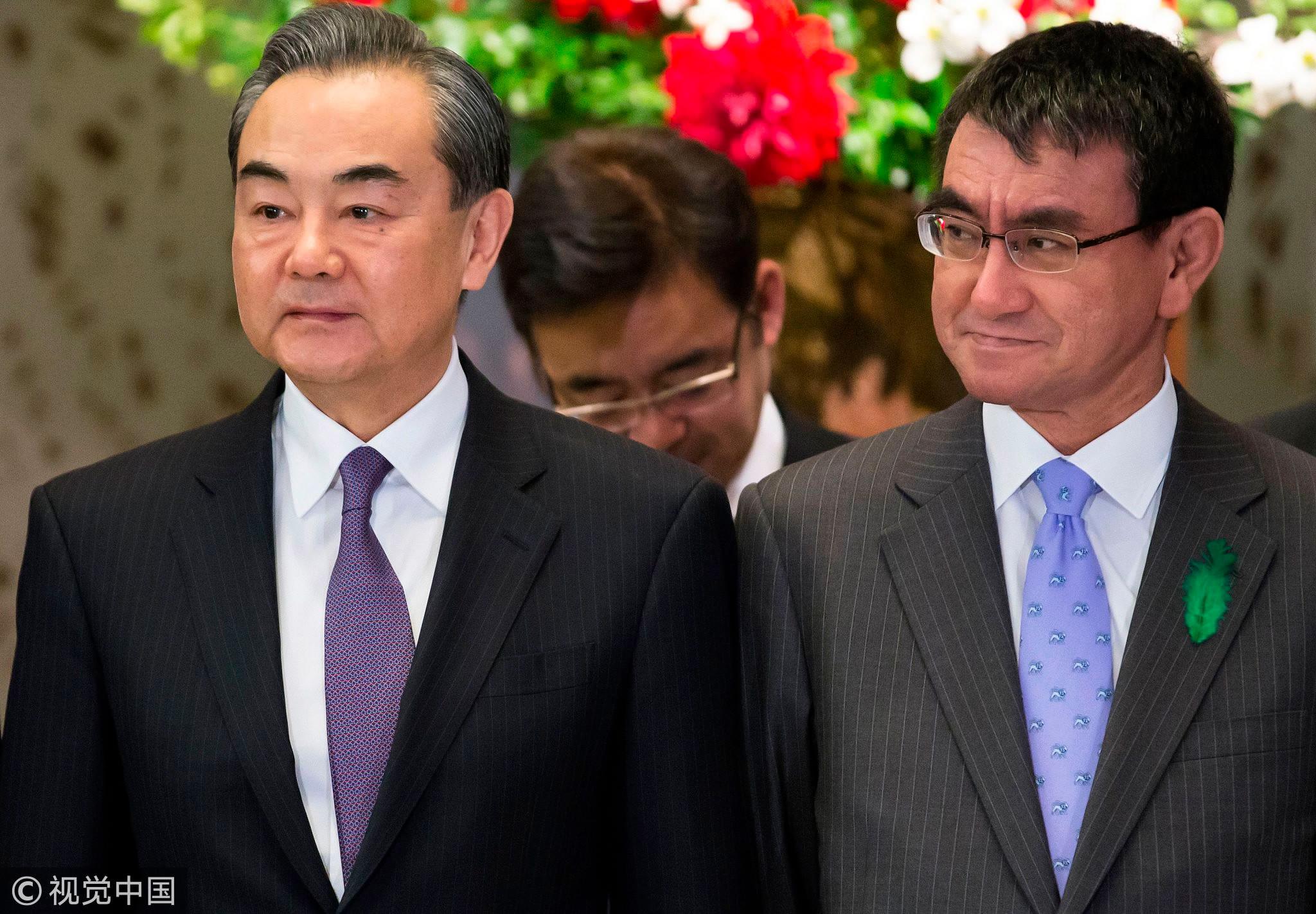
China's Foreign Minister Wang Yi (L) and Japan's Foreign Minister Taro Kono pose during a photo session ahead of a high-level Japan-China economic dialogue in Tokyo on April 16, 2018. /VCG Photo
China's Foreign Minister Wang Yi (L) and Japan's Foreign Minister Taro Kono pose during a photo session ahead of a high-level Japan-China economic dialogue in Tokyo on April 16, 2018. /VCG Photo
In a telephone conversation with Japanese Prime Minister Shinzo Abe last Friday, Chinese President Xi Jinping lauded recent positive messages and actions from Tokyo in fixing bilateral ties.
During Premier Li’s meeting with Abe, on top of the agenda are enhancing trust, expanding cooperation and properly handling differences between the two nations.
To promote local exchanges, Premier Li will visit the northern island of Hokkaido, a popular destination for Chinese tourists, thanks to the Chinese blockbuster If You Are The One(《非诚勿扰I》).
China attaches importance to the positive messages sent by Mr. Abe on improving bilateral ties on a number of occasions since last year. This year marks the 40th anniversary of the signing of the China-Japan Treaty of Peace and Friendship. Frequent high-level visits are doing wonders on bilateral ties.
In April, the reopened China-Japan High-Level Economic Dialogue during the three day visit of Chinese State Councilor and Foreign Minister Wang Yi was welcomed in both countries.
Building momentum rather than setbacks needed
“We are seeing the 'spring' of China-Japan relations, but we also need to watch out for any possible returned 'chills',’" Premier Li said.
More initiative rather than setbacks are needed to maintain the momentum.
In 2017, the bilateral trade volume reached 300 million US dollars, with Japanese investment in China rebounding with a faster pace and Chinese investment in Japan increasing in new fields such as online payment, cross-border e-commerce, robot manufacturing and AI innovation.

Chinese Premier Li Keqiang (R) meets with Japanese Prime Minister Shinzo Abe in Manila, the Philippines, on November 13, 2017. /Xinhua Photo
Chinese Premier Li Keqiang (R) meets with Japanese Prime Minister Shinzo Abe in Manila, the Philippines, on November 13, 2017. /Xinhua Photo
With 7.35 million Chinese tourists to Japan in 2017, up 15% year-on-year, people-to-people and cultural exchanges are growing. WeChat Pay, Alipay and China UnionPay have become more popular in Japan.
China welcomed Abe’s positive remarks on China’s Belt and Road Initiative and Tokyo’s willingness to cooperate with Beijing under the BRI.
Last May, Chinese President Xi Jinping met with Toshihiro Nikai, the Secretary-General of the ruling Liberal Democratic Party (LDP), who led the Japanese delegation to the Belt and Road Forum for International Cooperation in Beijing.
Facing challenges to international trade, triggered by the US tariffs on steel and other goods from many countries, even Washington’s own allies, Premier Li’s visit is set to show China’s advocacy of free trade, regional integration and globalization. The upcoming seventh China-Japan-ROK leaders’ meeting, a trilateral mechanism to negotiate a big free trade agreement, will reconvene after two and a half years.
Strengthen crisis management over disputes
Steady and sound interactions are the bedrock of China-Japan ties, though deep structural problems and challenges remain.
Territorial disputes over the Diaoyu Islands and a distortion of the Japan’s history before and during World War II have frayed ties between Beijing and Tokyo. Territorial disputes have become not only regional destabilizing factors, but also the cornerstone of the US-Japan alliance. Beijing and Tokyo are intent on improving the crisis management of their differences.
Both nations held multiple rounds of high-level consultations on maritime issues including maritime search and rescue operations, exchange of information on maritime law enforcement since both public service vessels are patrolling waters nearby.
Relations could remain positive after reaffirming the principles of the four political documents between China and Japan and a four-point agreement reached in November 2014 to properly handle historical, territorial and other issues. Japanese leaders should stick to these agreements.
Both countries must strengthen the foundation of China-Japan relations rather than making a one-time deal. More achievements based on sound bilateral ties are expected.
(The author is a research fellow at the Charhar Institute. The article reflects the author's opinion, and not necessarily the views of CGTN.)