
Space
14:36, 23-Apr-2018
China starts selection of third batch of astronauts
 ["china"]
Share







Copied
01:55

China formally began selecting its third batch of taikonauts, or Chinese astronauts, on Monday, a senior space official said.
"The selection process consists of three phases and we will not only select males, but also female candidates," said Yang Liwei, deputy director of the China Manned Space Engineering Office and the country's first astronaut to launch into space.
It's been 20 years since the taikonaut brigade of the Chinese People's Liberation Army (PLA) was established. Twenty-one taikonauts have since been recruited in two batches.
Some 17 or 18 candidates will be selected for the third batch for deployment in the country’s manned space exploration plan after completing training.
"The taikonauts will be pilots, maintenance engineers and payload scientists," Yang told a ceremonial event commemorating China's third Space Day. "The scope will cover not only pilots from the Air Force of the PLA, but also flight engineers, and scientists from related industries, universities and institutions."
Compared to the first two selections, the qualification standard for being an astronaut for the third one is much lower, indicating that more ordinary people may have the opportunity to take part in space exploration.
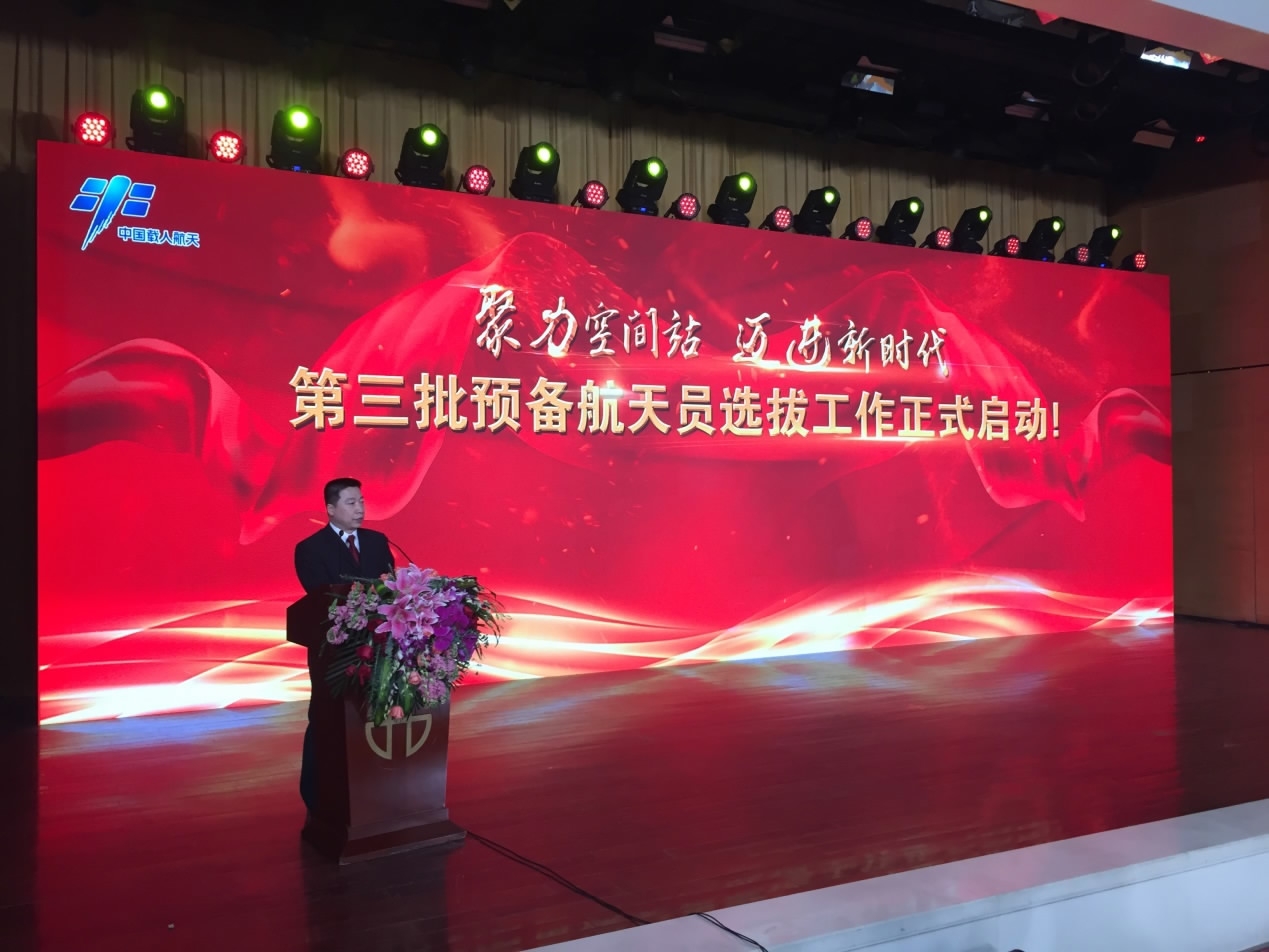
Yang Liwei addresses the Space Day ceremony. /CGTN Photo
Yang Liwei addresses the Space Day ceremony. /CGTN Photo
During the ceremonial event, Chen Dong – one of the taikonauts chosen for the successful 2016 Shenzhou-11 space mission – shared his experiences with some young people through a video link.
The China National Philatelic Corporation has also issued special commemorative covers and stamps to honor the taikonauts' dedication to the Chinese space industry.
Jian Yiping, the designer of the commemorative cover, said: "In January, the Publicity Department of the Communist Party of China Central Committee publicized the deeds of all members of the Taikonaut brigade and honored them with the title 'Role Models of Our Times.' It got a positive response from the army, students and other people from all walks of life."
Previous two selections
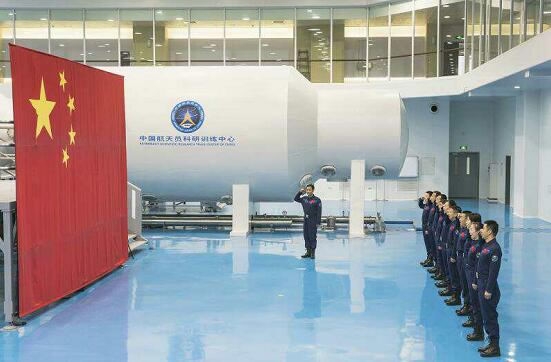
Eleven Chinese astronauts take an oath in honor of the 20th anniversary of the establishment of the PLA Astronaut Group. /Xinhua Photo
Eleven Chinese astronauts take an oath in honor of the 20th anniversary of the establishment of the PLA Astronaut Group. /Xinhua Photo
China started its selection of the first batch of astronauts in October 1995 from among fighter plane pilots and attack plane pilots in the Chinese Air Force.
The selection set basic physical and mental requirements.
The candidates were required to have a height of between 1.6 and 1.72 meters and were expected to weigh between 55 and 70 kilograms. They were often pilots with a cumulative flight time of over 600 hours and excellent flight performance records. Candidates were also required to go through exams such as balancing and bearing capacities in low pressure and microgravity. In addition, they were also required to have at least a junior college degree.
Firmness and dedication were also essential.
Through layers of rigorous screenings and tests, the candidates were scaled down from thousands to 14, with an average age of 42. The elimination rate was as high as 99 percent.
The group of 14, including Yang Liwei, was formally established in December 1997. It was approved by the Central Military Commission and January 5, 1998, was marked as the group's birthday.
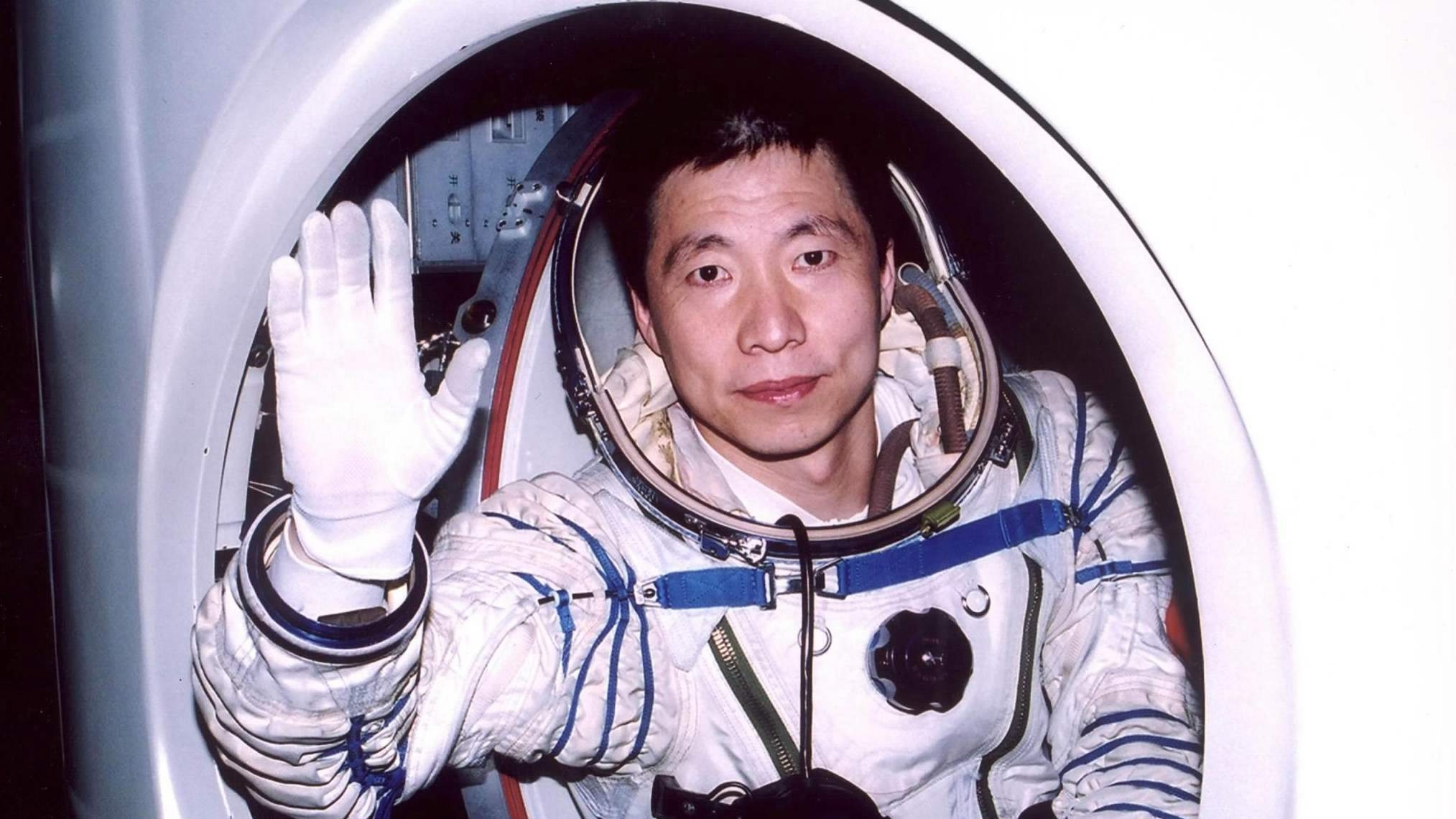
Yang Liwei, deputy director of the China Manned Space Engineering Office and China's first astronaut to go into space /VCG Photo
Yang Liwei, deputy director of the China Manned Space Engineering Office and China's first astronaut to go into space /VCG Photo
The second-batch selection started in May 2009, and seven were picked, two of whom were female. They were also made up of pilots from the air force with an average age nearly 10 years younger than the first batch.
Experts said the new taikonauts should have exemplary skills, and the ones selected should excel in their roles, exhibit rich knowledge and be psychologically and physically fit. They are also expected to be outstanding professionals and be capable of working efficiently in space.
For Chinese astronauts, missions are always more important than life. Click here to see life-threatening moments they went through during their missions.
(Top image credit: VCG Photo)