
Space
20:58, 09-May-2018
China launches first self-made satellite that can monitor air pollution
 ["china"]
Share







Copied
00:59
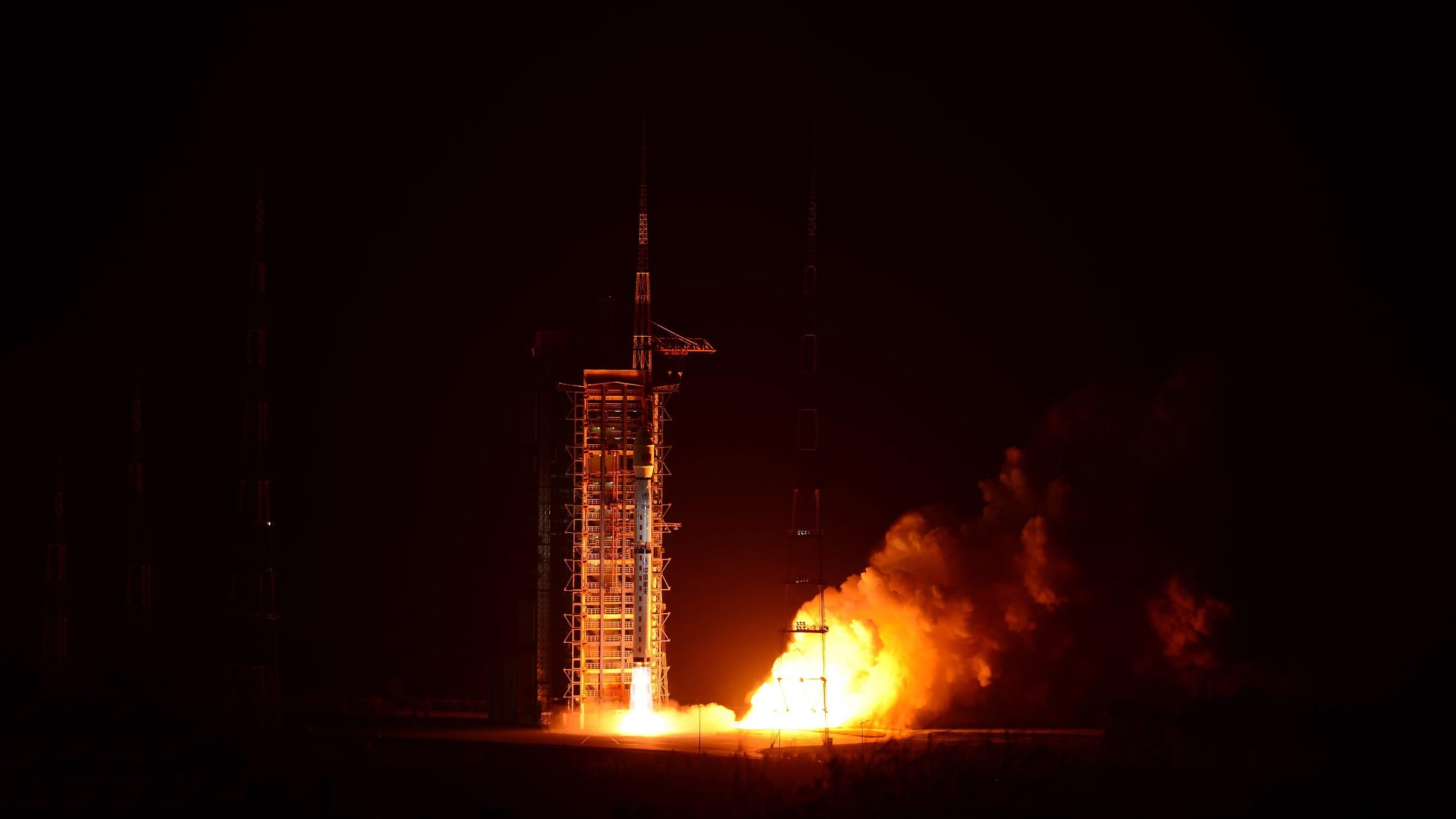
China on Wednesday launched Gaofen-5, a hyperspectral imaging satellite, as part of the China High-resolution Earth Observation System (CHEOS) project.
Gaofen, which means high-resolution, is a short name for the CHEOS project.
Different from its predecessors, the Gaofen-5 adopts hyperspectral imaging technology, which enables it to obtain spectral information from ultraviolet to long-wave infrared radiation.
Since various elements and compounds have their own spectral signatures, such technology actually makes it possible for the satellite to identify things and analyze their components, while optical imaging can only help recognize objects’ shapes and sizes.
Therefore, the Gaofen-5 can be used for comprehensive observation of the atmosphere and land, and is especially helpful in air pollution monitoring.
According to Tong Xudong, chief designer of the Gaofen series, by monitoring air pollutants, greenhouse gases and aerosols, the Gaofen-5 is able to dynamically reflect the atmosphere condition in China.
It will also provide reliable data for China’s resource exploration and disaster prevention and relief, said Wang Qiao, an official from the Ministry of Ecology and Environment.
Since the launch of the first Gaofen satellite in 2013, the data the CHEOS provided have been applied to areas including geographical mapping, environment protection, precision agriculture and so forth.
China will launch Gaofen-6 later this year, in a bid to form a constellation with other Gaofen satellites in orbit.