
Politics
22:32, 27-Aug-2018
Trump to meet Kenyatta with trade, security topping agenda
Updated
21:33, 30-Aug-2018
 ["china"]
Share







Copied
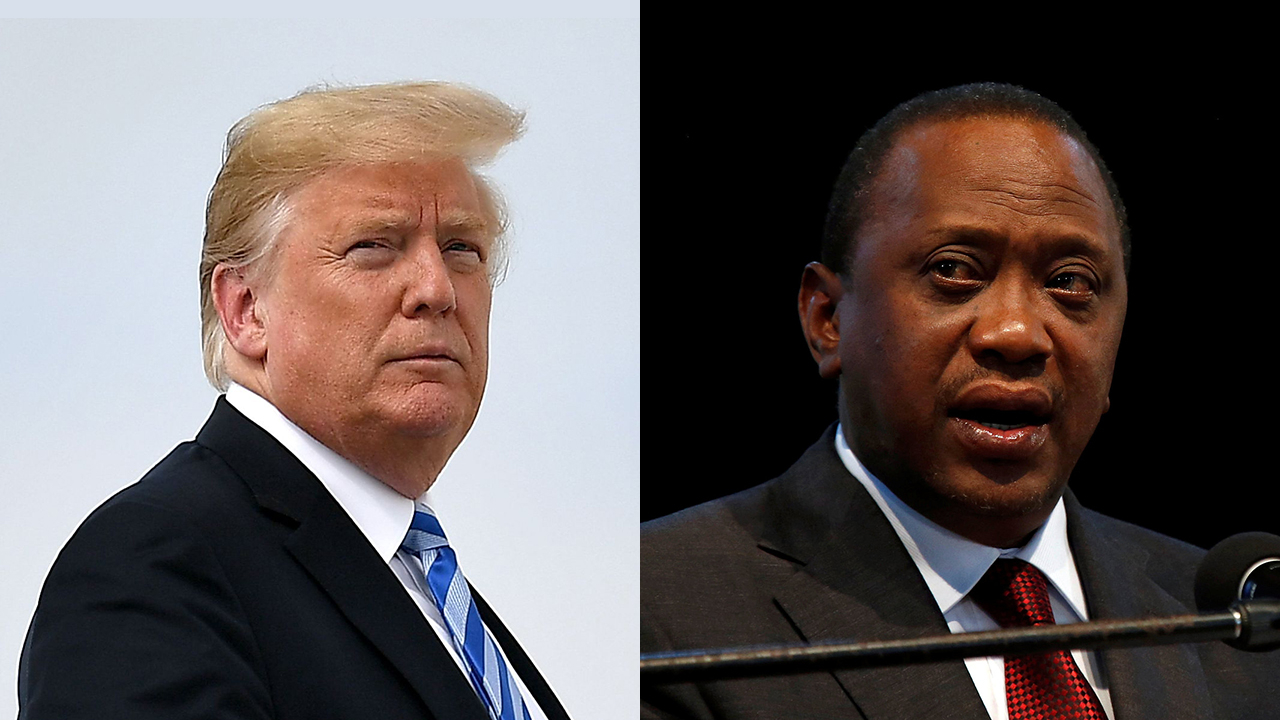
Kenyan President Uhuru Kenyatta will meet with US President Donald Trump on Monday, focusing on trade and regional security, according to Kenyatta's office.
Kenya is the third highest recipient of US security aid in sub-Saharan Africa, according to the Security Assistance Monitor.
Kenyatta is the second African leader to meet with Trump at the White House.
Kenya's Foreign Affairs Cabinet Secretary Monica Juma said in an interview that President Kenyatta's visit to the US is significant in many aspects."It underscores the importance of Kenya-US relations, a relationship that is historical and that has been growing in both breadth and depth over the years to cover a wide range of areas from security and defense to governance, trade and investment."
"The meeting between the two leaders will reaffirm the long-standing relationship between the United States and Kenya as a cornerstone of peace and stability in Africa and the broader Indo-Pacific region," Trump's press secretary Sarah Sanders said in a statement, according to the East African.
US-Kenya economic ties
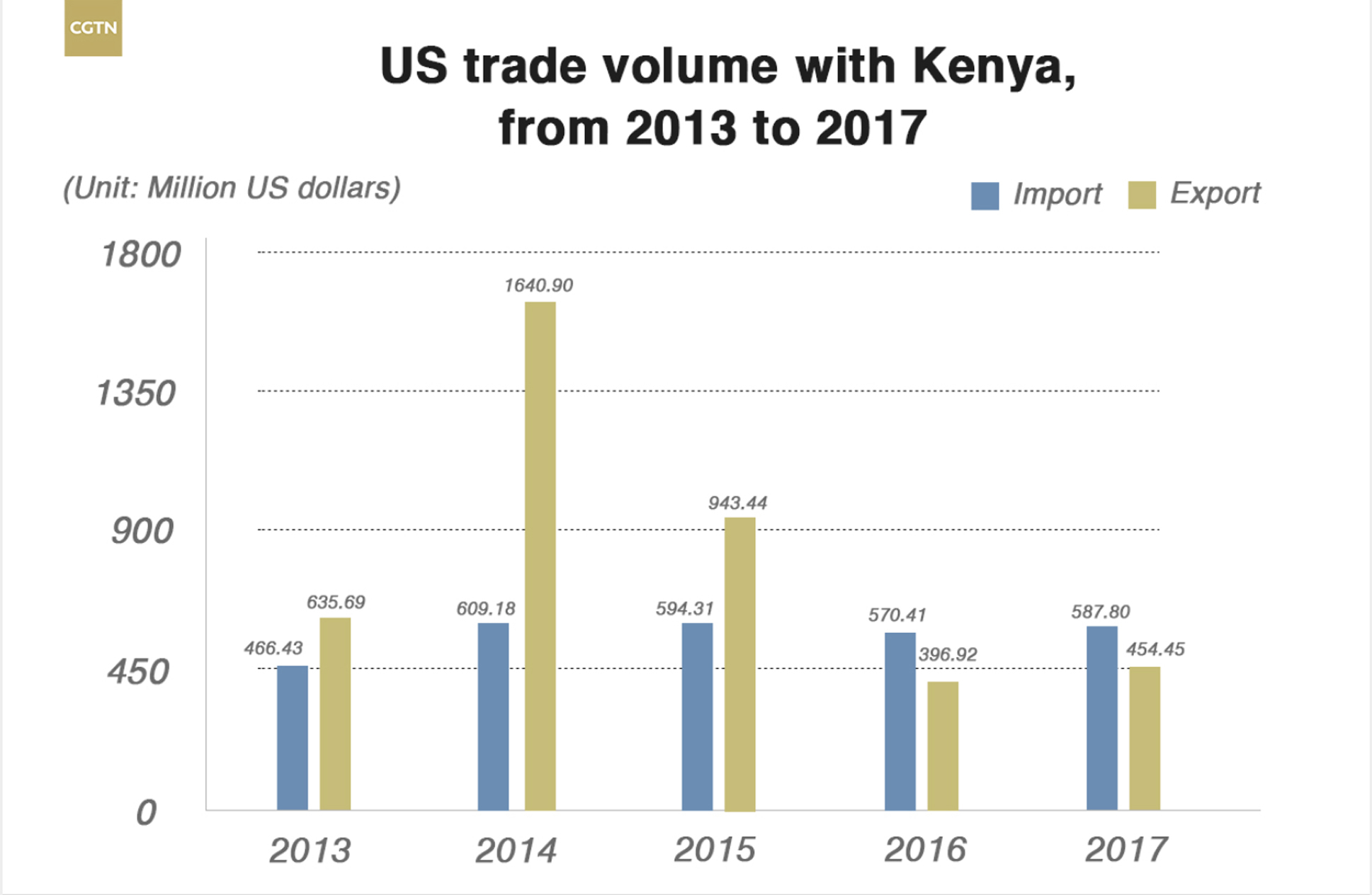
During his Washington visit, Kenyatta is also meeting with US business leaders to promote investment.
CGTN Photo
CGTN Photo
"Now America is looking towards Africa. It is not us who looked to the East. It is America that had ignored Africa. They admit that they had not looked to Africa as a trade partner, but now they are," Kenya's ambassador to the US Njeru Githae said, reports KTN News.
According to the US Census Bureau, Kenya has sold goods valued at 256 million dollars (Sh25.6 billion) to the US this year, mainly clothing under this arrangement through Agoa (African Growth and Opportunity Act).
Kenya-US relations 'different' under Trump
The US and Kenya "have mutual interests that are not going to change," Kenya's deputy chief of mission to the US David Kahiro Gacheru said following Trump's inauguration in January 2017. "This is the basis for us to continue working together."
Then Trump spoke with Kenyatta later in March 2017, his fourth phone call with an African leader since taking office, showing the appreciation for Kenya's significant contributions to the African Union Mission in Somalia.
The US president also congratulated Kenyatta on his re-election and the country for conducting "a peaceful, fair and transparent contest," praising Kenyatta on his win to a second term on August 2017.
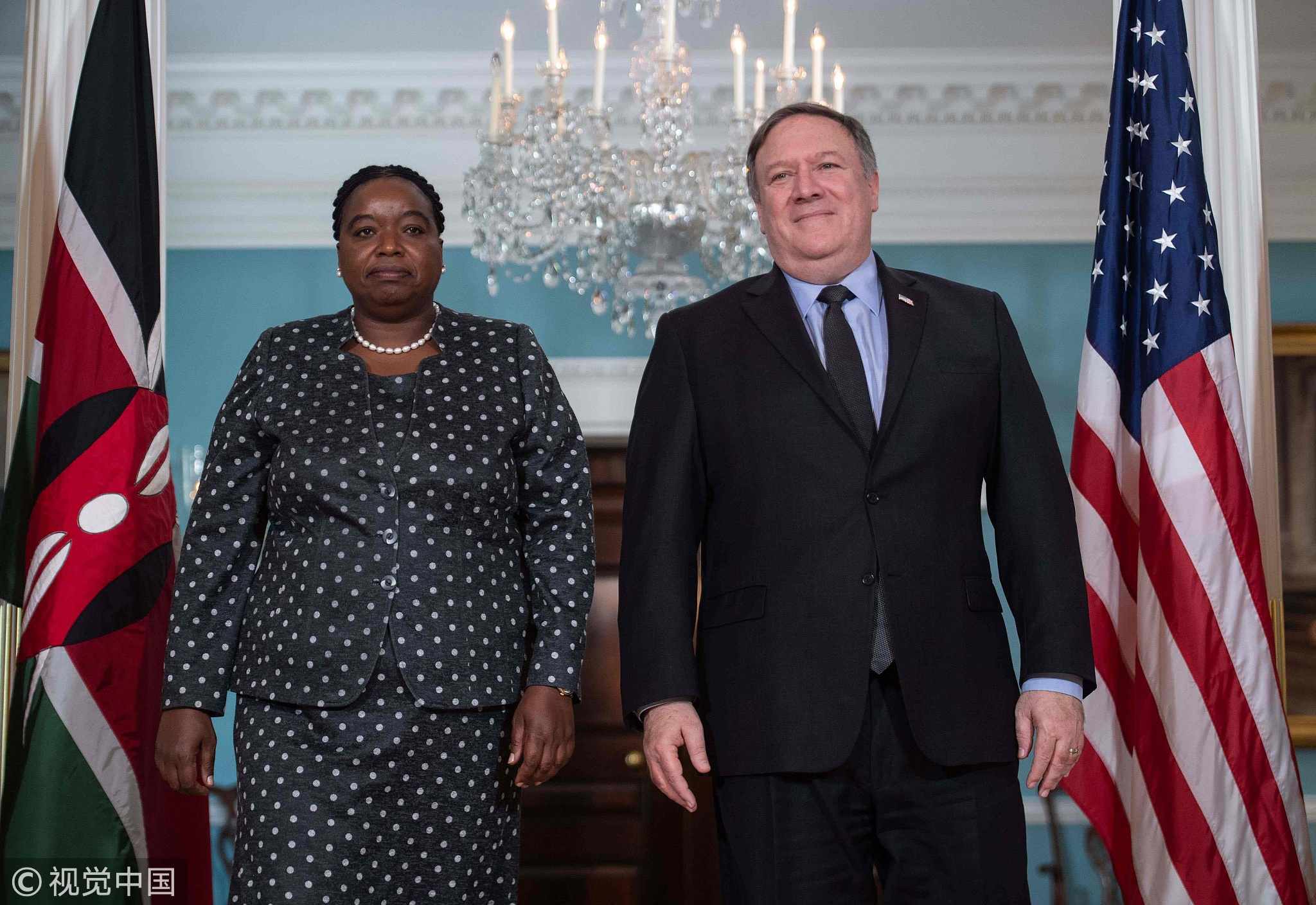
US Secretary of State Mike Pompeo (R) and Kenyan Foreign Minister Monica Juma arrive for a photo opportunity prior to talks at the State Department in Washington, DC, August 23, 2018. /VCG Photo
US Secretary of State Mike Pompeo (R) and Kenyan Foreign Minister Monica Juma arrive for a photo opportunity prior to talks at the State Department in Washington, DC, August 23, 2018. /VCG Photo
This year in March, US Secretary of State Rex Tillerson met with Kenyatta in Nairobi and hailed the political reconciliation between Kenyatta and opposition leader Raila Odinga as "a positive step toward healing Kenya's ethnic and political divisions."
"The US will seek to work with African nations, providing them with incentives to improve governance and meet their long-term security and development goals," Tillerson added.
Three months earlier, US Secretary of State Pompeo called Kenyan President Kenyatta to affirm US support for Kenya's security and continued economic advancement. The two also vow to work together to hasten the end of the conflict in South Sudan and ensure continued support for AMISOM (African Union Mission to Somalia) forces in Somalia.
However, though Trump has been president for more than a year, under the backdrop of "America first," there still seems to be no clear policy on Africa.
The Kenyatta's visit may work in strengthening US ties with Africa as Trump appears to be moving to mend fences with the continent he reportedly described as a collection of "sh**hole" countries on Jan. 11.
Kenya focuses on regional integration
Kenyatta's November 2017 inaugural address implied the basis of his foreign policy as he mentioned economic ties, regional peace, and the free movement of people.
Monica Juma, the Cabinet Secretary of Foreign Affairs and International Trades, has further confirmed that engaging in the neighborhood remains a cornerstone of Kenyatta's foreign policy orientation.

Kenya's President Uhuru Kenyatta (L) and Vice-President William Ruto shake hands after taking oath of office during the inauguration ceremony at Kasarani Stadium in Nairobi, Kenya, November 28, 2017. /VCG Photo
Kenya's President Uhuru Kenyatta (L) and Vice-President William Ruto shake hands after taking oath of office during the inauguration ceremony at Kasarani Stadium in Nairobi, Kenya, November 28, 2017. /VCG Photo
"President Kenyatta has repeatedly underscored the centrality of Africa in our foreign policy," Monica Juma said on Feb. 26 at the meeting with diplomats from Africa. She pointed out that Kenya will continue to enhance regional integration and Intra-African trade as a cornerstone for Africa's development and economic prosperity.
The country has also commenced a global mapping exercise to gainleverage on the implementation of the Big Four, namely food security, universal healthcare, decent housing and manufacturing.
(CGTN's Su Chen also contributed to the story)