
Opinions
10:50, 14-Aug-2018
Opinion: Trump may freak out about these figures
Updated
10:16, 17-Aug-2018
 ["china","north america"]
Share







Copied

Editor's note: The article is translated and edited from an analysis originally published on the WeChat official account, Zhan Hao, which focuses mainly on analyzing international affairs. It reflects the author’s views, and not necessarily those of CGTN.
Donald Trump vowed to launch a trade war to reduce the US trade deficit, attack the “Made in China 2025” national plan, and even attempt to cause major disruptions to China’s economy. After one month of the trade war, let’s take stock of Trump’s “spoils” that he may show off.
According to China's customs statistics, China’s foreign trade did very well in July as compared to previous months, with imports and exports totaling 2.6 trillion yuan in July, up 12.5%. Exports grew by 6% and imports by 20.9% from a year earlier.
Comparing bilateral imports and exports between China and the US in the first half of the year and in January-July respectively, we can see that China-US trade continues to weaken.
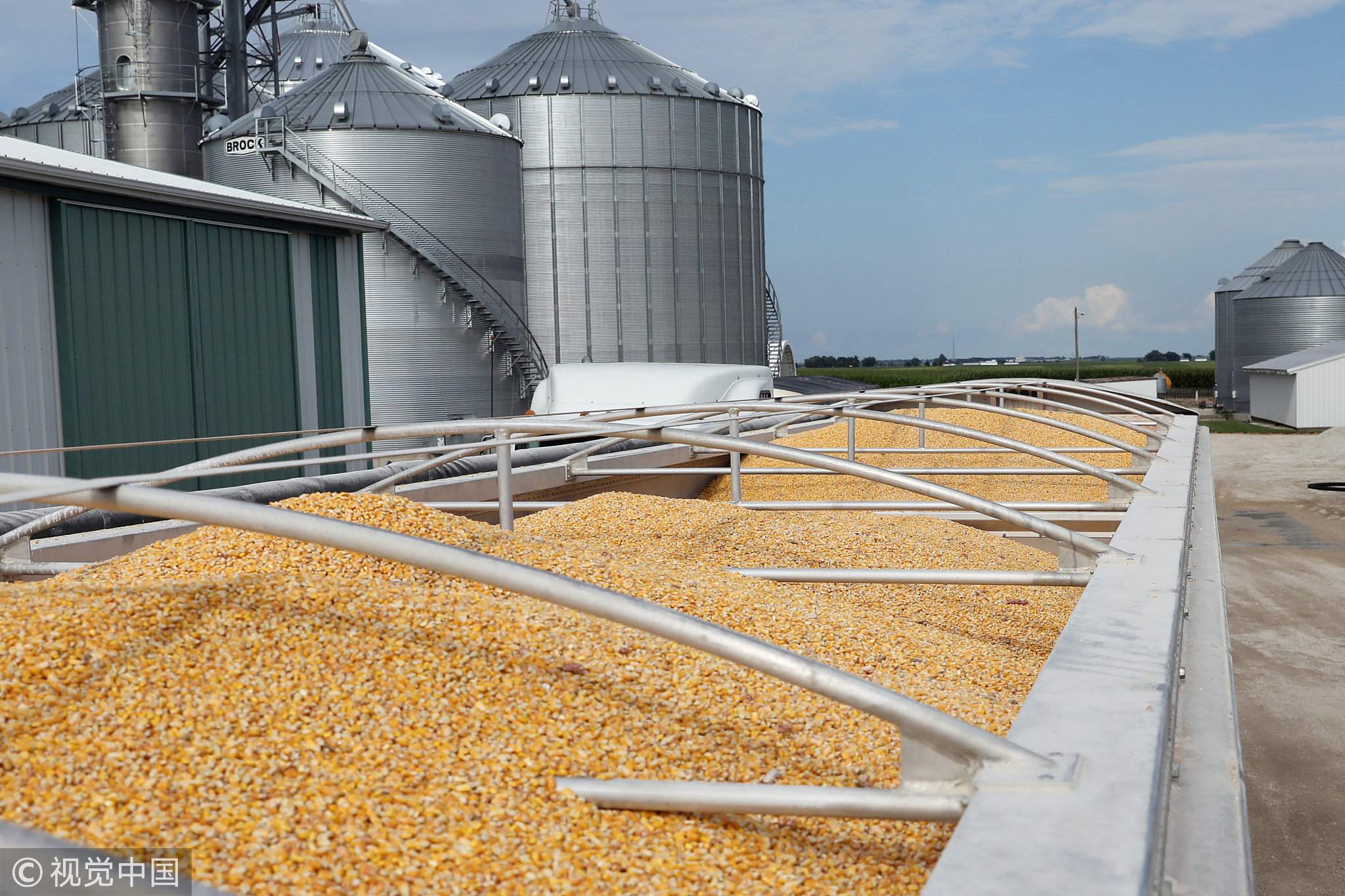
Corn at Wessling Farms near Grand Junction, Iowa, July 5, 2018. /VCG Photo
Corn at Wessling Farms near Grand Junction, Iowa, July 5, 2018. /VCG Photo
In renminbi terms, China’s US imports and exports in the first half of the year were 1.93 trillion yuan, up 5.2% from the same period last year, with 1.39 trillion yuan in exports, up 5.7%, and 537.97 billion yuan of imports, a rise of 4%. The US remains China’s second largest trading partner, accounting for 13.7% of the total value of China’s foreign trade.
In the first seven months, the total value of China-US trade was 2.29 trillion yuan, up 5.2%, 1.66 trillion yuan of which represented China’s exports to the US, a jump of 5.6%, and 625.01 billion yuan China’s imports from the US, up 4.3%. China’s trade surplus with the US totaled 1.04 trillion yuan, an increase of 6.4%.
In the first half of the year, China’s foreign trade with the US averaged 321.7 billion yuan per month, with exports averaging 231.7 billion yuan and imports averaging 89.7 billion yuan. In comparison, China’s foreign trade with the US totaled 360 billion yuan in July. The exports exceeded 270 billion yuan and the imports totaled 87 billion yuan, resulting in a trade surplus of more than 180 billion yuan in China’s favor.
That means an average increase in yuan-denominated trade with the US in July as compared to the first half of the year, with much of the growth coming from exports, mainly due to a weaker yuan. However, US exports to China have declined as a result of the trade war, leading to an increase in the US trade deficit with China. That is to say, this trade war game between China and the US has greatly affected the growth rate of China-US trade, especially in US exports to China.
But in July alone, one month into the trade war, China’s exports to the US as a whole were about the same as in the first half of the year, with total exports to the US rising 38.3 billion yuan in July from the monthly average of the first half of the year. That is to say, the US keeps buying from China despite the ongoing trade war.
The US continues buying “Made in China,” but China is trying to wean itself from “Made in America” in some fields. In July 2018, China drastically slashed its imports of US soybeans and natural gas. According to China's latest customs statistics, China imported 8.005 million tons of soybeans in July and 52.878 million tons in January-July, down 3.7% compared with the same period last year.
Recently, China has significantly increased soybean imports from Brazil. According to figures of the Brazilian government, China imported 7.97 million tons of soybeans from Brazil in July alone or 80% of the total soybean imports of China in the month.
China’s soybean demand is estimated to be declining, with 95 million tons expected to be imported in 2018. Since 60.883 million tons were already imported in January-July, there is a shortfall of 34 million tons. Brazil has more than 20 million tons left this year, all of which are expected to be consumed by China.
There is no doubt that Brazil has become the biggest winner in the China-US trade war in the field of soybeans.
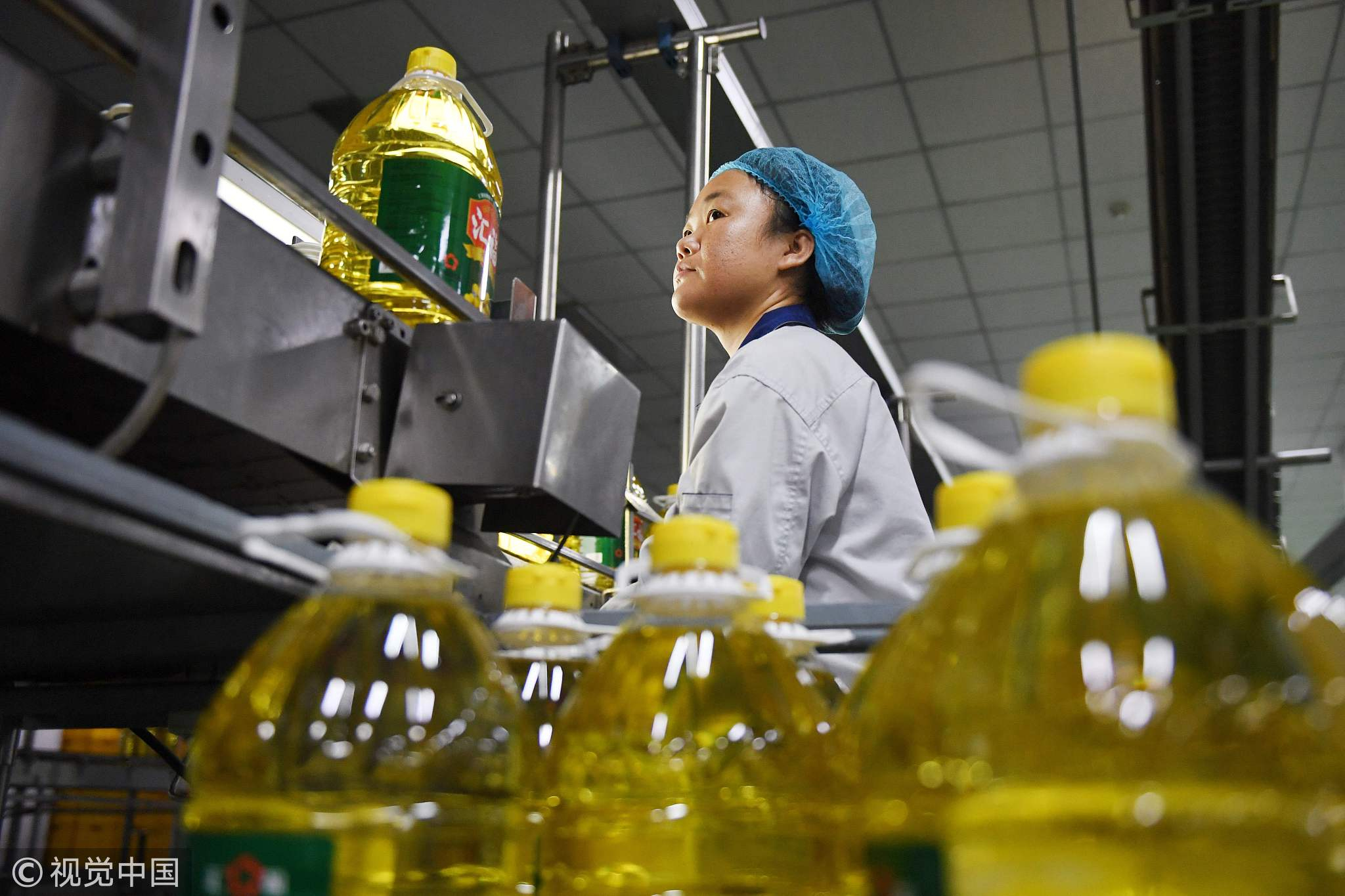
A worker monitoring a soybean oil production line at the Hopeful Grain and Oil Group factory in Sanhe, Hebei Province, China, July 19, 2018. /VCG Photo
A worker monitoring a soybean oil production line at the Hopeful Grain and Oil Group factory in Sanhe, Hebei Province, China, July 19, 2018. /VCG Photo
Since the beginning of this year, US soybean prices have fallen more than 20%, while the average prices of soybeans in China are about the same. In other words, the overall supply and demand, as well as the prices of soybeans in China, are stable, while the prices of US soybeans have plummeted as a result of the trade war, causing some 4-5 billion dollars in losses to US soybean farmers.
Trump has been trying to use 12 billion dollars of subsidies to compensate those farmers, but they just don’t buy it. They know very well that the loss of market share in China far outweighs the subsidies, and the lost market share will be extremely difficult to recover.
Because of the trade war, the US soybean industry is losing out, and the other big loser should be American energy companies. Shipping data from Reuters showed that US sales of liquefied natural gas (LNG) to China in July fell to 130,000 tons, a one-year low, and this is only about one-third that of May 2018. Meanwhile, LNG supplies to China from Australia, Malaysia, Indonesia, Russia and Papua New Guinea increased in July.
In order to address air pollution, China has greatly increased the energy substitution of natural gas for coal in the past decade. As a result, the consumption of natural gas is increasing rapidly, so is China’s import of natural gas.
According to statistics, in 2017 alone, China’s import of natural gas reached 92.6 billion cubic meters, while China’s natural gas consumption in the same period is as high as 235.2 billion cubic meters (a 15.3% increase year-on-year), which is far more than what China’s domestic natural gas production can supply.
Therefore, China’s demand for natural gas imports will inevitably continue to increase. But the share of the US in China’s natural gas market is rapidly dwindling because of the trade war.
Trump launched the trade war against several countries in the disguise of reducing US trade deficit. So is the deficit really shrinking? According to the US Department of Commerce, the US trade deficit increased by 3.1 billion dollars, up from 43.2 to 46.3 billion dollars. Compared with May 2018, US imports increased by 1.6 billion dollars to 260.2 billion dollars, while its exports fell by 1.5 billion dollars to 213.8 billion dollars in June.

Ford Motor Co. vehicles stand on display at a Ford dealership in Shanghai, China, July 19, 2018. /VCG Photo
Ford Motor Co. vehicles stand on display at a Ford dealership in Shanghai, China, July 19, 2018. /VCG Photo
The US trade deficit with China rose 0.5% to 33.5 billion dollars in June; with Mexico, 10.5% to 7.4 billion dollars; and with Canada, by 39.7% to 2 billion dollars. The US trade deficit in goods with China further widened in the first half of the year, rising 9% from a year earlier to 185.7 billion dollars, according to a report released by the US State Department’s US-China Economic and Security Review Commission on August 6.
That is to say, despite all the fuss and maneuvers made by Trump in the past six months, the US trade deficit has actually increased, which was completely unexpected by Trump when he launched the trade war.
The fierce trade dispute with China has essentially had little impact on China’s macro economy and foreign trade, but the US has ceded some of its market share in China to European countries, Japan and other developed countries, and has dampened its economic influence in China.
The trade war with China was started and imposed by the Trump administration in an attempt to force China to yield to bullying, thwart its industrial upgrading and economic transformation, arrest the development of the “Made in China 2025” national plan, and interrupt the process of the great rejuvenation of the Chinese nation.
Instead of yielding, China will meet the challenge head-on, not just because this is the right thing to do, but this is the least costly option for China and the most costly and undesirable option for the US.
(Cover photo: American farmer Terry Davidson displays one of his soybeans in Harvard, Illinois, July 6, 2018. /VCG Photo)