
World
08:48, 06-Jul-2018
Japan sarin attack cult leader executed
Updated
08:27, 09-Jul-2018
 ["china"]
Share







Copied

Shoko Asahara, the leader of the Aum Shinrikyo cult that carried out a deadly sarin attack on Tokyo's subway in 1995, was executed on Friday, local media reported.
The justice ministry later confirmed the reports.
Asahara had been on death row for over a decade for the attack that killed 13 people and injured thousands more. His hanging was the first execution of any of the 13 cult members for the 1995 attack and other crimes.
The March 20, 1995 incident shocked the world and prompted a massive crackdown. It paralyzed the Japanese capital, turning it into a virtual war zone as injured people staggered out of the underground struggling for breath with watery eyes.
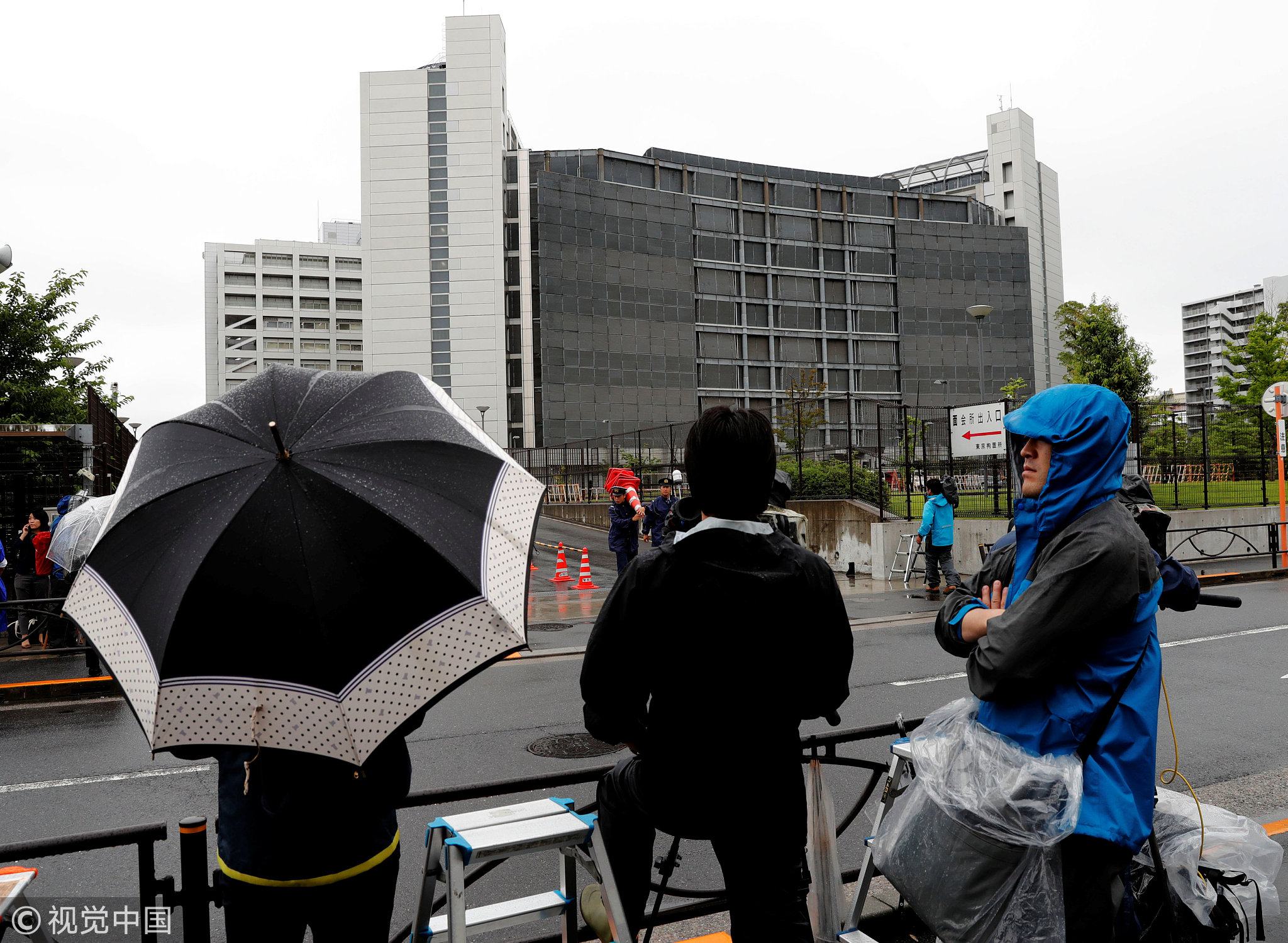
Journalists stand in front of the Tokyo Detention Center where former leader of Aum, the Japanese doomsday cult, Chizuo Matsumoto, who went by the name Shoko Asahara, was executed, in Tokyo, July 6, 2018. /VCG Photo
Journalists stand in front of the Tokyo Detention Center where former leader of Aum, the Japanese doomsday cult, Chizuo Matsumoto, who went by the name Shoko Asahara, was executed, in Tokyo, July 6, 2018. /VCG Photo
Some keeled over, foaming at the mouth, with blood streaming from their noses, as the rush hour attack unfolded.
Asahara was born Chizuo Matsumoto in 1955 on the southwestern island of Kyushu and changed his name in the 1980s, when the Aum cult was being developed.
Virtually blind, he was seen as a charismatic speaker who cloaked himself in mysticism to draw recruits to the doomsday cult he developed in the 1980s.
Asahara, who founded Aum in 1987, said that the US would attack Japan and turn it into a nuclear wasteland. He also said he had traveled forward in time to 2006 and talked to people then about what World War Three had been like.
At its peak, the cult had at least 10,000 members in Japan and overseas, including graduates of some of Japan's top universities.
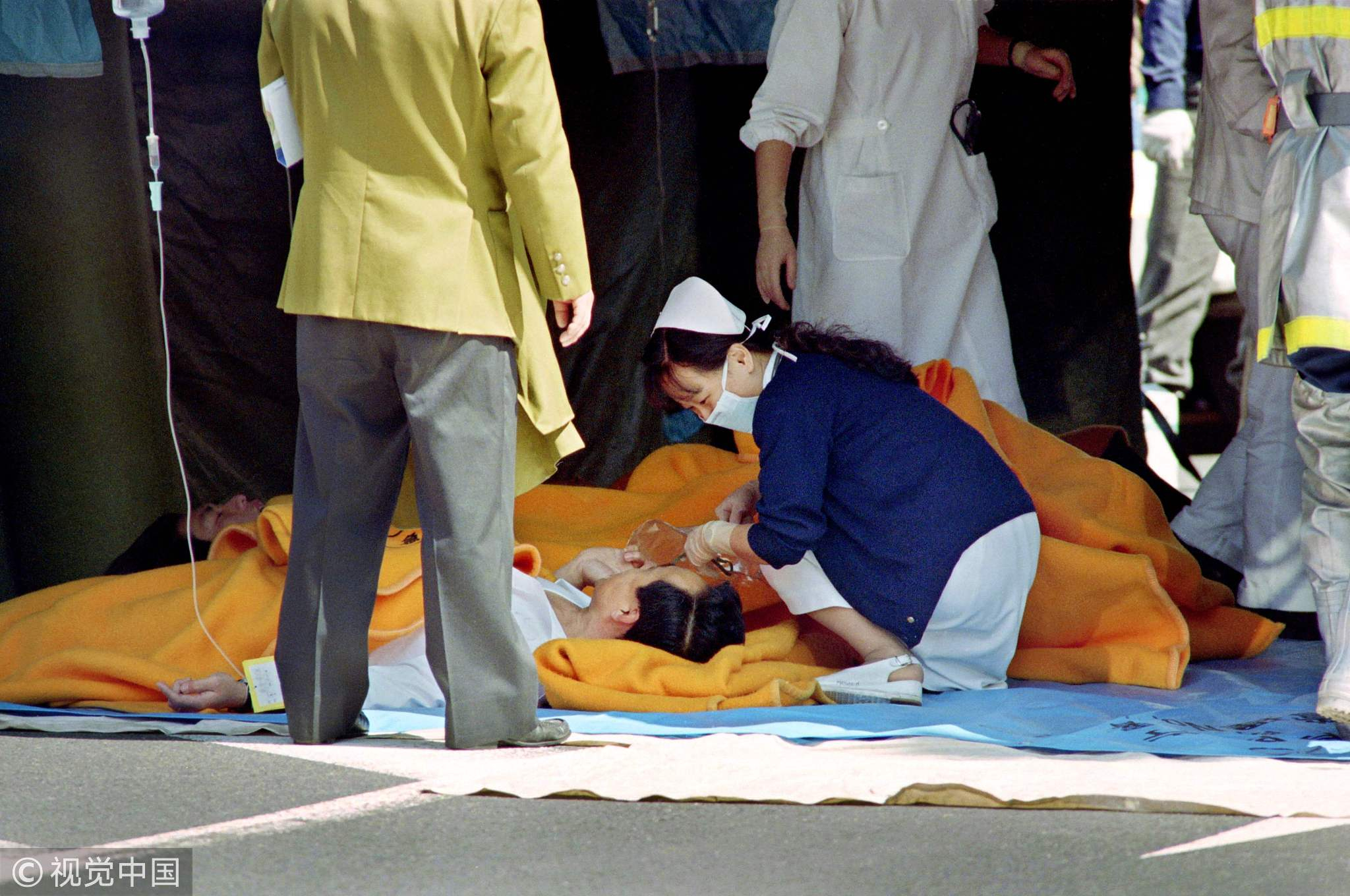
This file photo taken on March 20, 1995, shows a commuter being treated by an emergency medical team at a makeshift shelter before being transported to hospital after being exposed to sarin gas fumes in the Tokyo subway system during an Aum sect attack. /VCG Photo
This file photo taken on March 20, 1995, shows a commuter being treated by an emergency medical team at a makeshift shelter before being transported to hospital after being exposed to sarin gas fumes in the Tokyo subway system during an Aum sect attack. /VCG Photo
Some members lived in a commune-like complex Asahara established at the foot of Mount Fuji, where the group studied his teachings, practiced bizarre rituals and gathered an arsenal of weapons, including sarin.
The cult also used the gas in 1994, releasing it in the central city of Matsumoto on a summer night in an attempt to kill three judges set to rule on a case against it.
That attack, which involved a refrigerator truck releasing the gas to be dispersed by the wind through a neighborhood, failed to kill the judges but killed eight other people and injured hundreds.
The Aum cult, now renamed Aleph, officially disowned Asahara in 2000, but it was never banned.
Experts say the former guru retained a strong influence, with some members using pictures of him and recordings of his voice for meditation.
Source(s): AFP