
Animal
21:15, 10-Jul-2018
City development vs. animal dwelling: Cyprus clifftop villas raise fears for endangered seals
Updated
20:46, 13-Jul-2018
 ["china"]
Share







Copied
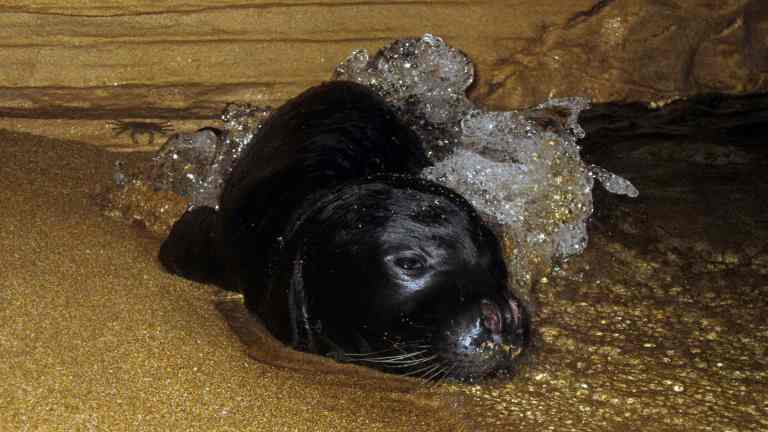
In a string of caves along the coast of Cyprus, a colony of monk seals – the most endangered mammals in the Mediterranean – has found refuge.
But now environmentalists and residents are accusing developers of endangering the seals' habitat, by building luxury villas on top of the caves.
Numbering only around 300 in the Mediterranean, they were named "monk seals" in the late eighteenth century by a scientist who thought they bore a resemblance to a monk dressed in a hood.
Most are found in Greek waters. But tucked under white rocks by the town of Peyia in southwest Cyprus, caves provide sanctuary to some of the seven to 10 monk seals found in Cypriot waters, according to the government.
Standing on a coastal path, Peyia resident Mandie Davies pointed to a construction site of six part-finished villas – which she referred to as "monstrosity" – above the caves.
One of the building projects is around 25 meters from the shore, lamented Peyia mayor Marinos Lambrou – one of many to oppose a government green light for the villas.
'Crucial for the ecosystem'
Monk seals are crucial "for the ecosystem's balance," said Melina Marcou, a government scientist who swims in the caves and monitors the creatures with hidden cameras.
But the seals' habitat is so sensitive, Marcou has urged the public to avoid the caves.
Their numbers diminished through centuries of being disturbed by fishermen, and the mammals abandoned beaches over-exploited by humans.
More recently, urbanization and tourism have been the key drivers of the seals' decline, said Marie-Aude Sevin, who works for the International Union for Conservation of Nature, an authority on monk seals and their numbers.
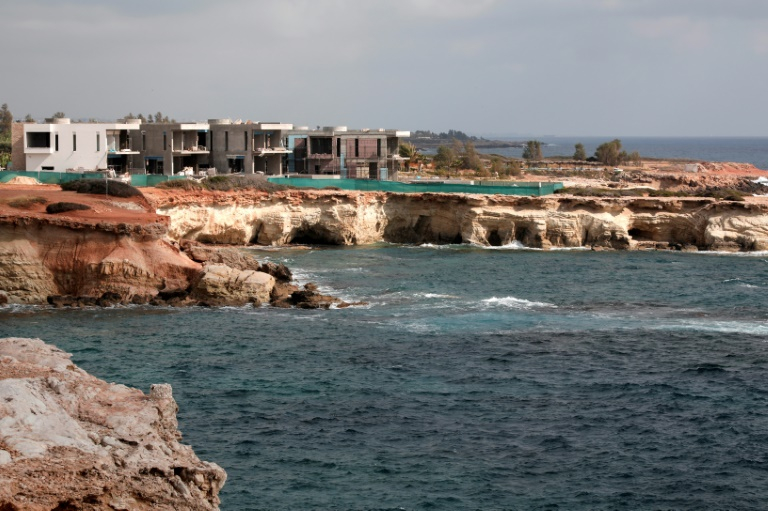
Environmentalists and residents are accusing developers of endangering the seals' habitat, by building luxury villas on top of the caves. /AFP Photo
Environmentalists and residents are accusing developers of endangering the seals' habitat, by building luxury villas on top of the caves. /AFP Photo
Cypriot law provides for a protection zone stretching 91 meters back from the shore, slightly less than the 100 meters recommended by the UN and EU.
But the Environment Ministry says even the government's own rule does not apply to the six villas – a position contested by scientists and ecologists.
A source close to the case said the Environment Ministry approved the villas on the basis of outdated maps.
This meant it failed to take into account the effect of erosion, working on the basis that the plots are further from the shore than in reality, the source added.
Another expert, Klitos Papastylianou from the Initiative for the Protection of the Natural Coastline, alleged that there was no adequate environmental impact study during the planning process, contravening an EU directive.
For Linda Leblanc, a municipal councilor in Peyia, the villas are a "terrible testament to the failure" of the government's environmental policy.
On the other hand, the Environment Ministry said that all relevant "environmental legislation was fully implemented and all ... requirements were fulfilled" ahead of granting a permit for the villas.
Developer Leptos Estates said the project has "all the necessary" permits.
EU passports, EU complaints
The EU confirmed that it is evaluating a complaint against the development.
Brussels has also censured Cyprus over "its failure to ensure adequate protection for indigenous habitats and species" in a separate infringement case.
Since joining the EU, Cyprus has been the subject of 109 environmental infringement cases, with deficient impact studies along the coast a particular bone of contention.
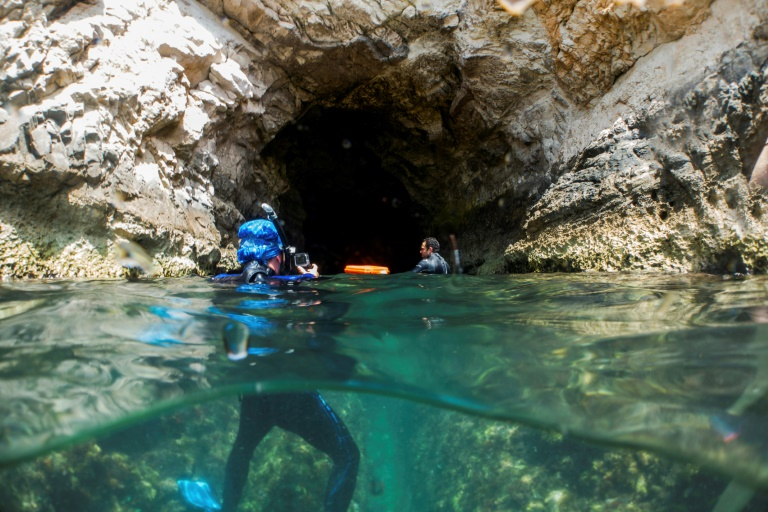
A marine biologist films as members of the Cypriot department of fisheries and marine research enter a cave to collect data from cameras they installed to observe the habitat of the endangered Mediterranean monk seal off the coast of Pegeia in western Cyprus, May 23, 2018. /AFP Photo
A marine biologist films as members of the Cypriot department of fisheries and marine research enter a cave to collect data from cameras they installed to observe the habitat of the endangered Mediterranean monk seal off the coast of Pegeia in western Cyprus, May 23, 2018. /AFP Photo
On the front page of its website, developer Leptos boasts of being able to obtain European citizenship for clients investing through the "Cypriot investment scheme."
The program was set up by Cyprus to attract investment after the financial crisis, with two million euros (about 2.3 million US dollars) plus value-added tax the minimum required to secure an EU passport.
The investment scheme has triggered significant construction in Peyia according to mayor Lambrou.
A second and much bigger project in Peyia by another developer, Korantina Homes, is also opposed by residents and environmentalists.
While further from the shore, it stretches along land close to the EU-protected marine zone and involves a hotel along with 44 luxury villas.
The Environment Ministry has given the green light to the project.
Councilor Leblanc and a second source alleged that part of the coast had already been destroyed as a result of construction activity by Korantina.
Korantina Homes said its proposed hotel is 350 meters from the sea and that its development is two kilometers away from where the seals live and breed.
"The seals are not in danger from our development", the company claimed.
For some experts, however, the work at Peyia is symbolic of a broader problem in Cyprus of sacrificing natural assets for development.
"Unfortunately, in Cyprus, when you say 'development' everybody looks at big building projects," said Charalampos Theopemptou, vice-chairman of parliament's environment committee.
"We don't look at sustainable tourism."
(Top image: A handout picture taken on November 10, 2011 and distributed by the Cypriot Department of Fisheries and Marine Research shows a baby Mediterranean monk seal sleeping in one of the sea caves along the coast of Pegeia in western Cyprus. /AFP Photo)
Source(s): AFP