
World
19:32, 05-Oct-2018
Romania referendum: Is there a backlash against gay marriage?
Updated
18:38, 08-Oct-2018
 ["europe"]
Share







Copied
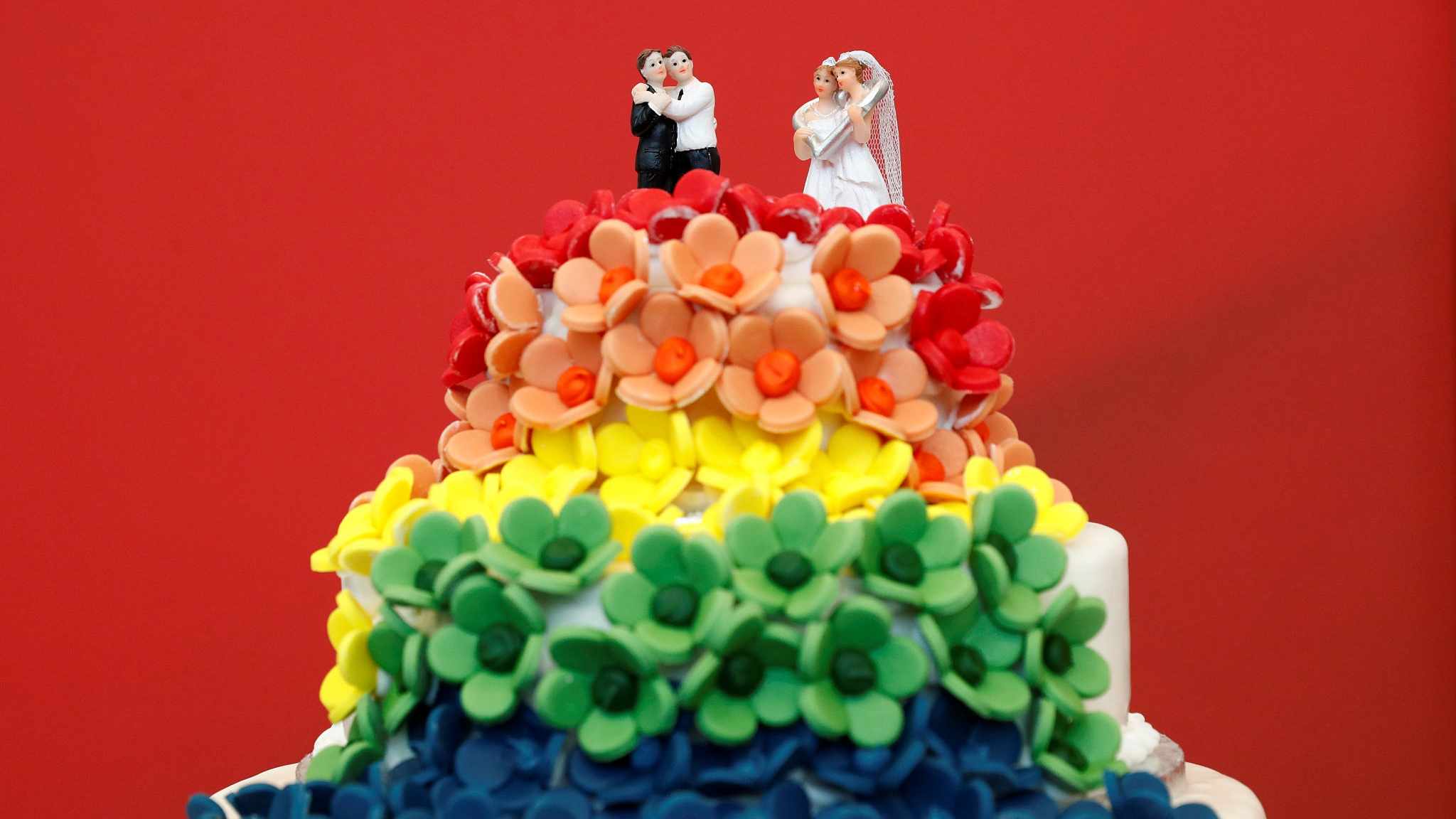
Romanians are due to vote this weekend on whether to change the constitution's definition of marriage, making it impossible for same sex couples to marry in the future, as critics warn of a worsening climate for gays in the country.
The proposal, which calls for marriage to be defined as a union exclusively between a man and a woman, has widespread support, including from the influential Orthodox Church and most major political parties.
This seems to go against the recent trend which has seen LGBT (Lesbian, Gay, Bisexual and Transgender) rights make major advances around the world and gay marriage become increasingly accepted.
So what is the current situation worldwide?
'Yes' to gay marriage
Same-sex marriage is legal in just under 30 countries worldwide and a dozen more allow civil partnerships for gay couples.
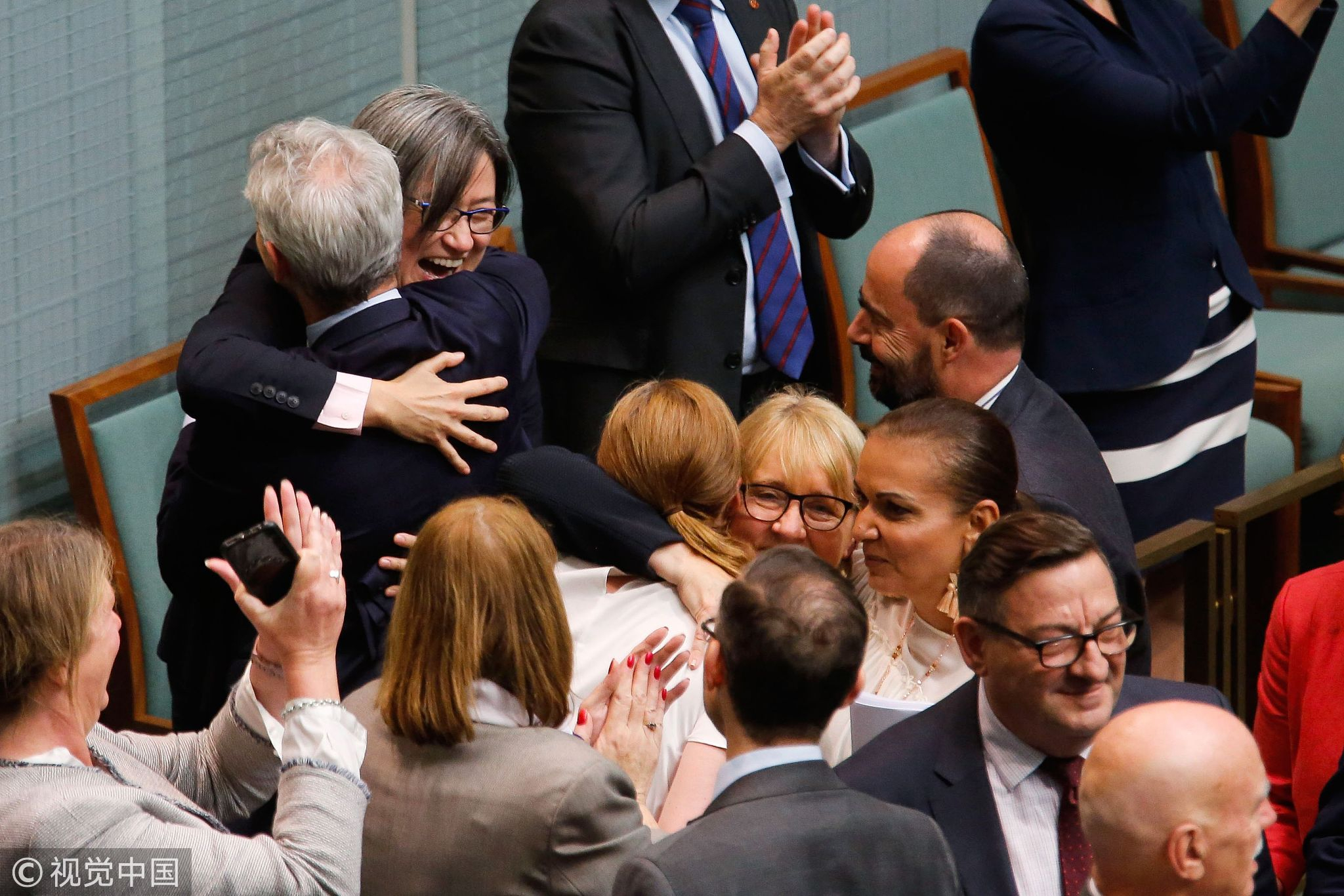
Senators hug after passing the same-sex marriage bill in the Federal Parliament in Canberra, Australia, December 7, 2017. /VCG Photo
Senators hug after passing the same-sex marriage bill in the Federal Parliament in Canberra, Australia, December 7, 2017. /VCG Photo
The Netherlands was the first country to kick off this trend in 2001 but some high-profile developments in the last few years have kept the issue front and center.
The US Supreme Court's decision to legalize gay marriage in June 2015, forcing 14 states to lift their bans, was greeted as a major victory for LGBT rights.
Ireland, once staunchly Catholic, also made headlines when it made same-sex marriage legal that same year. It was the first country to do so after a referendum.
Germany changed its policy in June 2017 after Chancellor Angela Merkel unexpectedly dropped her opposition to gay marriage. Within days the German parliament voted to legalize it and the first gay wedding took place on October 1, 2017.
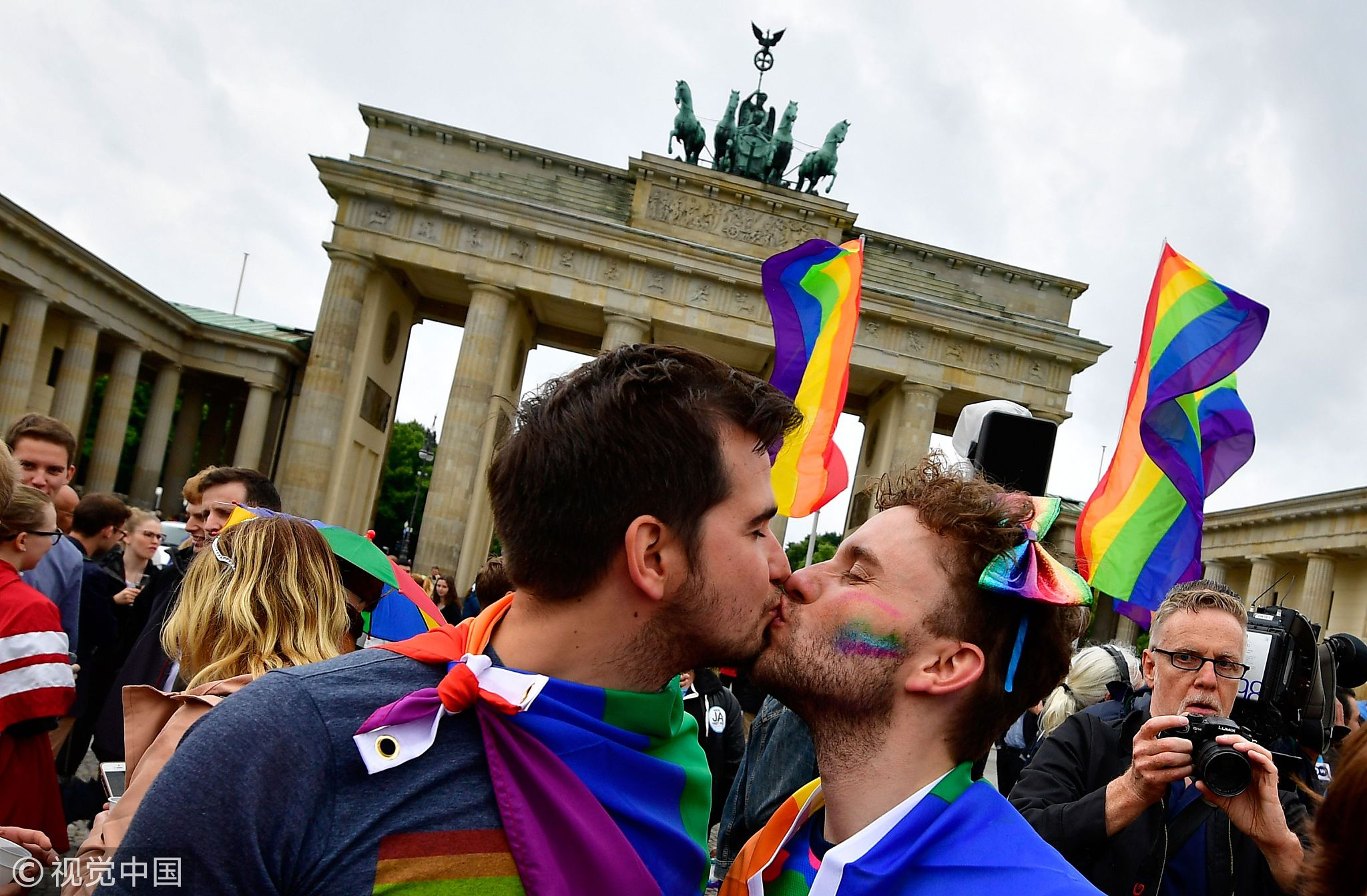
Two men kiss at a rally of gays and lesbians in front of the Brandenburg Gate in Berlin, June 30, 2017. /VCG Photo
Two men kiss at a rally of gays and lesbians in front of the Brandenburg Gate in Berlin, June 30, 2017. /VCG Photo
In Finland, same-sex marriage became legal in March 2017.
Most recently, Australia legalized gay marriage after Australians voted overwhelmingly in favor of it in a referendum in December 2017.
In the works
A few other countries and regions could soon follow in their footsteps.
Austria's constitutional court ruled in December 2017 that same-sex and opposite-sex couples should have equal rights to marry or have a civil partnership. Gay marriage could therefore become legal on January 1, 2019 if no new law is passed blocking it.

Alfred Kaine (L) and his husband John Guenther lead 14 same-sex couples after getting married at the town hall in Hamburg, Germany, October 1, 2017. /VCG Photo
Alfred Kaine (L) and his husband John Guenther lead 14 same-sex couples after getting married at the town hall in Hamburg, Germany, October 1, 2017. /VCG Photo
Costa Rica's Supreme Court had a similar ruling in August and set an 18-month deadline to change the law, after which gay couples will automatically be allowed to marry.
Cuba's National Assembly meanwhile approved in July a new constitution that defines marriage as "the consensual union of two people, regardless of gender," meaning same-sex marriage could soon become legal, if it is approved in a popular vote.
Fighting back
But amid the celebrations, there has also been a backlash.
Last year, Haiti's Senate passed a bill not only banning gay marriage, but making it punishable by up to three years in prison and a fine of up to 8,000 US dollars. The Senate president argued that homosexuality was a Western practice.
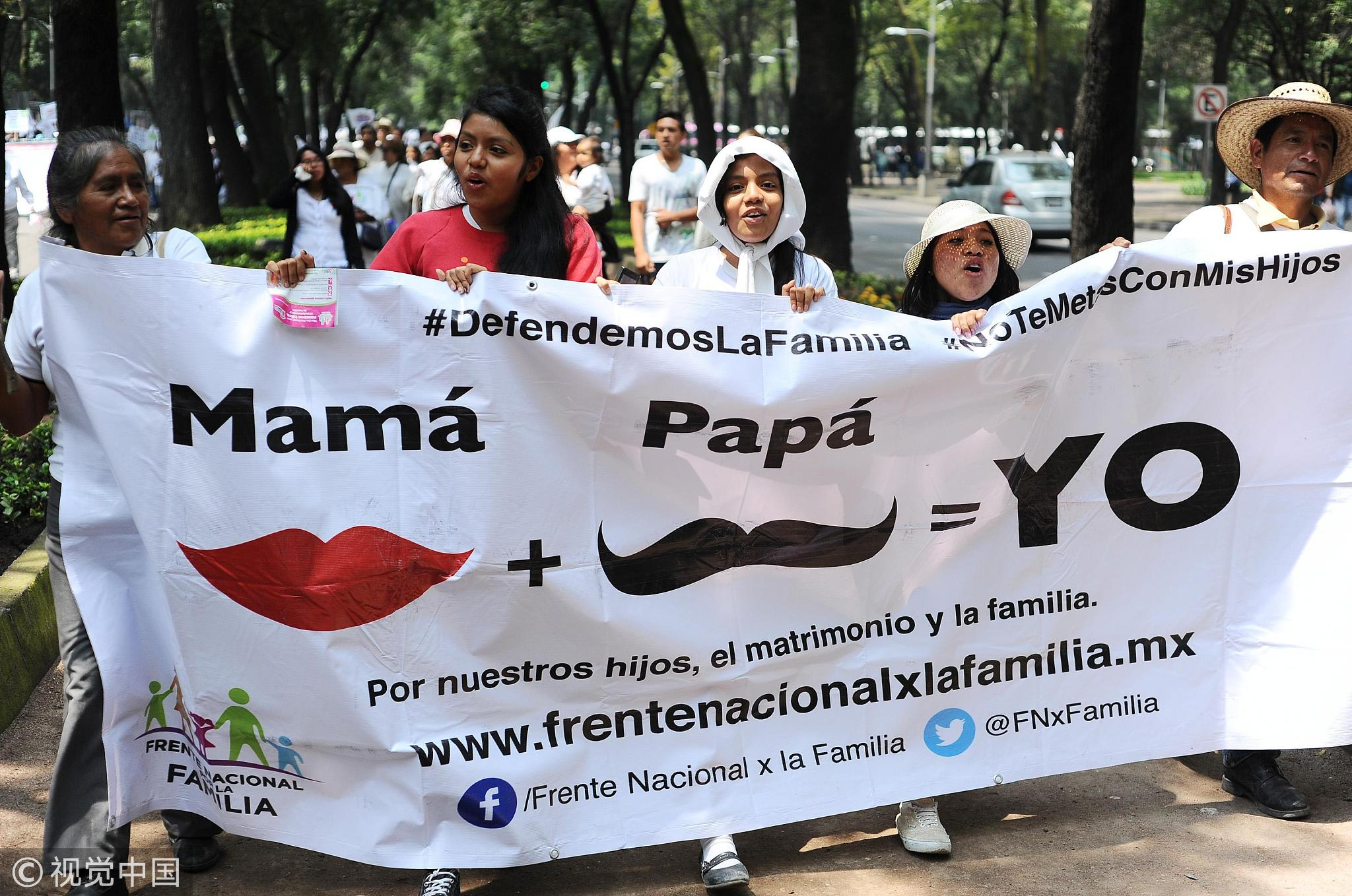
Members of National Front for the Family march against gay marriage in Mexico City, Mexico, September 24, 2016. /VCG Photo
Members of National Front for the Family march against gay marriage in Mexico City, Mexico, September 24, 2016. /VCG Photo
Croatia changed its constitution after a referendum in 2013 to say marriage was between a man and a woman, thus excluding same-sex couples, although it still allows civil partnerships.
Earlier this year, Bermuda became the first country in the world to overturn a law allowing same-sex marriage, although the Supreme Court later repealed that decision, making gay marriage in the island territory legal again.
Meanwhile, the far-right Freedom Party in Austria's government has floated the idea of defining marriage as a union between a man and a woman for the purpose of having children, in a bid to block gay marriage yet remain in line with the constitutional court's decision.
Romania's referendum
In Romania, gay couples are neither allowed to marry nor enter into a civil partnership, and the country also does not recognize same-sex marriages performed abroad.
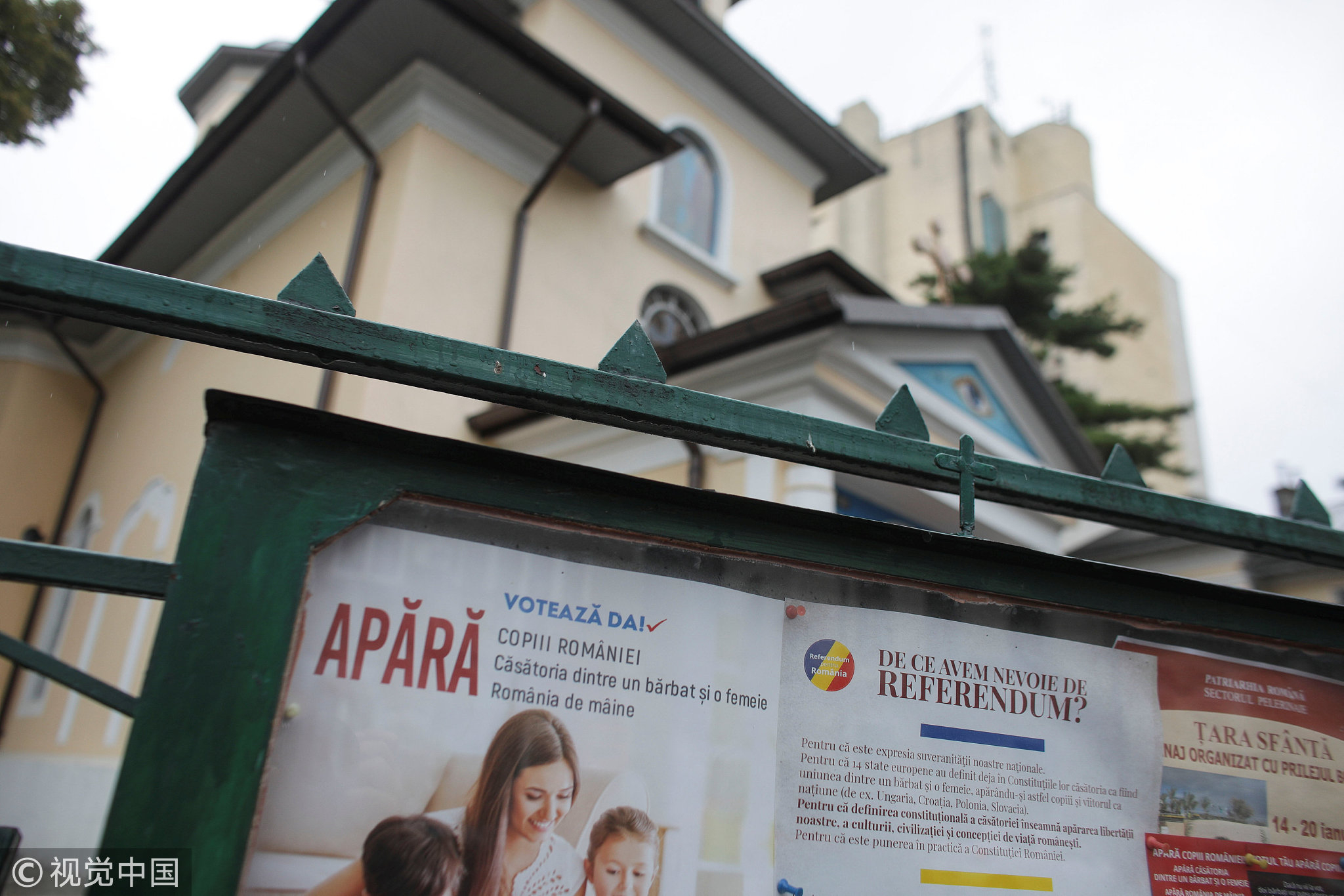
Posters urging Romanians to vote are displayed in front of an Orthodox church in Bucharest, Romania, October 1, 2018. /VCG Photo
Posters urging Romanians to vote are displayed in front of an Orthodox church in Bucharest, Romania, October 1, 2018. /VCG Photo
Now the LGBT community fears this weekend's referendum could lead to further discrimination. Already, harassment and hate speech against LGBT are rife in the country.
Ahead of the referendum, which was initiated by a group called the Coalition for the Family, campaign ads have warned voters that gay couples may steal or adopt their children.
The vote will be held over two days and will need 30 percent turnout to be valid.
But many already predict it will end with a "yes."
7071km