
Environment
15:38, 30-Apr-2019
Nepal's bringing down 3,000kg of waste from world's highest peak
 ["china"]
Share







Copied
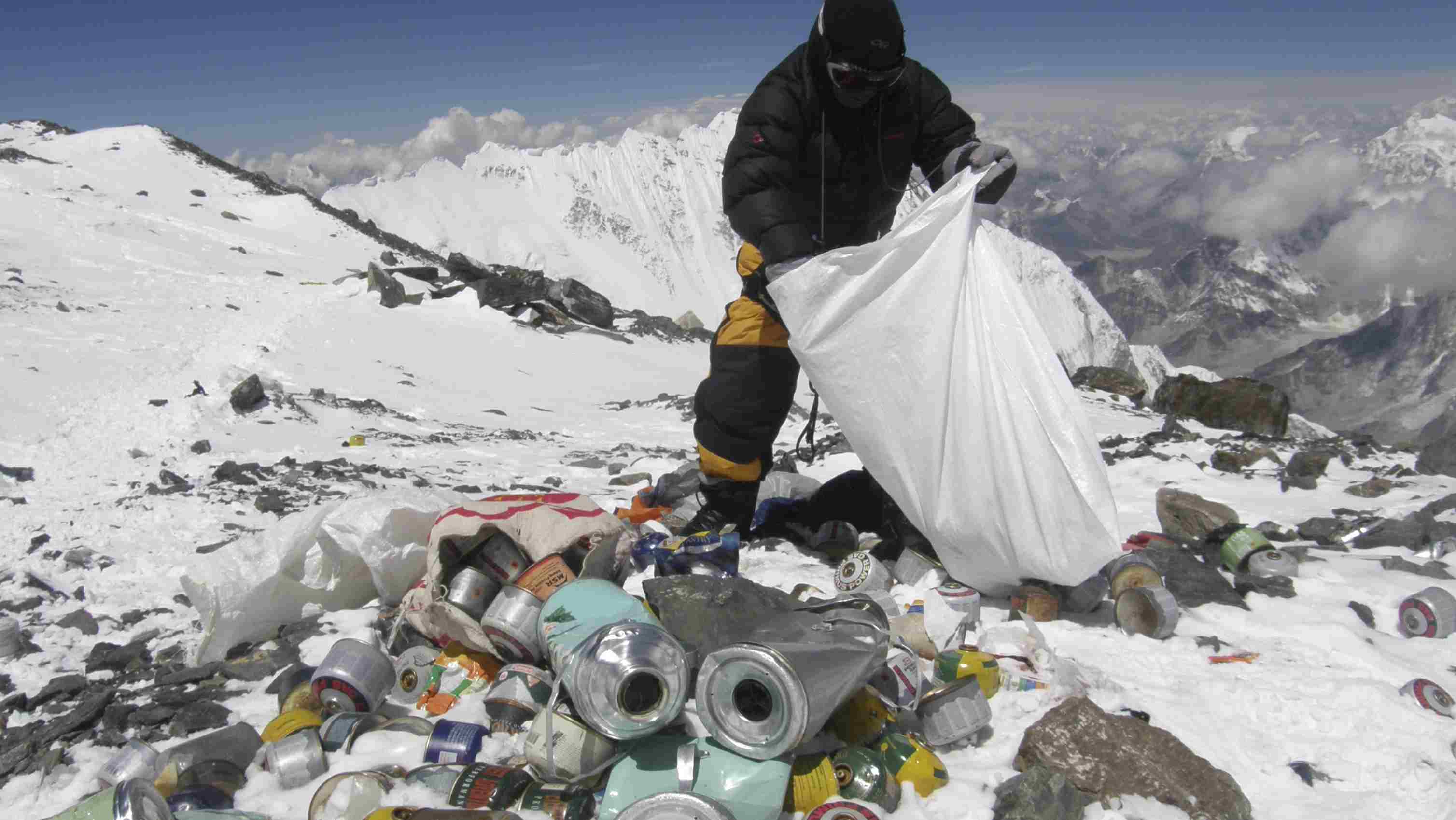
Around 3,000 kg of waste has been collected and brought down from the world's highest peak Mount Qomolangma in a clean-up drive launched by Nepal.
The country is planning to bring down 10,000 kg of solid waste and dead bodies stuck at the "world's highest dumpsite" as a part of the 45-day clean-up initiative launched on April 14.
Dandu Raj Ghimire, director general of Nepal's Department of Tourism at a press conference said, of the 3,000 kg collected from the harsh terrain of the mountain included 2,000 kg of biodegradable waste that has been dispatched to Okhaldhunga for processing.
Non-biodegradable waste comprising of dumped tents, plastics, and mountaineering gear weighing 1,000 kg were brought to Kathmandu through Nepali Army helicopters. The waste will be on display during the World Environment Day event on June 5.
“Our team has now reached the Base Camp for the cleaning campaign. All the necessary things including food, water, and shelter have already been arranged there,” Ghimire said, according to Himalayan Times.
The government is investing nearly 206,494 U.S. dollars in collecting the garbage strewn over the base camps and around it. It targets to collect around 5,000 kg of waste from Base Camp area, 2,000 kg from the South Col region. Another 3,000 kg will be collected from Camp II and Camp III area.
The waste collectors have also discovered four dead bodies.
Decades of commercial mountaineering has littered Mount Qomolangma with trash and human poop. Concerned over waste piling up, Nepal in 2014, implemented a scheme making it mandatory for each climber to deposit 4,000 U.S. dollars, refundable only if the climber brought down at least eight kg of rubbish.
Despite the scheme in place, Nepal's high altitude cleaners brought down nearly 25 tonnes of trash and 15 tons of human waste in 2017.
The government estimates more than 500 foreign mountaineers along with 1,000 local support staff will try to scale base camps.
In order to resolve the human waste contaminating the Mount Qomolangma, China is installing an eco-friendly toilet at the camp 7,028 meters up the North Slope of the mountain during the climbing season this spring.
"The toilet makes it easy to collect the human waste produced by the climbers as there is a barrel with rubbish bags underneath the toilet," Pema Tinley, Deputy Secretary General of the Tibet Mountaineering Association told Xinhua.
(Top Image: A group of 20 Nepalese climbers, including some top summiteers collected garbage in a high-risk expedition to clean up the world's highest peak, Mount Qomolangma, May 23, 2010)