
Tech & Sci
11:14, 27-Jun-2018
Polio outbreak confirmed in Papua New Guinea
Updated
10:28, 30-Jun-2018
 ["other","Pacific"]
Share







Copied
An outbreak of polio in Papua New Guinea has been confirmed by the World Health Organization (WHO) and the national government. The country had eradicated the disease around 18 years back.
The medical surveillance team first suspected the strain of polio virus in a six-year-old child from Morobe Province on April 28. The polio virus in the specimen was confirmed in early May.
The United States Centers for Disease Control and Prevention (CDC) confirmed on June 22 that the same strain of virus was also found from stool specimens of two healthy children from the same community. "This means that the virus is circulating in the community – representing an outbreak of the virus," WHO statement maintained.
“We are deeply concerned about this polio case in Papua New Guinea, and the fact that the virus is circulating,” said Pascoe Kase, Secretary of the National Department of Health (NDOH). “Our immediate priority is to respond and prevent more children from being infected.”
NDOH along with WHO and partner organizations has launched large-scale immunization campaign. It is also strengthening surveillance systems for early detection of the virus in the affected and neighboring region.
A team comprising of experts from the NDOH, Papua New Guinea’s Central Public Health Laboratory, Provincial Health Authorities, UNICEF and WHO have started field missions to undertake the clinical investigation, house-to-house surveys, sample collection and contact tracing.
The team also collected stool specimens from family members of the patient and their neighbors. An intensive immunization campaign has been launched in the community targeting children under 15 years old. Around 845 children from the Lufa Mountain Settlement have been vaccinated.
Papua New Guinea has not had a case of wild poliovirus since 1996, and was certified as polio-free in the year 2000, along with the rest of the WHO Western Pacific Region. However, in Morobe Province, polio vaccine coverage is low, with only 61 percent of children have received the recommended three doses. The region also faces water; sanitation and hygiene issues.
“Since the detection of the poliovirus in April, WHO has been working with the government on the investigation, laboratory confirmation, enhanced surveillance and response activities,” said Dr Luo Dapeng, WHO Representative in Papua New Guinea. “We will continue to support the government to ensure children are protected.”
The spread of polio has been controlled in most parts of the world. In 2017, around 20 cases of polio were detected globally, all from Afghanistan and Pakistan.
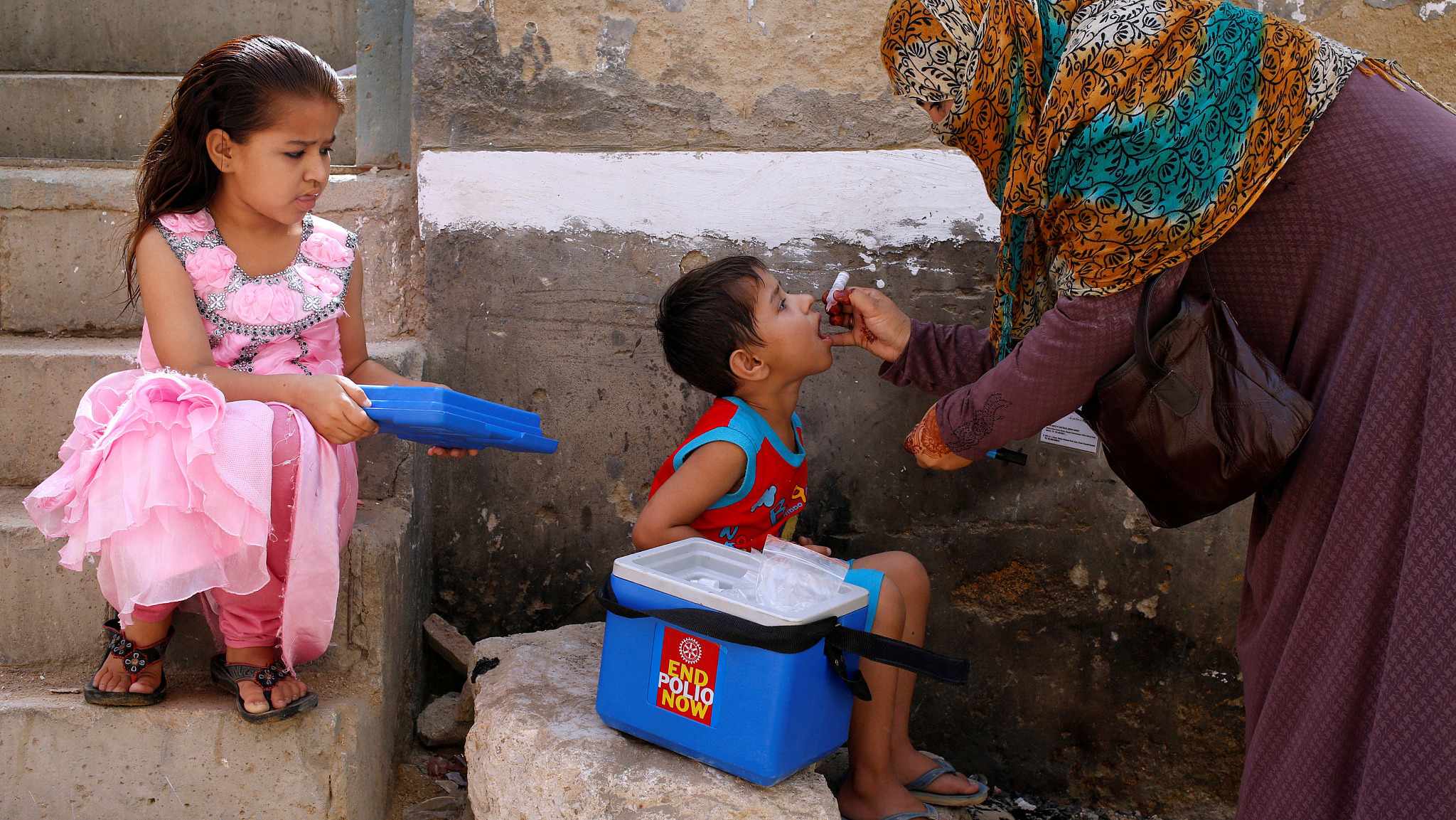
[Cover Image: A health worker administers polio vaccine drops to children in a low-income neighborhood in Karachi, Pakistan, April 9, 2018. /VCG Photo]