
Europe
12:06, 15-Apr-2019
Ecuador president defends Assange asylum withdrawal
 ["china"]
Share







Copied
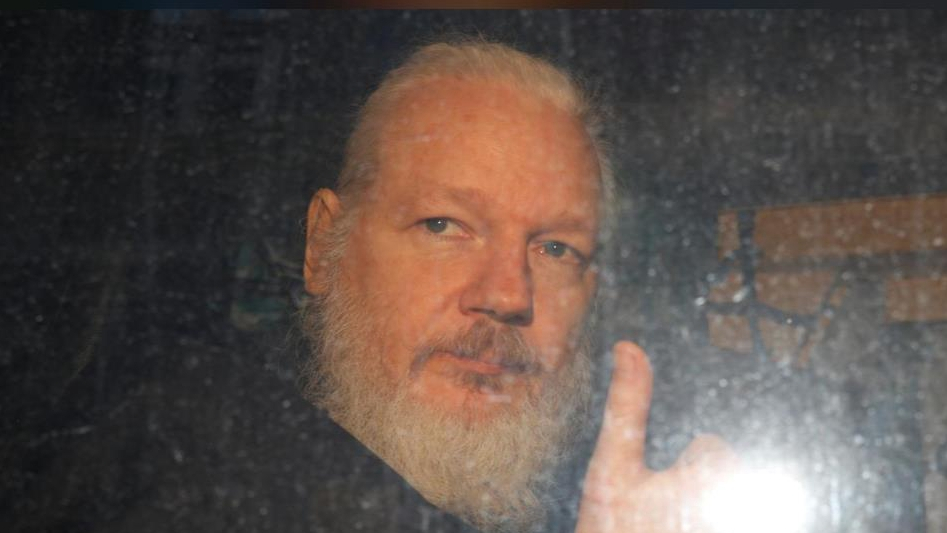
Ecuadoran President Lenin Moreno on Sunday defended his decision to overturn Julian Assange's asylum status, claiming in an interview with the Guardian newspaper that the WikiLeaks founder had tried to set up a "center for spying" in Ecuador's London embassy.
"It is unfortunate that, from our territory and with the permission of authorities of the previous government, facilities have been provided within the Ecuadoran embassy in London to interfere in processes of other states," Moreno said.
"We cannot allow our house, the house that opened its doors, to become a center for spying," said Moreno, who came to power in 2017.
"Our decision is not arbitrary but is based on international law," he said.
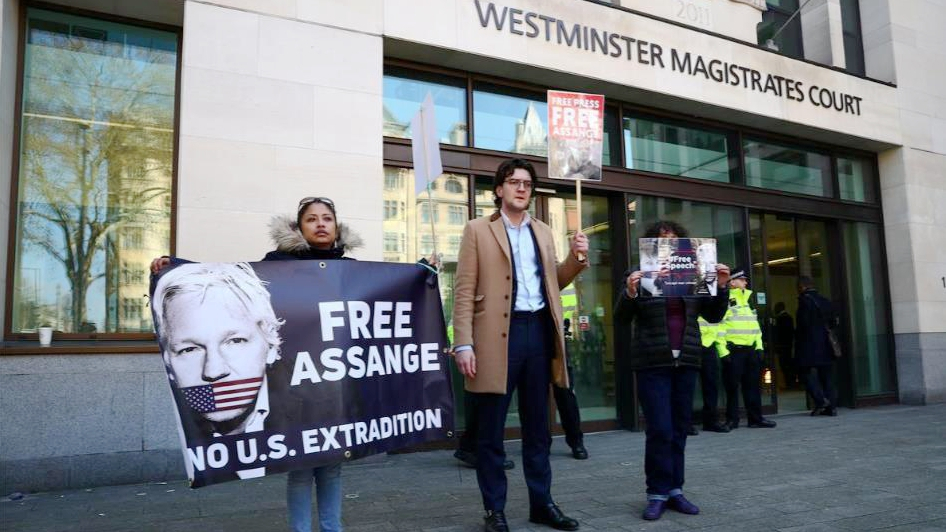
People hold banners in front of Westminster Magistrates Court after WikiLeaks founder Julian Assange was arrested in London, April 11, 2019. /Reuters Photo
People hold banners in front of Westminster Magistrates Court after WikiLeaks founder Julian Assange was arrested in London, April 11, 2019. /Reuters Photo
The WikiLeaks founder is in custody in London awaiting sentencing for breaching his British bail conditions in 2012 by seeking refuge in the Ecuadoran embassy to avoid extradition to Sweden.
Earlier Sunday, Assange's lawyer said his client would cooperate with Swedish authorities if they reopen a rape case against him but would continue to resist any bid to extradite him to the U.S..
"We are absolutely happy to answer those queries if and when they come up," Jennifer Robinson told Sky News television about the rape claims.
"The key issue at the moment is U.S. extradition, which we have warned about for many years," she added.
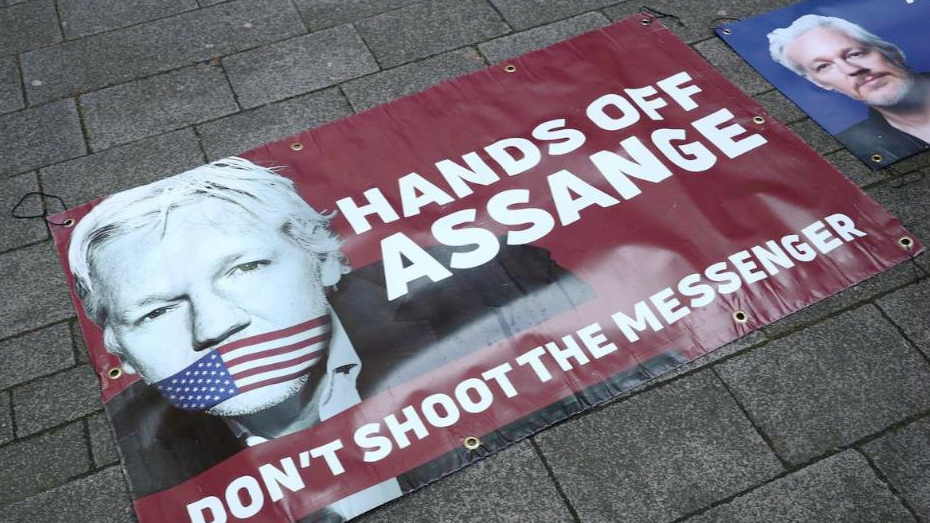
Banners in support of arrested WikiLeaks founder Julian Assange are seen on the pavement in front of Westminster Magistrate Court in London, April 11, 2019. /Reuters Photo
Banners in support of arrested WikiLeaks founder Julian Assange are seen on the pavement in front of Westminster Magistrate Court in London, April 11, 2019. /Reuters Photo
Assange, 47, was arrested at the embassy on Thursday after Ecuador gave him up, and is now also fighting a U.S. extradition warrant relating to the release by WikiLeaks of a huge cache of official documents.
The Australian has always denied the claims of sexual assault and rape in Sweden. The first expired in 2015 and the other was dropped in 2017, but the alleged rape victim has now asked for the case to be reopened.
If Stockholm makes a formal extradition request, the British government will have to decide whether to consider it before or after that of the United States.
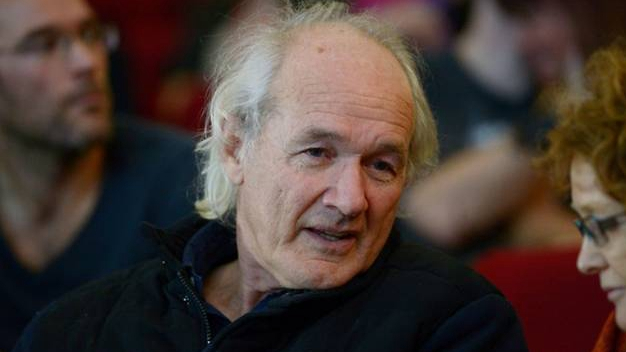
John Shipton, father of WikiLeaks founder Julian Assange, has urged the Australian government to bring his son home. /AFP Photo
John Shipton, father of WikiLeaks founder Julian Assange, has urged the Australian government to bring his son home. /AFP Photo
Robinson said Assange would seek assurances from Sweden that he would not be sent on to America, saying, "That is the same assurance we were seeking in 2010 and the refusal to give that is why he sought asylum."
The U.S. indictment charges Assange with "conspiracy," alleging that he worked with former U.S. Army intelligence analyst Chelsea Manning to crack a password stored on Department of Defense computers in March 2010.
Assange's father, John Shipton, on Sunday urged Australia to bring his son home, saying he was shocked to see his son's condition when the 47-year-old was arrested in London on allegations of skipping bail, and on a U.S. extradition warrant.
"I am 74 and I look better than him and he's 47. It's such a shock," he said.
Source(s): AFP
,Reuters