Erdogan declares victory in elections, says no walking back on Turkey's progress
CGTN
["china"]
Share
Copied
01:08
President Recep Tayyip Erdogan won a new presidential mandate in the first round of voting by winning more than half of the votes, the chief of Turkey's election authority said Monday.
"President Recep Tayyip Erdogan received the absolute majority of all valid votes," the head of the Supreme Election Committee (YSK) Sadi Guven told reporters in Ankara, without giving further details or numbers after Sunday's polls.
Results released by Turkey's state-run Anadolu news agency based on data from the YSK also gave Erdogan a clear majority of votes.
Erdogan won 52.5 percent in the presidential poll while his main rival Muharrem Ince, of the secular Republican People's Party (CHP), was on 31.7 percent, Anadolu news agency said, based on a 99 percent vote count. The YSK is to announce final results on Friday.
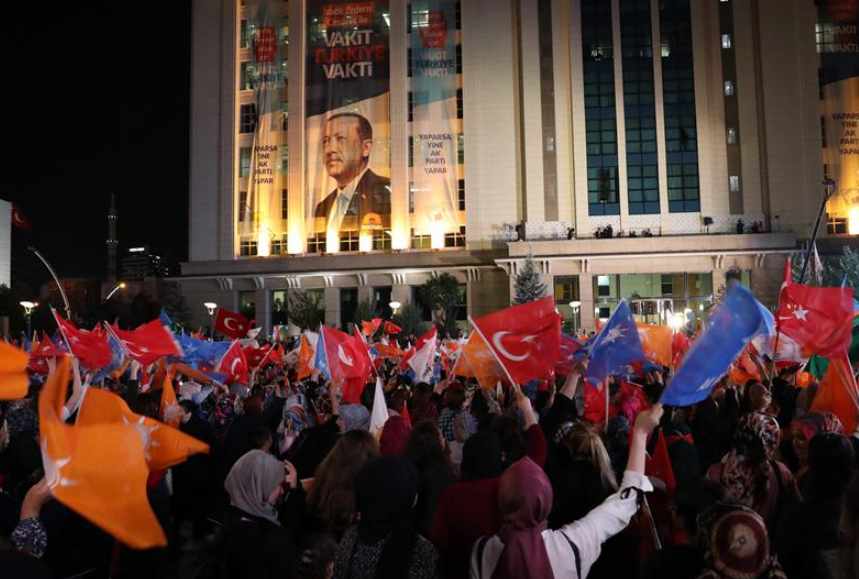
Supporters of Turkish President Recep Tayyip Erdogan rally in front of the Justice and Development Party (AKP) headquarters in Ankara, Turkey, on June 24, 2018. /XInhua Photo
Supporters of Turkish President Recep Tayyip Erdogan rally in front of the Justice and Development Party (AKP) headquarters in Ankara, Turkey, on June 24, 2018. /XInhua Photo
"It's now time to leave all political debates of the election campaign behind and to get focused on the future," Erdogan said.
The turnout was high at around 87 percent for both contests, with more than 59 million votes running to the polls.
Turkey held Sunday's elections under the state of emergency declared after a failed military coup in July 2016.
Erdogan and his ruling AKP claimed victory in both presidential and parliamentary polls, overcoming a revitalized opposition that in recent weeks had gained considerable momentum and looked capable of staging an upset.
The AKP took 42.5 percent in the parliamentary polls, and was boosted by its nationalist allies, which outstripped expectations and took 11.1 percent.
Supporters of Turkish President and the leader of the Justice and Development Party (AK Party) Recep Tayyip Erdogan celebrate as unofficial results show Erdogan leading the presidential election at Bascarsija in Sarajevo, Bosnia and Herzegovina, on June 24, 2018. /VCG Photo
Supporters of Turkish President and the leader of the Justice and Development Party (AK Party) Recep Tayyip Erdogan celebrate as unofficial results show Erdogan leading the presidential election at Bascarsija in Sarajevo, Bosnia and Herzegovina, on June 24, 2018. /VCG Photo
Anadolu news agency said that, based on unofficial results, the AKP and its MHP alliance will hold 343 seats in Turkey's 600-seat parliament, with 293 of those for the AKP and 50 for the nationalists.
The main opposition will have 146, the pro-Kurdish HDP 67 and the breakaway nationalist Iyi Party 44.
Opposition claims 'manipulation'
The CHP's presidential candidate Ince also accused election reports from the Anadolu Agency of "manipulation." The CHP said it had recorded violations in the southeastern province of Sanliurfa.
The presidential and parliamentary elections will complete Turkey's transition from a parliamentary system to a new executive presidential one, a move approved in a referendum last year.
“Our people have given us the job of carrying out the presidential and executive posts,” he said in a short speech from Istanbul.
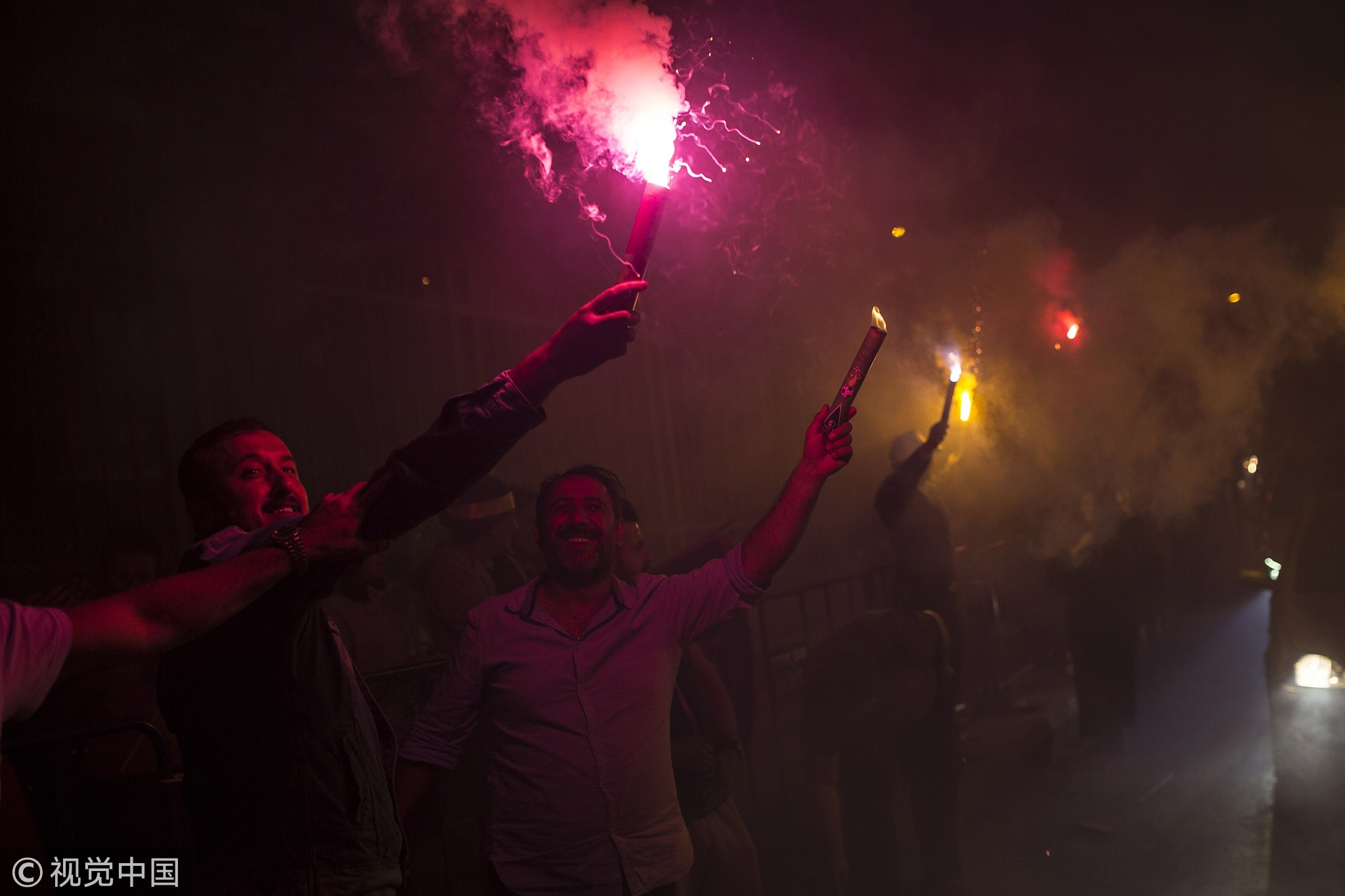
Supporters of Turkish President and the leader of the Justice and Development Party (AK Party) Recep Tayyip Erdogan celebrate as unofficial results show Erdogan leading the presidential election in Istanbul, Turkey, on June 24, 2018. /VCG Photo
Supporters of Turkish President and the leader of the Justice and Development Party (AK Party) Recep Tayyip Erdogan celebrate as unofficial results show Erdogan leading the presidential election in Istanbul, Turkey, on June 24, 2018. /VCG Photo
“I hope nobody will try to cast a shadow on the results and harm democracy in order to hide their own failure.”
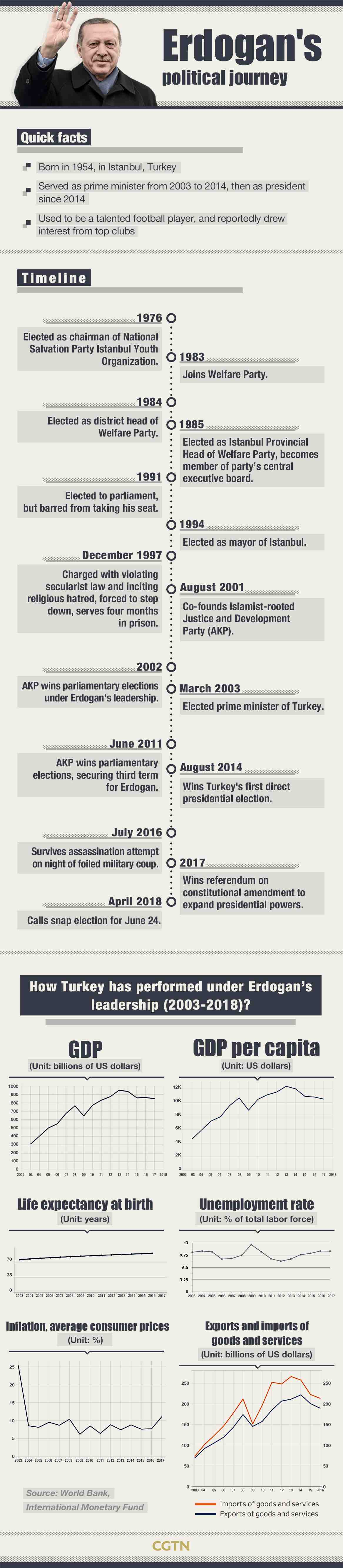
Recep Tayyip Erdogan, 64, has been in power for over 15 years, first as Turkish prime minister and later as president. He has led Turkey's economic transition to an emerging market and transformed the presidency from a ceremonial position to an executive one.
He shifted Turkey's foreign policy towards the East and enjoys support from conservatives in the country, despite concerns, including from Turkey’s Western allies, over his increased grip on power.

 ["china"]