
Politics
11:07, 30-Apr-2018
Pompeo: US concerned by 'destabilizing and malign activities' of Iran
 ["china"]
Share







Copied
01:53
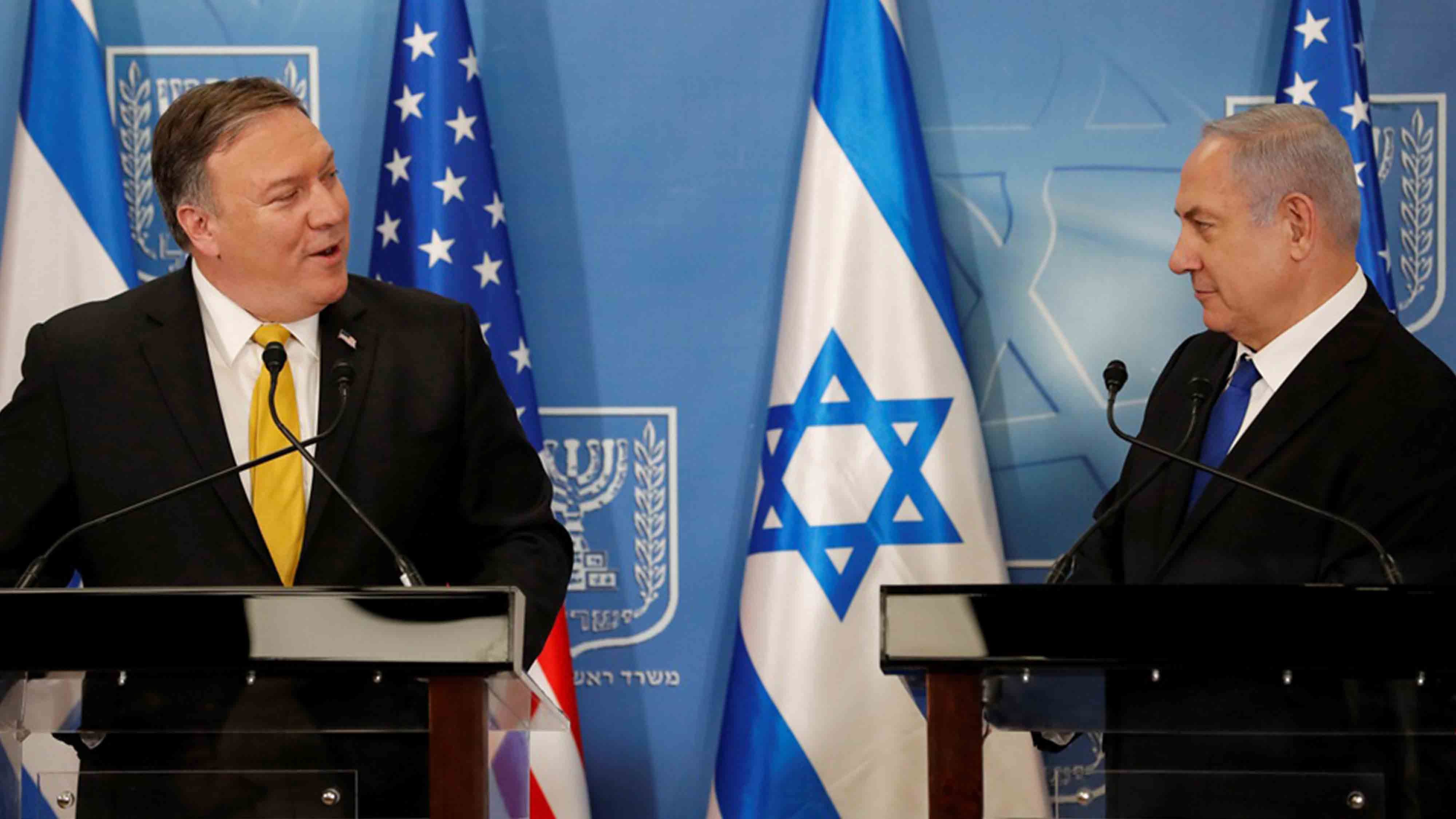
The United States is deeply concerned by Iran's "destabilizing and malign activities," new Secretary of State Mike Pompeo said after meeting Israeli Prime Minister Benjamin Netanyahu on Sunday.
The former CIA director was speaking on a flying visit to the region, where he had earlier in the day met with Saudi King Salman in Riyadh and stressed the need for unity among Gulf allies as Washington aims to muster support for new sanctions against Iran to curb its missile program.
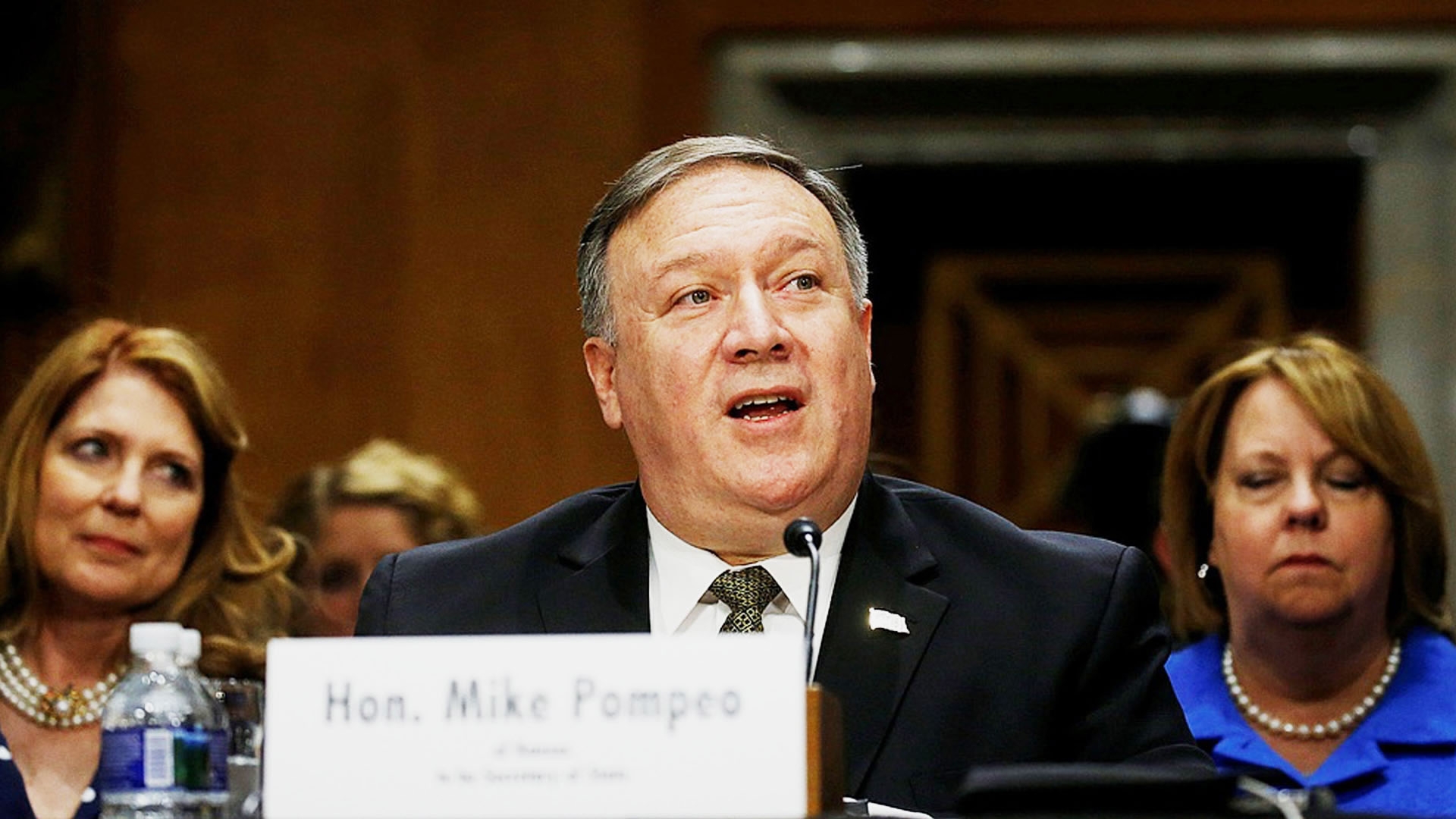
The whirlwind trip to NATO in Brussels and to Middle East allies came only hours after Pompeo was confirmed as Trump's top diplomat. He has not even visited his own office yet, he told Netanyahu.
00:37
Speaking alongside the Israeli leader, Pompeo said in Tel Aviv: "We remain deeply concerned about Iran's dangerous escalation of threats towards Israel and the region."
He added: "Strong cooperation with close allies like (Israel) is critical to our efforts to counter Iran's destabilizing and malign activities through the Middle East, and indeed, throughout the world."
Pompeo also said that the relocation of the American embassy to Jerusalem, a move set to take place on May 14, was "recognizing (the) reality" of "Jerusalem as the capital of Israel and the seat of its government."
Netanyahu, who called Pompeo a "true friend of Israel," echoed the secretary's focus on Iran, stressing the closeness of US and Israeli cooperation on the issue.
"I think the greatest threat to the world and to our two countries, and to all countries, is the marriage of militant Islam with nuclear weapons, and specifically the attempt of Iran to acquire nuclear weapons. We have had a very productive talk today on this subject," he said.
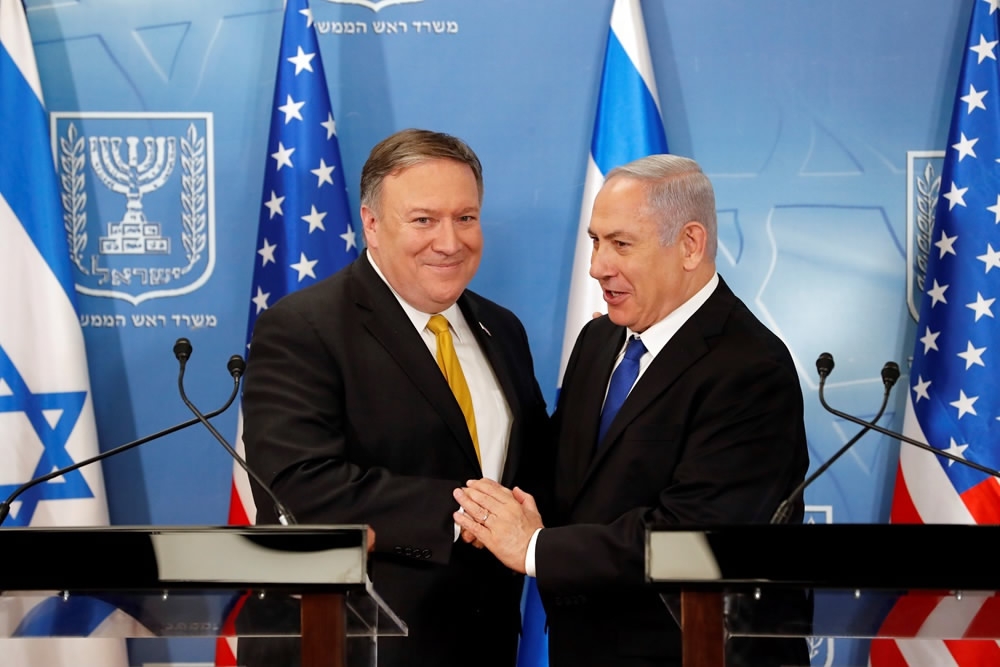
Israeli Prime Minister Benjamin Netanyahu (R) shakes hands with US Secretary of State Mike Pompeo during a meeting in Tel Aviv, Israel, April 29, 2018. /Reuters Photo
Israeli Prime Minister Benjamin Netanyahu (R) shakes hands with US Secretary of State Mike Pompeo during a meeting in Tel Aviv, Israel, April 29, 2018. /Reuters Photo
In contrast to his fierce opposition to the Obama administration's negotiations with Iran to reach a nuclear deal in 2015, which he called a "historic mistake," Netanyahu said Israel was willing to support US President Donald Trump's efforts to strengthen the 2015 agreement.
"Iran must be stopped. Its quest for nuclear bombs must be stopped. Its aggression must be stopped, and we're committed to stopping it together," he said.
The 2015 agreement limited Iran's enrichment of uranium for nuclear fuel to help ensure it could not be turned to developing bomb material, and Tehran secured a removal of most international sanctions in return.
Iran has repeatedly said its ballistic missile program has nothing to do with its nuclear work and is non-negotiable.
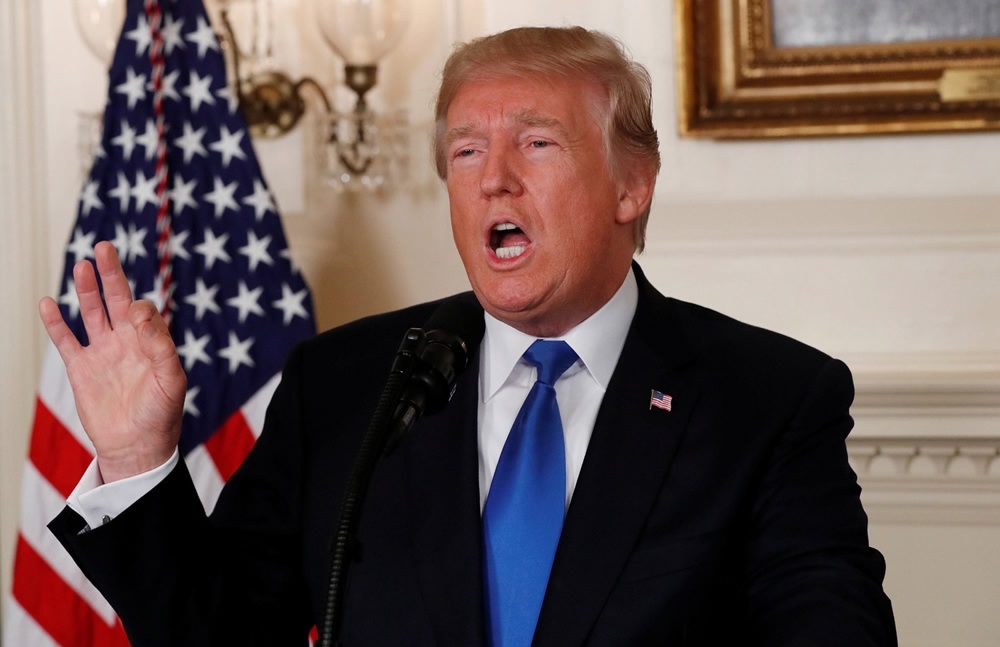
US President Donald Trump has threatened to withdraw from the Iran nuclear deal. /VCG Photo
US President Donald Trump has threatened to withdraw from the Iran nuclear deal. /VCG Photo
US calls for 'Gulf unity'
In Saudi Arabia earlier, Pompeo said that the US would abandon the 2015 nuclear deal with Iran, unless talks with European partners yield improvements to ensure the Islamic Republic never possesses nuclear weapons.
"Iran destabilizes this entire region. It supports proxy militias and terrorist groups. It is an arms dealer to the Houthi rebels in Yemen. It supports the murderous Assad regime (in Syria) as well," he said in joint remarks with Saudi Foreign Minister Adel al-Jubeir. "Gulf unity is necessary and we need to achieve it."
Pompeo also addressed the rift between Qatar and its neighbors, telling reporters after leaving Riyadh: "We are hopeful that they will, in their own way, figure out how to remove the dispute between them."
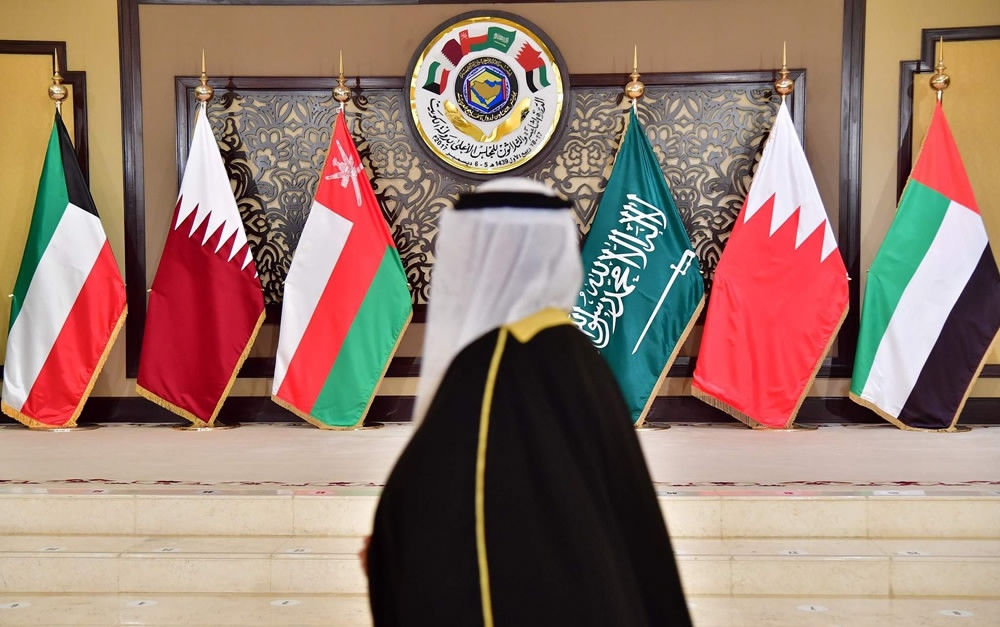
A man walks past the flags of the countries attending the Gulf Cooperation Council summit at Bayan palace in Kuwait City, December 5, 2017. /VCG Photo
A man walks past the flags of the countries attending the Gulf Cooperation Council summit at Bayan palace in Kuwait City, December 5, 2017. /VCG Photo
Saudi Arabia, along with the United Arab Emirates, Bahrain and Egypt, cut off travel and trade ties with Qatar last June, accusing it of supporting terrorism and Iran. Doha has denied the accusations and has said its three fellow Gulf countries aim to curtail its sovereignty. Iran denies supporting terrorism or having sought to develop nuclear weapons.
The United States, which has military bases in both Qatar and some of the countries lined up against it, is trying to mediate the Qatar feud. Trump publicly sided with the Saudis and Emiratis early in the crisis, but is now pushing for a resolution to maintain a united front against Iran.
7136km
Source(s): Reuters