
Opinions
18:02, 21-Apr-2018
Opinion: GDP – Not a recipe for 'cooking' but a formula for thinking
 ["china"]
Share







Copied
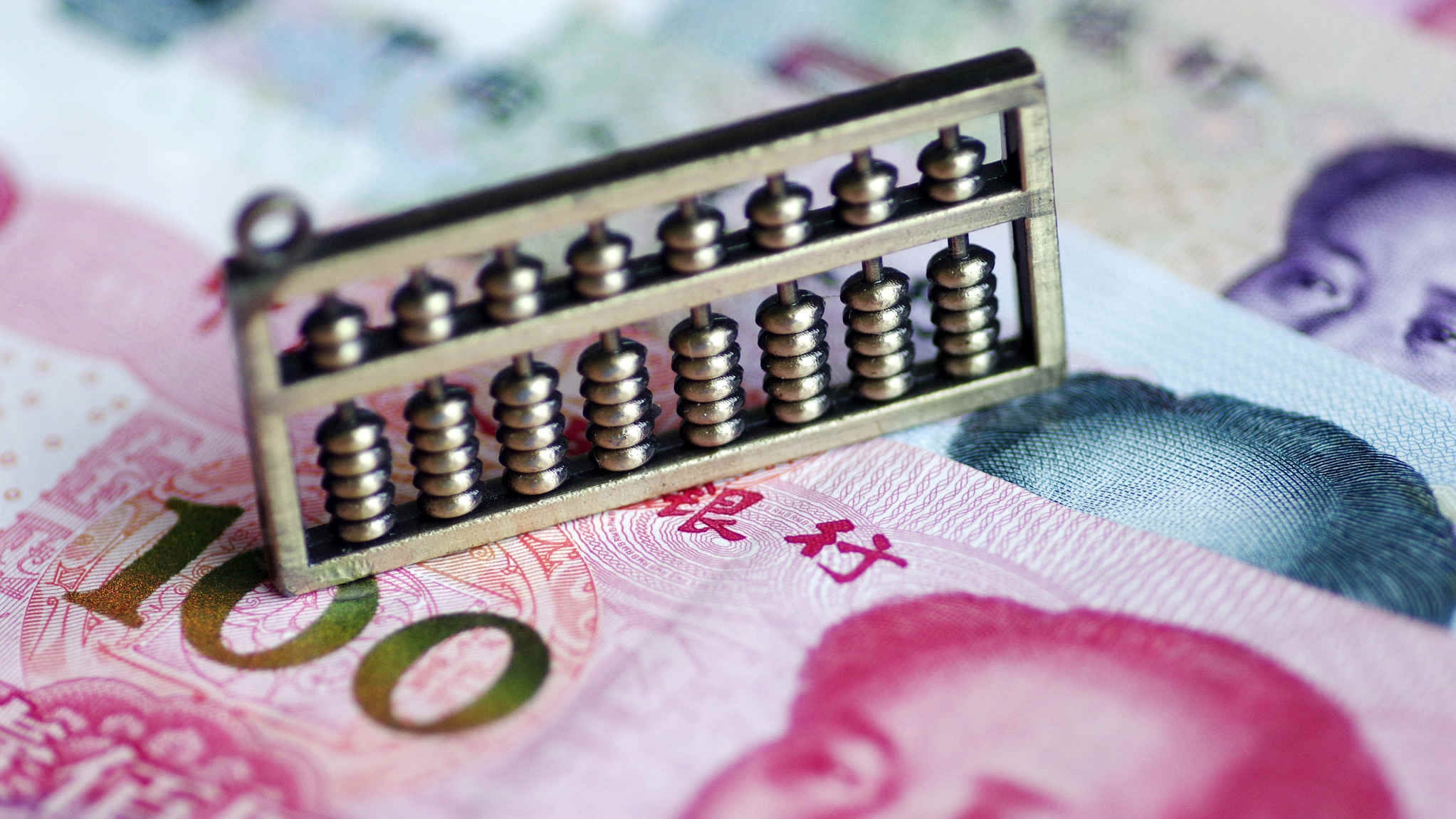
When it comes to the economy, GDP is a crucial factor and a government’s annual work report always starts with national or local GDP data from the previous year.
The media loves updating the billboard of provincial growth rate, and forecasting on which provinces might join the “One Trillion Yuan-GDP Club” soon. It's a known secret that cadres’ promotions depend, to a great extent, on GDP growth rates in the places where they had served. Such growth-oriented strategy was, despite some shortcomings, absolutely necessary until 2007, when the nominal per capita GDP was less than 3000 USD.
However, we should have a “second thought or opinion” after the per capita GDP exceeded 7100 USD in 2013. In the same year the central committee of the party officially announced that the indicator was no longer a core factor of cadres’ performance assessment category. However, the excessive pursuit of quantitative growth persisted until recently when several provinces admitted that their GDP data had been overstated over the past few years.
Some observers attribute the obsession with GDP scores to underdevelopment and cyclical disruptions such as the global financial crisis, short sighted planning, wrong assessment systems, and even corruption. These issues can explain certain things at certain times but not the whole picture.
There is an over-simplified mind set in economic management that has caused major problems such as wasting of resources, over-capacity, non-performing loans, pollution, etc.
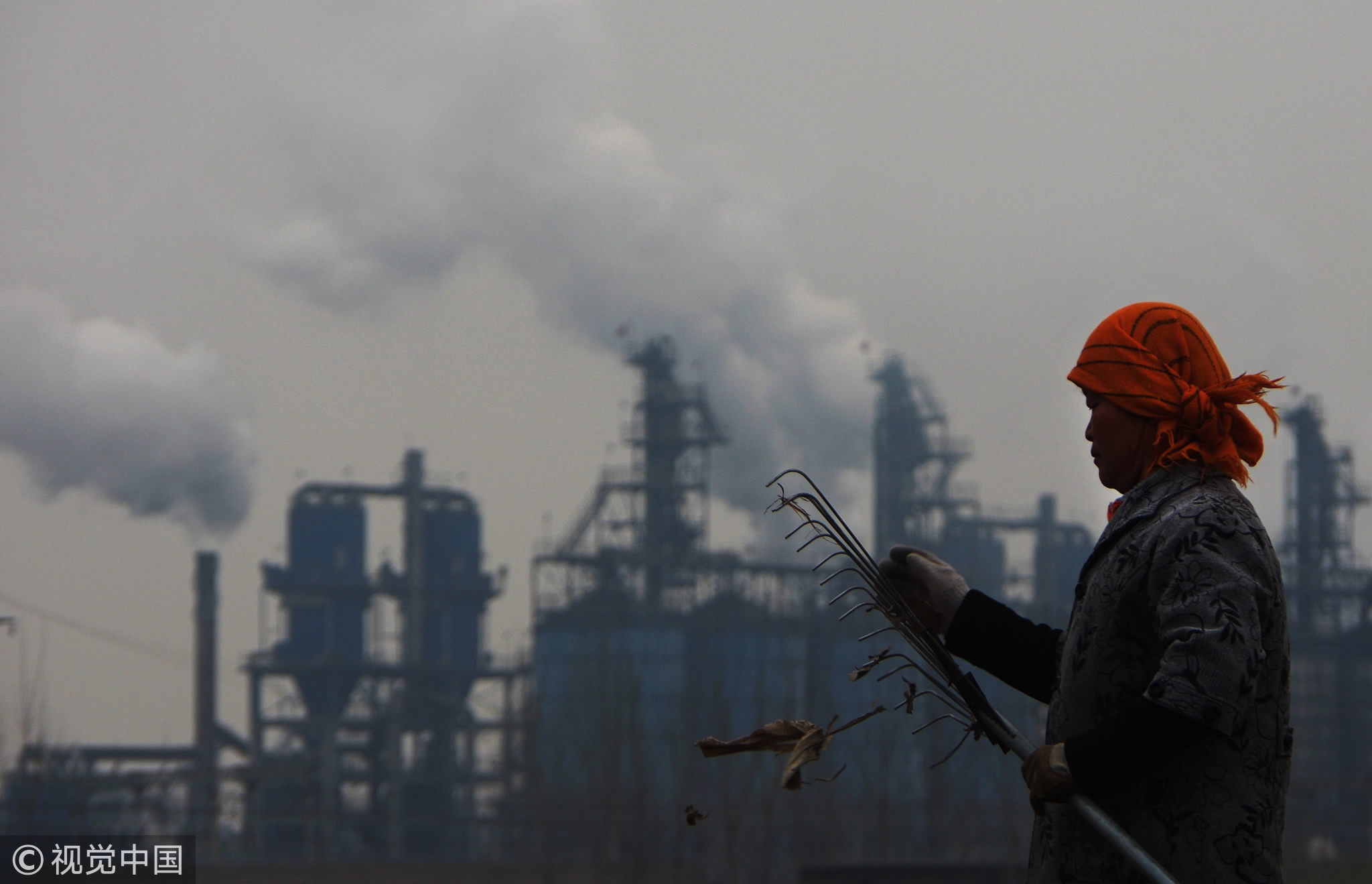
File Photo: A farmer working near a factory in Dezhou City, Shandong Province. /VCG Photo
File Photo: A farmer working near a factory in Dezhou City, Shandong Province. /VCG Photo
According to its definition, GDP equals the sum of households’ consumption, investment, government expenditures and net exports to many government officials. This academic conclusion looks like a recipe for obtaining GDP growth; increasing everything on the left side of the formula would increase the sum. There is no doubt that the majority of our officials have had good returns using this formula.
Chinese economic growth has been phenomenal. There is, however, another crucial theory many officials were not fully or truly aware of --- the diminishing marginal effect. It basically tells us that overdoing good things ultimately causes loss as opposed to gains. For example, increasing investment helps to create jobs; big projects and construction. But later down the line it may result in redundancy.
Things will get worse if the political system only rewards officials for short-term gains but doesn’t hold them responsible for long-term losses.
Although a little late, positive changes are taking place. Central and local governments are thinking more about things other than growth. New party leaders have called for quality-oriented development, and “people’s well being” and related policies are taken more seriously.
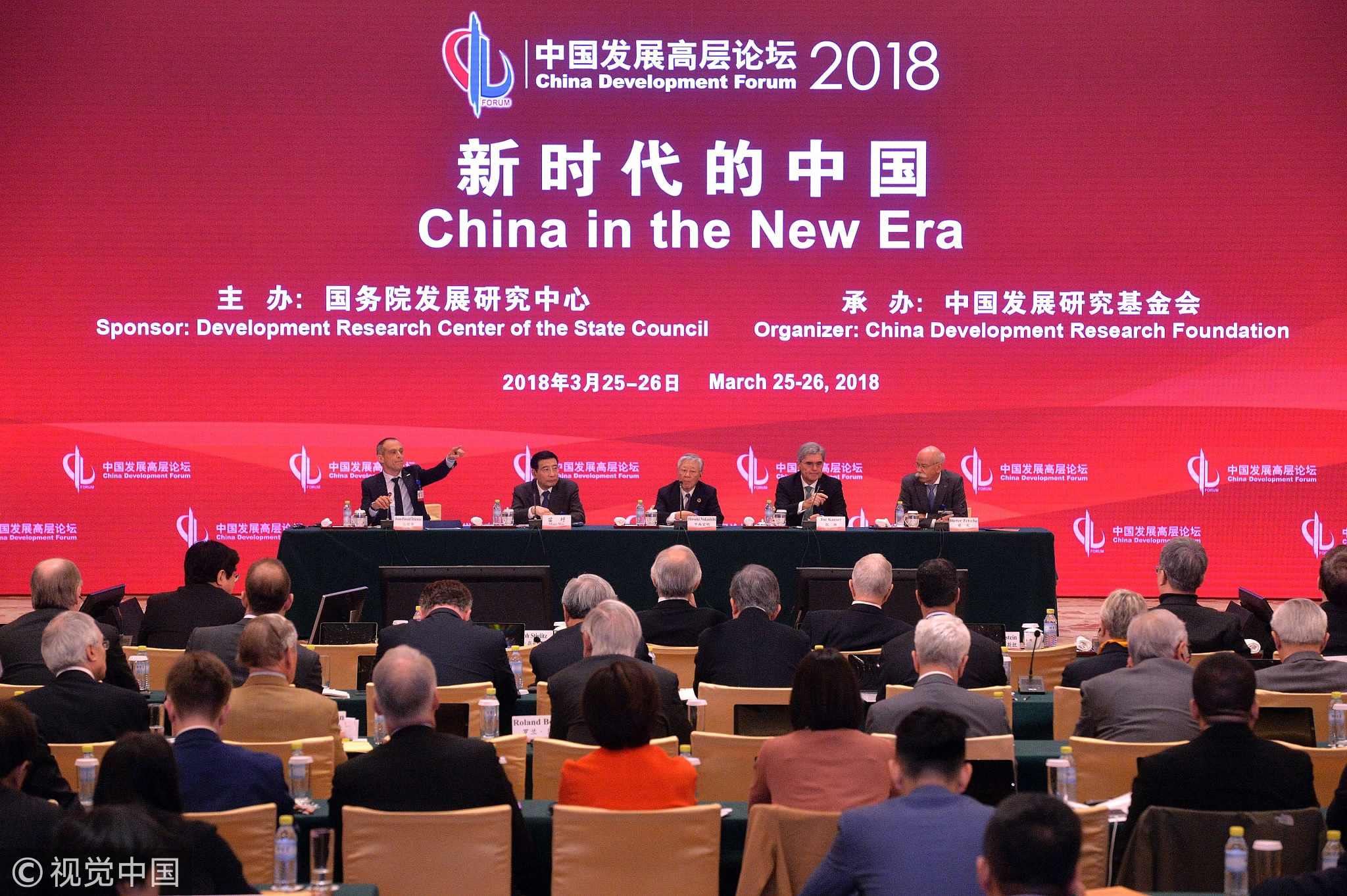
Panel Session of Higher Quality of “Made in China” at China Development Forum 2018, Beijing, March 26, 2018. /VCG Photo
Panel Session of Higher Quality of “Made in China” at China Development Forum 2018, Beijing, March 26, 2018. /VCG Photo
Nonetheless, GDP as key economic data still matters for both decision makers and professionals. But to obtain a real and complete picture of the economy, people should interpret the data in a meaningful context and avoid superficial understanding.
We should pay more attention to changes in the overall trend and structure. We also need related information from government departments to validate our findings.
Last week, the Statistic Bureau released a series of economic data including GDP for the first quarter this year. I would not pay too much attention to the overall growth figures due to the economic down trend that has been happening since 2012. Instead, I would look at several encouraging signs which prompt optimistic expectations concerning structural reforms and quality-oriented strategy. The growth in the primary sector increased to 3.2 percent, showing positive effects of the agricultural policy and poverty reduction measures.
Despite the cut from over-capacity in manufacturing, the contribution rate in the overall GDP remained stable at 36.1 percent, meaning enhanced efficiency. The contribution from the financial and real estate industry was 2.0 and 1.6 percent lower compared to that in 2017, while other service industries’ share increased by 4.4 percent; the distribution of capital and profits is becoming more balanced.
By replacing business tax with value-added tax and other tax reduction measures, the overall tax revenue still managed to grow by 17.3 percent, which is the best first-quarter on record since 2012; it would appear that the quality of our economic growth is improving.
(Wang Jianhui is the Deputy General Manager at R&D Department, Capital Securities. The article reflects the author's opinion, and not necessarily the views of CGTN)