
Politics
11:02, 06-Jul-2018
Wang Yi: China firmly supports Europe's integration
Updated
10:27, 09-Jul-2018
 ["china"]
Share







Copied
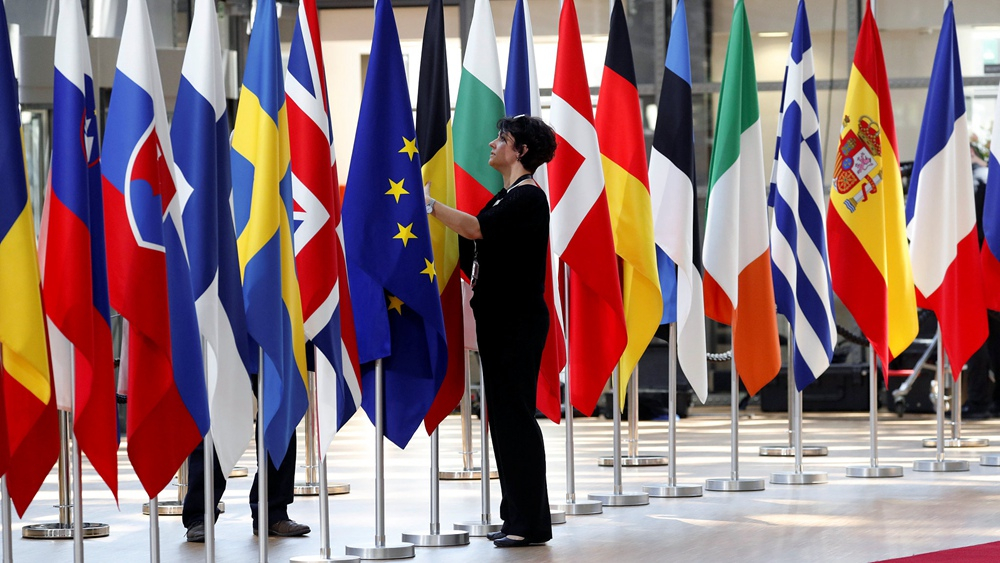
China will continue to firmly support the process of Europe's integration and would like to strengthen communication and coordination with Europe in global governance and international affairs, Chinese State Councilor and Foreign Minister Wang Yi told Austrian Foreign Minister Karin Kneissl on Thursday.
Wang is in Vienna for a meeting with foreign ministers of France, Germany, Britain and Russia as well as Iranian officials scheduled on Friday. They will discuss how to keep the 2015 Iran nuclear deal alive after Washington withdrew from it in May.
Wang expressed his hope that by working together more closely, China and Europe will inject more "positive elements" into an era featured by growing uncertainties.
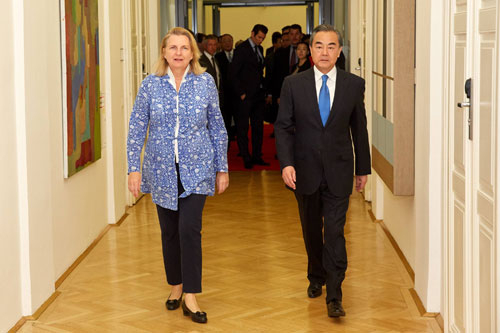
Chinese State Councilor and Foreign Minister Wang Yi (R) meets with Austrian Foreign Minister Karin Kneissl in Vienna, Austria, July 5, 2018. /Photo via MOFA
Chinese State Councilor and Foreign Minister Wang Yi (R) meets with Austrian Foreign Minister Karin Kneissl in Vienna, Austria, July 5, 2018. /Photo via MOFA
Austria took over the presidency of the European Union on Sunday (July 1). Wang called on the country to play a constructive role in strengthening strategic trust between China and Europe and promoting comprehensive cooperation between the two sides.
He also expects expansion of China-Austria practical cooperation as a result of China's new round of reform and opening-up as well as Austria's participation in the first China International Import Expo slated for November.
The China-proposed Belt and Road Initiative will bring huge market opportunities to Austria, Wang added.
Read more:
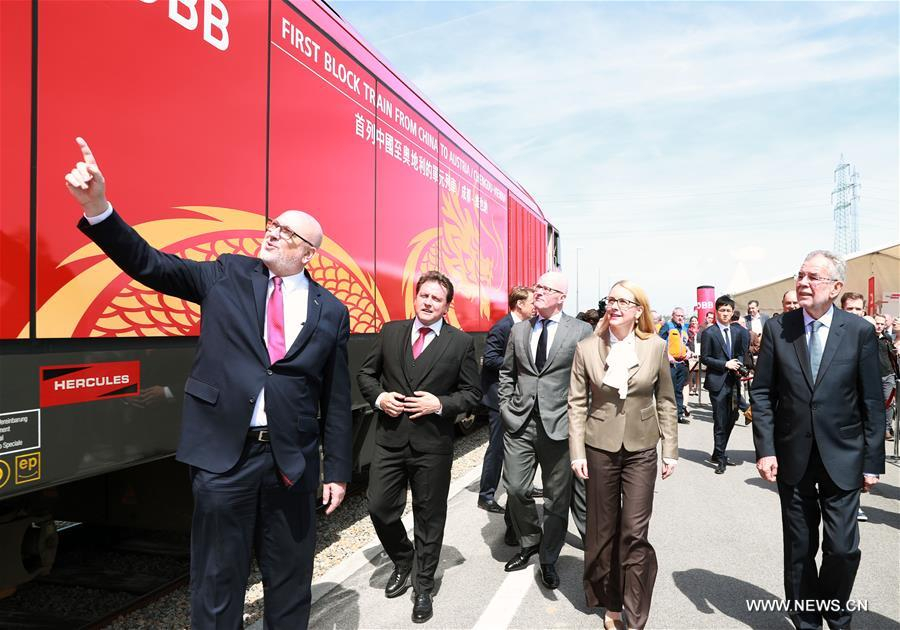
April 27, 2018: Austrian President Alexander Van der Bellen (R1, Front), Austrian Minister for Digital and Economic Affairs Margarete Schrambock (R2, Front) and other guests inspect a new China-Europe freight train from Chengdu to Vienna at the Vienna South Freight Center in Vienna, Austria. /Xinhua Photo
April 27, 2018: Austrian President Alexander Van der Bellen (R1, Front), Austrian Minister for Digital and Economic Affairs Margarete Schrambock (R2, Front) and other guests inspect a new China-Europe freight train from Chengdu to Vienna at the Vienna South Freight Center in Vienna, Austria. /Xinhua Photo
'China, EU should jointly safeguard free trade'
It is short-sighted to pursue trade protectionism which will inevitably harm others without benefiting oneself, said Wang, noting that provoking a trade war is a step back in history not only harming the interests of both parties, but also hurting the interests of all parties in the global value chain as the national economies are deeply integrated.
He pointed out that any unilateral move violates the WTO rules and damages the multilateral trading system, and it will also cast a shadow on the recovery momentum and development prospects of the global economy.
Wang urged the EU and China to jointly safeguard multilateralism and a rules-based free trade system, as both are beneficiaries and defenders of the multilateral trading system.
"This is our common obligation and our responsibility to the world as well. China is now standing at the forefront of opposing unilateralism and trade protectionism, and does not want to be shot in the back."
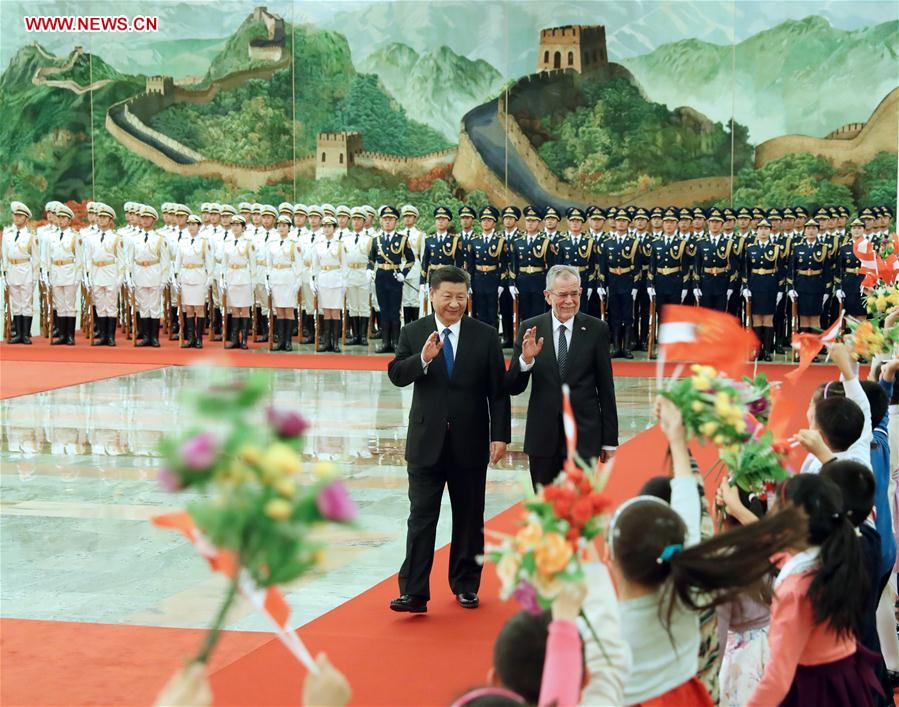
April 8, 2018: Chinese President Xi Jinping holds a welcome ceremony for Austrian President Alexander Van der Bellen at the Great Hall of the People in Beijing. /Xinhua Photo
April 8, 2018: Chinese President Xi Jinping holds a welcome ceremony for Austrian President Alexander Van der Bellen at the Great Hall of the People in Beijing. /Xinhua Photo
Kneissl said Austria and China are witnessing their best relations in history, hailing Austrian President Alexander Van der Bellen and Chancellor Sebastian Kurz's visit to China in April as a great success.
Europe highly values China's status and role in the world and is willing to enhance communication and collaboration with China in multilateral affairs, Kneissl stressed.
The two foreign ministers also exchanged views on the Iran nuclear issue, agreeing that the 2015 deal should be maintained.
Wang's visit to Austria coincides with Chinese Premier Li Keqiang's tour to Bulgaria for the seventh leaders' meeting of China and the Central and Eastern European countries, a sign of China and Europe's increasing closeness amid growing US unilateralism in trade.
Li will later visit Germany for the fifth round of intergovernmental consultations between Beijing and Berlin.
7472km