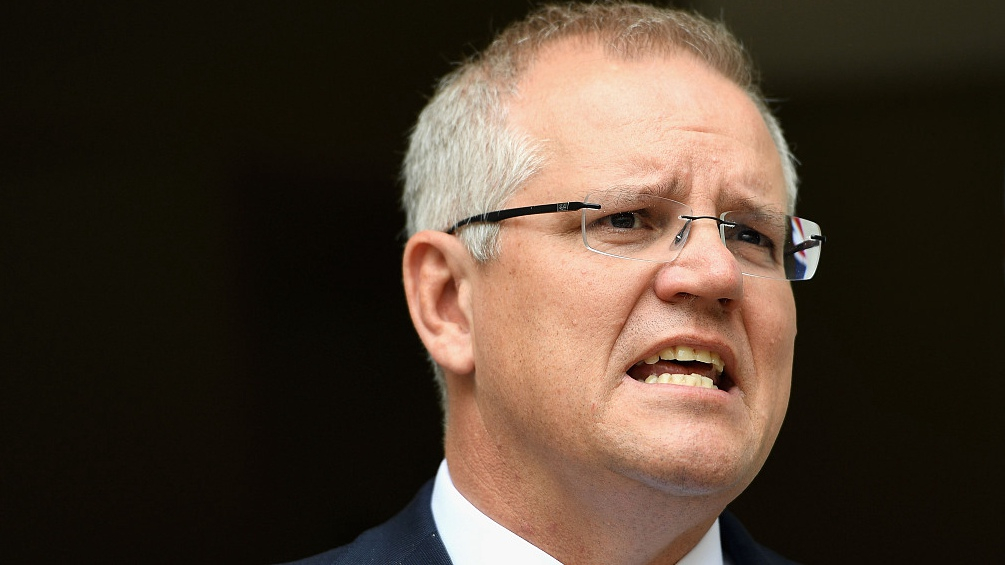
An egg stole the limelight when a protester tried to crack one on Australia's Prime Minister Scott Morrison's head as he campaigned for a May 18 general election.
Besides the egg issue, Morrison's China policy and challenges from smaller parties and independents are giving the incumbent minister headaches.
The egg
Morrison was greeting members of the Country Women's Association (CWA) in the regional town of Albury on May 7 when a 25-year-old woman approached him from behind and threw the egg at his head without breaking it.
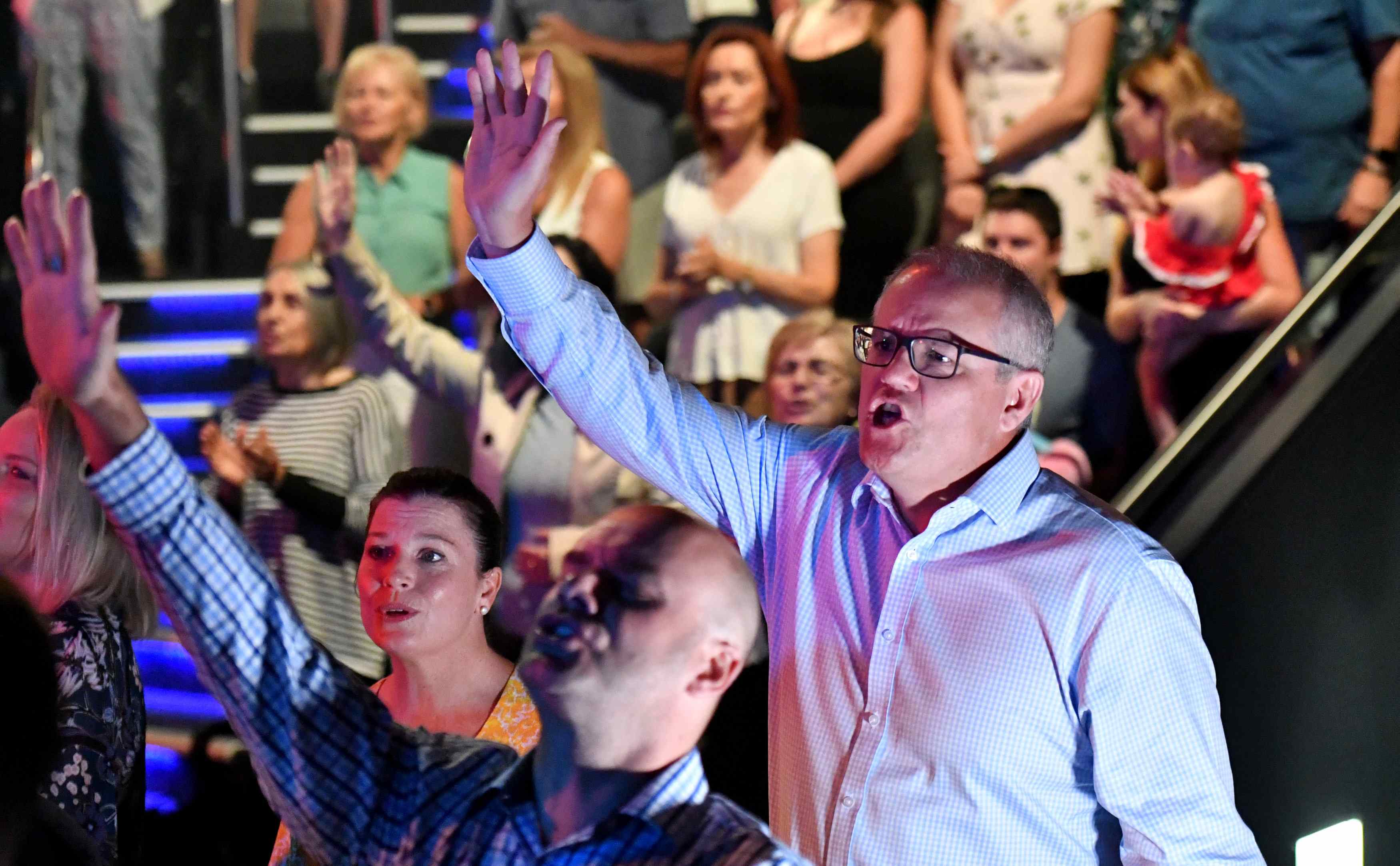
Australia's Prime Minister Scott Morrison sings during an Easter Sunday service at his Horizon Church at Sutherland in Sydney, Australia, April 21, 2019. /Reuters Photo
Australia's Prime Minister Scott Morrison sings during an Easter Sunday service at his Horizon Church at Sutherland in Sydney, Australia, April 21, 2019. /Reuters Photo
Protester: My action 'speaks for itself'
The woman told reporters moments after the incident that her action "speaks for itself" and she referred to Manus Island in Papua New Guinea, where Australia has long detained refugees.
She was charged with common assault and drug possession, after police found cannabis on her. The woman was released on bail and ordered to appear in court on May 27.
Morrison: 'We have to learn to disagree better'
"We will stand up to thuggery whether it's these cowardly activists who have no respect for anyone, or militant unionists standing over small businesses and their employees on work sites," Morrison tweeted after the incident.
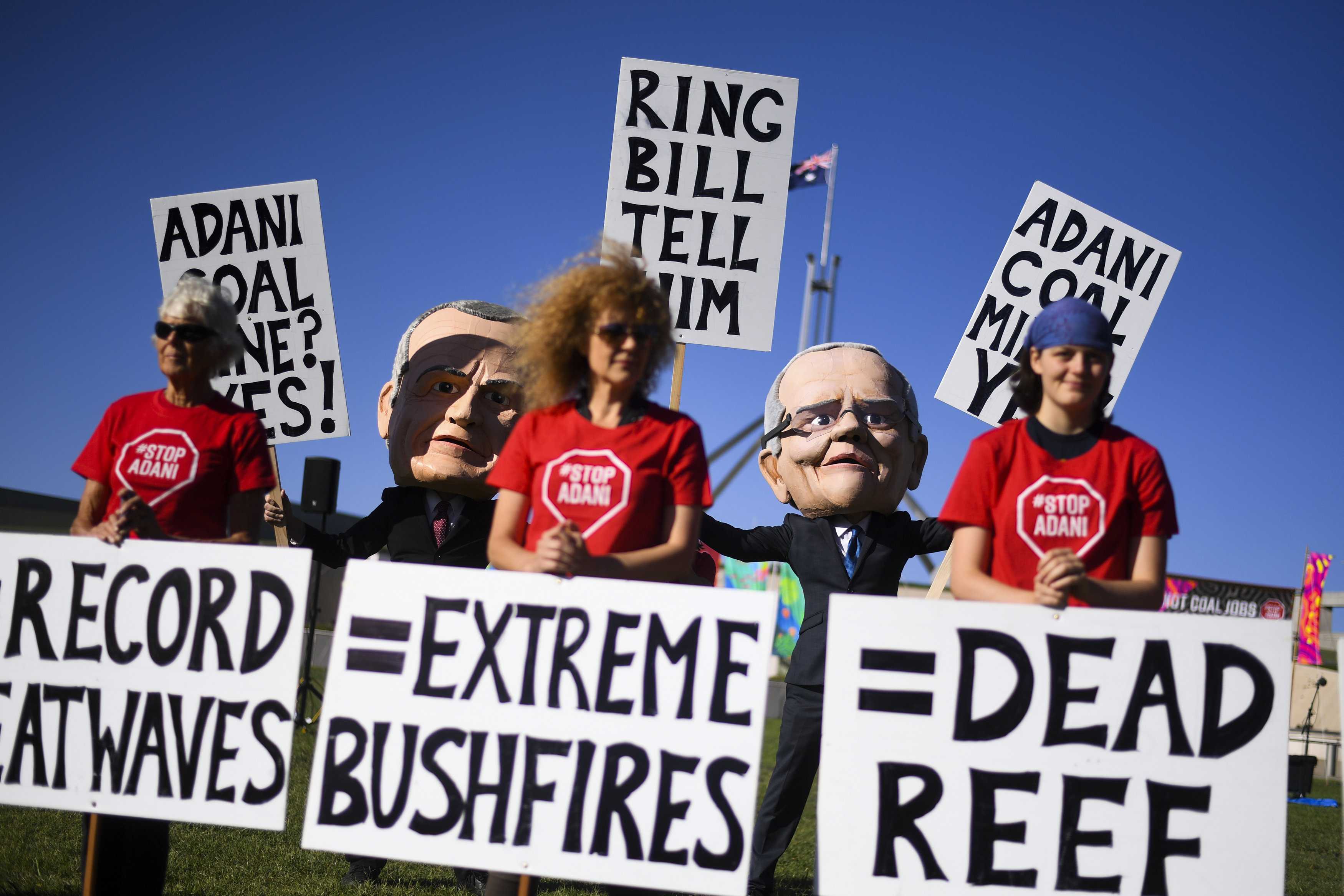
Protesters wearing giant puppet heads resembling Australian Prime Minister Scott Morrison and Australian Opposition Leader Bill Shorten are seen during a Stop Adani protest outside Parliament House in Canberra, Australia, February 12, 2019. /Reuters Photo
Protesters wearing giant puppet heads resembling Australian Prime Minister Scott Morrison and Australian Opposition Leader Bill Shorten are seen during a Stop Adani protest outside Parliament House in Canberra, Australia, February 12, 2019. /Reuters Photo
Later, he joked when asked about it, saying he did not want to "over-egg" it.
"Just because you have a difference of view to someone, doesn't mean you have to engage in these sorts of ugly types of protests ... We have to learn to disagree better," he told reporters.
Earlier in the year, controversial Australian Senator Fraser Anning was also struck with an egg.
Policy on China
Australia's double standards on cybersecurity
Morrison's government has repeatedly said it is keeping Chinese telecoms giant Huawei out of Australia's 5G network infrastructure since he was elected as Australian prime minister in 2018.

Signs are displayed at the Huawei stand at the Shanghai Auto Show in Shanghai, April 17, 2019. /VCG Photo
Signs are displayed at the Huawei stand at the Shanghai Auto Show in Shanghai, April 17, 2019. /VCG Photo
On the other hand, a relevant Australian law has mandated communication enterprises to install "backdoors" for the Australian government, a number of Australian media reported.
Google, Apple, Amazon and other technology companies thus believed the move will threaten cybersecurity in Australia and the world.
On the Huawei issue, people in Australian have their own say.
For Bob Jarman, an university lecturer from New Zealand, espionage allegations against Huawei have no evidence.
02:55

"I can't understand why they're taking this perspective," he said.
Meanwhile local electrician Simon Bazouni didn't think that Morrison is against the Chinese. "He has to look after the interest of Australia."
In a nutshell, it is puzzling that relevant countries use cybersecurity and sensationalize the so-called "security threat" of other countries or enterprises with trumped-up charges while doing things that endanger cybersecurity, China's foreign ministry spokesperson Lu Kang explained last month.
Morrison describes China as 'customer'
Another spat that strained China-Australia ties was Morrison's description of China as a "customer" on Monday, Australia's SBS News reported.
"You don't have to pick sides in that. You don't have to walk away from the relationships that you have," Morrison said on the campaign trail in Sydney.
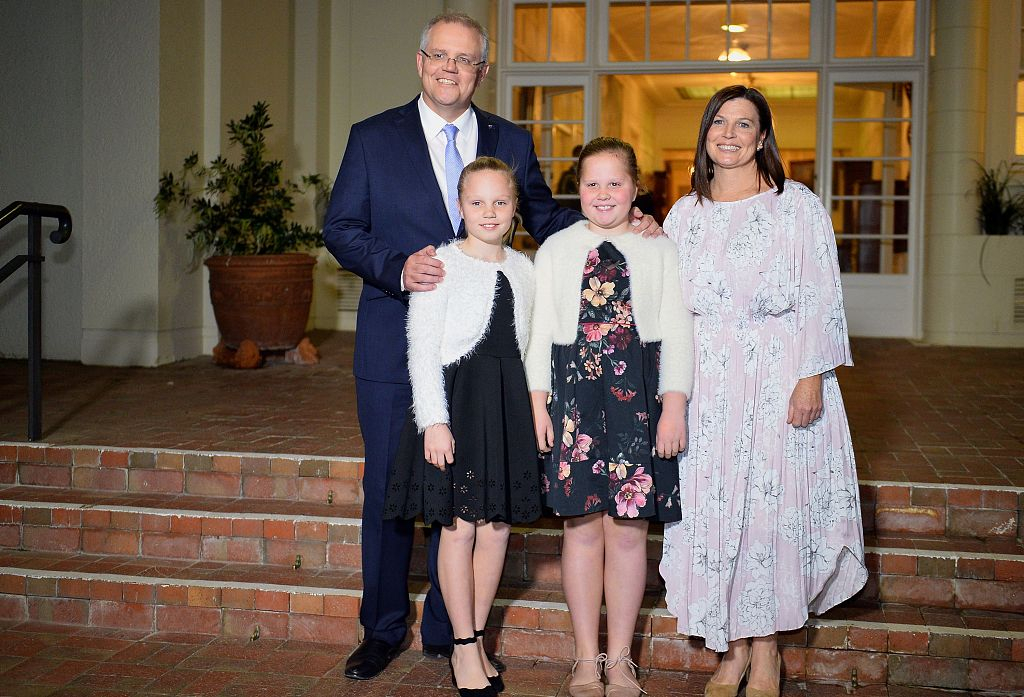
Australian Prime Minister Scott Morrison (L) poses for photos with his wife Jenny Morrison (R) and their two daughters in Canberra, August 24, 2018. /VCG Photo
Australian Prime Minister Scott Morrison (L) poses for photos with his wife Jenny Morrison (R) and their two daughters in Canberra, August 24, 2018. /VCG Photo
He made the comments when describing the United States as a "friend" while referring to China as a "customer," which was met with outrage on Chinese social media.
Meanwhile, Australia's former foreign minister Julie Bishop turned the thumbs down on the remarks.
"I don't see it that way at all," Bishop told reporters in Perth."I think our relationship with China is one of deep and mutual respect."
Smaller parties and independents
At a time when opposition Australian Labor Party (ALP)'s Bill Shorten and Morrison are fighting tooth and nail for votes, a survey of Australian news website news.com.au shows more people are determined to vote for smaller parties and independents.
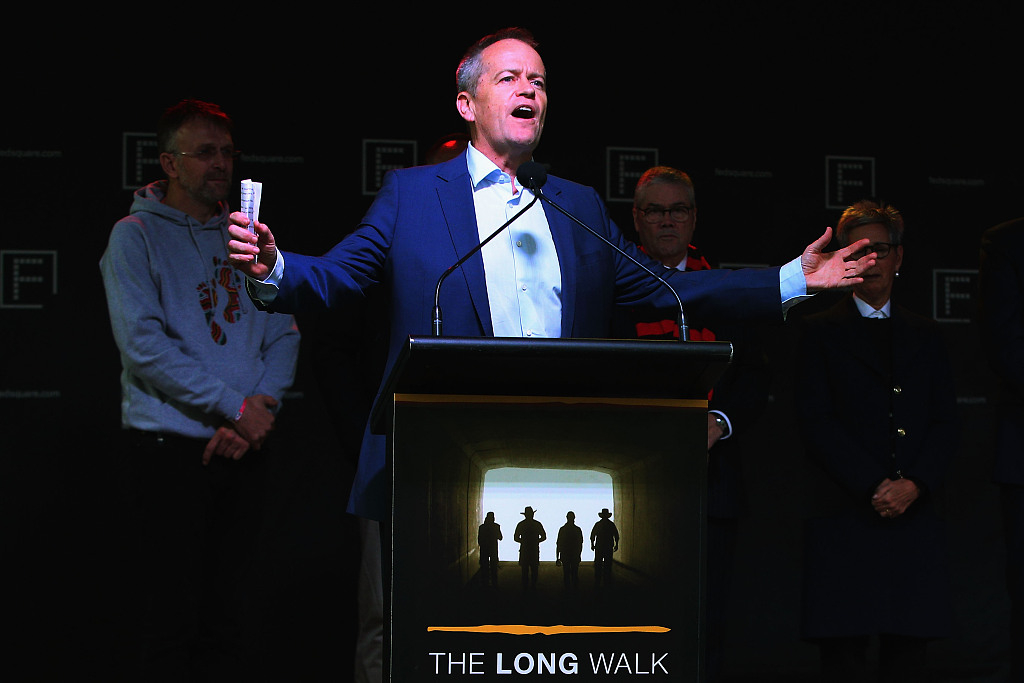
Bill Shorten speaks at Federation Square during the round 10 AFL match between the Richmond Tigers and the Essendon Bombers at Melbourne Cricket Ground in Melbourne, Australia, May 27, 2017. /VCG Photo
Bill Shorten speaks at Federation Square during the round 10 AFL match between the Richmond Tigers and the Essendon Bombers at Melbourne Cricket Ground in Melbourne, Australia, May 27, 2017. /VCG Photo
According to the website, the survey polled 25,347 people on their attitudes to things such as immigration, housing affordability, welfare, childcare and infrastructure, as well as politics, in which voters seemed more open to voting for one of the smaller parties and independents.
If neither the ALP nor the LNP wins a majority of the 151 seats, they can form a minority government with the support of independents and smaller parties, as Labor did to form a government in 2010.
With both parties having announced their major policies if they win on Saturday, the leaders will use election campaigns to target marginal seats where the election will be won and lost.
Morrison spent Tuesday morning defending his plan to lower the required deposit for first home buyers to five percent, saying that it would stabilize Australia's fledgling property market, while Shorten promised the same day that he would take action on increasing the minimum wage if he wins the election.
(With inputs from agencies)
(Video editors: Ge Ning, Chen Haomin)

 ["china"]