
Politics
08:18, 09-May-2018
Trump pulls US out of Obama-era's Iran nuclear deal
 ["china"]
Share






Copied
00:30
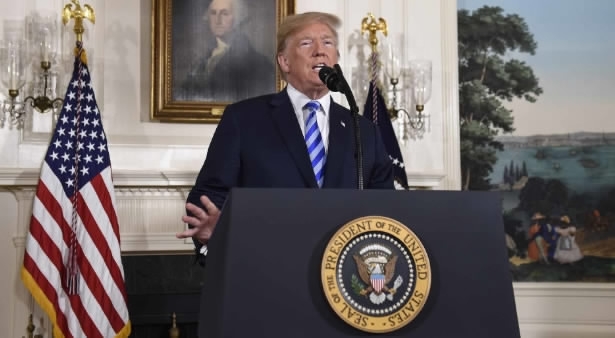
US President Donald Trump said on Tuesday he was reimposing economic sanctions on Iran and pulling the United States out of an international agreement aimed at stopping Tehran from obtaining a nuclear bomb.
The decision is likely to raise the risk of conflict in the Middle East, upset America's European allies and disrupt global oil supplies.
"The Iran deal is defective at its core," Trump said in a televised address from the White House. "I am announcing today that the United States will withdraw from the Iran nuclear deal."
After consulting US "friends" from across the Middle East, Trump said, "it is clear to me that we cannot prevent an Iranian nuclear bomb under the decaying and rotten structure of the current agreement."
"America will not be held hostage to nuclear blackmail," Trump vowed.
"We will not allow American cities to be threatened with destruction and we will not allow a regime that chants 'Death to America' to gain access to the most deadly weapons on Earth."
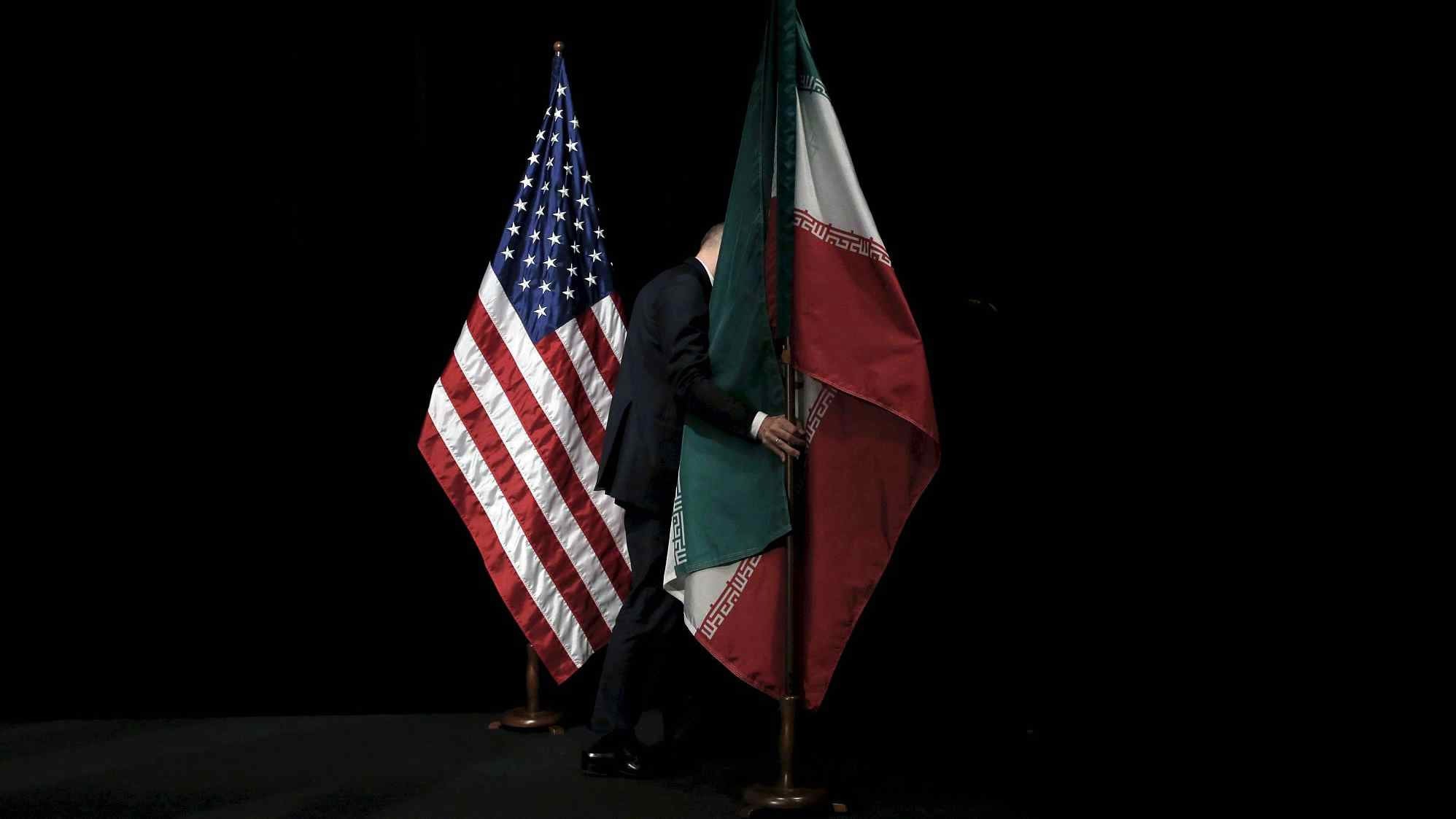
A staff member removes the Iranian national flag from the stage during the Iran nuclear talks in Vienna, Austria, July 14, 2015. /VCG Photo
A staff member removes the Iranian national flag from the stage during the Iran nuclear talks in Vienna, Austria, July 14, 2015. /VCG Photo
Following his address, the US leader signed a presidential memorandum to start reinstating US nuclear sanctions on Iran. "We will be instituting the highest level of economic sanction," Trump said.
"Any nation that helps Iran in its quest for nuclear weapons could also be strongly sanctioned by the United States," National Security Adviser John Bolton told reporters after Trump's speech that the US sanctions would apply to new contracts "immediately," and that foreign firms would have months to wind down existing operations in Iran.
Describing Iran as the world's leading state sponsor of terror, and decrying its influence in the Middle East, Trump said the United States intended to work with its allies to "find a real, comprehensive, and lasting solution to the Iranian nuclear threat."
Such a solution, he said, would include efforts to eliminate the threat from Iran's ballistic missile program, stop its "terrorist activities" worldwide, and block its "menacing" activity across the region.
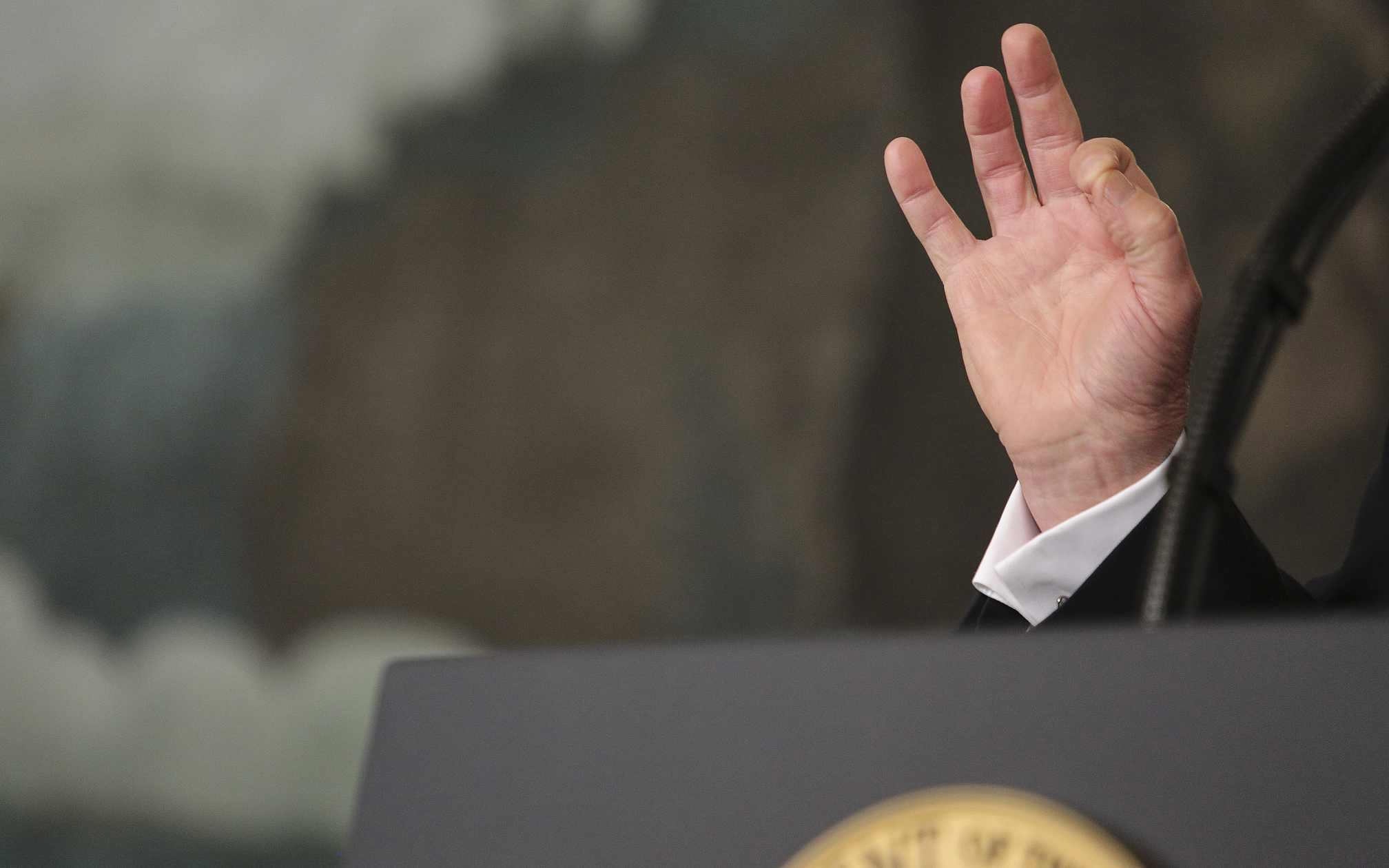
US President Donald Trump makes a statement on the administration's strategy for dealing with Iran, in the Diplomatic Reception Room in the White House on October 13, 2017 in Washington, DC. /VCG Photo
US President Donald Trump makes a statement on the administration's strategy for dealing with Iran, in the Diplomatic Reception Room in the White House on October 13, 2017 in Washington, DC. /VCG Photo
In the meantime, Trump warned, "if the regime continues its nuclear aspirations, it will have bigger problems than it has ever had."
Trump had long pledged to tear up the "very badly negotiated" agreement – which his predecessor Barack Obama agreed with Britain, China, France, Germany and Russia – daring Tehran's regime to restart its enrichment program and alleged quest for a nuclear weapon.
The US leader had until May 12 to decide whether to continue to waive sanctions on Iran's central bank and its oil sector dealings, a key pillar of the 2015 agreement.
For months, critics have warned that ending the waivers would unravel the carefully constructed deal, plunge Iran's already struggling economy into crisis and expose the biggest transatlantic rift since the Iraq War.