
Tech & Sci
20:15, 13-Aug-2018
Australia's Antarctic division tests submarine in country's deepest lake
Updated
19:37, 16-Aug-2018
 ["china"]
Share







Copied
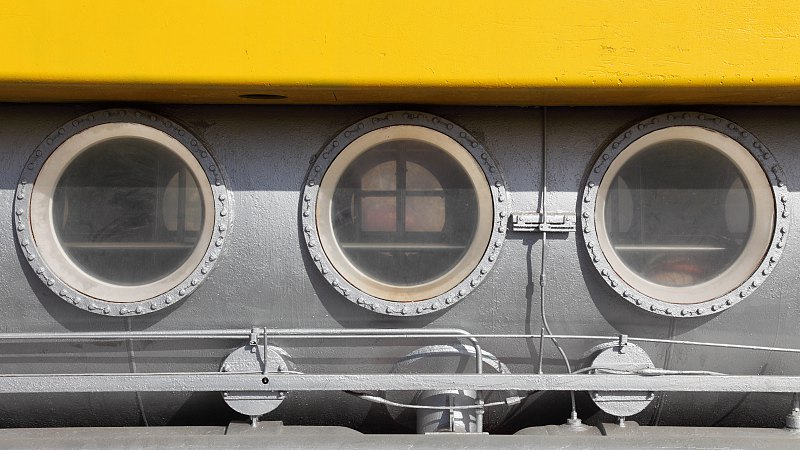
Australian scientists have tested an automated submarine in the country's deepest lake before it is due to be placed bellow the freezing waters of Antarctica later this year.
The seven-meter, 1,600-kilogram unmanned autonomous underwater vehicle (AUV) will be deployed beneath the sea ice and ice shelves to collect important data from these areas which are normally extremely difficult to access.
"This summer the vehicle will be going to Antarctica for the first time," AUV facility manager Peter King told Xinhua on Monday.
"So to prepare for that we did a bit of a dress rehearsal at Lake St Clare which has a high altitude and very deep, cold water."
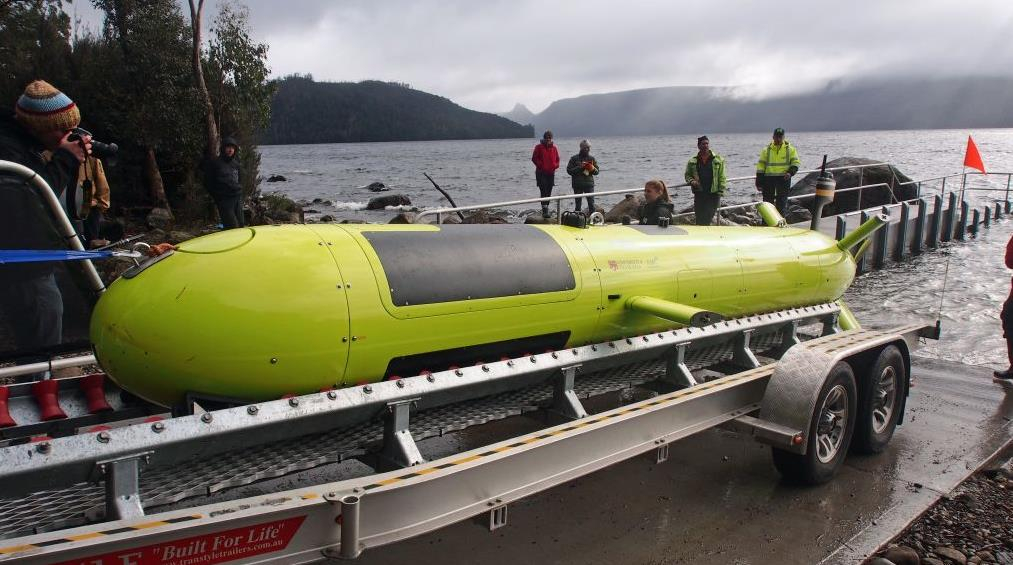
The AUV before launch into Lake St Clair /Photo via antarctica.gov.au
The AUV before launch into Lake St Clair /Photo via antarctica.gov.au
Lake St Clare is located in Australia's southernmost State of Tasmania, which due to its extreme southerly latitude, acts as a base for much of the nation's Antarctic research.
The project, led by the University of Tasmania, aims to provide new insight into the role of Antarctica and the Southern Ocean in the global climate system, exploring over 1,000 meters beneath the frigid Antarctic waters.
For its maiden mission, the team will launch the vehicle from the Davis research station before traveling 11 km to the Sorsdal Glacier, during which time the AUV will travel along the surface of the water, controlled by a team in a small chase boat.
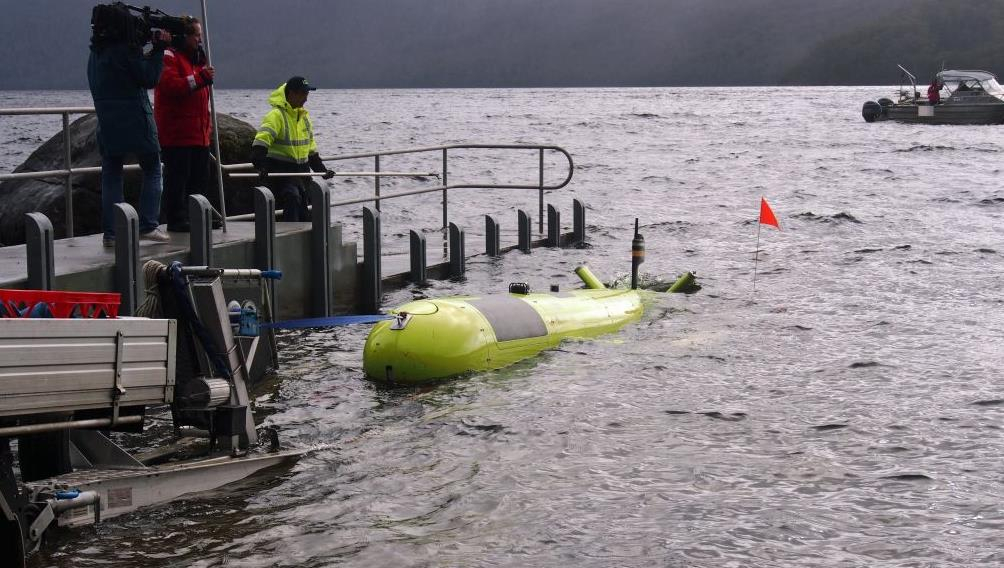
The AUV into the water /Photo via antarctica.gov.au
The AUV into the water /Photo via antarctica.gov.au
However, once the AUV dives beneath the surface to start collecting data, it will be completely independent from the research team, autonomously mapping the shape of ice formations and collecting water and sediment samples.
"Once we get out to our destination and want to run an actual mission we basically program it a set of tasks and waypoints," King said.
There is not a lot known about the conditions the team will be exploring, meaning the first steps will be to test the AUV's capacity, slowly increasing reach and depth as it proves its capability.
"There are examples of AUVs that have gone underneath the ice before and a couple have gone underneath the ice shelf," King said. "But it's a very small club."
(Top image: VCG Photo)
9608km
Source(s): Xinhua News Agency