
Opinions
21:11, 28-May-2018
Opinion: Iran leaving Syria is a dream ticket for Trump and Friends - But does it have legs?
 ["china"]
Share







Copied
Editor's note: Ghanbar Naderi is an Iranian columnist and political commentator. The article reflects the author's opinion, and not necessarily the views of CGTN.
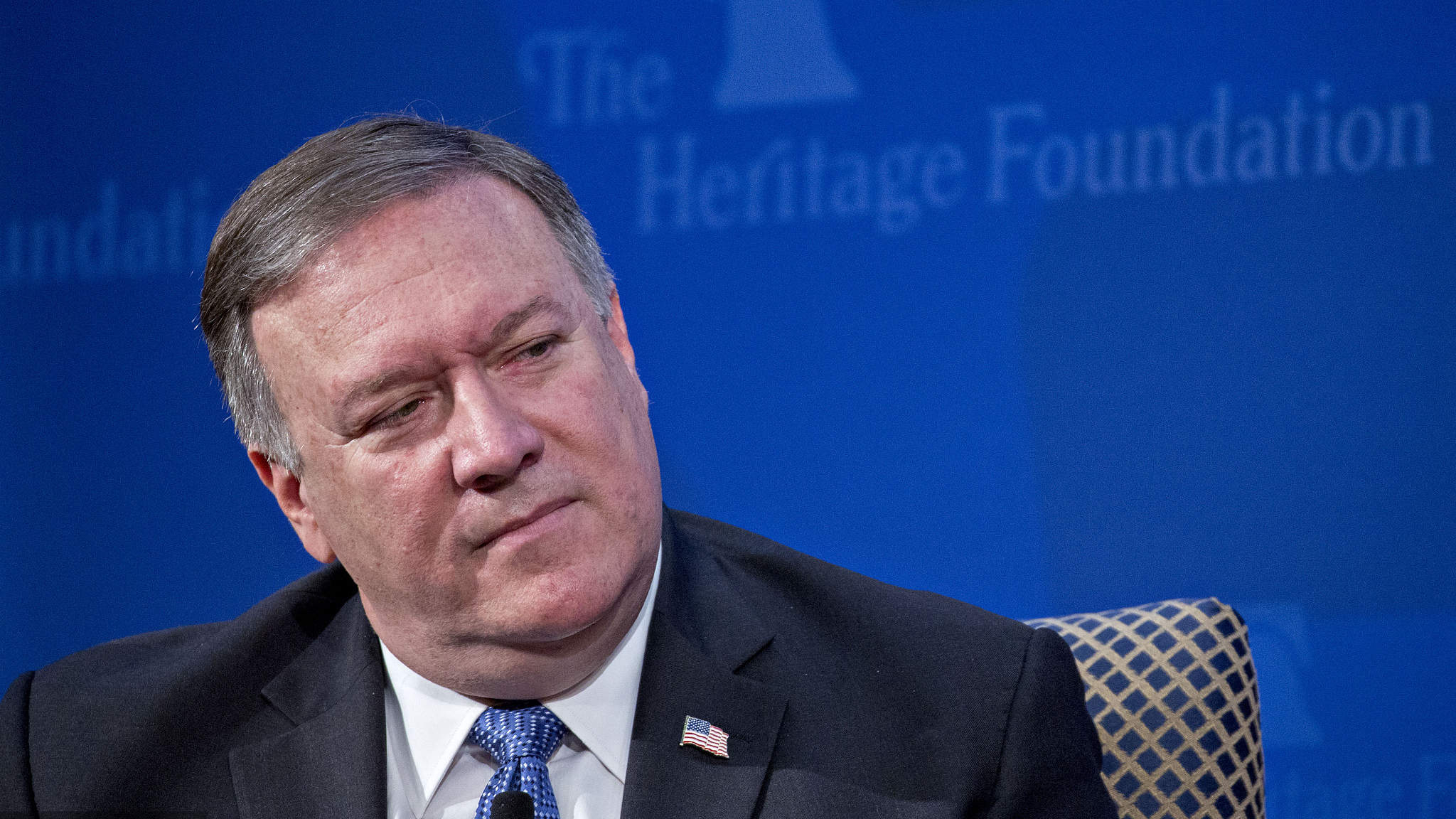
US Secretary of State Mike Pompeo has once again talked about Washington’s demands and the new Iran strategy, saying if Iranian leaders accept these demands “the Americans will visit Iran and treat it as a friend.”
This came after Pompeo set out 12 demands on May 21 for inclusion in a new nuclear treaty with Iran. The conditions require Iran among other things to curb its regional influence and withdraw all forces under its command throughout the entirety of Syria.
This is a dream ticket for US President Donald Trump and his friends in the Middle East. But does it have legs?
1. Iran has already criticized the Trump White House for the sweeping change in its foreign policy and nuclear deal.
President Donald Trump had no justification to pull out of an international nuclear deal that had lifted sanctions on Iran in exchange for curbs to its nuclear program.
European powers see the accord as the best chance of stopping Tehran acquiring a nuclear weapon. They are desperate to salvage whatever has remained from that historic deal, saying Pompeo’s demands are “wishful thinking.”
2. Tehran’s ally Damascus has flatly dismissed Pompeo’s call for a withdrawal of Iranian forces from Syria.
Iranian Foreign Minister Mohammad Javad Zarif and Chief of Staff of Iranian Armed Forces Major General Mohammad Bagheri have said Tehran will never bow to Washington’s pressure to limit its influence in the region, much less withdraw its troops and military advisors from Syria.
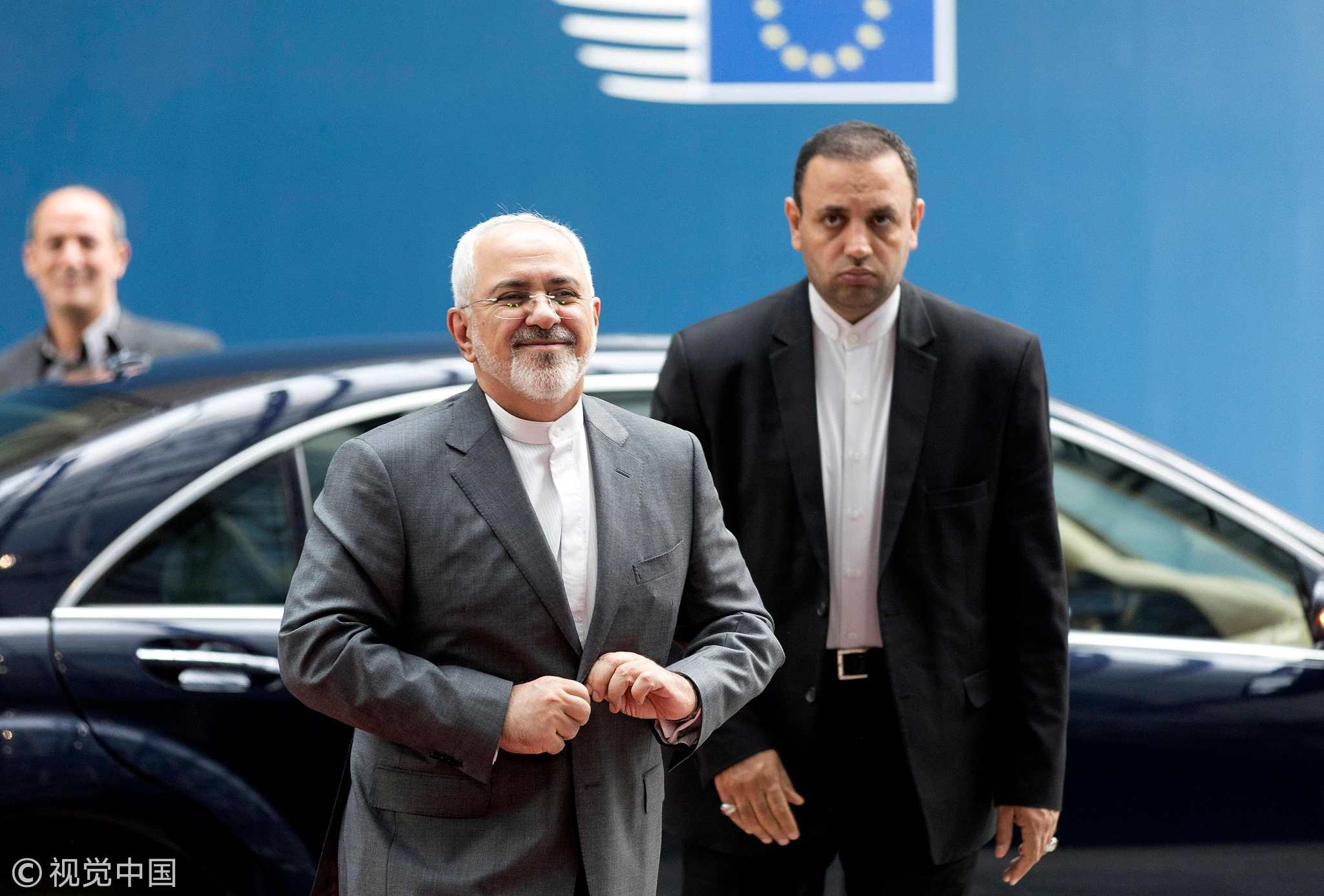
May 15, 2018: Iranian Foreign Minister Mohammad Javad Zarif arrives at the EU headquarters in Brussels ahead of a meeting, with European Union Foreign Policy Chief and EU counterparts, concerning Iran's nuclear deal./ VCG Photo
May 15, 2018: Iranian Foreign Minister Mohammad Javad Zarif arrives at the EU headquarters in Brussels ahead of a meeting, with European Union Foreign Policy Chief and EU counterparts, concerning Iran's nuclear deal./ VCG Photo
3. In Syria’s seven-year-old conflict, Iran has provided vital support to the army and government in their fight against terrorist groups, including ISIL and Al-Qaeda.
Iranian forces and the militias from the region, including Lebanon’s Hezbollah, helped Damascus claw back control of major cities and towns from militants and rebels with a helping hand from Russian airpower.
That explains why Syrian Deputy Foreign Minister Faisal Mekdad says, “Whether Iranian forces or Hezbollah withdraw or stay in Syria is not up for discussion because it’s the business of the Syrian government.”
4. A series of attacks against US- and Russian-backed forces in recent days suggests that ISIS is still very much a threat.
The terrorist group’s new offensives serve as a reminder that it may be too soon to sound the death knell for ISIS in Syria.
Whilst the US talks of a military defeat and the liberation of Syrian-Iraqi territory, the bigger and arguably much trickier struggle is about defeating the medieval ideology and preventing the death cult from re-emerging. Iranian forces are in Syria because ISIS is also a threat to Iran.
On the other hand, with Iranian-Syrian-Russian military operations against militants still underway, there has yet to be any significant attempt by the US to battle the ideological residues of the group or address the grievances that led to its emergence in Iraq.

August 16, 2016: Russian fighter took off from Iran to bomb extreme groups in Syria./ VCG Photo
August 16, 2016: Russian fighter took off from Iran to bomb extreme groups in Syria./ VCG Photo
5. Since fighting terrorism was not part of the nuclear agreement, the US secretary of state cannot claim Iran’s counter-terrorism activities can’t be allowed to continue in Syria, much less threaten that the US is prepared to act unilaterally and impose “the strongest sanctions in history” on Iran unless it takes dramatic steps.
These threats come amid official announcements that the US is keen to build new illegal military bases in Syria and carry out major attacks against the government, hoping to impose a regime change in Damascus. The pressure on Iran to leave the war-torn country may simply be the pretext for this new campaign.
6. The truth is that Iran has no cutthroat strategy in Syria with the sole purpose to turn the country into a permanent client state to serve its so-called malign interests.
Unlike what Israel and Saudi Arabia would like to suggest, Tehran is not building a land bridge from Iran to the Mediterranean Sea to threaten Israel and the entire Middle East.
It’s in fact the ambitious plan by war-party Washington and company to carry out a regime change in Syria that threatens to destabilize the region. An Iran pull-out from Syria makes the likelihood of it happening so much more real.
7. Just like Russia, Iran understands the consequences of disengagement.
A hasty withdrawal from Syria will create a vacuum that terrorists - including ISIS and Al-Qaeda - would instantly fill. The same holds true in Iraq. Iran’s enemies are waiting at the gates, ready to fill its place there too.
There is no doubt that without a solid military support from Iran, Syria’s ability to counter terrorist groups would be put at severe risk. It would be a catastrophic blow to regional peace and stability - a major strategic victory for terrorists and their patrons.
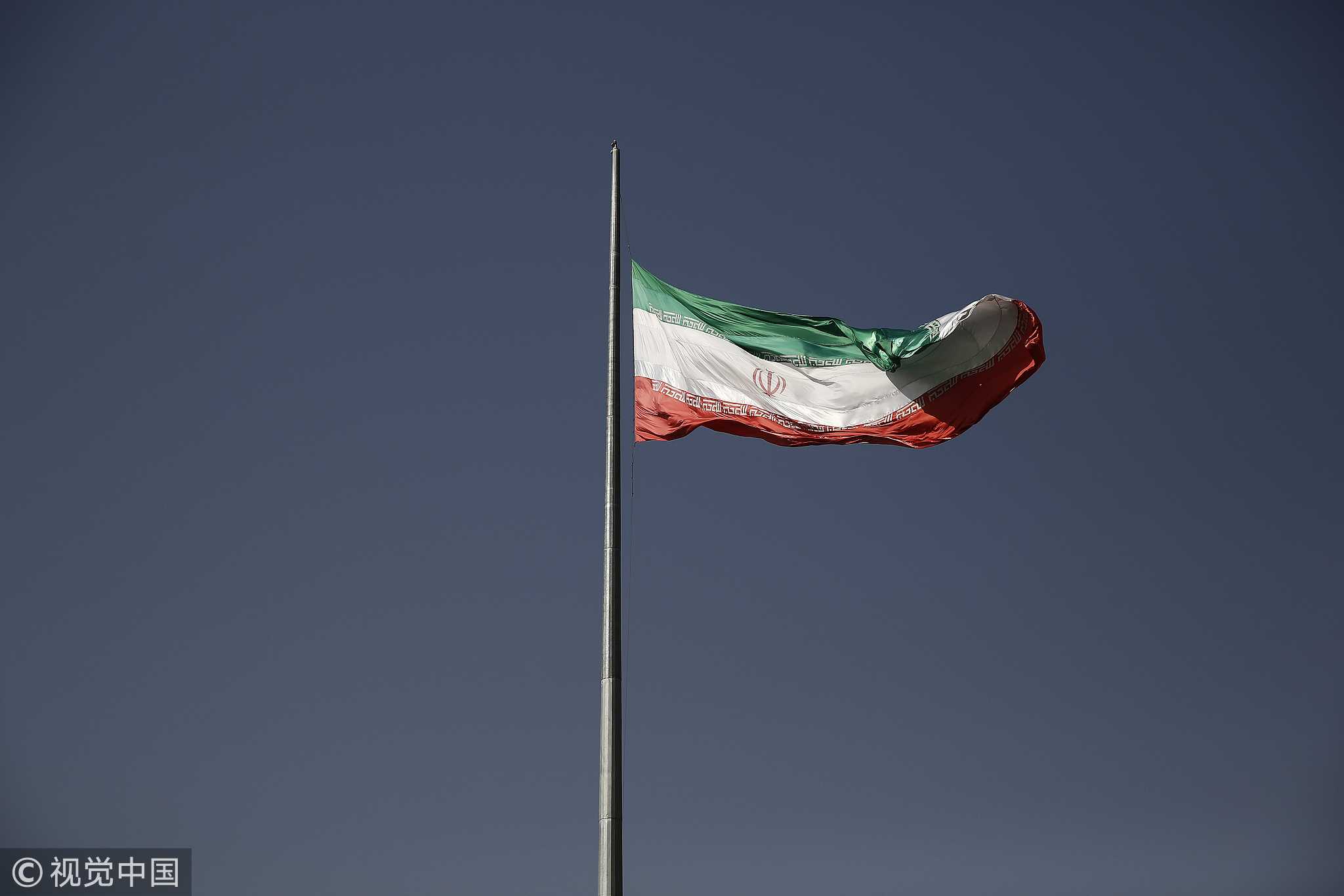
Iran national flag./ VCG Photo
Iran national flag./ VCG Photo
Altogether, the consequences of an Iranian decision to disengage in Syria must not be underestimated. Such a move could easily result in greater devastation and horror than the choice to remain.
When the US government continues to prop up anti-government militants or build new illegal military bases in northern Syria with great impunity and no accountability at the United Nations, that line has long been crossed.
And the catastrophic consequences would not just undermine Iranian interests in Syria. They would also make the position of its military advisors in neighboring Iraq untenable. The defeated Takfiri-Wahhabi militia forces - bankrolled and equipped by Saudi Arabia – still have their eyes on the Levant.
It’s a battle on multiple fronts and a grim outlook, and no easy options are left on the table.