
Politics
16:04, 11-Aug-2018
Can Trump boost Abe's party leadership race chances?
Updated
15:45, 14-Aug-2018
 ["china"]
Share







Copied
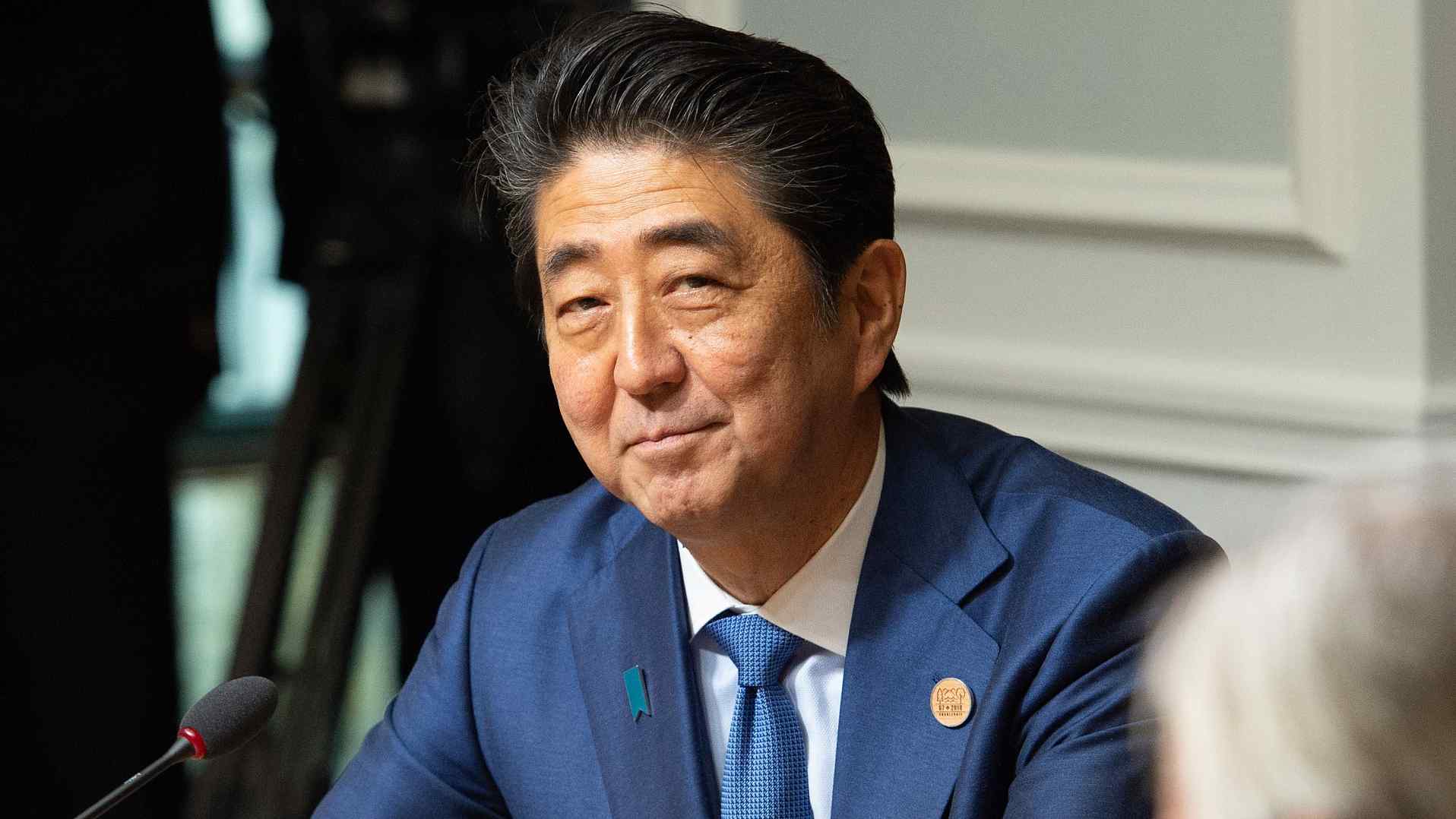
The prospects for Japanese Prime Minister Shinzo Abe to win the upcoming ruling party leadership election look pretty bright, putting him on track to becoming the longest-serving prime minister despite challenges by former defense minister and internal affairs minister for the post.
Abe attended a local gathering in west Japan on Saturday, saying his political determination has remained consistent for six years. Although this was not an official announcement for his intention to re-run as Liberal Democratic Party (LDP) president during September's party election, many view it as a clear sign.
03:39
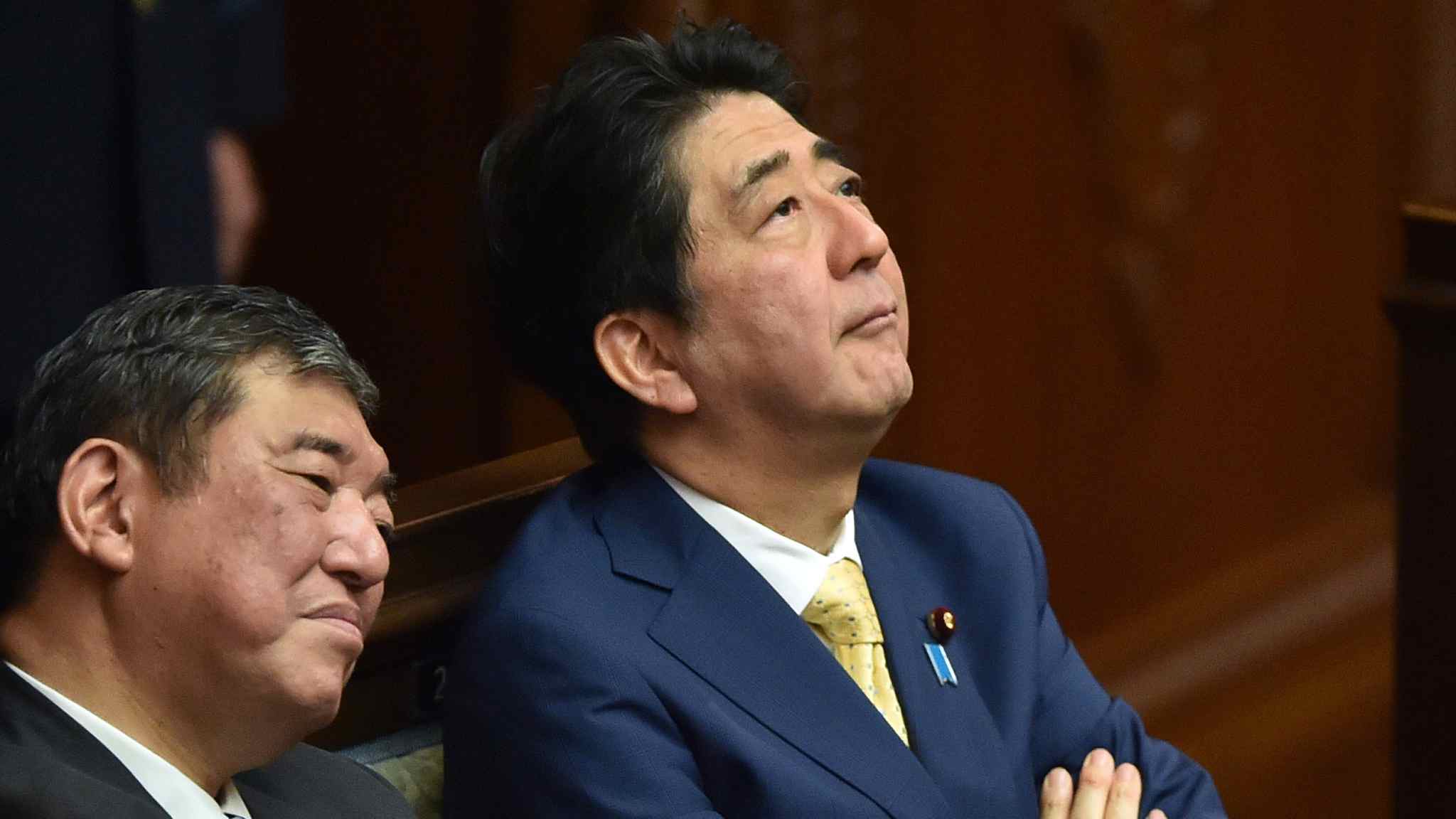
Abe's challengers
Japan's former defense minister Shigeru Ishiba officially declared his candidacy on Friday for the ruling Liberal Democratic Party's (LDP) leadership race.
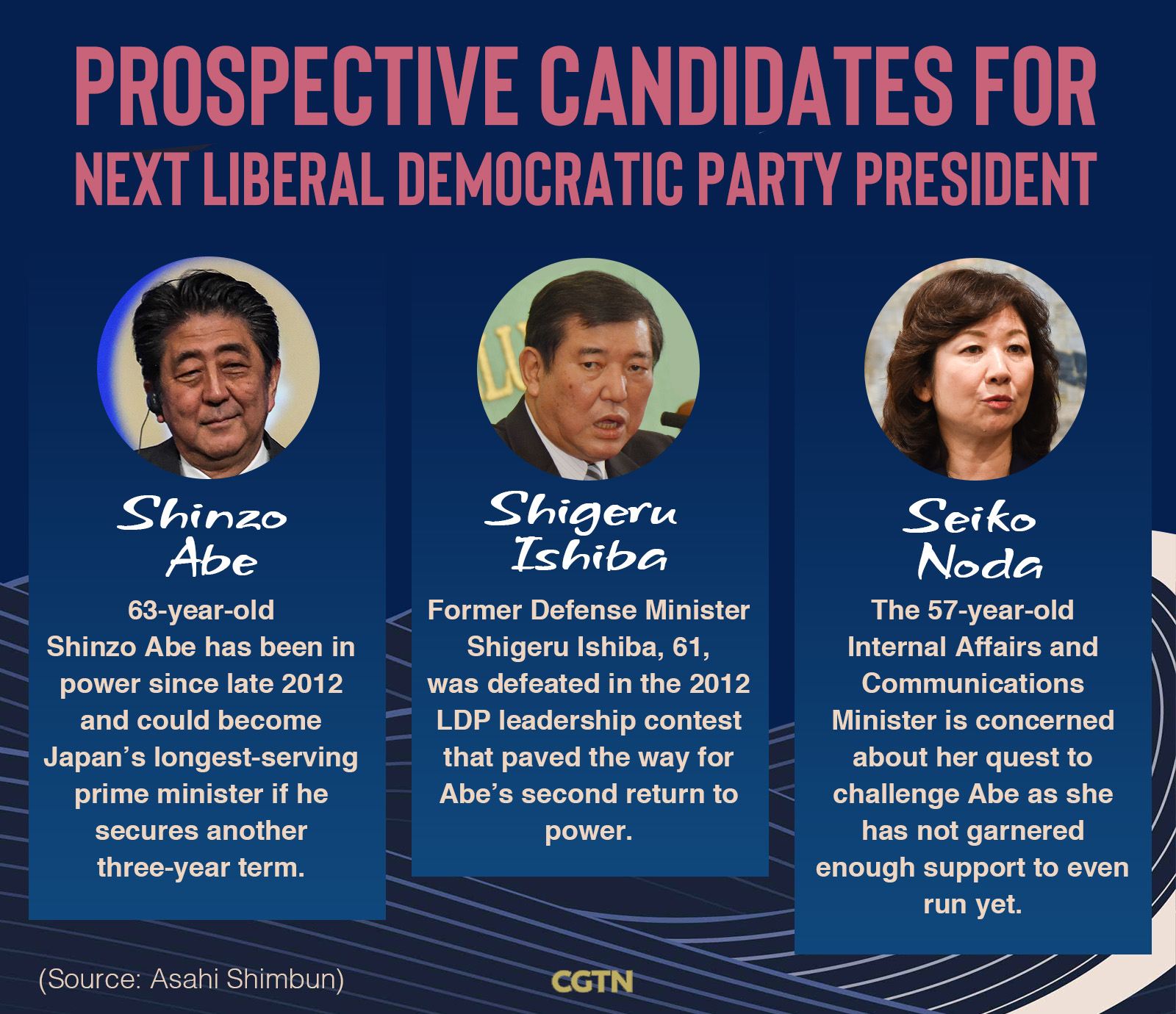
Who are Abe's competitors? /CGTN's Li Jingjie
Who are Abe's competitors? /CGTN's Li Jingjie
The 61-year-old has been outspoken about Abe and his policies and this will be the third time the veteran politician attempts to win the ruling party's top post.
Some believe that his "honest and fair" politics could likely be a refreshing change from Abe, who has long been caught up in cronyism scandals.
Meanwhile, things for Seiko Noda, another prospective candidate, are not easy as her eligibility remains in doubt.
According an Asahi Shimbun poll that asked LDP members, "Who do you think is the most suitable as the next LDP president?" Only three percent chose Noda, while 59 percent voted Abe, followed by 20 percent for Ishiba.
Although Abe is yet to officially declare his candidacy, one survey has shown that he has already locked in 70 percent of the 405 votes from LDP members of parliament.
Whoever wins the race will become Japan’s prime minister because of the LDP’s majority in the lower house of Japan’s parliament.
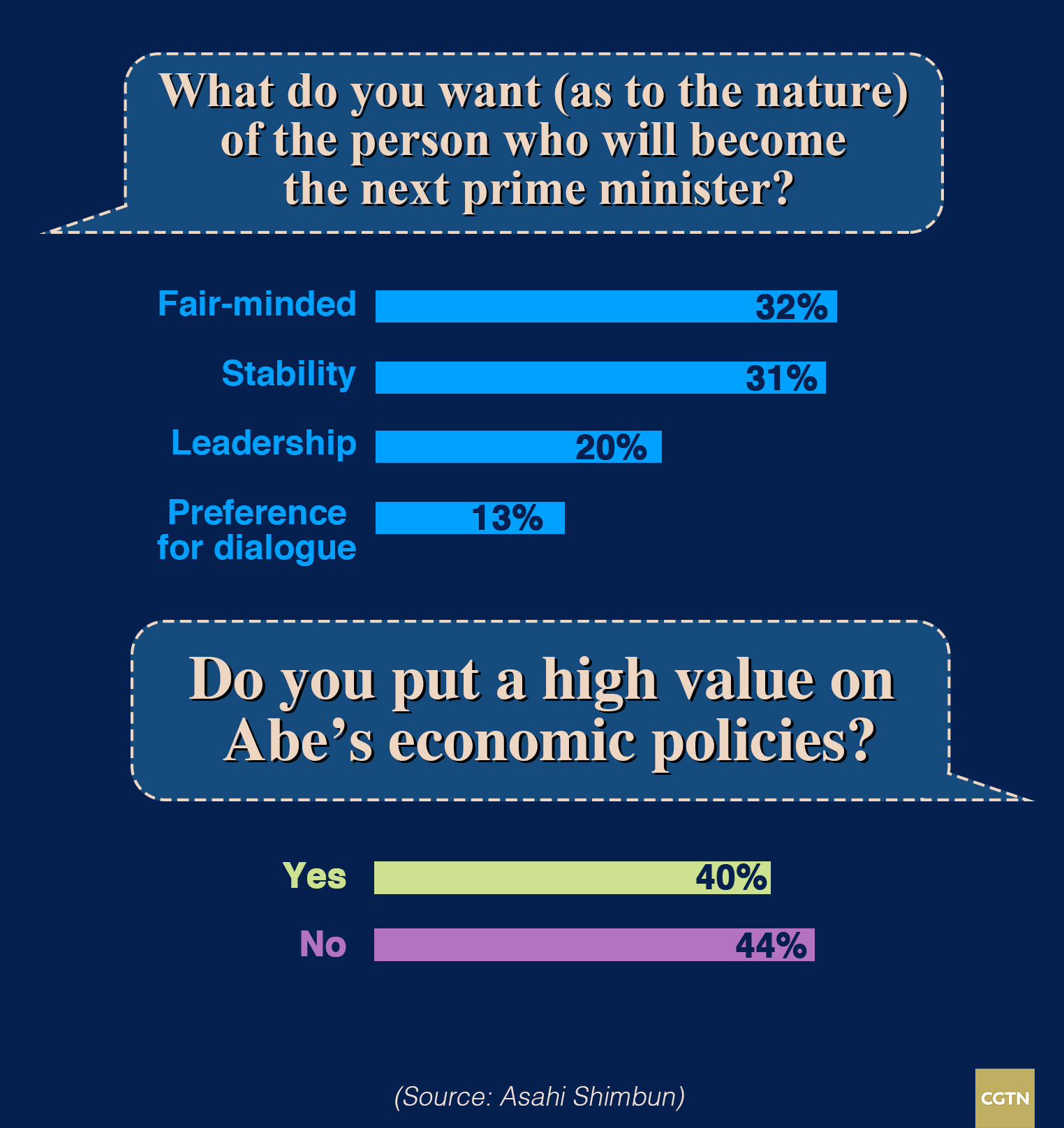
Results of a survey of LDP members. /CGTN's Li Jingjie
Results of a survey of LDP members. /CGTN's Li Jingjie
Decoding Abe's popularity
Abe's popularity apparently stems from concerns that a leadership change would destabilize Japan’s international footing at a time when US President Donald Trump is threatening to impose steep tariffs, and the Democratic People's Republic of Korea (DPRK) appears to be opening up to dialogue, according to the Japan Times newspaper.
"No one else can deal with President Trump," said one lawmaker in explaining his support for Abe, adding that Abenomics, as well as his vows for structural reform, have helped secured Abe's popularity.
Tariff row and TPP
Abe took the leadership of the Trans-Pacific Partnership (TPP) negotiations when the US decided to pull out, but mercurial Trump shocked Washington in April when he announced that he "was looking into joining the TPP again."
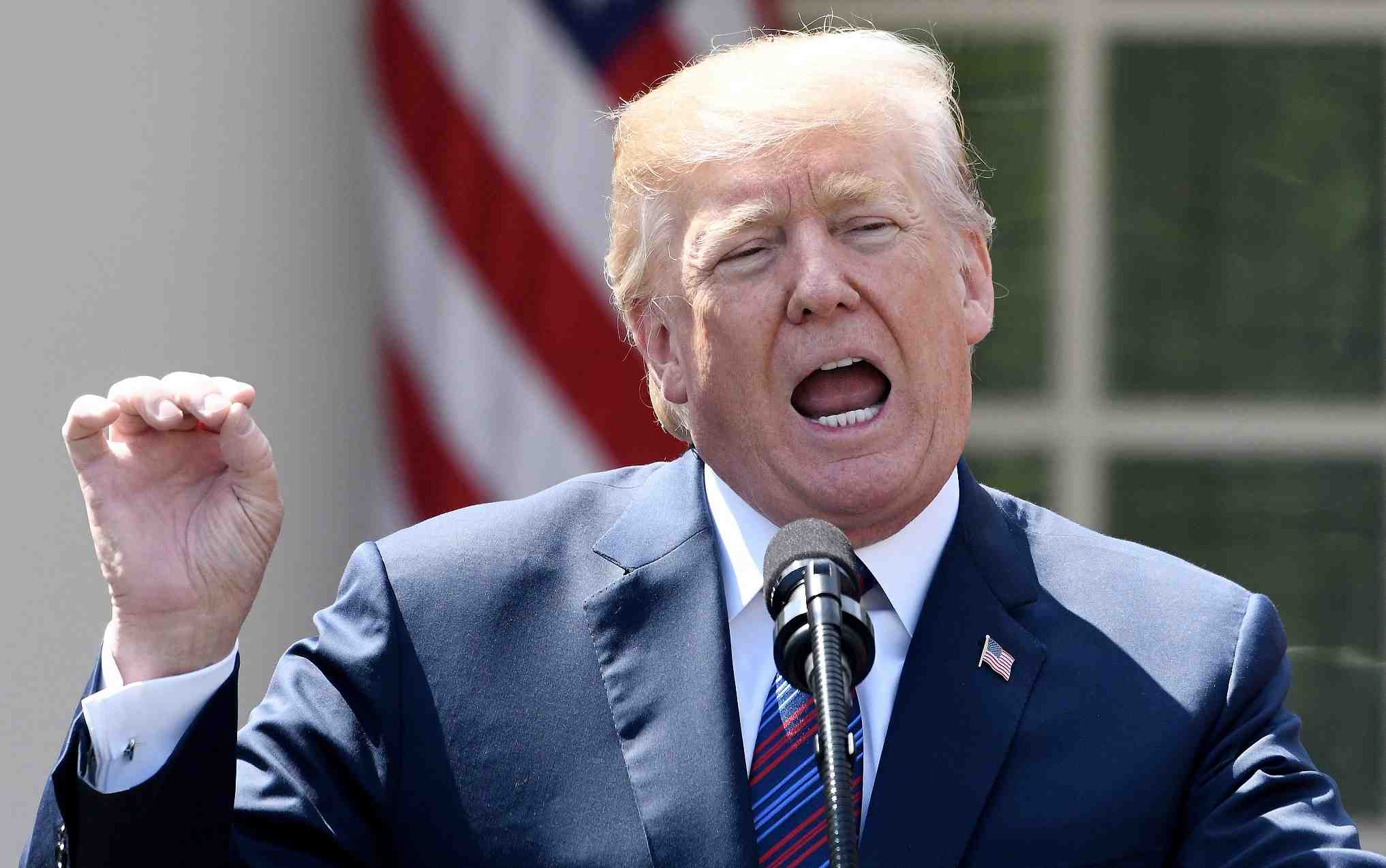
US President Donald Trump speaks about tax cuts for American workers in the Rose Garden of the White House, April 12, 2018. /VCG Photo
US President Donald Trump speaks about tax cuts for American workers in the Rose Garden of the White House, April 12, 2018. /VCG Photo
In this case, Trump could lean on Abe to begin negotiations for trade talks and Abe will try to avoid promising anything specific on that front, knowing that Trump will seek to extract more concessions from Japan than it already agreed to give in the TPP trade agreement.
This is also a bargaining chip for Japan to hold trade talks with its "closest ally" as Tokyo has called on the US to return to the TPP and Washington is pushing for a bilateral trade deal under new terms.
'Nuclear umbrella'
Japan’s security policy is premised on the US “nuclear umbrella” but the situation of the region has seen signs of change following Trump-Kim summit in Singapore, which Abe is looking to cash in on.
The historic summit between the US and DPRK leaders paved the road to the denuclearization of the Korean Peninsula. Pyongyang agreed to shut down its nuclear test site and suspend test launches of intercontinental ballistic missiles, which can hit the US mainland, and of course, Japan, too.
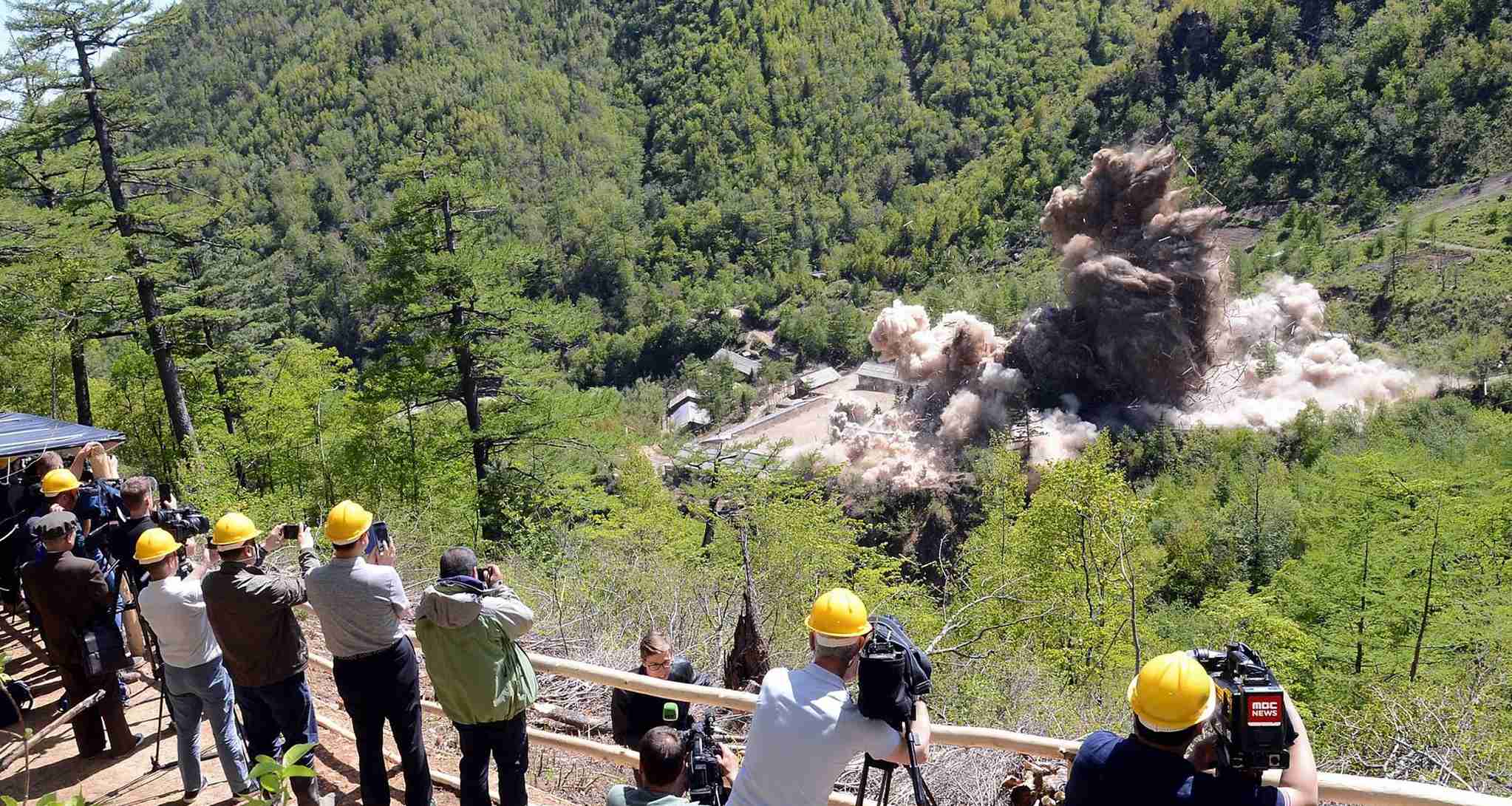
A demolition "ceremony" of the Punggye-ri nuclear test site takes place on May 25, 2018. /VCG Photo
A demolition "ceremony" of the Punggye-ri nuclear test site takes place on May 25, 2018. /VCG Photo
Abe has always described himself as a “mediator” for bridging the gap between nuclear weapon states and non-nuclear weapon states. His words sound persuasive this time as the US took initial action to call on nuclear weapon states to complete denuclearization.
Island dispute
Besides the meeting between Trump and DPRK leader Kim Jong Un, the Trump-Putin summit this July also can be seen as "a vindication of Abe’s own policy toward Russia," said James Brown, an associate professor at Temple University in Tokyo.
Abe has pinned much of his hopes on joint economic activities on a long-festering row over four disputed islands off Hokkaido between Japan and Russia.
His approach has been to consistently promote high-level political engagement with Russia, such as face-to-face meetings with Putin.
"Even if Trump is not particularly popular in Japan, there is the widespread recognition that it is still necessary for the Japanese prime minister to remain close to him," Brown added.
(With input from agencies)