
Politics
10:14, 28-Apr-2018
Powerful commander returns to Libya after health rumors
 ["africa"]
Share







Copied
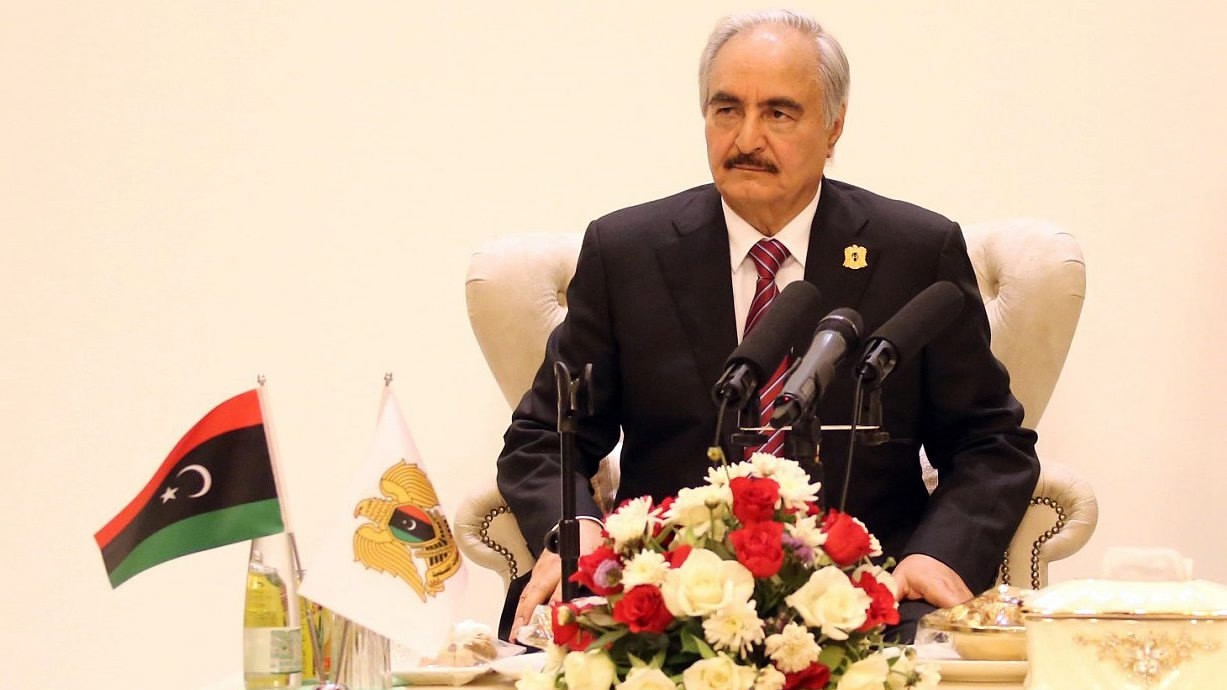
The most powerful figure in eastern Libya, military commander Khalifa Haftar, has returned to the North African country after a two-week absence that sparked rumors he may have died.
Haftar, who leads the self-styled Libyan National Army and has united territory in the east of the country after the fragmentation that followed the overthrow of Muammar Gaddafi in 2011, had been receiving medical treatment in Paris.
Authorities in eastern Libya did not issue any pictures or detailed information about the 75-year-old's health during his stay in France, fueling speculation over his condition and the possible impact on the balance of power in Libya.
There were fears that without Haftar's presence, a leadership vacuum would develop that could further destabilize the region.
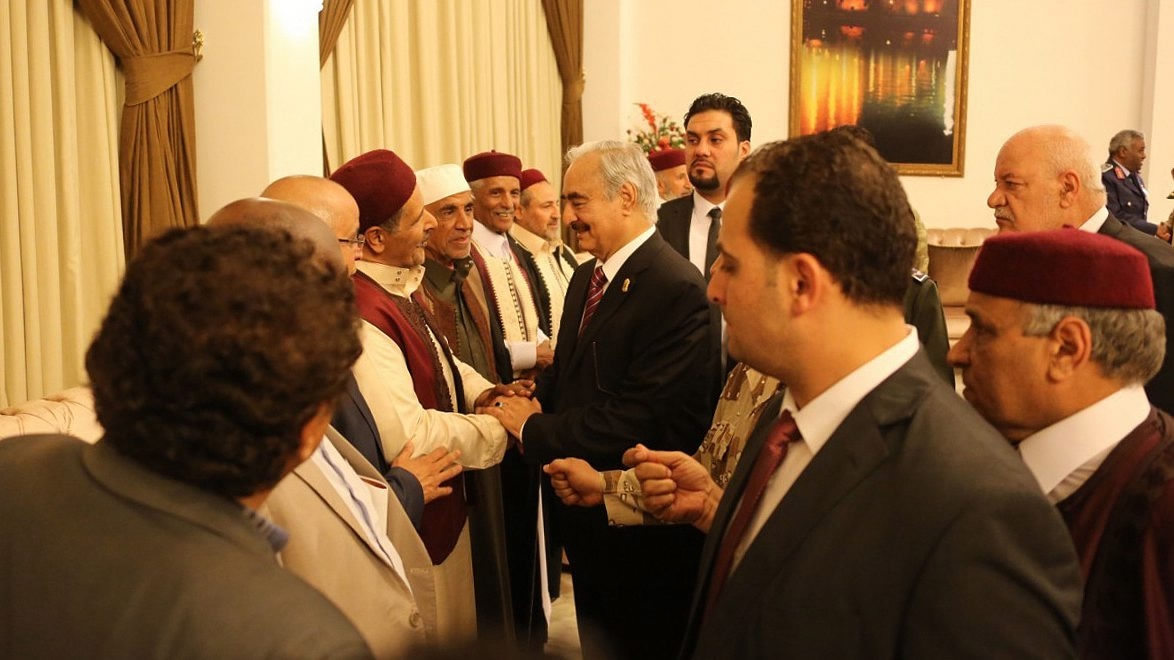
Khalifa Haftar (C) is welcomed upon his return to Benghazi, April 27, 2018. /VCG Photo
Khalifa Haftar (C) is welcomed upon his return to Benghazi, April 27, 2018. /VCG Photo
However, Haftar smiled and joked as he greeted a delegation of senior officials after arriving in Benghazi from Cairo. Among them was his chief of staff, General Abdelrazak al-Nadhuri, who survived a car bombing in Libya's second city Benghazi on April 18.
"I want to reassure you that I am in good health," he told senior army commanders and local elders in a televised address from the airport, without going into details about his absence.
"I won't respond to those promoting rumors about my health, and you are not responsible for them. But there are those who will answer for them in the appropriate way."
What's going on in Libya?
Libya fragmented after a 2011 uprising that ended more than four decades of Gaddafi's rule, and has been divided since 2014 between rival governments and military alliances based in the east and the west.
The United Nations has been leading an effort to stabilize and reunify the oil-rich nation of six million and has said it hopes to hold national elections by the end of the year. Haftar has previously suggested he would run for the presidency.
Haftar, a former commander in Gaddafi's army who turned against him and returned to Libya to join the 2011 uprising, has gradually extended his grip on Libya's east and parts of the south, taking full control of Benghazi last year after a three-year military campaign.
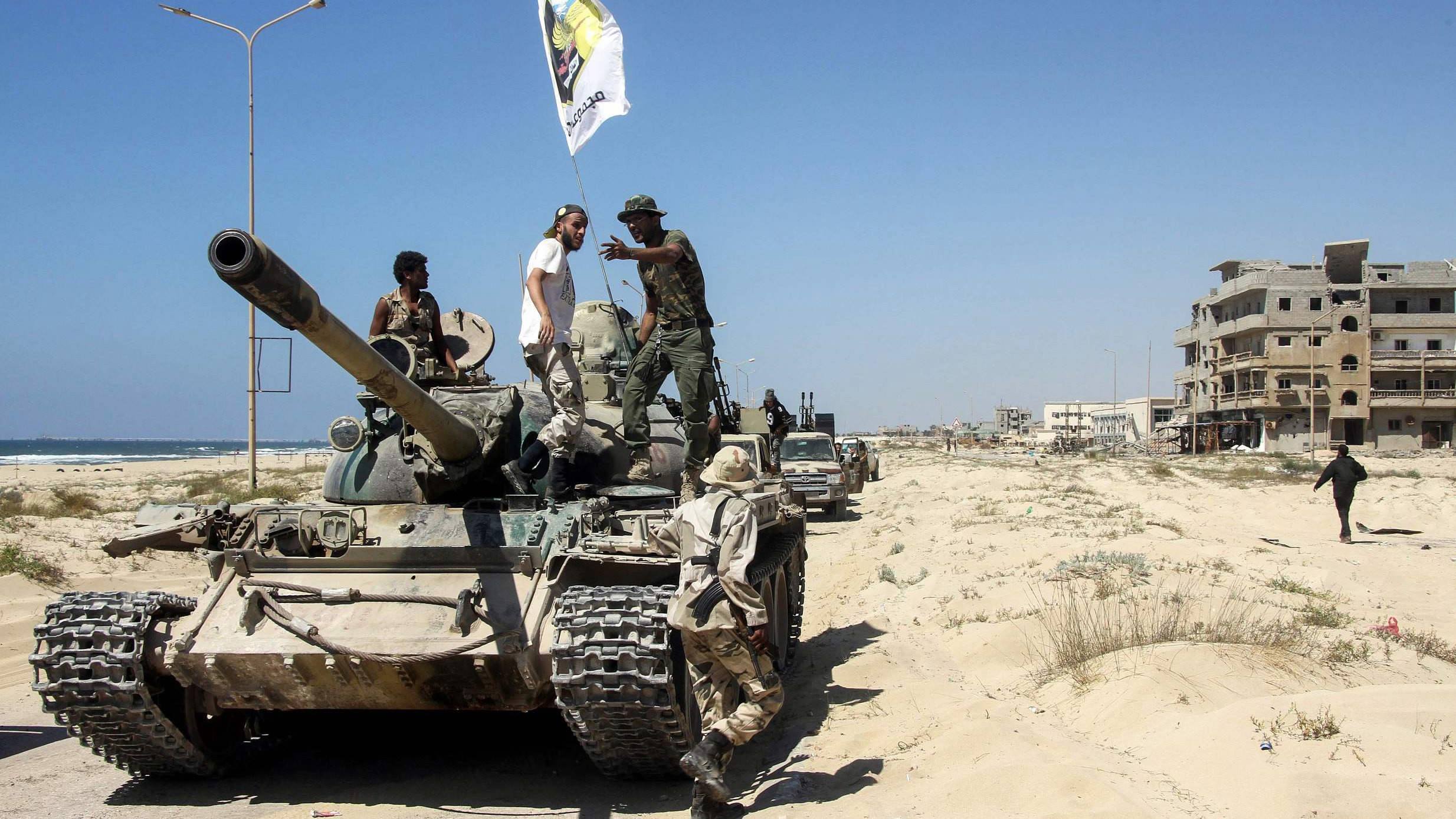
Members of the self-styled Libyan National Army, loyal to Khalifa Haftar, in the eastern city of Benghazi's central Sabri district, July 5, 2017. /VCG Photo
Members of the self-styled Libyan National Army, loyal to Khalifa Haftar, in the eastern city of Benghazi's central Sabri district, July 5, 2017. /VCG Photo
With support from President Abdel Fattah al-Sisi's Egypt and the United Arab Emirates, he has promised to drive out Islamist militants and "liberate" Tripoli, bringing the capital's militias to heel.
He has opposed a UN-backed transitional government that has been trying to establish itself from Tripoli for the past two years.
Since 2016, Haftar has also controlled all the oil ports and main fields in the east, where most of Libya's oil resources are concentrated.
But he has struggled to contain local divisions and power struggles in Libya's east. Armed rivals of his Libyan National Army have resisted encirclement to retain control of the eastern city of Derna.
(With input from agencies)
8273km