
Tech & Sci
15:37, 01-May-2018
Hong Kong takes first step towards ivory ban today
 ["china"]
Share







Copied
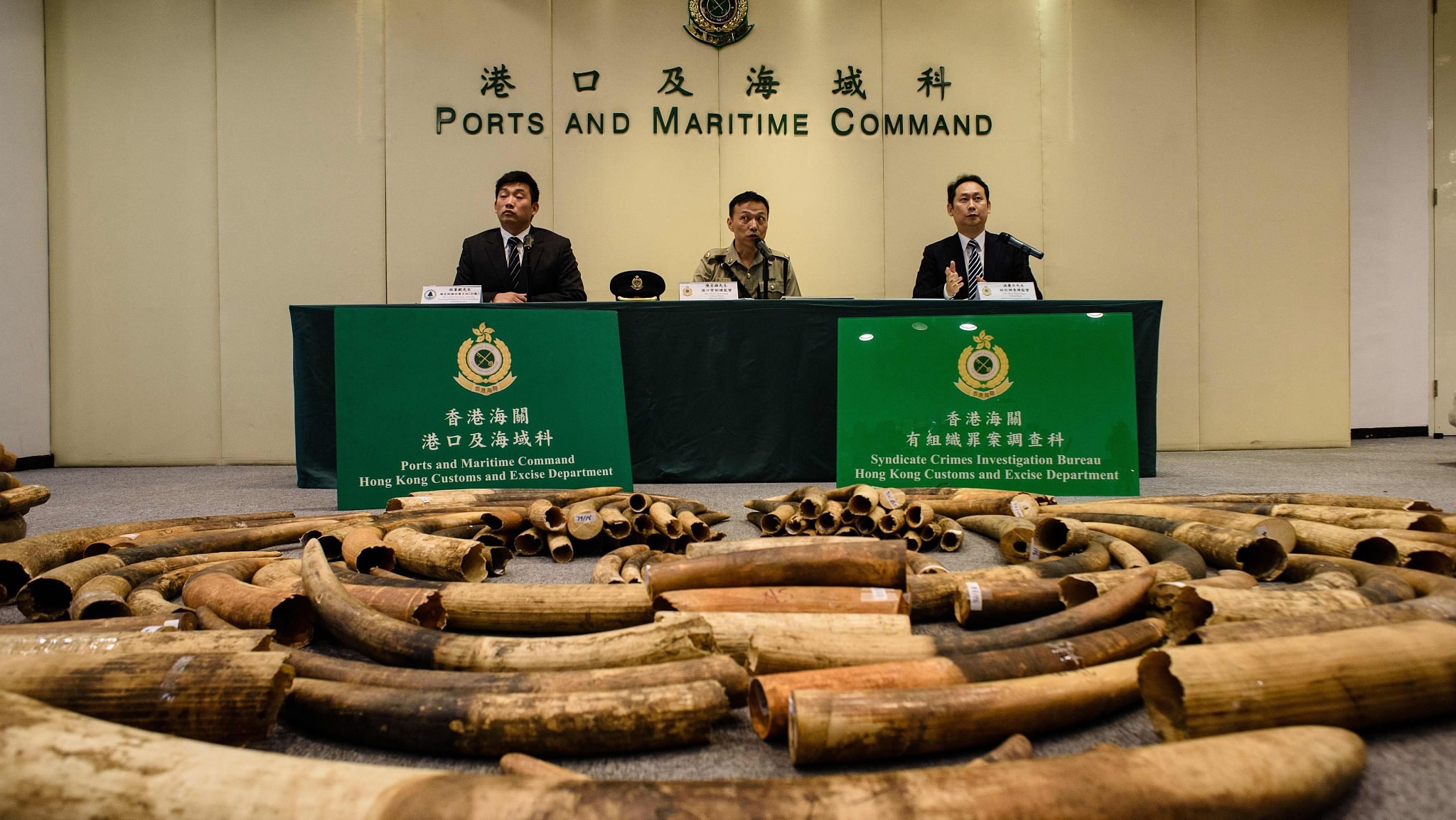
The Hong Kong Special Administrative Region (HKSAR) implemented The Protection of Endangered Species of Animals and Plants (Amendment) Ordinance 2018 on Tuesday. The new ordinance is the first step towards enforcing the ivory ban.
From May 1, import and re-export of all elephant hunting trophies and post-convention ivory pieces are banned by the government. Post-convention ivory pieces are ones acquired after the 1975 Convention on International Trade in Endangered Species of Wild Fauna and Flora (CITES).
CITES bans the international trade in elephant specimens including ivory, particularly post-Convention ivory, which had been virtually banned, except under certain specific and stringent circumstances.
“As the first step of the plan, we will ban the import and re-export of all elephant hunting trophies and the remaining post-Convention ivory items from May 1, for which their import, export, and re-export are currently permitted under the CITES,” a spokesperson from the HKSAR's Agriculture Fisheries and Conservation Department (AFCD) maintained.
The HKSAR has also increased the maximum penalties for smuggling and illegal trade to 1.3 million US dollars and 10 years of imprisonment, in a bid to control the illegal ivory trade.
Hong Kong - the world’s largest ivory market - voted to ban the trade early this year. In the second step, it will prohibit import and export of pre-Convention ivory. The HKSAR will also bring commercial possession and trade of ivory under the licensing control from August 1. In the last step, it will ban commercial possession of all ivory. The ivory trade will be completely banned from Dec. 31, 2021.
The Chinese mainland already banned ivory trade in January this year. Massive demand for ivory is blamed for the brutal killing of more than 20,000 African elephants every year. Wildlife groups and activists have been campaigning for a ban on the trade in the last few years.
European colonial rulers thrived on the western countries demand ivory products. The booming trade decimated the African elephant population from 20 million in 1800’s to nearly two million by 1970. Alarmed by the situation, CITES banned the international ivory trade to control the pachyderm's slaughter, but business soon picked up again.
The UK had one of the world’s largest domestic markets in ivory, a large part of which was imported during the colonial era as trophies and tusk pieces.
From 2010 to 2015, Britain was the most significant exporter of antique ivory, according to the World Wildlife Fund (WWF), and it allows domestic trade of ivory carved before 1990. The country has proposed one of the strictest ivory bans, which is set to take effect in the coming months.
[Top Image: Hong Kong Customs seized 7.2 tons of ivory tusks with an estimated market value of 9.2 million US dollars in the city's largest bust in three decades. /VCG Photo]