
Asia Pacific
17:25, 11-May-2019
Filipinos will vote in crucial midterm election
Updated
18:34, 12-May-2019
 ["china"]
Share







Copied
01:59
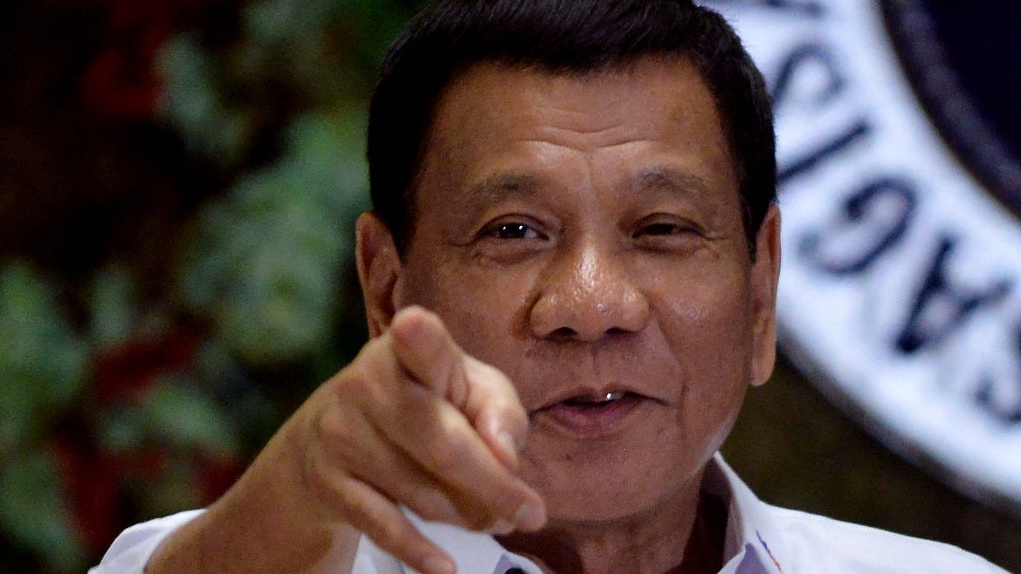
The energy was high. Hundreds of Filipinos from all walks of life gathered at the People Power Monument in Manila, site of the bloodless 1986 revolt that ousted former Philippine President Ferdinand Marcos, three days before a crucial midterm election.
"Are you ready for the day of reckoning?" Chel Diokno, a human rights lawyer, vying for one of 12 Senate seats, asked the crowd.
He drew loud cheers. Diokno has been a staunch critic of President Rodrigo Duterte and his war on drugs and is running mainly on a promise to end human rights abuses and help fix the country's justice system.
The rally brought together voters and candidates who want a Senate that would act as check and balance in the face of what they say is a looming dictatorship.
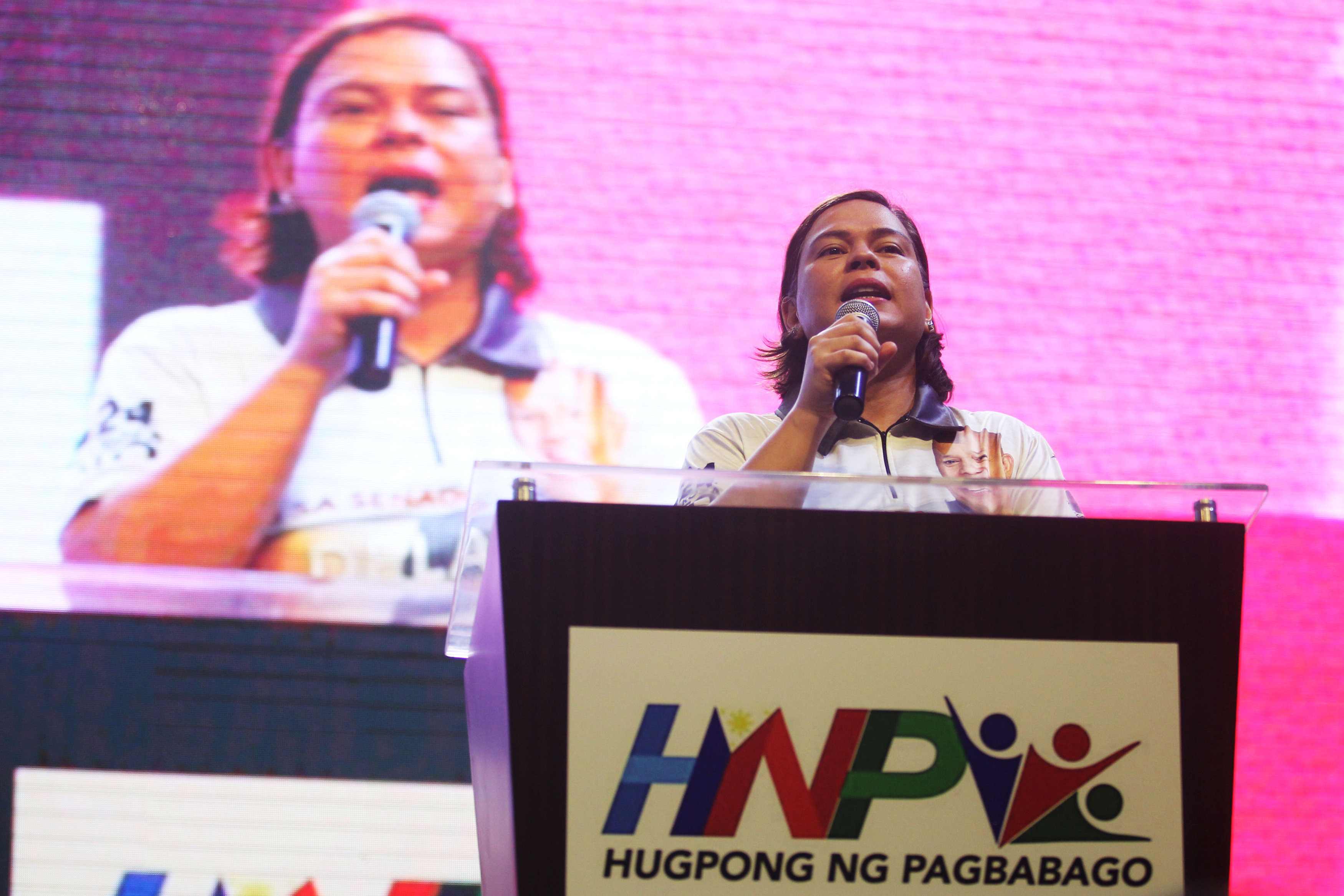
Sara Duterte, Davao City mayor and daughter of Philippine President Rodrigo Duterte, delivers a speech during a senatorial campaign caravan for Hugpong Ng Pagbabago (HNP) in Davao City, southern Philippines, May 9, 2019. /Reuters Photo
Sara Duterte, Davao City mayor and daughter of Philippine President Rodrigo Duterte, delivers a speech during a senatorial campaign caravan for Hugpong Ng Pagbabago (HNP) in Davao City, southern Philippines, May 9, 2019. /Reuters Photo
University mock polls show opposition candidates leading the Senate race, but surveys conducted by established pollsters Social Weather Station and Pulse Asia have them trailing.
Ramon Casiple, a political analyst, said it could be attributed to how they framed their campaign.
"You attack a popular president; you're basically committing political suicide. Also, Duterte's not running. You have to connect him or your criticisms of him to his candidates, which I think is very weak," said Casiple.
Duterte's latest approval rating is the highest of any Philippine leader halfway through a six-year term.
On the ground, local leaders are not only running under the administration's banner; they're also throwing their support and resources behind national candidates who are either outright allies or are supportive of Duterte.
"Many of those in the winning circle have capabilities, in their own right to win. Some are popular, some have their own networks, and some are resourceful. But of course, if they're aligned with the president, it gives additional insurance," Casiple said.
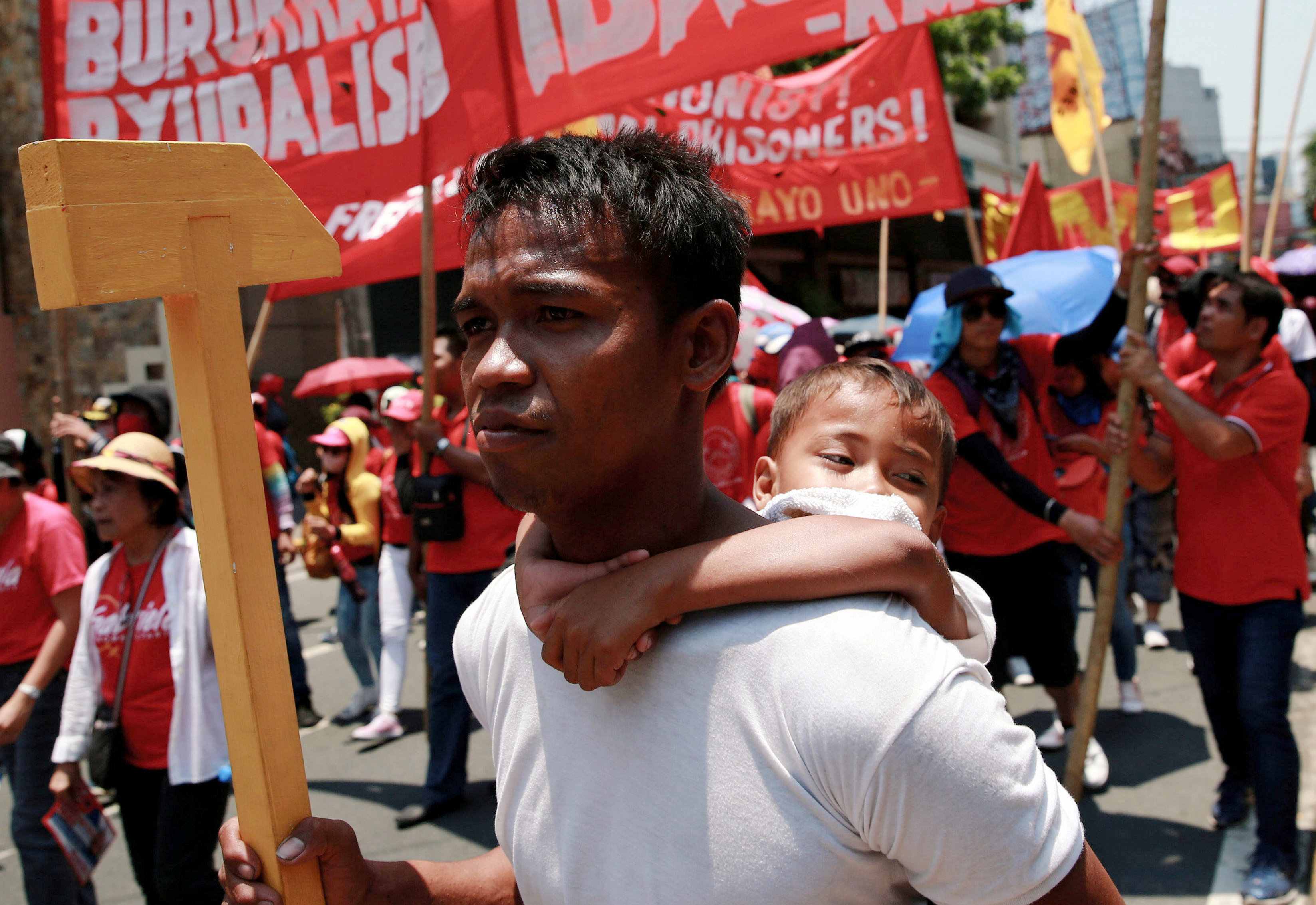
A protester carrying a child participates in a May Day rally in Manila, Philippines, May 1, 2019. /Reuters Photo
A protester carrying a child participates in a May Day rally in Manila, Philippines, May 1, 2019. /Reuters Photo
Midterms elections are usually a test of a sitting president's popularity but Duterte appears to have maintained his rock star status. What could matter, therefore, in Congress, in particular, are the numbers.
Sweeping tax reforms are on hold after prices of basic commodities skyrocketed in the wake of the first phase of new tax law. Duterte's vow to end short-term employment is also in need of new legislation.
But among Duterte's legislative agenda, none is potentially more far-reaching than a switch from a unitary to a federal form of government, which he said is necessary to distribute wealth and power more equitably.
His critics said it is nothing but a smokescreen to extend his presidency beyond the six-year, one-term limit. They also fear it could lead to unchecked power for the political elite.
The likely results of the midterm elections could solidify the numbers for Duterte's push for charter change.
"If they get 12-0 in the Senate, it's not an automatic thing, but it would be easier for the Duterte government to maneuver," Casiple said about the possibilities of a federal government replacing the current one.
In 2016, Duterte campaigned on a platform of change. After the May 13 election, Filipinos could see this change go one step further.