
Politics
11:31, 28-Apr-2018
Leaders commit to building resilient, innovative ASEAN
 ["china"]
Share







Copied
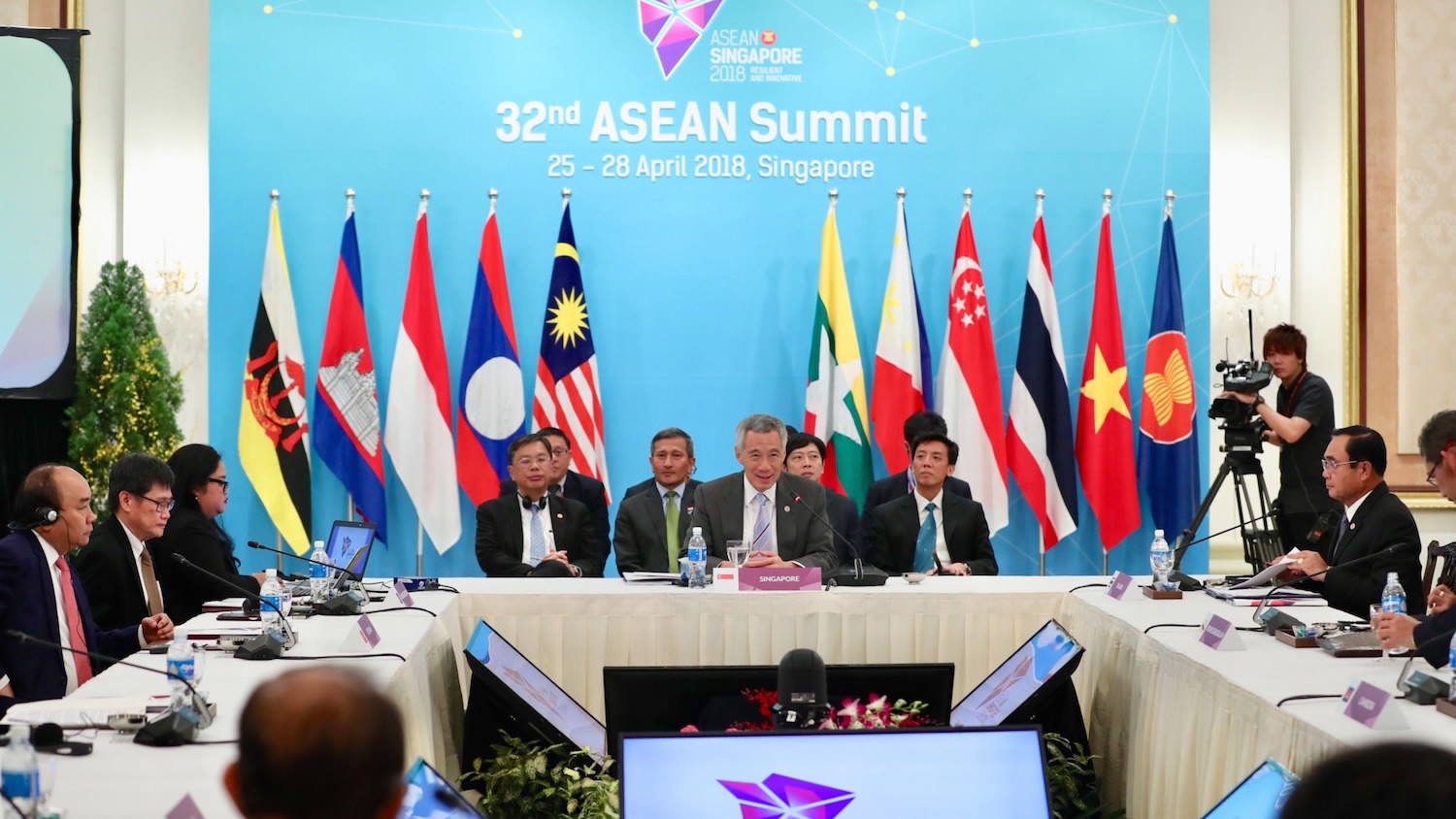
Leaders of the member states of the Association of Southeast Asian Nations (ASEAN) announced their commitment to building a resilient and innovative ASEAN, which is able to navigate the challenges related to the increasing change and growing uncertainties in the global strategic landscape in a coordinated, integrated and effective manner.
Singapore took the chairmanship of ASEAN this year and Singapore's Prime Minister Lee Hsien Loong said on Friday that Singapore has adopted the themes of "resilience" and "innovation" because he believed ASEAN needed collective resilience against growing transboundary threats including terrorism, climate change and cybersecurity.
The ASEAN leaders met and had a working dinner hosted by Lee on Friday evening. The formal ASEAN Summit will kick off on Saturday evening.
“How can the ten of us work together, align our different political and economic interests, and strengthen our efforts to build a coherent and effective ASEAN community?” Lee asked at the opening ceremony of the 32nd ASEAN Summit in Singapore’s Shangri-La Hotel. “The short answer is: We need to strengthen ASEAN centrality and find new areas and fresh commitment to work together.”
He stressed, “Individually, the ASEAN member states will find it hard to make much impact on their own. But when we speak in one collective ASEAN voice, we can be effective.”
All ten ASEAN countries are party to negotiations on the Regional Comprehensive Economic Partnership, a pan-Asia free trade deal that will include China, Japan, India, Australia, New Zealand and South Korea. ASEAN leaders wish to complete the negotiation by the end of this year. “We proceed with this as a sign that countries in the Asia-Pacific are pressing forward with trade liberalization and are committed to trade liberalization,” Prime Minister Lee said at the summit’s press conference.
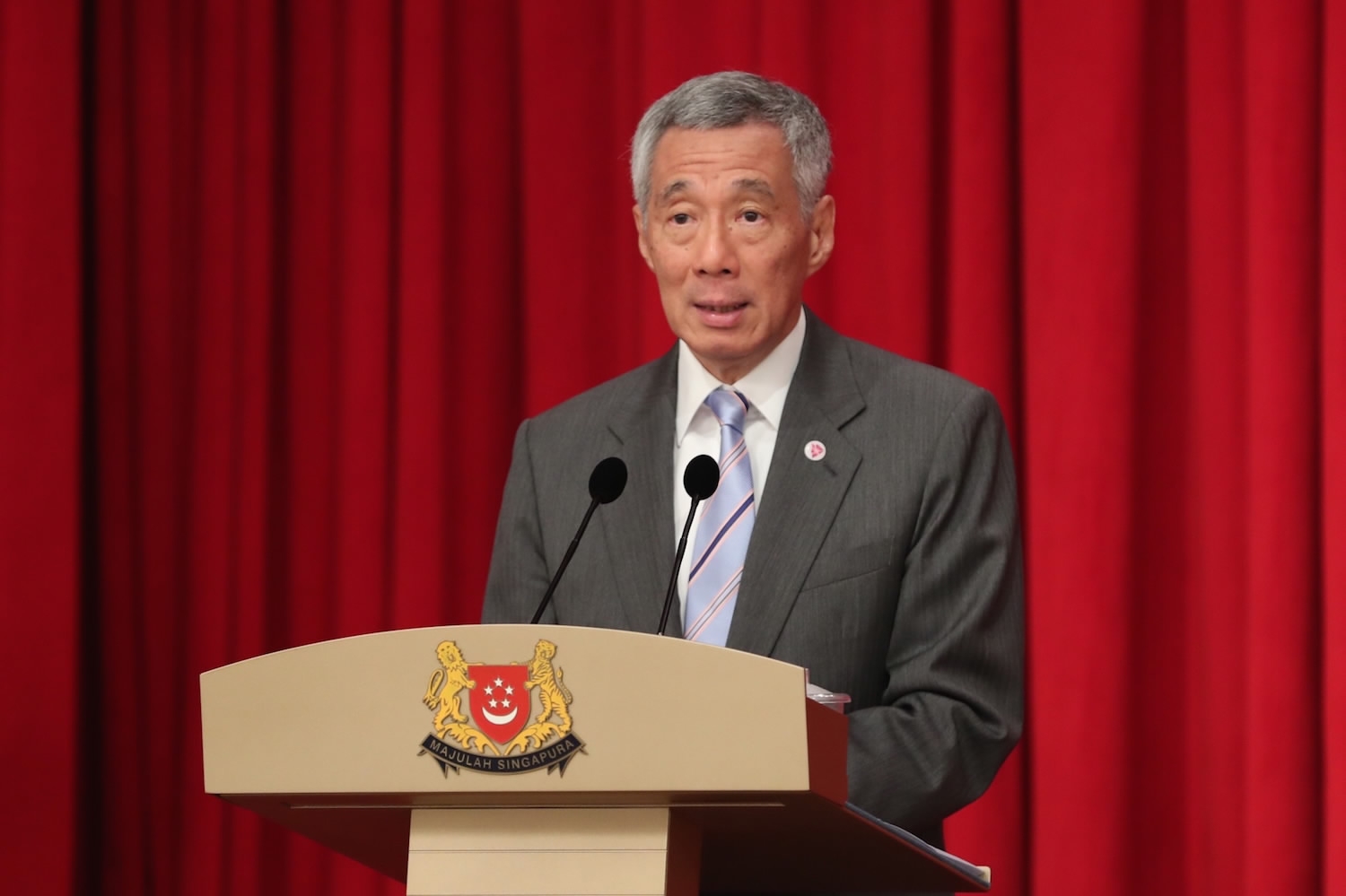
Singapore's Prime Minister Lee Hsien Loong addresses the ASEAN Summit's working dinner at the Istana, Singapore. /ASEAN 2018 Organizing Committee Photo
Singapore's Prime Minister Lee Hsien Loong addresses the ASEAN Summit's working dinner at the Istana, Singapore. /ASEAN 2018 Organizing Committee Photo
Commit to unite
ASEAN leaders reaffirmed the commitment to open the markets and remain united in the face of external divisive forces.
The leaders reiterated 10 key principles that will underscore ASEAN member states' collective vision, and commitment to build a Resilient and Innovative ASEAN in 2018 and beyond.
These principles are related to ASEAN's unity and centrality, rules-based order, peace and security, cooperation against terrorism and non-traditional threats, economic integration and openness, embracing technology, investment in youth and elderly, strengthening ASEAN identity, sustainable and inclusive development, and respect for human rights and fundamental freedoms.
They also issued a political statement laying out their response to geostrategic, technological challenges and opportunities faced by the region.
ASEAN will "promote and protect human rights and fundamental freedoms in accordance with the ASEAN Human Rights Declaration," the leaders promised.
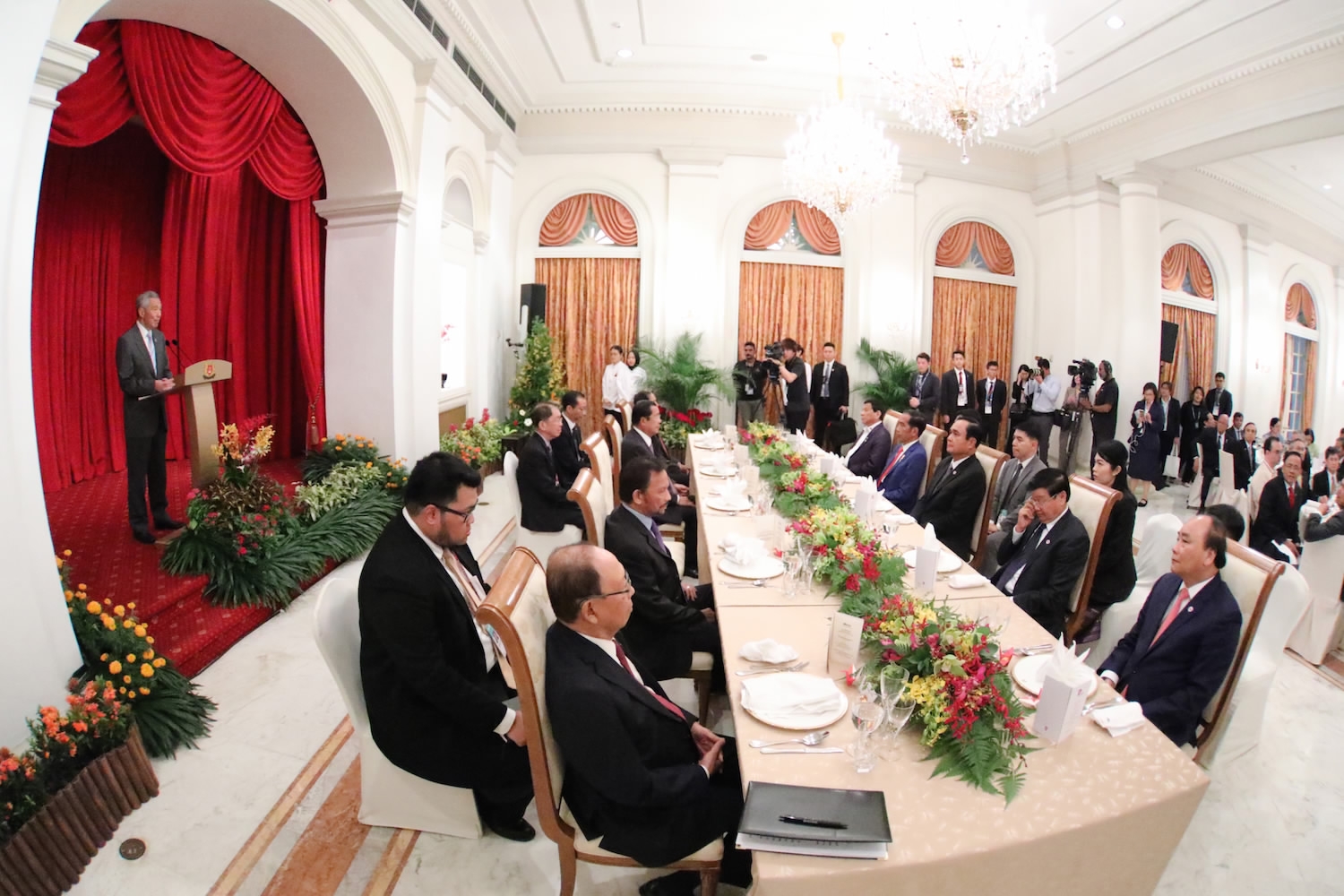
ASEAN leaders' working dinner at the Istana, Singapore, April 27, 2018. /ASEAN 2018 Organizing Committee Photo
ASEAN leaders' working dinner at the Istana, Singapore, April 27, 2018. /ASEAN 2018 Organizing Committee Photo
Together with the ASEAN Leaders' Vision, two other documents were released online, the Concept Note for an ASEAN Smart Cities Network and the ASEAN Leaders' statement on Cyber Security Cooperation.
Smart cities network
Twenty-six cities from the 10 ASEAN countries have been named pilot cities for the ASEAN Smart Cities Network, Singapore's flagship initiative as chair, according to a concept note released on Friday.
The 26 are: Bandar Seri Begawan, Bangkok, Banyuwangi, Battambang, Cebu City, Chonburi, Da Nang, Davao City, Jakarta, Hanoi, Ho Chi Minh City, Johor Baru, Kota Kinabalu, Kuala Lumpur, Kuching, Luang Prabang, Makassar, Mandalay, Manila, Naypyitaw, Phnom Penh, Phuket, Siem Reap, Singapore, Vientiane and Yangon.
The proposal aims to use technology and digital solutions to resolve issues caused by rapid urban development, such as city congestion, water and air quality, and public safety and enhance quality and accessibility of services.
The smart city network will bring the smart cities together.
The official projects will be launched in November this year but many ASEAN member states have already designated certain areas or launched projects.
In addition, individual cities will come up with their own development plans, which will outline specific projects to be carried out from this year until 2025.
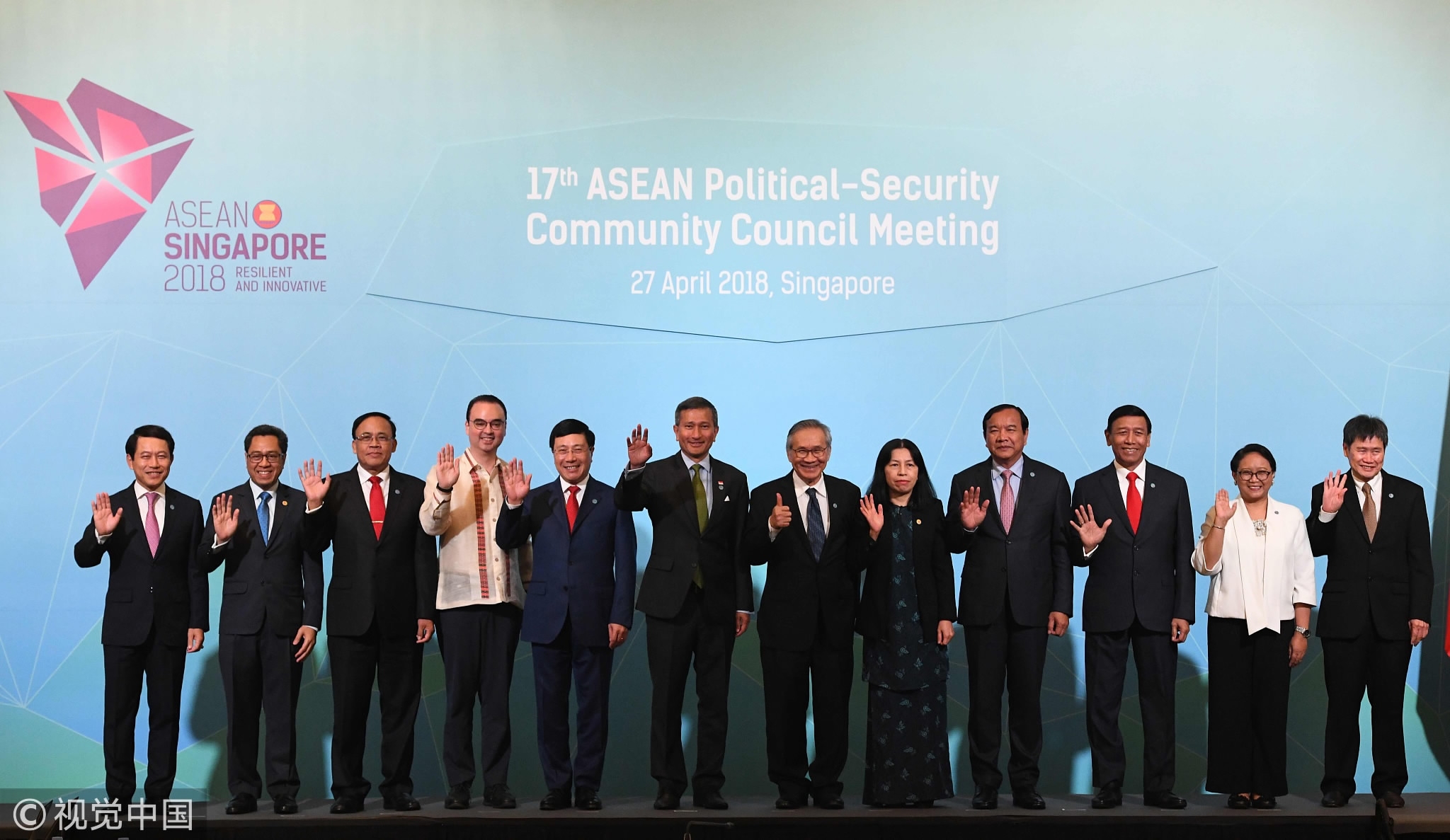
Foreign ministers from ASEAN member countries pose for a group photo during the 17th ASEAN Political-Security Community Council Meeting in Singapore, April 27, 2018. /VCG Photo
Foreign ministers from ASEAN member countries pose for a group photo during the 17th ASEAN Political-Security Community Council Meeting in Singapore, April 27, 2018. /VCG Photo
They will meet annually to discuss their progress, launch new projects with companies, and secure funding and support from multilateral financial institutions including the World Bank, Japan-led Asian Development Bank, China's Asian Infrastructure Investment Bank, and the G-20's Global Infrastructure Hub.
Cyber security
ASEAN's leaders also vowed to coordinate more in cyber security policies and came up with a concrete list of practical norms of state behavior in cyberspace, according to the statement.
These norms would be voluntary and non-binding.
The statement also said leaders would cooperate to tackle vulnerabilities in the region's critical infrastructure, and encourage measures to address the criminal or terrorist use of cyberspace.
Relevant ministers from ASEAN member states have been demanded to submit proposals on feasible ways to coordinate cybersecurity policy.
The leaders believe secure cyberspace is vital for the region's peace and can also boost economic and technological development.
ASEAN’s combined GDP stood at 2.5 trillion US dollars in 2016, with a compound annual growth rate of around 5 percent over the last decade. ASEAN is a prime investment destination and is set to become the fourth-largest single market in the world by 2030.
(CGTN's Miro Lu also contributed to the story.)