
Culture
20:03, 23-May-2018
Zhejiang parents asked to stop soliciting online votes for their children
 ["china"]
Share







Copied
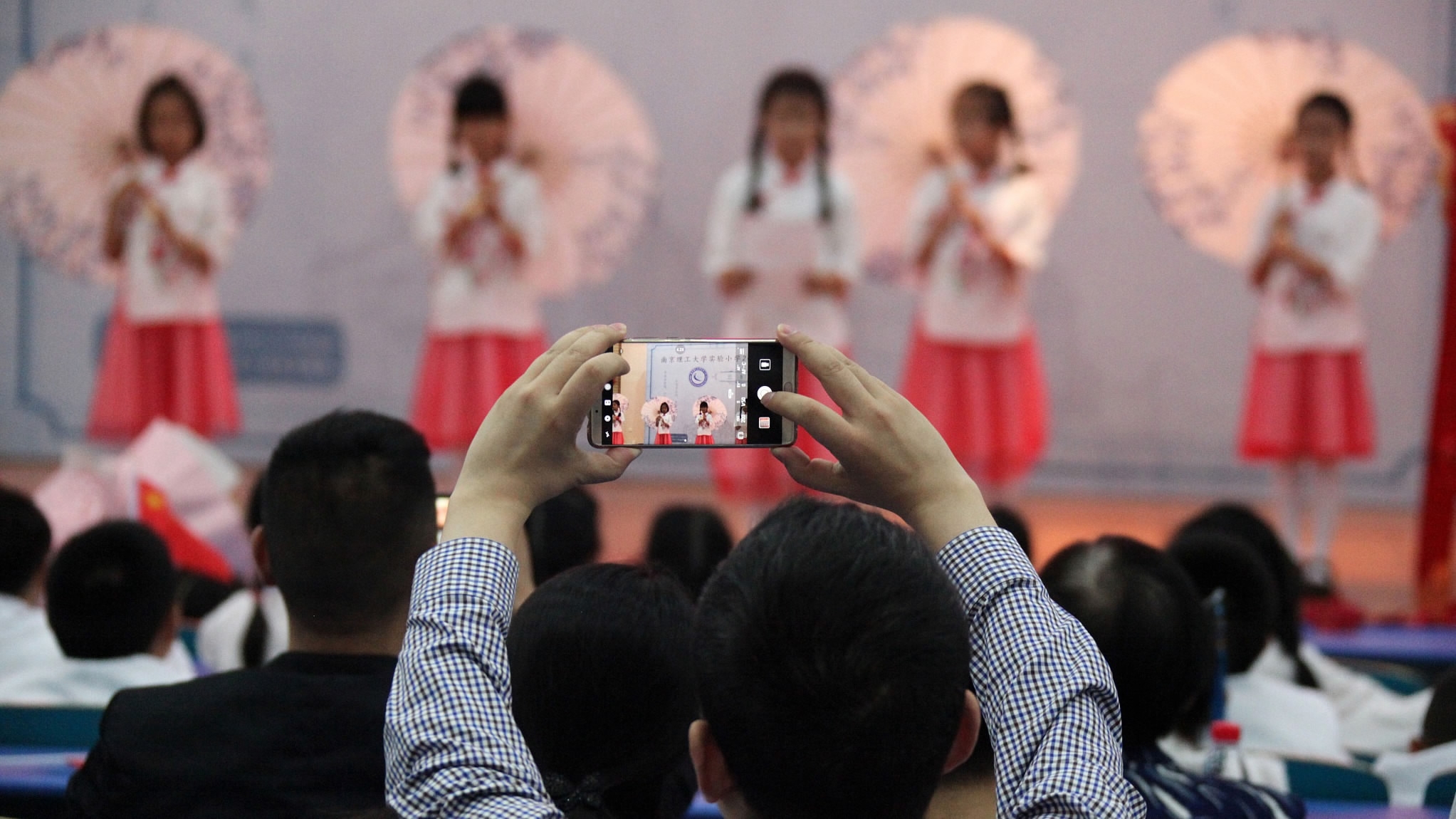
Soliciting votes for children – that’s something many Chinese parents do on their social media accounts. However, local education authorities have asked parents not to do so.
Online votes that are open to the public should not be adopted during competitions regarding children’s personal awards, education authorities of east China’s Zhejiang Province said in a public notice issued recently.
Competitions for toddlers and young children, such as “super baby” and “the piano star”, have been popular during the past few years. It is a common phenomenon that parents and their friends ask for votes through their WeChat, the leading Chinese social media platform.

An online competition asks parents to show off their toddlers. /WeChat Screenshot
An online competition asks parents to show off their toddlers. /WeChat Screenshot
According to a poll conducted by Chongqing Evening News in 2015, 80 percent of the interviewees said they would vote, but are “unhappy to a certain degree” with the process.
People are under social pressure and risk leaking their personal information, Bejing Youth Daily reported, as, in most cases, voters have to give the portal sponsors their online information before voting.
The needs of the parents have also prompted “new jobs”, since full-time voters can reportedly earn more than 10,000 yuan (about 1,566 US dollars) per day, according to Chengdu Business News.
“It causes the students to seek fame,” Zhejiang education authorities said in the public notice, adding that it goes against the goal of education.
The voting rights for activities held by schools should be limited to students and online votes should be approved by education authorities, according to the notice.
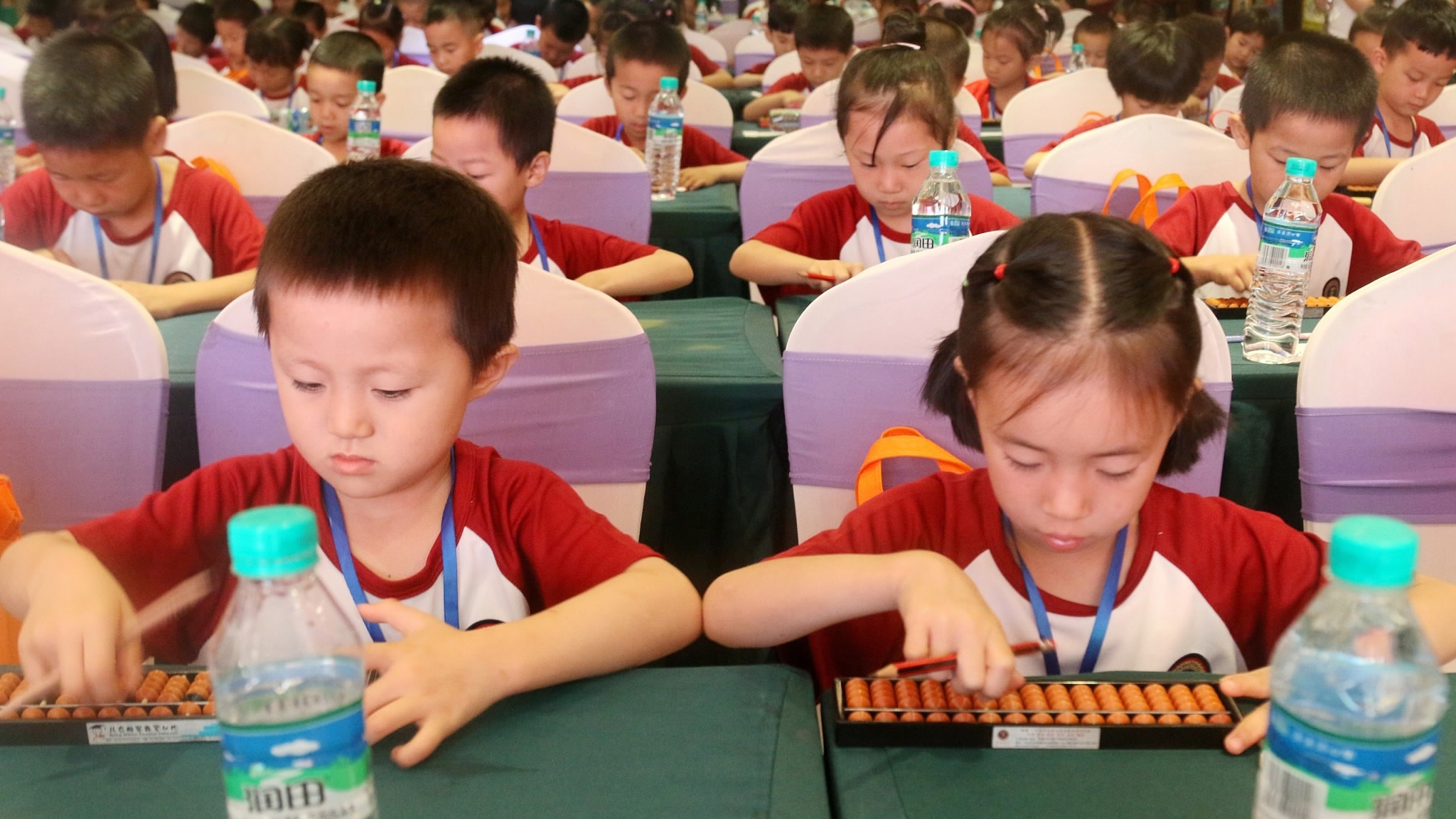
Students participated in an abacus competition in Jian City of southeast China’s Jiangxi Province on Monday. /VCG Photo
Students participated in an abacus competition in Jian City of southeast China’s Jiangxi Province on Monday. /VCG Photo
A majority of Weibo users, China's Twitter-like social media platform, have hailed the new move.
“Thumb up for the public notice issued by Zhejiang education authorities. [I] hope it will be generalized to the country as a whole,” said Weibo user @Shuhui, arguing that online votes only provide free advertisements for the sponsors.
“Such votes are pointless unless you want to know who has more friends on WeChat,” commented @Anaibaozhaoshe.
However, not everyone is supportive.
“Just vote for whoever you like,” said @Liyuandede, who thinks that people are too serious about it.
“The regulation is overly detailed,” Bejing Youth Daily stated in its opinion piece, suggesting surveillance is a better choice.