
Politics
23:05, 21-Apr-2018
The biggest and bloodiest election ever in Mexico 2018
 ["china"]
Share







Copied
02:42
“Drop out,” the caller warned, “or be killed.”
Would you hear this in real life or in a movie? If you were running for the upcoming Mexico election in 2018, then this may happen.
At least 82 candidates and office holders have been killed in Mexico since the electoral season kicked off in September, according to a tally by Etellekt, a security consultancy based in Mexico City, and Reuter’s research.
The electoral calendar gives candidates 90 days to duke it out, and the three official debates offer a forum for them on April 22, May 20, and June 12.
Biggest ever
The Mexican elections are scheduled to take place on July 1, 2018. On the same day, 30 out of 32 states will also hold local elections. 88 million Mexicans have registered to vote.
Seven times as many Mexicans in the United States have received voting credentials under new rules that let citizens sign up at local consulates rather than in Mexico, compared with the last presidential election six years ago.
During the election, voters will elect a new president to serve a six-year term, 500 members of the Chamber of Deputies and 128 members of the Senate.
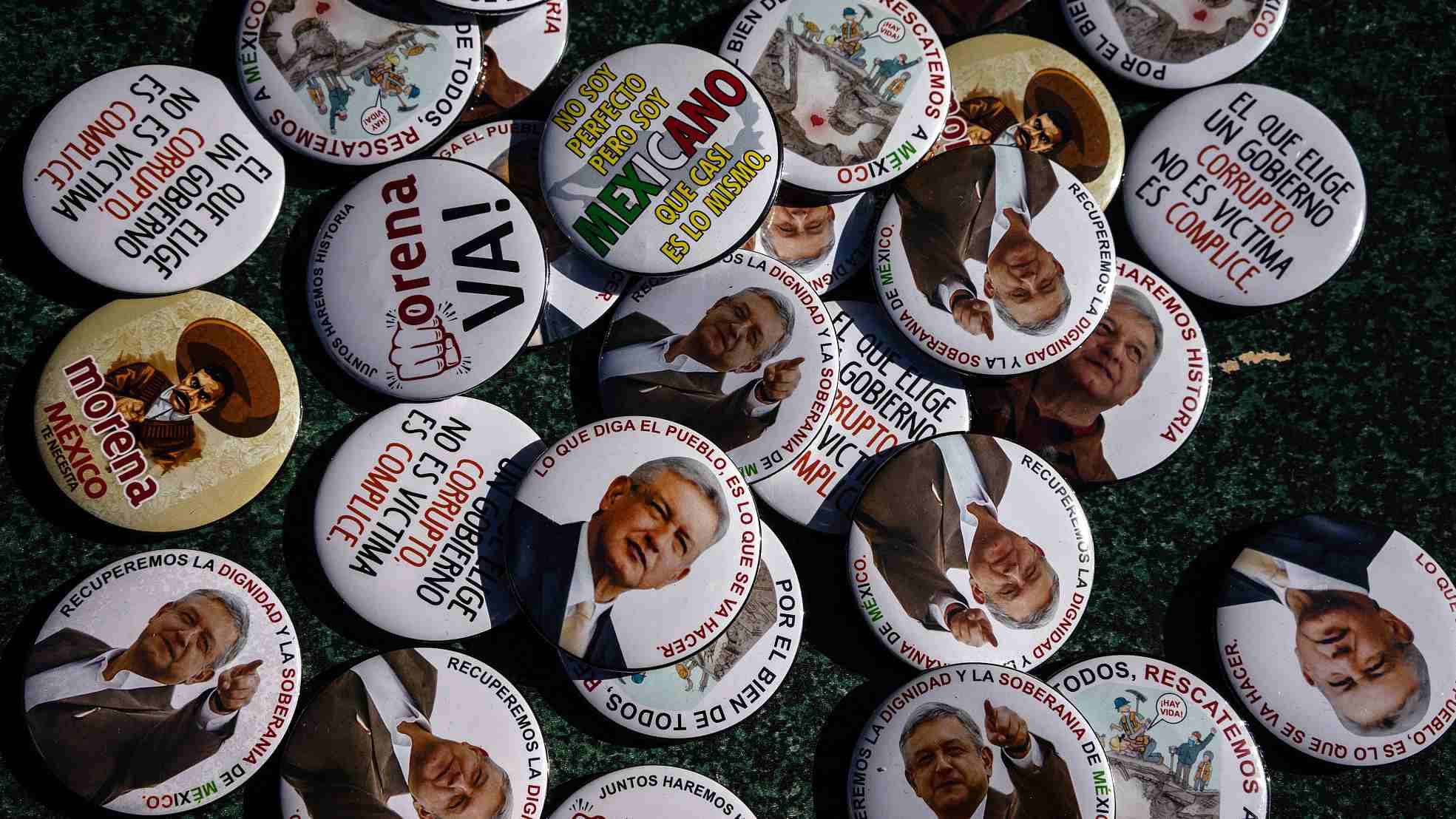
Campaign buttons are displayed for sale during a rally with Andres Manuel Lopez Obrador, presidential candidate of the National Regeneration Movement Party (MORENA), in Tijuana, Mexico, on Sunday, April 15, 2018. /VCG Photo
Campaign buttons are displayed for sale during a rally with Andres Manuel Lopez Obrador, presidential candidate of the National Regeneration Movement Party (MORENA), in Tijuana, Mexico, on Sunday, April 15, 2018. /VCG Photo
It is also the first time an independent candidate will appear on the presidential ballot and it is the election with the most budget.
Bloodiest ever
According to the Organization of American States (OAS), at least 55 murders of pre-candidates from all parties and 83 assaults occurred during the same period .
"It is an average of one murder of a candidate every four or five days: that is a margin of violence absolutely unacceptable in an electoral process, we are very worried," said OAS Secretary General Luis Almagro.
According to the PRD's estimate, about 12 members of the party have been assassinated since the beginning of the election campaign in September.
Local media report that at least 54 pre-candidates from various parties have been murdered during the same period, while 83 have been assaulted.
Since 2006, more than 100 mayors have been killed, according to a report by the National Association of Mayors.
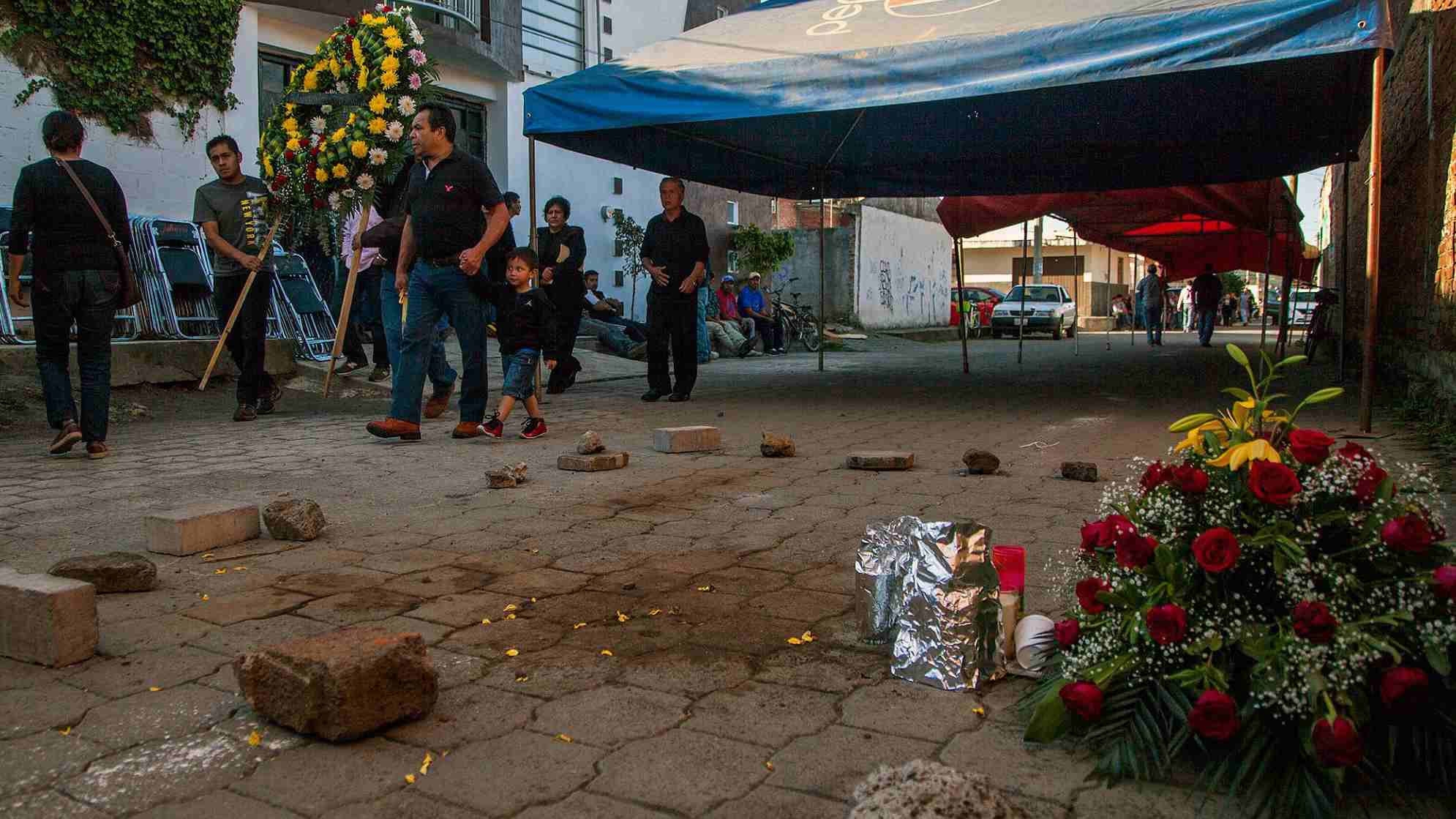
View of the site where the mayor of Paracho -Stalin Sanchez Gonzalez- was murdered, in Michoacan State, Mexico on October 6, 2017. Since 2003, nearly fifty mayors have been murdered in different parts of Mexico. /VCG Photo
View of the site where the mayor of Paracho -Stalin Sanchez Gonzalez- was murdered, in Michoacan State, Mexico on October 6, 2017. Since 2003, nearly fifty mayors have been murdered in different parts of Mexico. /VCG Photo
Mexican news site Nacion321 reported last month that between September 2017 and the beginning of March, 58 political figures, including mayors, deputies, and candidates, were killed.
Between January and November last year, there were 26,573 murders in Mexico, the biggest number in history since the drug traffickers fought each other. According to magazine Alcaldes de Mexico, 21 of the victims were mayors or former mayors.
Latest murdered:
Gustavo Martin Gomez Alvarez, with the Institutional Revolutionary Party (PRI).
Homero Bravo Espino, with the Mexican Democratic Party (PRD).
Aaron Varela Martinez, with the National Regeneration Movement (Morena).
Antonia Jaimes Moctezuma (PRD), pre-candidate for local elections in Chilapa, Guerrero
Dulce Nayeli Rebaja Pedro (Institutional Revolutionary Party), pre-candidate for local elections in Chilapa, Guerrero
Candidates
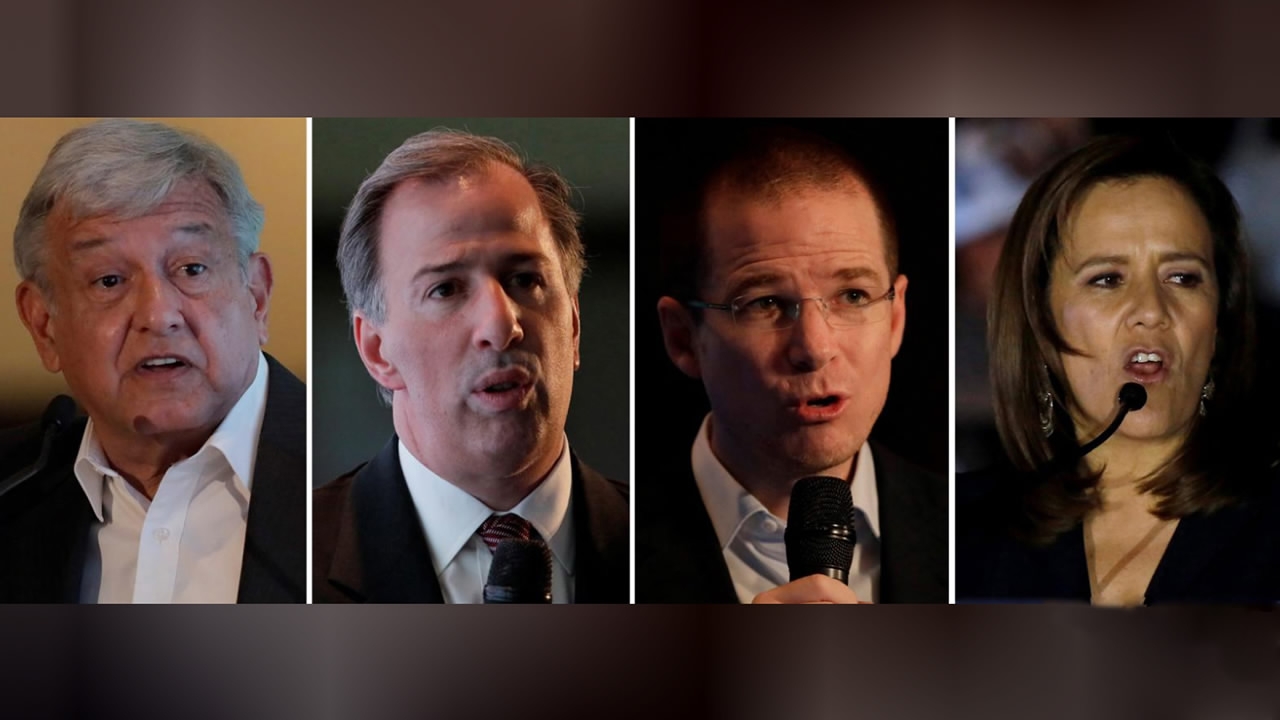
The official campaign season for the Mexican presidency kicked off on March 30, with four candidates vying for the position. Approximately 88 million registered Mexican voters will decide who can be their coming leader.

CGTN Photo
CGTN Photo
Change in Mexico’s future?
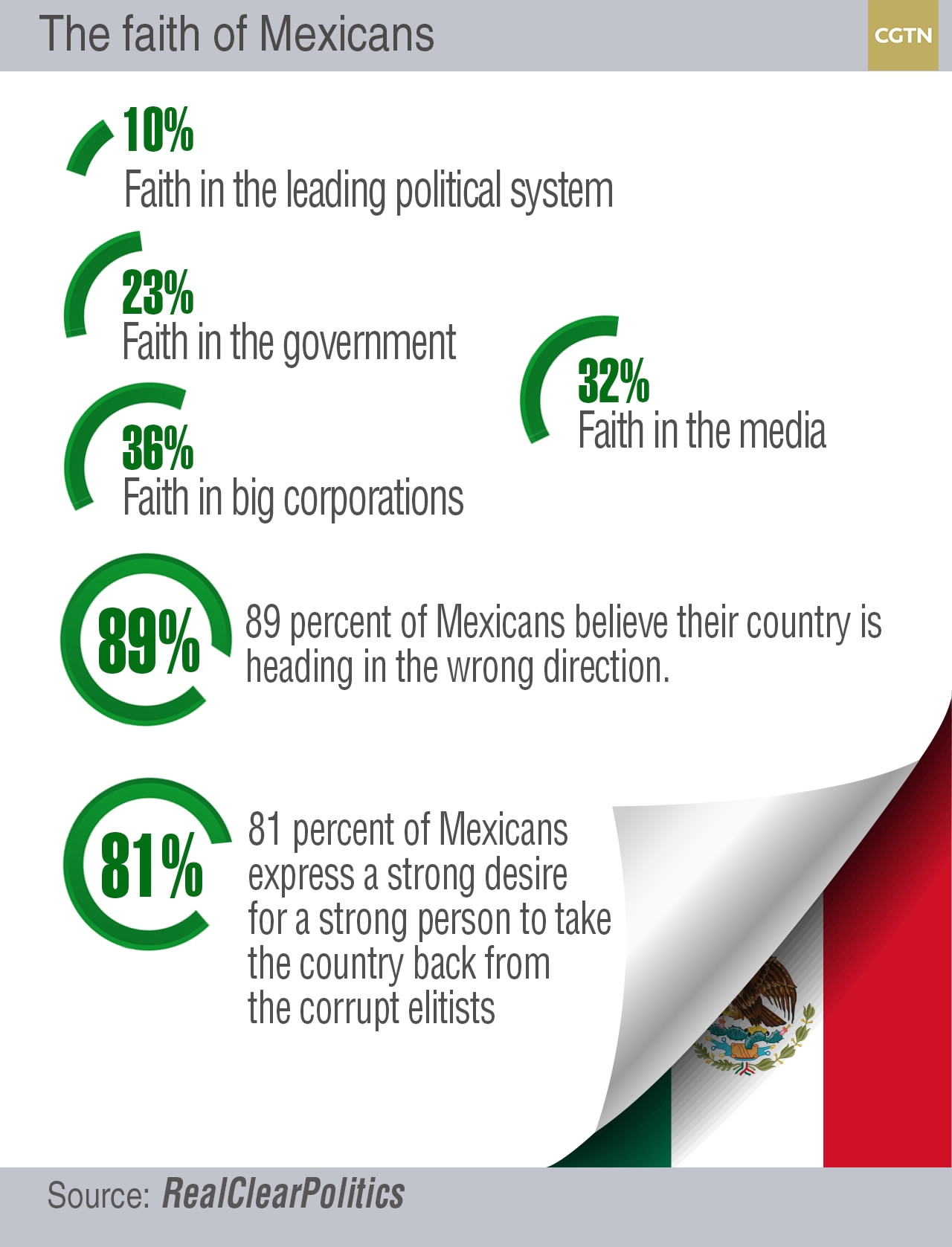
"Mexicans want change, and anger is trumping fear. This election is not about platforms, or issues, or even experience. This is about who has the credibility to make change," says Carlos Bravo Regidor, a political analyst and a professor at CIDE, a public research center in Mexico City.

CGTN Photo
CGTN Photo
CGTN Photo
CGTN Photo