Real-world debates permeate this year’s Venice Biennale on architecture, from commemorating spaces once part of the US slave trade to maintaining the delicate status quo at religious sites in the Holy Land.
The sprawling exhibition, opened Saturday for a six-month run, reflects not only on the political implications of what gets built but also on the empty spaces in between.
“We have to be aware of the political issues in order to make buildings which protect, in so far as we can, the status of the human being in the world,” said, co-curator with Yvonne Farrell of the main exhibition, “Free Space.” “We are acutely aware of the things that are threatening the quality of life of human beings.”
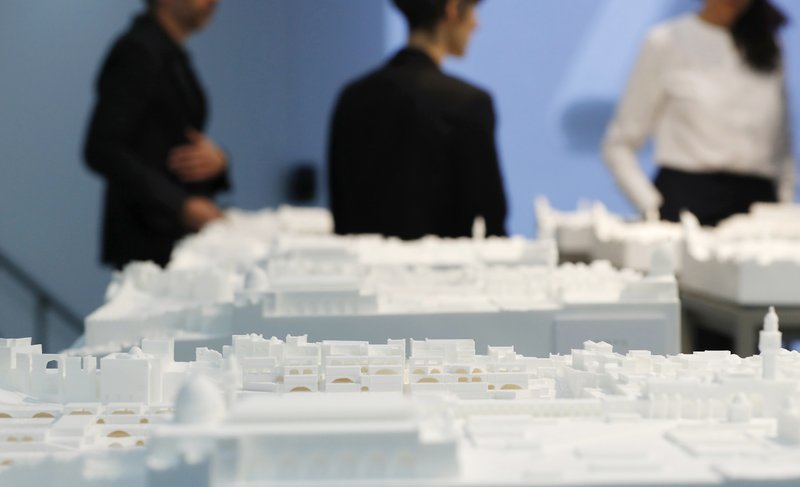
May 23, 2018: A view of the Israel pavilion, at the Biennale International Architecture Exhibition, in Venice, Italy. /AP Photo
May 23, 2018: A view of the Israel pavilion, at the Biennale International Architecture Exhibition, in Venice, Italy. /AP Photo
The Israeli Pavilion, subtitled “structures of negotiation,” outlines the consequences of multiple claims on revered religious places and how daily use defines monuments.
It doesn’t comment on how the Trump administration’s recent decision to move the US Embassy to Jerusalem from Tel Aviv might impact the Middle East conflict. But the curators agreed it is easy to draw inferences.
“What we know is that sometimes political events have a very heavy impact on the status quo of the holy places and vice versa, and even if the equilibrium of the status quo in the holy places is for some reason violated it has an influence on the political situation,” said the pavilion’s co-curator Tania Coen Uzzielli.
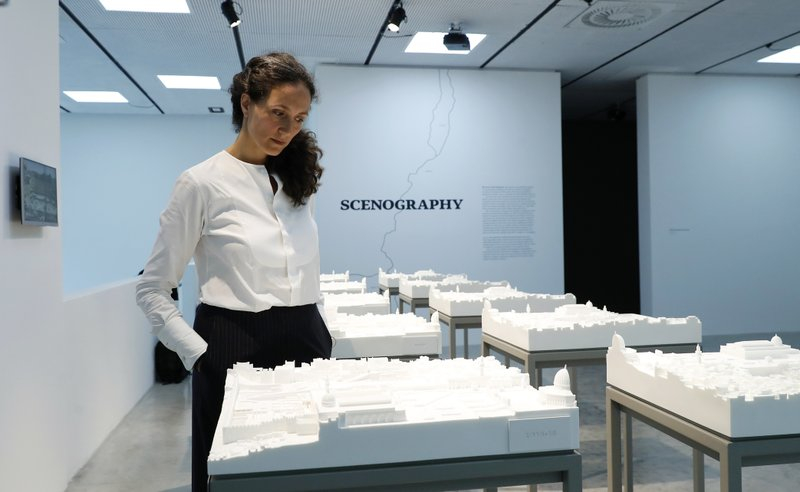
May 23, 2018: Architect Deborah Pinto Fdeda looks part of the installation at the Israeli pavilion. /AP Photo
May 23, 2018: Architect Deborah Pinto Fdeda looks part of the installation at the Israeli pavilion. /AP Photo
Take the Church of the Holy Sepulcher in Jerusalem, revered as the place of Jesus’ crucifixion and burial and one of the pavilion’s five case studies. The exhibit features a color-coded, three-dimensional model of the church made for an Ottoman-era pasha to make clear which denomination controlled which area.
In the early part of the last century, a conflict over who had the right to clean a raised stone in the church courtyard led to violence, said pavilion co-curator Deborah Pinto Fdeda.
“Tens of people died,” she said. “It is through the usage of places over time that these communities gain or lose power.” Yet even there the status quo evolved: “Today the Latins and Orthodox agree to clean it as if the other doesn’t exist.”
May 23, 2018: A view of the United States pavilion. /AP Photo
May 23, 2018: A view of the United States pavilion. /AP Photo
The US pavilion comments on the meaning of citizenship as governments dictate who belongs and who doesn’t.
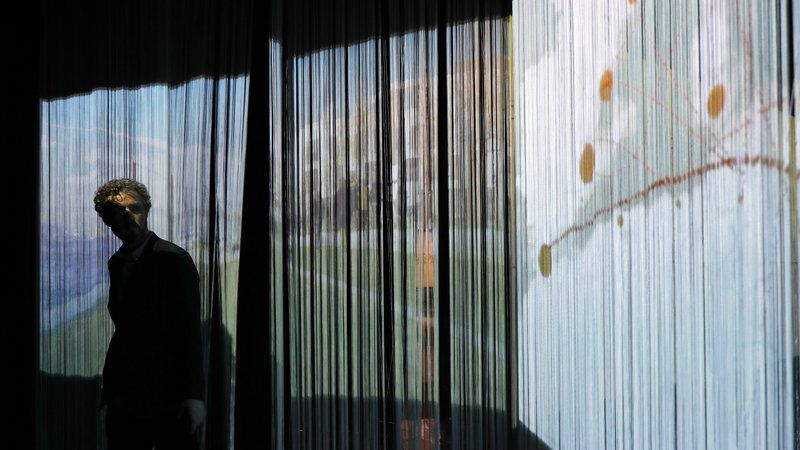
Amanda Jones and Andres Hernandez created “a pocket of retreat” in the courtyard behind a protective veil of black braids. The refuge is built on a rail, symbolizing the underground railroad that helped bring slaves to freedom. It projects upward, toward a better future.
“The piece tries to embody that trajectory from fighting and surviving for your citizenship to thriving,” Jones said.
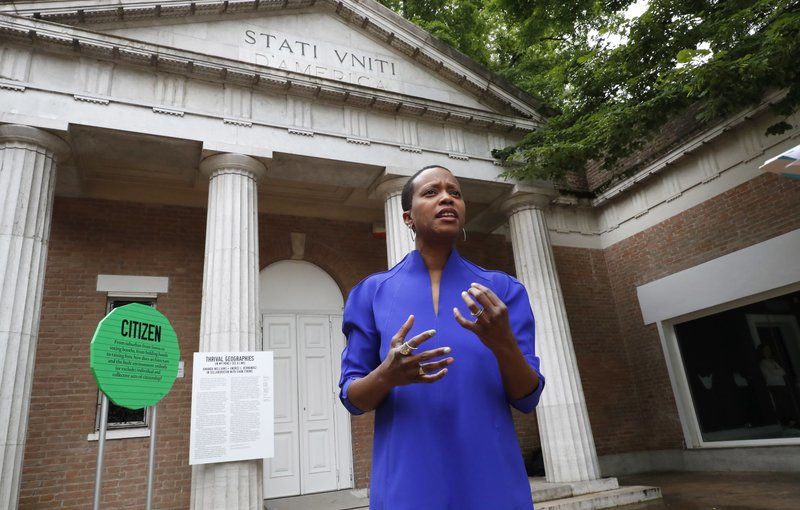
May 23, 2018: Artist Amanda Williams talks with journalists next to the United States pavilion, at the Biennale International Architecture exhibition, in Venice, Italy. /AP Photo
May 23, 2018: Artist Amanda Williams talks with journalists next to the United States pavilion, at the Biennale International Architecture exhibition, in Venice, Italy. /AP Photo
Inside, a group called Studio Gang brought 800 stones from a 19th-century landing in Memphis linked to the slave trade. Co-curator Ann Lui said the project was about “taking a moment to think about these fraught sites” without proposing, yet, how to remember them.
Saudi Arabia is one of six countries participating for the first time in the architectural Biennale, with a project that focuses on urban sprawl in the kingdom’s four major centers: political capital Riyadh, religious capital Mecca, the oil city of Dammam and the port city of Jeddah.
“The sprawl is the result of the oil boom but the result of the sprawl is actually social isolation,” said curator Sumayah Al-Solaiman.
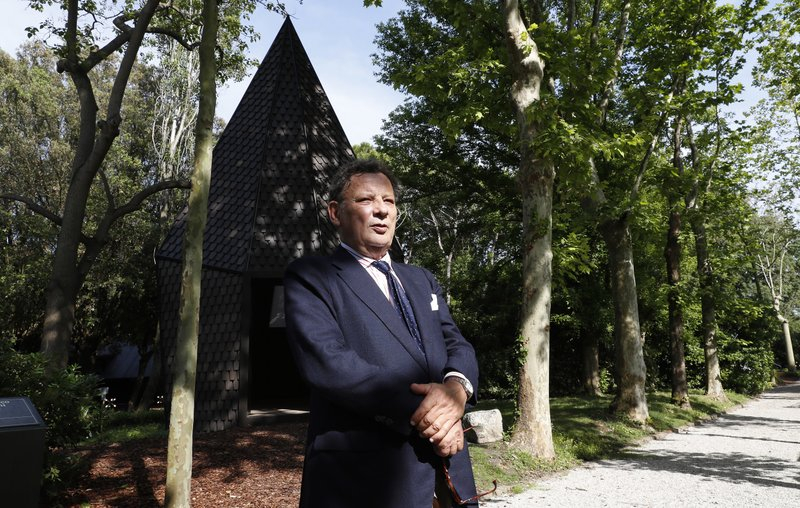
May 23, 2018: Vatican pavilion curator Francesco dal Co at the Biennale International Architecture Exhibition. /AP Photo
May 23, 2018: Vatican pavilion curator Francesco dal Co at the Biennale International Architecture Exhibition. /AP Photo
Participation in the Biennale is yet another sign of a recent opening in Saudi Arabia, giving Saudis an important chance to communicate their experiences directly to the world.
“I think it is becoming more and more relevant to be involved in things that relate to art and culture,” said architect Abdulrahman Gazzaz. “I think it is truly fascinating to us to be present at such a wonderful shift in the dynamic of the country.”
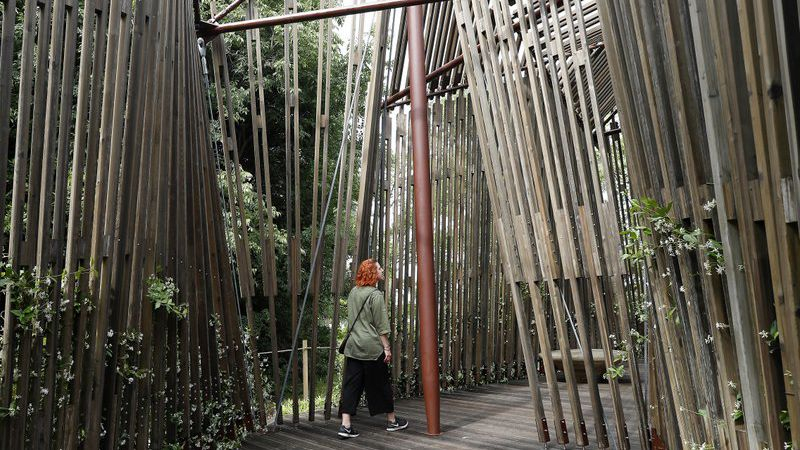
May 23, 2018: A woman visits the installation by architect Norman Foster at the Vatican pavilion, at the Biennale International Architecture exhibition, in Venice, Italy. /AP Photo
May 23, 2018: A woman visits the installation by architect Norman Foster at the Vatican pavilion, at the Biennale International Architecture exhibition, in Venice, Italy. /AP Photo
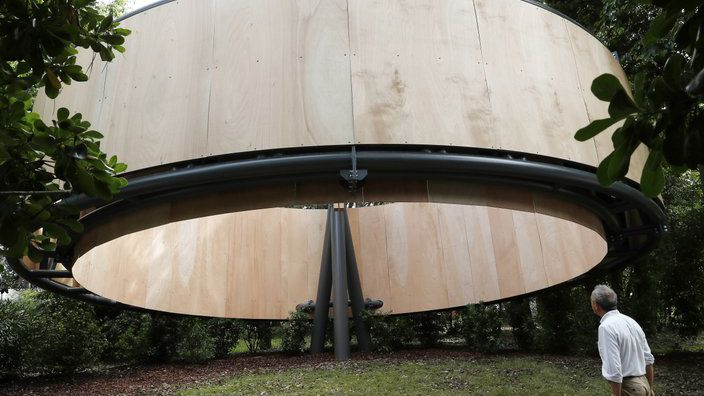
May 23, 2018: A man visits the installation by architect Javier Corvalan at the Vatican pavilion, at the Biennale International Architecture exhibition, in Venice, Italy. /AP Photo
May 23, 2018: A man visits the installation by architect Javier Corvalan at the Vatican pavilion, at the Biennale International Architecture exhibition, in Venice, Italy. /AP Photo
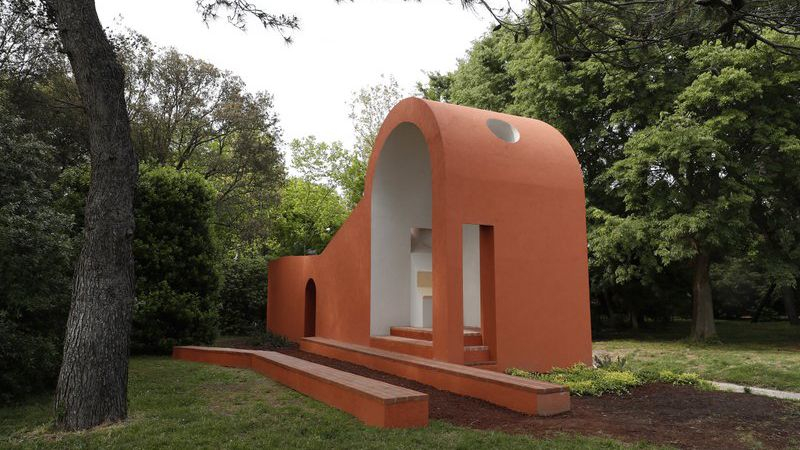
May 23, 2018: The installation by architects Ricardo Flores and Eva Prats at the Vatican pavilion, at the Biennale International Architecture exhibition, in Venice, Italy./AP Photo
May 23, 2018: The installation by architects Ricardo Flores and Eva Prats at the Vatican pavilion, at the Biennale International Architecture exhibition, in Venice, Italy./AP Photo
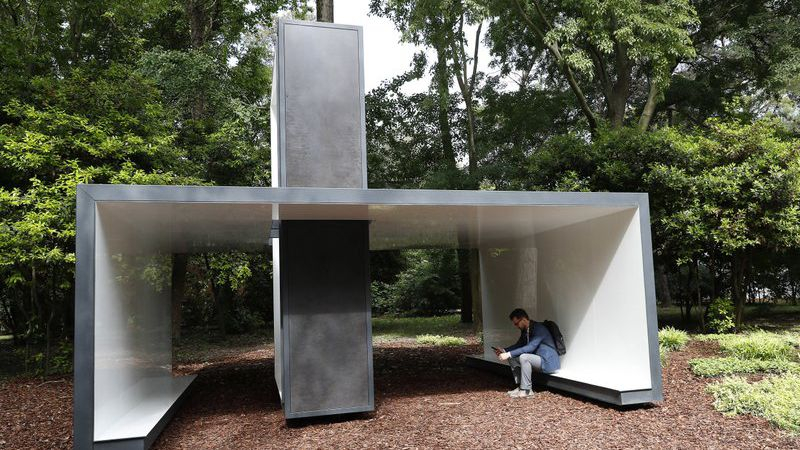
May 23, 2018: A man visits the installation by architect Francesco Cellini at the Vatican pavilion, at the Biennale International Architecture exhibition, in Venice, Italy. /AP Photo
May 23, 2018: A man visits the installation by architect Francesco Cellini at the Vatican pavilion, at the Biennale International Architecture exhibition, in Venice, Italy. /AP Photo
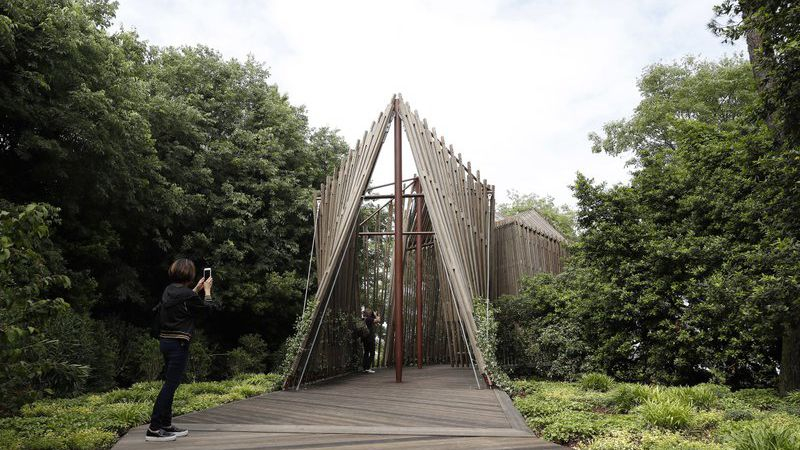
May 23, 2018: A woman takes a picture of the installation by architect Norman Foster at the Vatican pavilion, at the Biennale International Architecture exhibition, in Venice, Italy. /AP Photo
May 23, 2018: A woman takes a picture of the installation by architect Norman Foster at the Vatican pavilion, at the Biennale International Architecture exhibition, in Venice, Italy. /AP Photo
The Vatican also is participating for the first time in the Biennale of architecture after joining the contemporary art fair in 2013 and 2015. The Holy See entrusted world-renowned architects including Norman Foster to create chapels in a wooded area on an island in the Venetian lagoon.
Curator Francesco Dal Co said the woods provided a metaphor “of where you get lost in life” and the chapels “are always a place of encounter, meeting experience, and orientation.”
The chapels may stay on as a permanent presence on San Giorgio island after the Biennale closes on Nov. 25.
Source(s): AP

 ["china"]