
Tech & Sci
13:46, 23-May-2018
Chinese giant salamanders are slipping towards extinction
 ["china"]
Share







Copied
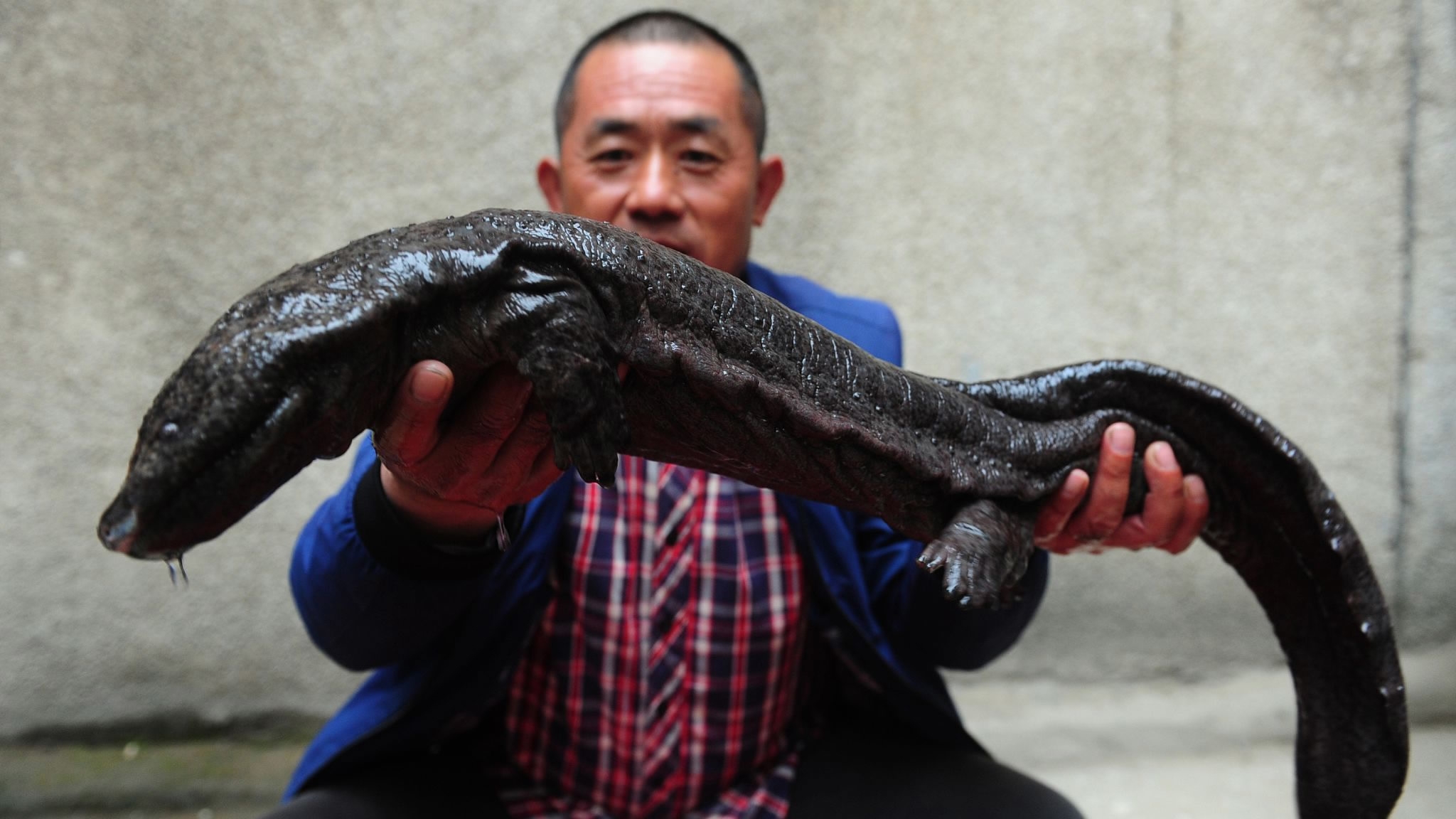
The world’s largest amphibians – Chinese giant salamanders – are facing the imminent threat of extinction, due to “well-intentioned, but misguided, conservation management.”
Roughly, six-feet-long and weighing nearly 64 kg, adult giant salamanders are sold at 1,500 US dollars apiece. Once aplenty in China’s rivers, a massive demand from the luxury food industry slowly decimated giant salamander numbers.
In 2004, International Union for Conservation of Nature (IUCN), concerned over the declining population of the species, declared the creature critically endangered.
In a bid to revive the species population, the Chinese government provided "Class II" protection to the salamanders. A captive breeding program was also initiated in hundreds of commercial farms to revive their numbers. In order to ensure robust revival, only second-generation giant salamanders have been allowed for trading.
Recently, a team of researchers from Zoological Society of London (ZSL) carried out an extensive survey of the salamanders from 2013 and 2016 in 16 provinces of China. The team was able to locate only 24 Chinese giant salamanders in the wild.
After a detailed analysis, researchers found existing salamanders were not native to the wild, but either escapees or releases from commercial farms.
“The overexploitation of these incredible animals for human consumption has had a catastrophic effect on their numbers in the wild over an amazingly short time-span,” co-author of the study Samuel Turvey maintained.
He warned, “unless coordinated conservation measures are put in place as a matter of urgency, the future of the world’s largest amphibian is in serious jeopardy.”
Researchers involved in the study explained the mixing of species through farming has led to the hybridization of the Chinese giant salamander species that diverged over four million years ago. “This is not surprising, because hybridization introduced the Chinese giant salamander with Japanese giant salamanders occurs in Japan too,” wrote the paper's authors.
Chinese giant salamanders belong to an ancient group of salamanders that diverged from their closest relatives over 170 million years ago during the Jurassic Period. They are considered a global conservation priority for maintaining evolutionary history.
In a related study, the Chinese giant salamander that was previously thought to represent a single species was found to be much more diverse. Researchers found at least five distinct genetic lineages – “some of which are now exceedingly rare and possibly already extinct in the wild.”
“Together with addressing wider pressures such as poaching for commercial farms and habitat loss, it’s essential that suitable safeguards are put in place to protect the unique genetic lineage of these amazing animals, which dates back to the time of the dinosaurs,” Fang Yan from Kunming Institute of Zoology added.
(Top Image: Huang Guolong, a fisherman from Shilipipu, Yinzhou District, Fuyang City, Anhui Province, exhibits a giant salamander. /VCG Photo)