The FBI believed that a former campaign adviser to Donald Trump was "collaborating" with Russia as it worked to influence the 2016 presidential election, top-secret documents released to US news organizations have revealed.
The US president hit back Sunday, portraying the wiretapping of his ex-aide as part of a partisan and "illegal" conspiracy because the FBI partly relied on information provided by Democrat-funded research in seeking its warrant.
The October 2016 application to the Foreign Intelligence Surveillance Court named Carter Page, a former foreign policy adviser to the Trump campaign, according to the documents published late Saturday by The New York Times.
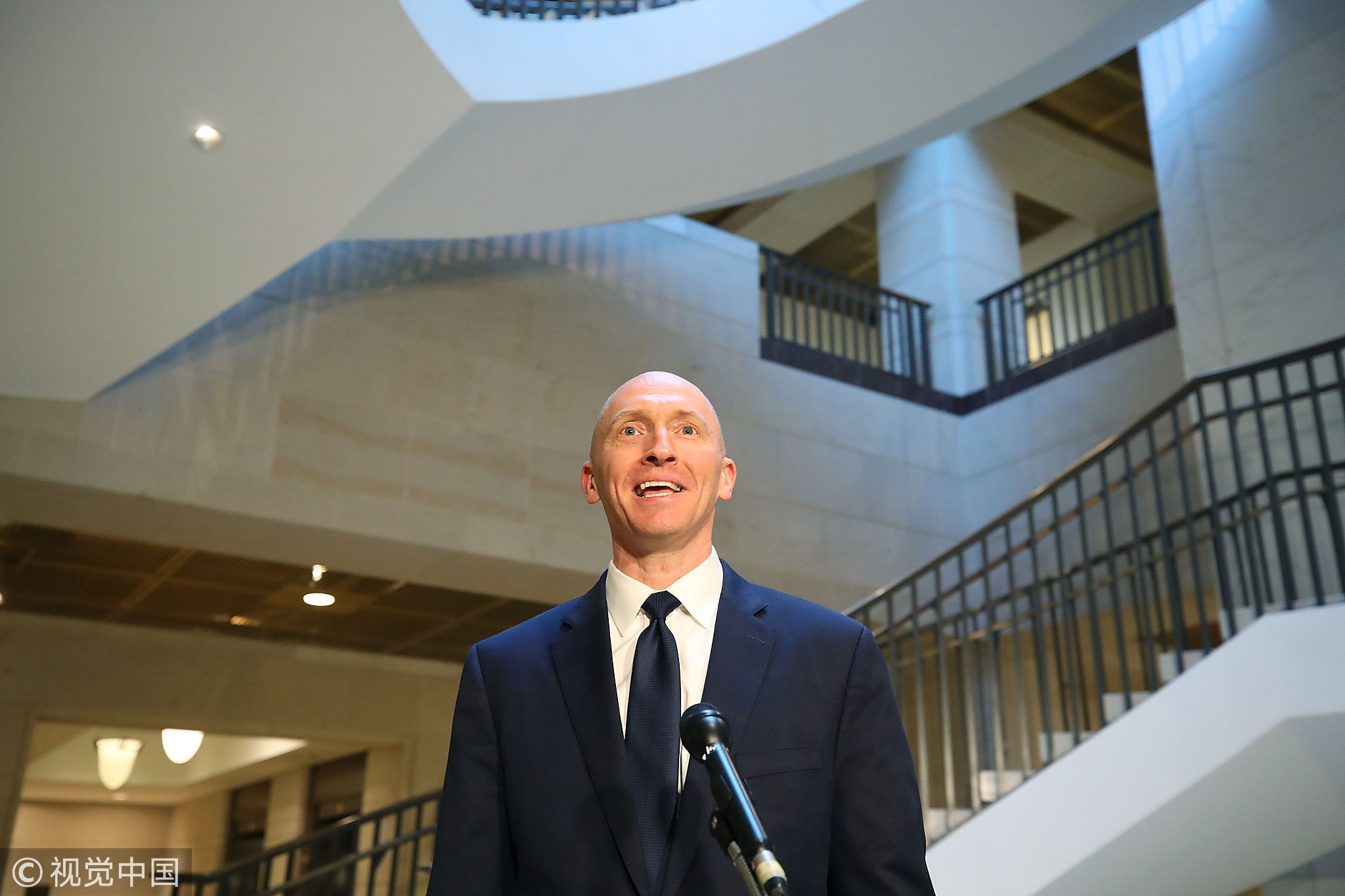
Carter Page, former foreign policy adviser for the Trump campaign, speaks to the media after testifying before the House Intelligence Committee on Nov. 2, 2017, in Washington, DC. /VCG Photo
Carter Page, former foreign policy adviser for the Trump campaign, speaks to the media after testifying before the House Intelligence Committee on Nov. 2, 2017, in Washington, DC. /VCG Photo
The newspaper, along with USA Today and others, filed Freedom of Information Act requests to obtain the material, which the Justice Department released but with many details redacted.
"The FBI believes Page has been the subject of targeted recruitment by the Russian government," the initial FBI application said, continuing after a blacked-out section, "...undermine and influence the outcome of the 2016 presidential election in violation of US criminal law."
"The FBI believes that Page has been collaborating and conspiring with the Russian government," the document adds lower down.
The release of the documents came just over a week after special counsel Robert Mueller, probing possible collusion between Trump's 2016 campaign and Russia, indicted 12 Russian intelligence officers, accusing them of hacking Democratic challenger Hillary Clinton's campaign to steal documents, which were then publicly released.
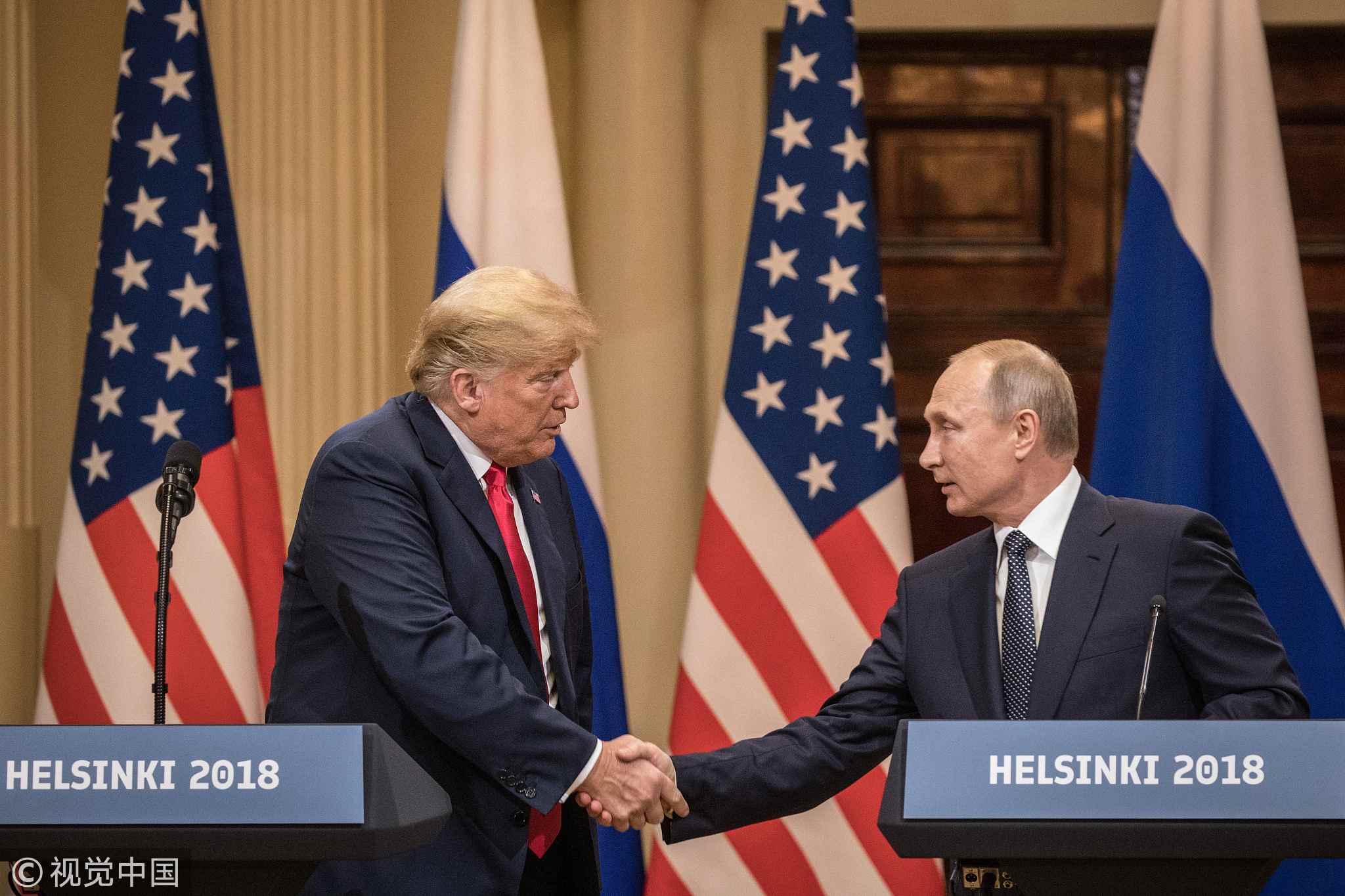
President Donald Trump (L) and President Vladimir Putin shake hands during a joint press conference after their summit on July 16, 2018 in Helsinki, Finland. /VCG Photo
President Donald Trump (L) and President Vladimir Putin shake hands during a joint press conference after their summit on July 16, 2018 in Helsinki, Finland. /VCG Photo
It also caps a week dominated by Trump's extraordinary inaugural summit with Vladimir Putin, at which he seemed to take at face value the Russian leader's denial of election interference, dismissing the findings of his own intelligence chiefs.
In a series of tweets on Sunday, Trump said the release confirmed the surveillance of his campaign was a "Witch Hunt" because some of the information that led to the wiretapping was provided by former British intelligence agent Christopher Steele, who was hired on behalf of the Clinton campaign in 2016.
But Trump's tweets did not address the fact that the FISA application revealed its sourcing at length and was approved by a judge, before being renewed three times by three other judges, all appointed by Republican presidents.
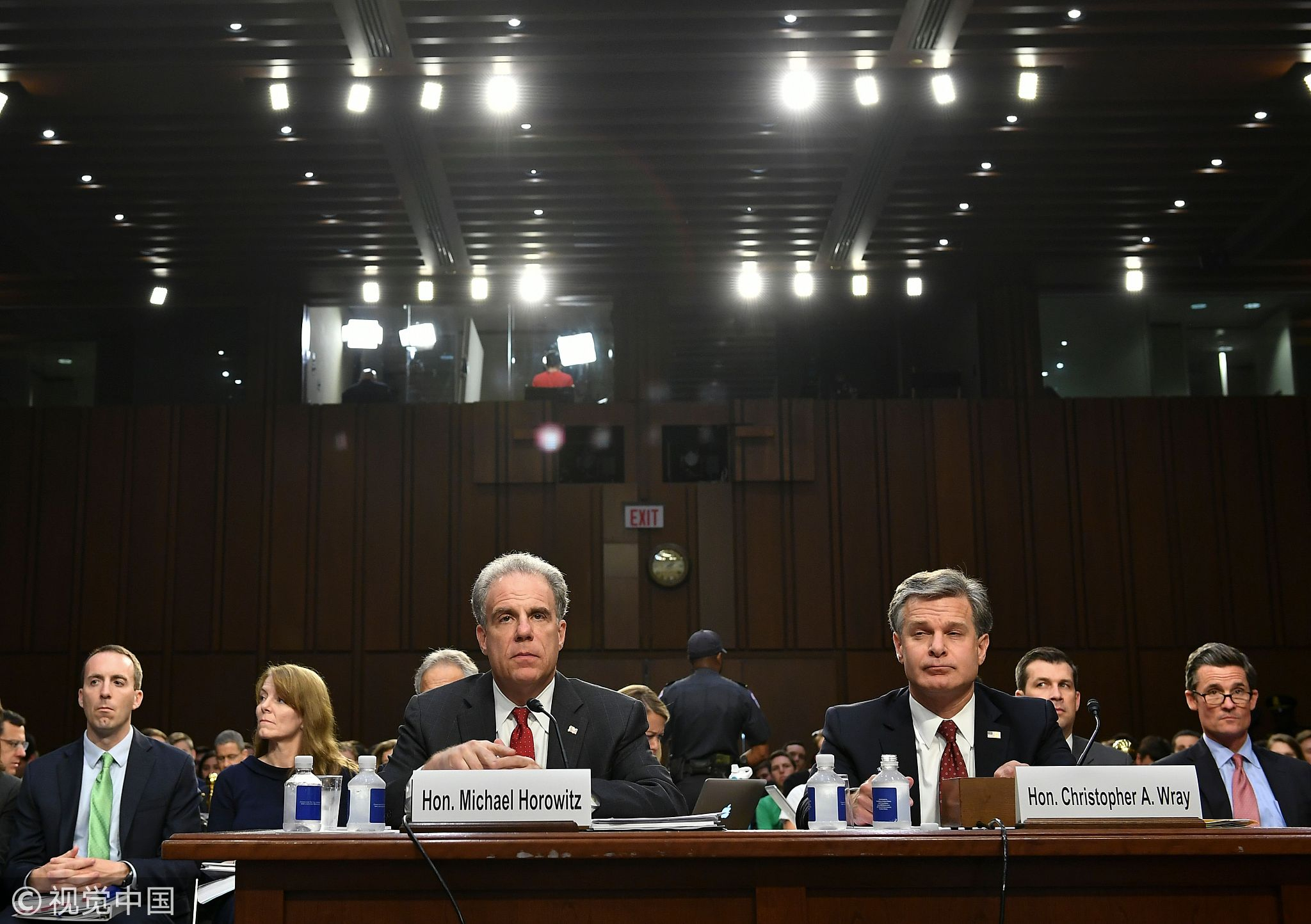
Justice Department Inspector General Michael Horowitz (L) and FBI Director Christopher Wray wait to testify before the Senate Judiciary Committee on "Examining the Inspector General's First Report on Justice Department and FBI Actions in Advance of the 2016 Presidential Election" in the Hart Senate Office Building on June 18, 2018 on Capitol Hill in Washington, DC. /VCG Photo
Justice Department Inspector General Michael Horowitz (L) and FBI Director Christopher Wray wait to testify before the Senate Judiciary Committee on "Examining the Inspector General's First Report on Justice Department and FBI Actions in Advance of the 2016 Presidential Election" in the Hart Senate Office Building on June 18, 2018 on Capitol Hill in Washington, DC. /VCG Photo
The surveillance of Page sparked intense rivalry in February between lawmakers from Trump's Republican Party and their Democratic counterparts.
The former released a memo claiming Democratic-funded research prompted the FBI to spy on Page and that the agency was not sufficiently candid with the court about its sourcing.
Trump defied his own FBI director and the Justice Department to declassify the four-page Republican document, which was based on the much larger secret court application record which has now been released.
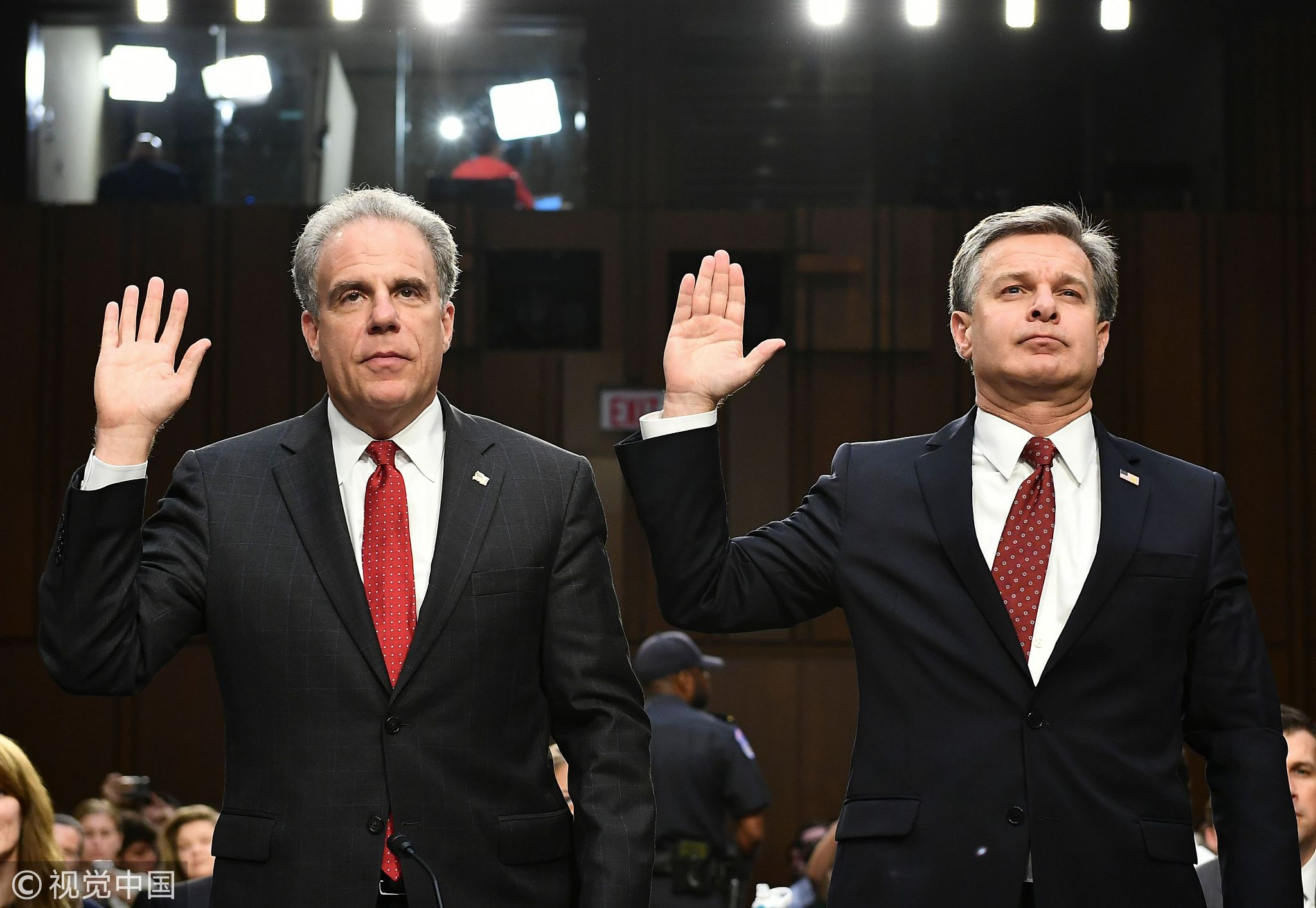
Horowitz (L) and Wray take an oath before testifying to the Senate Judiciary Committee on "Examining the Inspector General's First Report on Justice Department and FBI Actions in Advance of the 2016 Presidential Election" on June 18, 2018 on Capitol Hill in Washington, DC. /VCG Photo
Horowitz (L) and Wray take an oath before testifying to the Senate Judiciary Committee on "Examining the Inspector General's First Report on Justice Department and FBI Actions in Advance of the 2016 Presidential Election" on June 18, 2018 on Capitol Hill in Washington, DC. /VCG Photo
A counter-memo from Democrats argued that the surveillance request "was based on compelling evidence and probable cause." Writing on the Lawfare blog, David Kris, who served as a prosecutor under the George W. Bush and Barack Obama administrations, argued the Republican memo now stood exposed as dishonest.
"The footnote disclosing Steele's possible bias takes up more than a full page in the applications, so there is literally no way the FISA Court could have missed it," he said. "The FBI gave the court enough information to evaluate Steele's credibility."
In the documents released Saturday, the FBI cited a source which, it said, had a history of providing reliable information.

A woman looks at the ballot at a polling place at a high school in McLean, Virginia during the US presidential election on Nov. 8, 2016. /VCG Photo
A woman looks at the ballot at a polling place at a high school in McLean, Virginia during the US presidential election on Nov. 8, 2016. /VCG Photo
Trump is not named in the document but identified only as "Candidate #1."
The FBI, in its initial application in October 2016, said it "believes that the Russian Government's efforts are being coordinated with Page and perhaps other individuals associated with Candidate #1's campaign."
It added that "Page has established relationships with Russian Government officials, including Russian intelligence officers." Page has not been charged. Appearing Sunday on CNN, he denied the allegations. "I've never been an agent of the foreign power in any -- by any stretch of the imagination."
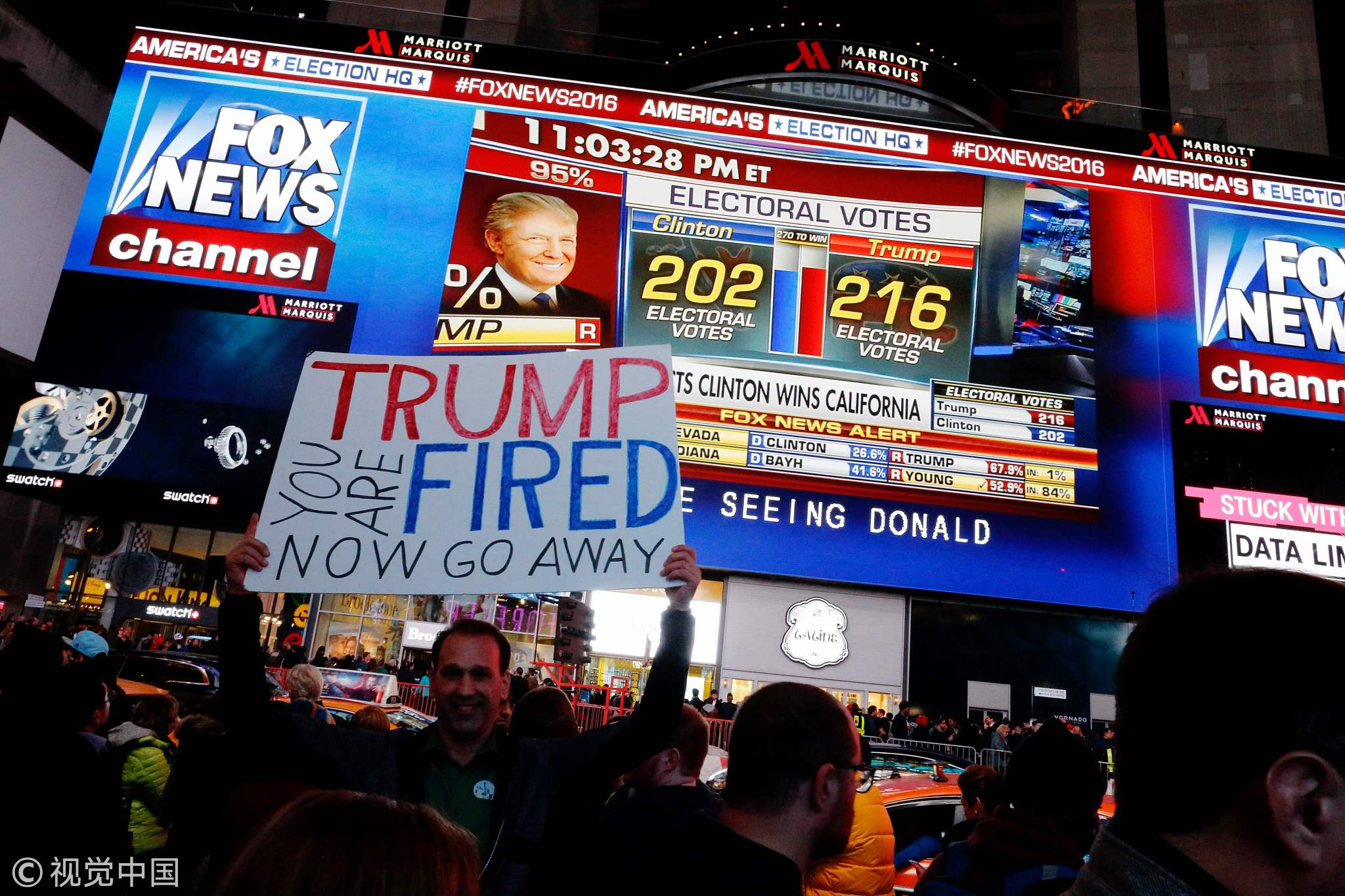
People gather around Times Square to view televised results of the US presidential election on Nov. 8, 2016 in New York. /VCG Photo
People gather around Times Square to view televised results of the US presidential election on Nov. 8, 2016 in New York. /VCG Photo
He added: "To call me an adviser, I think is way over the top," before host Jake Tapper interjected to cite a 2013 letter in which Page called himself "an informal adviser to the staff of the Kremlin."
The release of the FISA application came as the Trump administration was still battling to push past harsh criticism of the US president's Helsinki summit with Putin.
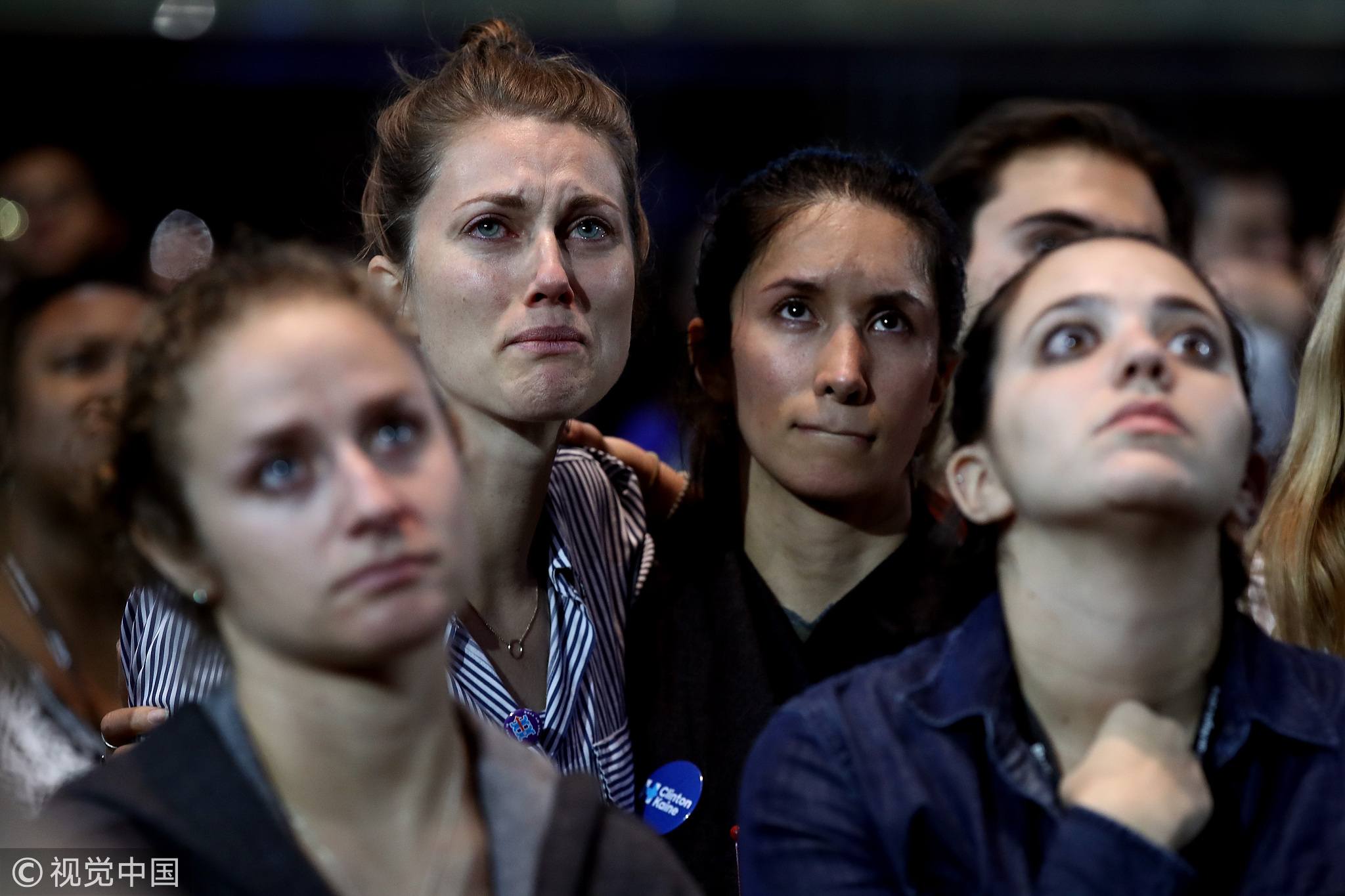
People react to the voting results at Democratic presidential nominee former Secretary of State Hillary Clinton's election night event at the Jacob K. Javits Convention Center on Nov. 9, 2016 in New York City. /VCG Photo
People react to the voting results at Democratic presidential nominee former Secretary of State Hillary Clinton's election night event at the Jacob K. Javits Convention Center on Nov. 9, 2016 in New York City. /VCG Photo
"I had a GREAT meeting with Putin and the Fake News used every bit of their energy to try and disparage it. So bad for our country!" Trump tweeted on Sunday.
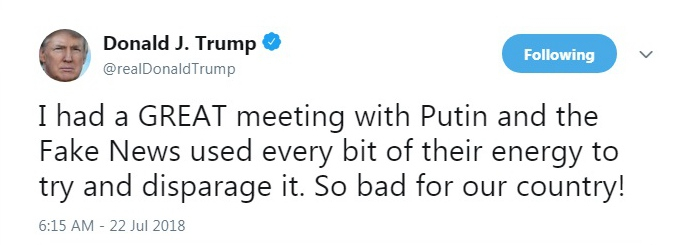
Screenshot of Trump's tweet
Screenshot of Trump's tweet
But the former Secretary of State John Kerry, a Democrat, told CBS that Trump's performance there was "one of the most disgraceful, remarkable moments of kowtowing to a foreign leader" ever by an American president.
Amid the blowback, Trump surprised Americans – including director of national intelligence Dan Coats – by announcing he had invited Putin to visit Washington later this year.
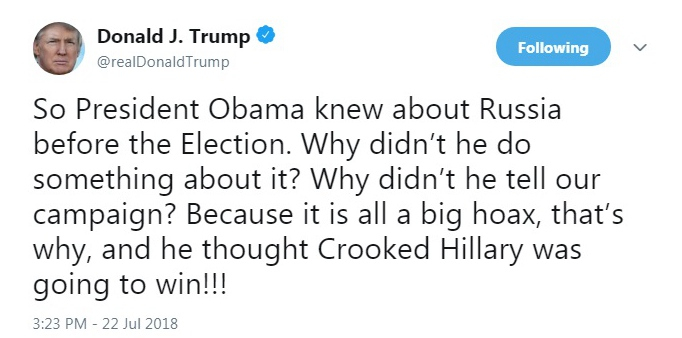
Screenshot of Trump's tweet
Screenshot of Trump's tweet
Informed of that plan during a live television interview, a clearly startled Coats grinned and said, "That's going to be special." After reports said Trump was incensed by Coats' reaction, the intelligence chief issued a formal statement carried by US media saying that his "admittedly awkward response was in no way meant to be disrespectful."
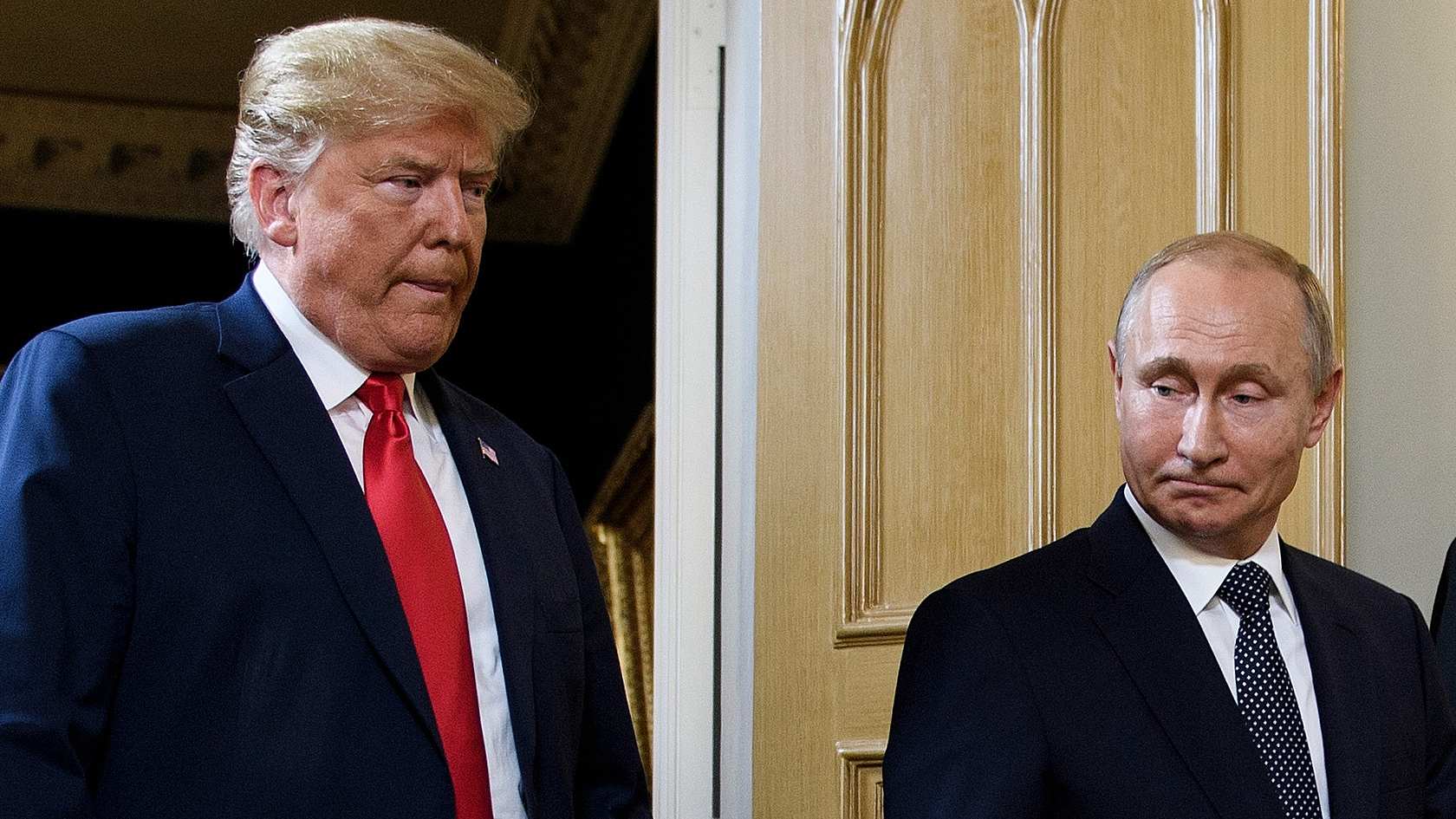
(Cover: US President Donald Trump (L) and Russian President Vladimir Putin arrived for a meeting in Helsinki on July 16, 2018. /VCG Photo)
Source(s): AFP

 ["china"]