
World
12:48, 15-Aug-2018
Nebraska executes first inmate in 21 years, despite drugs company appeal
Updated
12:25, 18-Aug-2018
 ["north america"]
Share







Copied
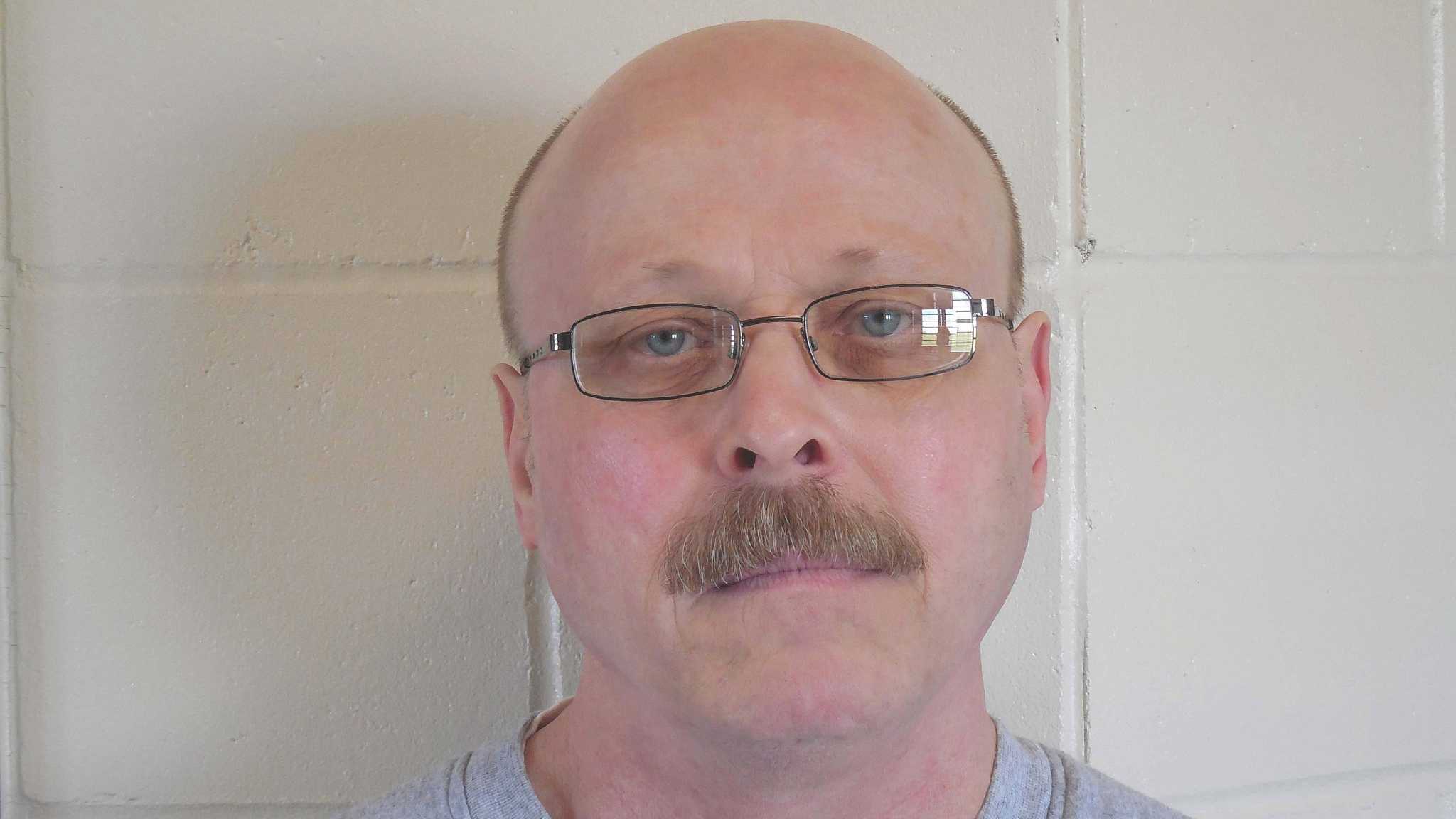
Nebraska executed its first inmate in 21 years on Tuesday, despite efforts by a German drug company to halt the execution over concerns the drugs used had been obtained illegally and could hurt its reputation.
Carey Dean Moore, 60, was put to death Tuesday morning at Nebraska State Penitentiary in Lincoln, in what was the state’s first ever lethal injection.
It was also the first time the US carried out an execution using fentanyl, the opioid at the center of the country's deadly overdose crisis and a drug 100 times stronger than morphine.
Moore had been sentenced to death for the 1979 murders of two taxi drivers.
In his final words, he alluded to a written statement dated August 2, in which he pointed to other Nebraska death row inmates who claim their innocence. "I am guilty, they are not," he wrote.
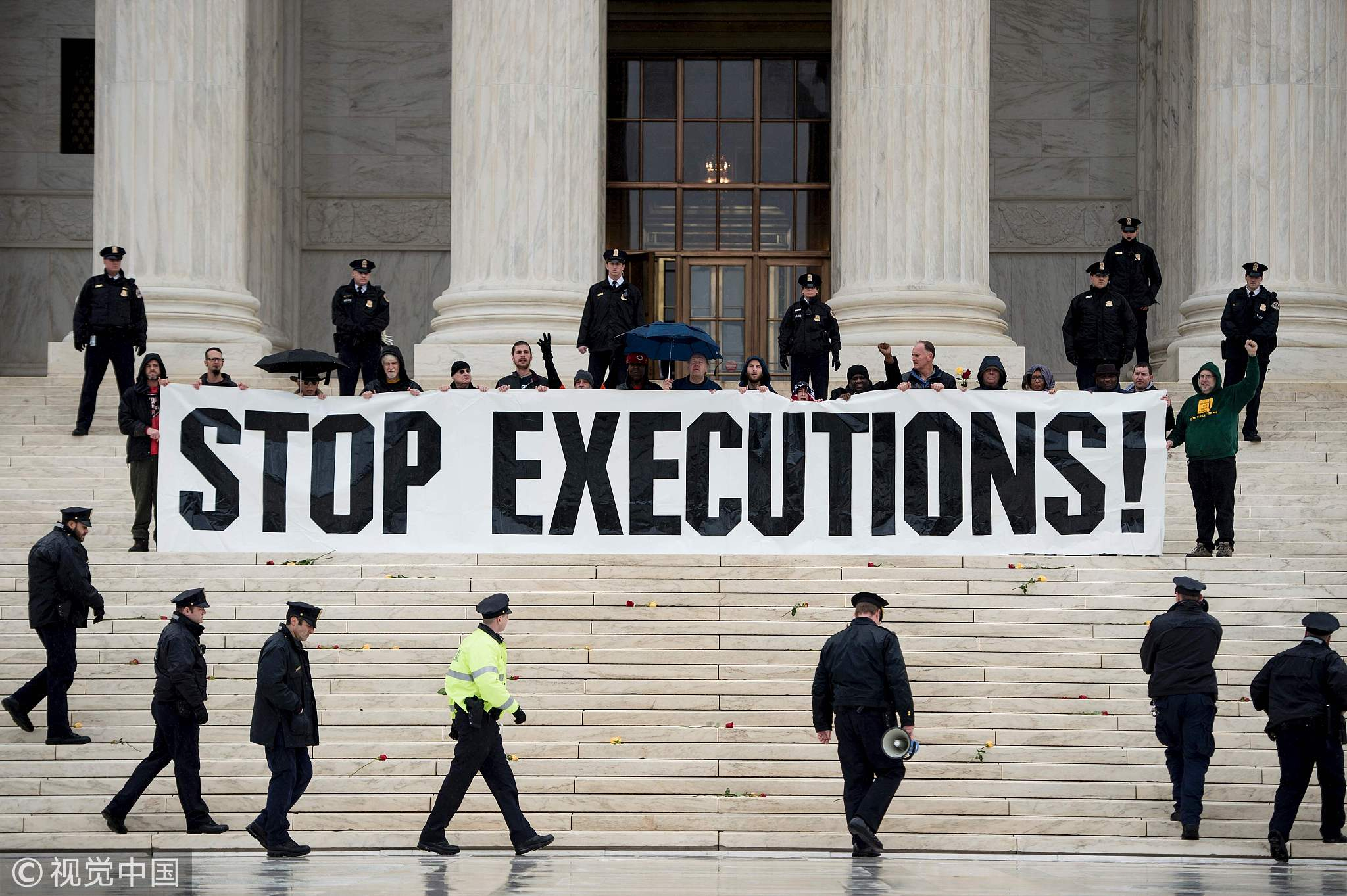
Police officers gather to remove activists during an anti-death penalty protest in front of the US Supreme Court in Washington, DC, Jan. 17, 2017. /VCG Photo
Police officers gather to remove activists during an anti-death penalty protest in front of the US Supreme Court in Washington, DC, Jan. 17, 2017. /VCG Photo
A handful of demonstrators gathered during the rainy morning to protest his execution, the 16th in the United States this year.
Moore launched no last-minute appeals to spare his life, but the US arm of German drug maker Fresenius Kabi sued last week to prevent the state from using its products in a lethal injection, claiming the state obtained the drugs through deception and that their use could harm its reputation.
The state however argued it legally obtained the drugs from a licensed US pharmacy and both a federal judge and an appellate court sided with Nebraska.
The lethal injection consisted of the sedative diazepam to bring on unconsciousness, the painkiller fentanyl citrate, the muscle relaxer cisatracurium to stop breathing, and potassium chloride to stop the heart.
Robert Dunham, director of the Death Penalty Information Center said Nebraska's use of fentanyl was problematic, because use of the powerful opioid is closely controlled by law, and the state has not disclosed its source for the drug.
"The manner in which they obtained it is highly questionable," he said.
Pharmaceutical manufacturers and providers have been increasingly hostile to selling such drugs to states. Officials across the country have had to scramble to find the execution drugs they need or find alternatives.
Nebraska’s state legislature abolished the death penalty in 2015 but voters reinstated it the next year in a referendum. The last execution carried out in the state was by electric chair in 1997.
Source(s): AFP
,Reuters