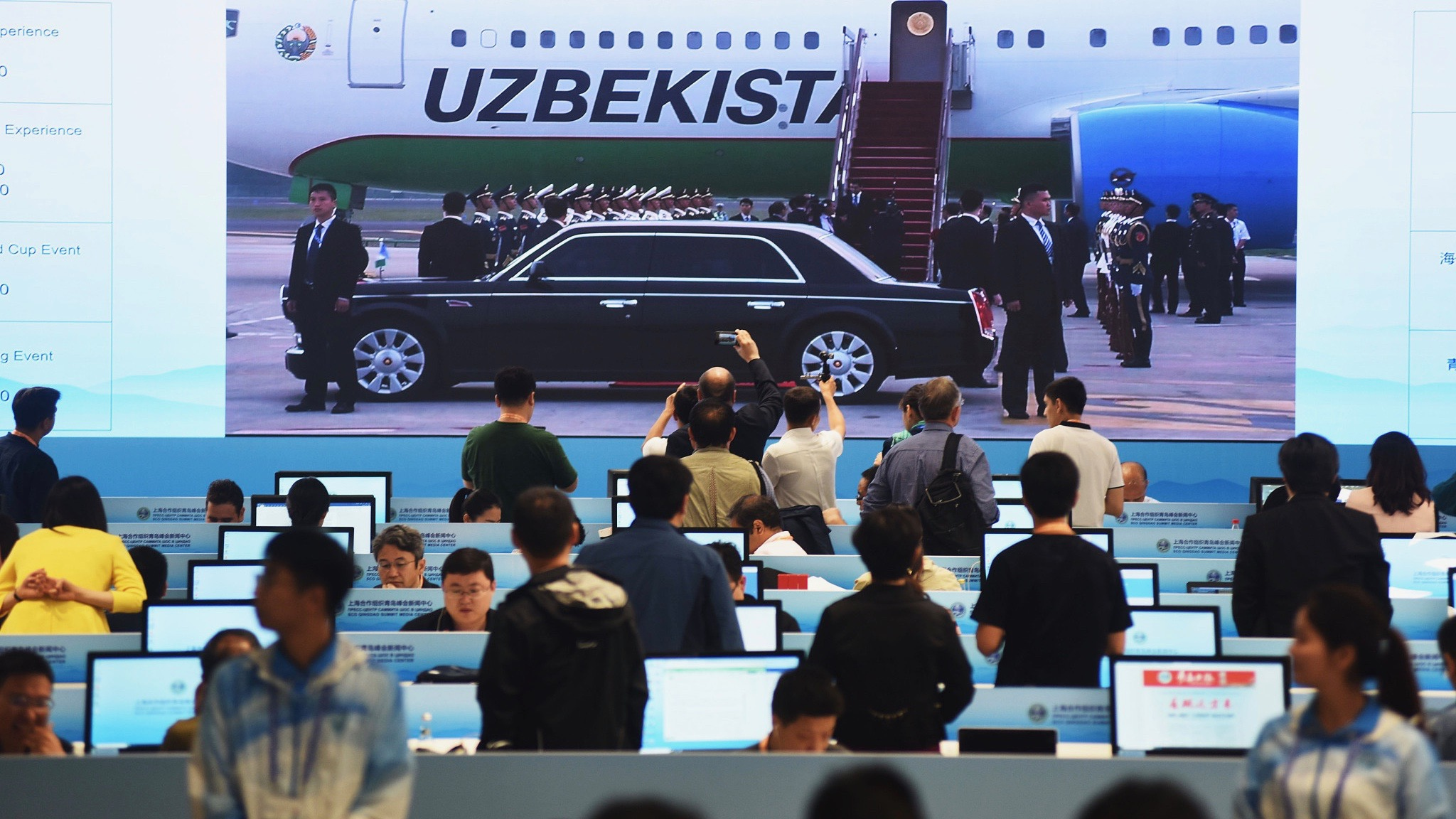
Secure borders, the fight against terrorism, but also the need for less talk and more action: an informal poll of journalists from each of the Shanghai Cooperation Organization’s member states on Saturday revealed a wide variety of interests and priorities going into the SCO’s annual summit.
Eyes were also on new members India and Pakistan – who are attending the meeting in Qingdao, in east China’s Shandong Province, for the first time – to see how the two regional rivals would interact and what they could bring to the table.
Here is an overview of what SCO media participants expected from the summit.
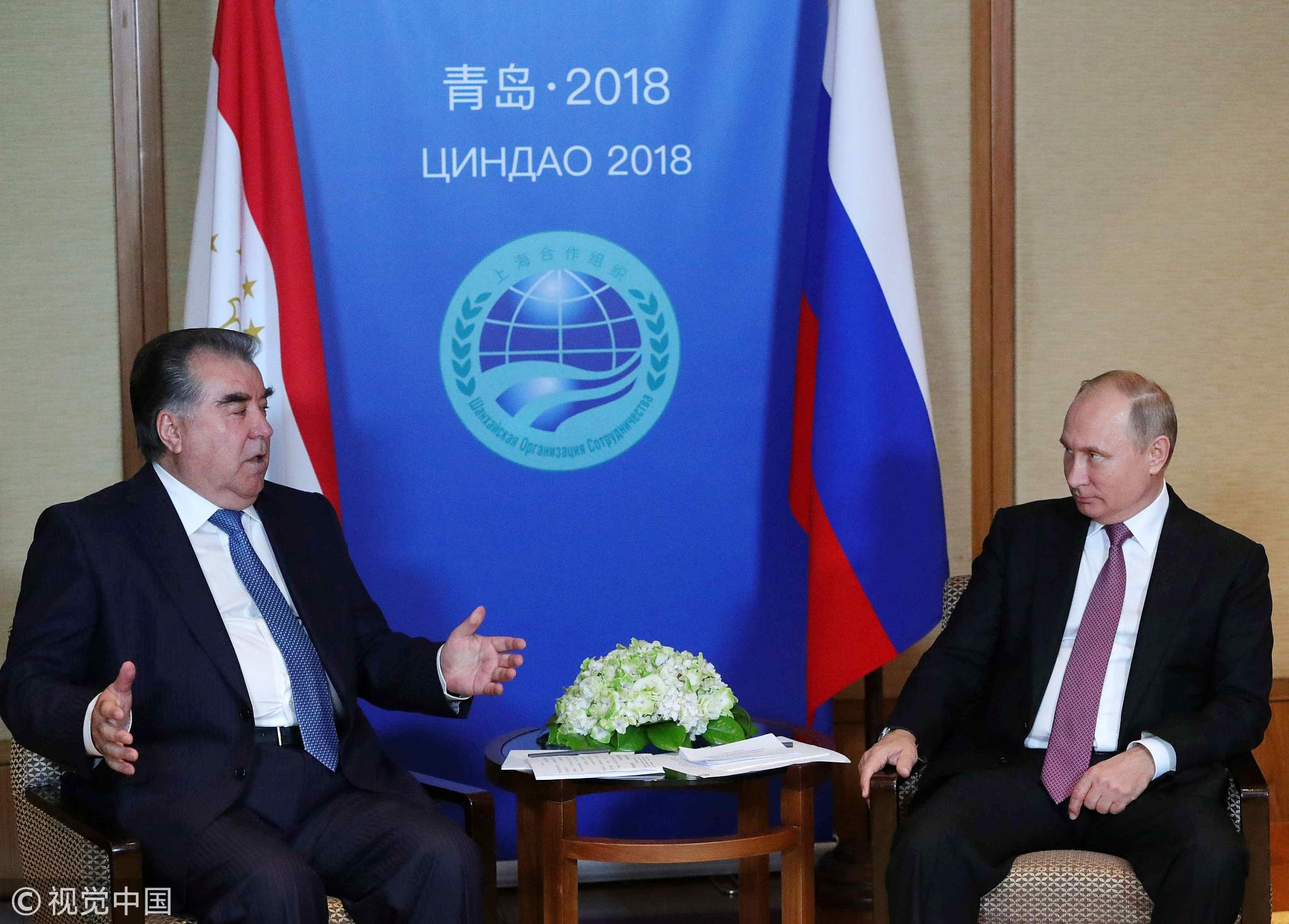
Russian President Vladimir Putin (R) meets with Tajik President Emomali Rakhmon on the sidelines of the Shanghai Cooperation Organization (SCO) Summit in Qingdao, China, June 9, 2018. /VCG Photo
Russian President Vladimir Putin (R) meets with Tajik President Emomali Rakhmon on the sidelines of the Shanghai Cooperation Organization (SCO) Summit in Qingdao, China, June 9, 2018. /VCG Photo
Russia: Terrorism and security cooperation
“It’s very important to collaborate, to work together, to protect our countries against terrorism.”
For Hassan Nassr, correspondent for Russia Today - Arabic, there was little doubt that security was the key issue at the meeting of SCO heads of state.
“This is the world’s challenge now: we should protect our countries, and our borders,” he told CGTN.
Security issues have been at the heart of the SCO ever since its establishment in 2001. With Afghanistan on the SCO’s doorstep and Middle East conflicts a stone’s throw away, more concrete efforts were needed however.
“We hope that sooner or later, we will go from just talking to action,” said Nassr.
Tajikistan: Words and action
Similar sentiments were shared by Abdurakhmon Rakhmanov, photographer-reporter with Tajikistan’s Avesta news agency.
“The SCO has talked about security for so many years, but it’s not enough. Now we need to go from words to action.”
Nevertheless, the existence of a platform to exchange views was a significant step in a region with, at times, widely divergent priorities.
“Every country has their own interest in this organization, but we talk to each other,” Rakhmanov said.
India: Dialogue and expansion
Most journalists CGTN spoke to said they would be watching to see how India and Pakistan – two countries with an often rocky relationship in the past - would fare at their first summit.
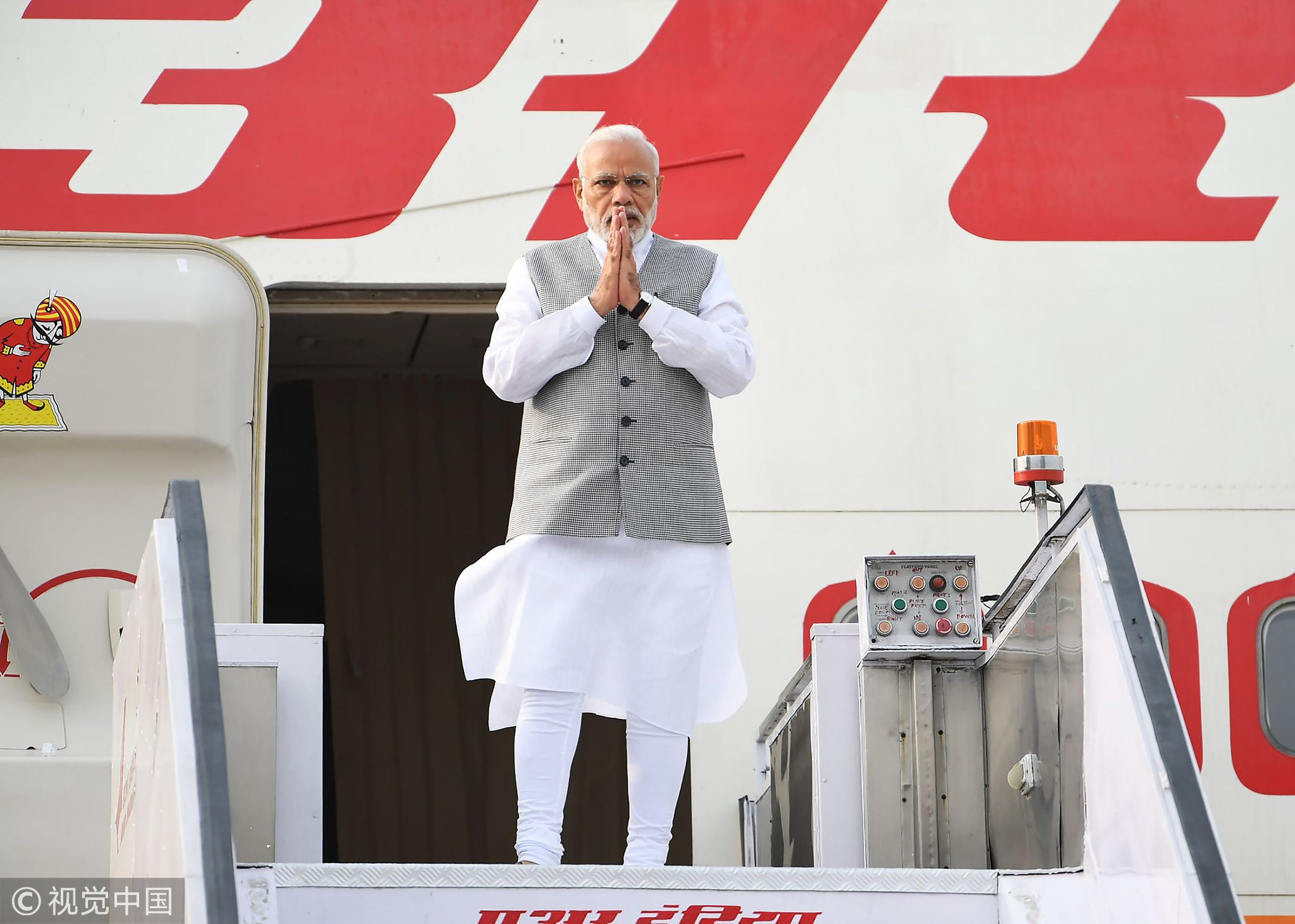
This handout photograph released by India's Press Information Bureau (PIB) on June 9, 2018 shows Indian Prime Minister Narendra Modi gesturing before boarding an aircraft flying to Qingdao, China in New Delhi. /VCG Photo
This handout photograph released by India's Press Information Bureau (PIB) on June 9, 2018 shows Indian Prime Minister Narendra Modi gesturing before boarding an aircraft flying to Qingdao, China in New Delhi. /VCG Photo
Sutirtho Patranobis, a reporter with the Hindustan Times, was positive however that the SCO membership could benefit bilateral relations. “The SCO provides one more platform for the two countries to get together, sit and discuss issues, which are probably plaguing not only India and Pakistan but the other six countries which are there,” he said.
If anything, the two countries’ membership was likely to spark further expansion of the bloc, he predicted.
“I think that’s what the countries are looking at: making it a broader framework, a broader mechanism, a broader platform of countries to work together towards the common goals of economic development, prosperity, regional connectivity and countering terrorism,” he said, although this might happen “maybe not immediately.”
Pakistan: Peace, stability and prosperity
For Wajid Khan, a reporter with Independent News Pakistan, the stakes for Pakistan were high.
“South Asia needs stability, peace and prosperity,” he told CGTN. But the SCO provides an important platform to achieve that, he added.
“Pakistan will now be able to share the experience which it received from the war against terrorism,” while India and Pakistan are also due to take part in joint peace mission exercises for the first time.
Pakistan is keen on further economic cooperation in the region, including through China’s Belt and Road Initiative (BRI), and this will only be possible by ensuring stability, said Khan. “If the security environment in the region is good, then it will be very helpful in implementing BRI projects.”
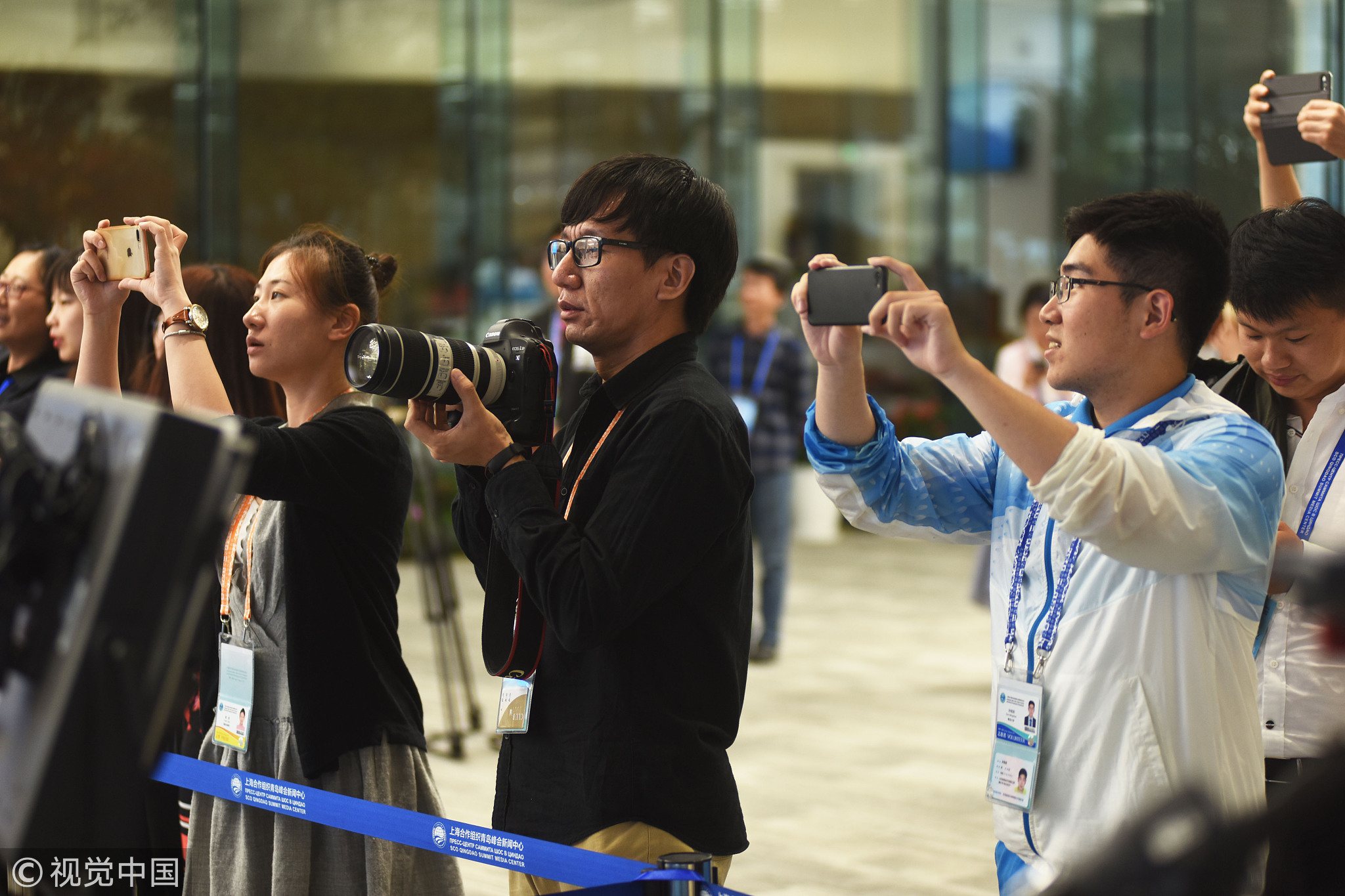
Journalists and photographers at the SCO 2018 Summit Media Center in Qingdao, China, June 9, 2018. /VCG Photo
Journalists and photographers at the SCO 2018 Summit Media Center in Qingdao, China, June 9, 2018. /VCG Photo
Kazakhstan: Border security, energy
Asem Kabilbekova, from Kazakhstan’s Khabr news agency, was one of the reporters watching the developments between India and Pakistan. With the two new members, the SCO now makes up over 40 percent of the world’s population, and covers a quarter of its surface area and produces one-fifth of global GDP.
This will give the SCO more sway in the future, Kabilbekova noted.
While global security and protecting its borders remain the country’s priorities, Kazakhstan is also looking for further development in the energy field. “India and Pakistan are very big countries,” and accordingly, they are big potential markets and partners, including on renewable energy projects, she said.
Uzbekistan: Silk Road and little people
The SCO members are all located along the ancient Silk Road, now being revived as part of China’s Belt and Road Initiative, and for Uzbek journalist Khusan Salikhov, the comparison was crucial.
“The great Silk Road was everything: it was (cooperation in) politics, trade, society, culture,” he noted. The SCO “has to be a big project that includes all of this.”
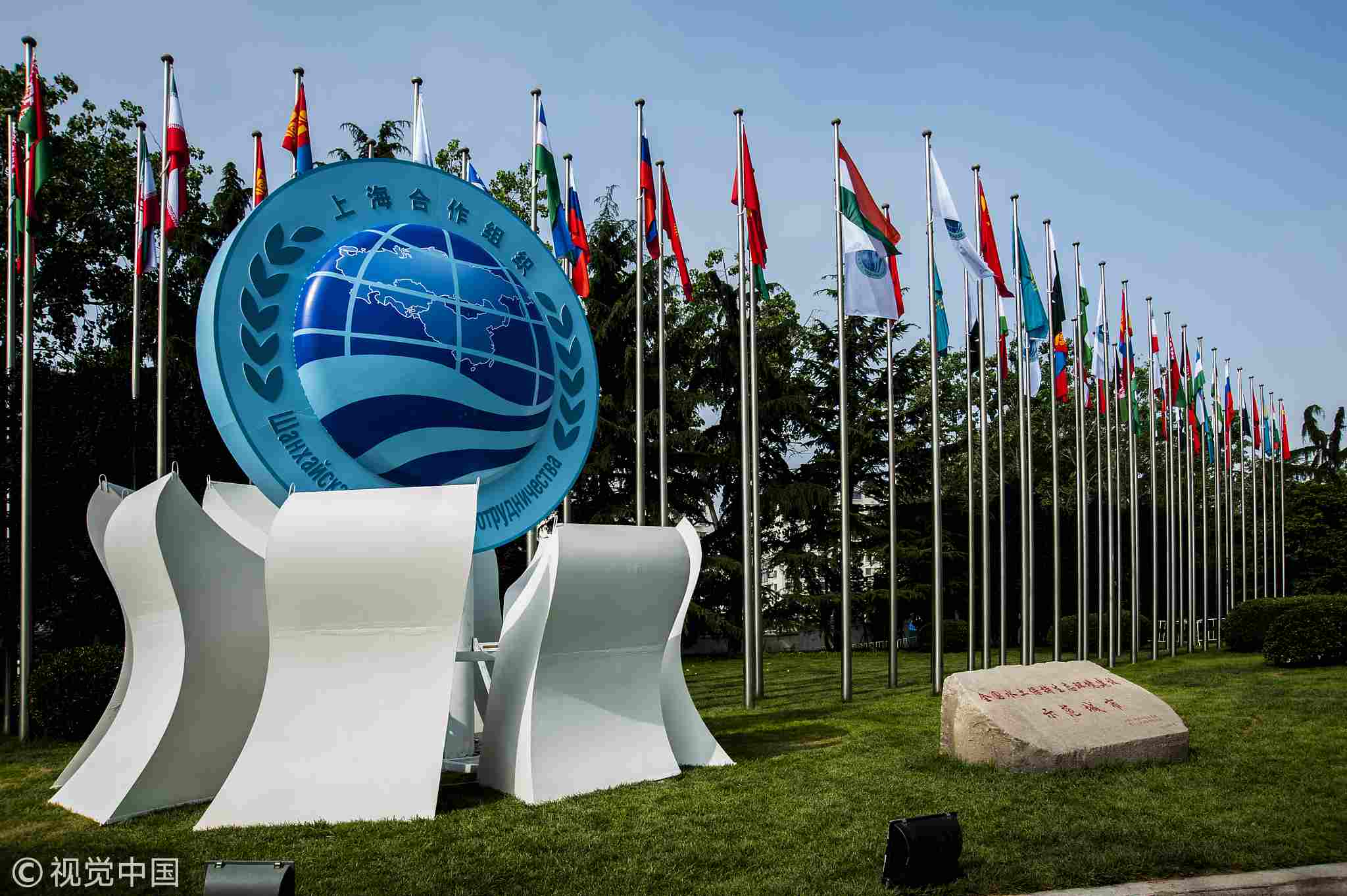
Logo of the Shanghai Cooperation Organization (SCO) in Qingdao, China. /VCG Photo
Logo of the Shanghai Cooperation Organization (SCO) in Qingdao, China. /VCG Photo
But in the process, leaders must remember who they are doing this for.
“This kind of summit has to come up with a way for everyone to profit too, not just government and businessmen, but simple people,” said Salikhov.
Kyrgyzstan: Tourism, culture and students
Besides security issues, SCO members have also shown a desire to cooperate on softer issues. Economic development with neighboring China is of course a priority for Kyrgyzstan, Aizhan Mambetalieva, a journalist with Evening Bishkek newspaper, told CGTN.
But she said she also hoped to see more cultural exchanges between the two countries. Already many Kyrgyz people study in China. The next step is to draw more Chinese tourists to visit Kyrgyzstan, she said.
China: Cooperation and culture
These ideas were echoed by Liu Jun, of China’s local Shandong TV station.
“Increased security, culture and youth exchanges: I hope more consensus can be reached in these areas,” she said.
“As a journalist and as a citizen, I hope more countries will join the SCO and work together to make the world better and step up cooperation among nations.”

 ["china"]