
Politics
16:16, 19-Jun-2018
Migration tops agenda as Merkel, Macron talk summit tactics
 ["europe"]
Share






Copied
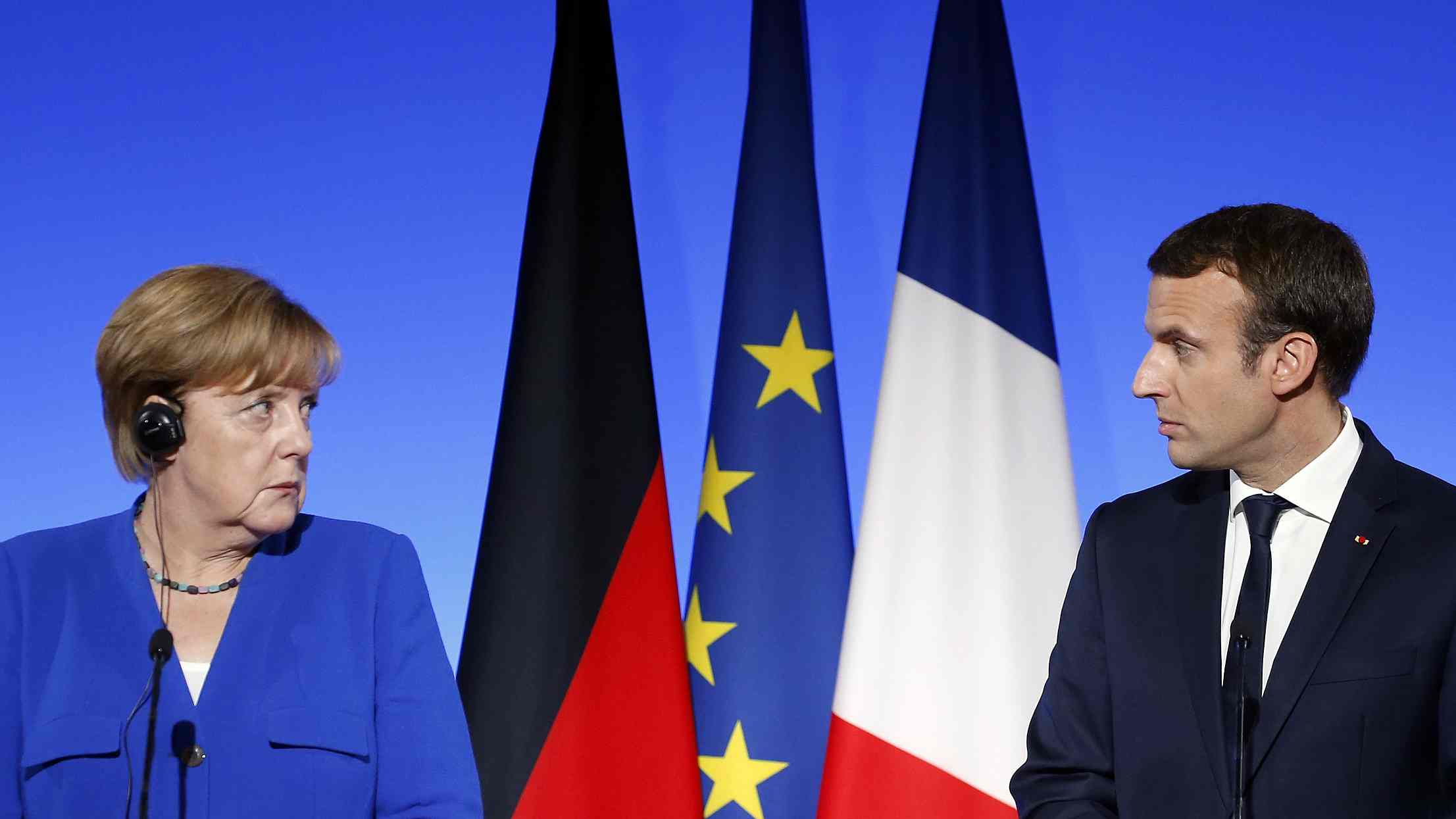
A high-level gathering of German and French cabinet members will attempt to find common ground on an array of European difficulties – from migration to eurozone reform – on Tuesday.
Chancellor Angela Merkel and President Emmanuel Macron will be joined by finance, defense and foreign ministers from their respective countries at the Meseberg castle north of Berlin.
The talks between leaders of Europe's two biggest economies are expected to center on reaching consensus ahead of an EU summit scheduled to take place on June 28-29, and come against the backdrop of deep divisions within the bloc over migration policy.
Migration fracture
Merkel and Macron face a challenge from the rise of nationalist and populist forces across the bloc, notably in Italy where a Five Star/League coalition is now in government, while the German chancellor was taunted about her open border policy by US President Donald Trump on Monday.
The new Italian interior minister Matteo Salvini, also the leader of the League, caused uproar last week when he refused to allow a ship carrying 630 migrants to dock. His stance led to a sharp exchange with Macron, who denounced the move as “cynical and irresponsible.”
Macron and new Italian Prime Minister Giuseppe Conte subsequently voiced support for EU "asylum centers" to be set up.
Read more:
Merkel's position has since been threatened by her own interior minister, with Horst Seehofer demanding tougher immigration curbs on German borders. Seehofer, chairman of Merkel's coalition partner the Christian Social Union, has given the chancellor two weeks to find an EU-wide solution.
The CSU indicated on Monday that Seehofer would defy Merkel and implement hardline new rules if a solution was not found – a move that could bring down the government.
Merkel argues that the issue must be resolved at the EU level, and has pledged to reach deals with transit and arrival countries by the end of June.
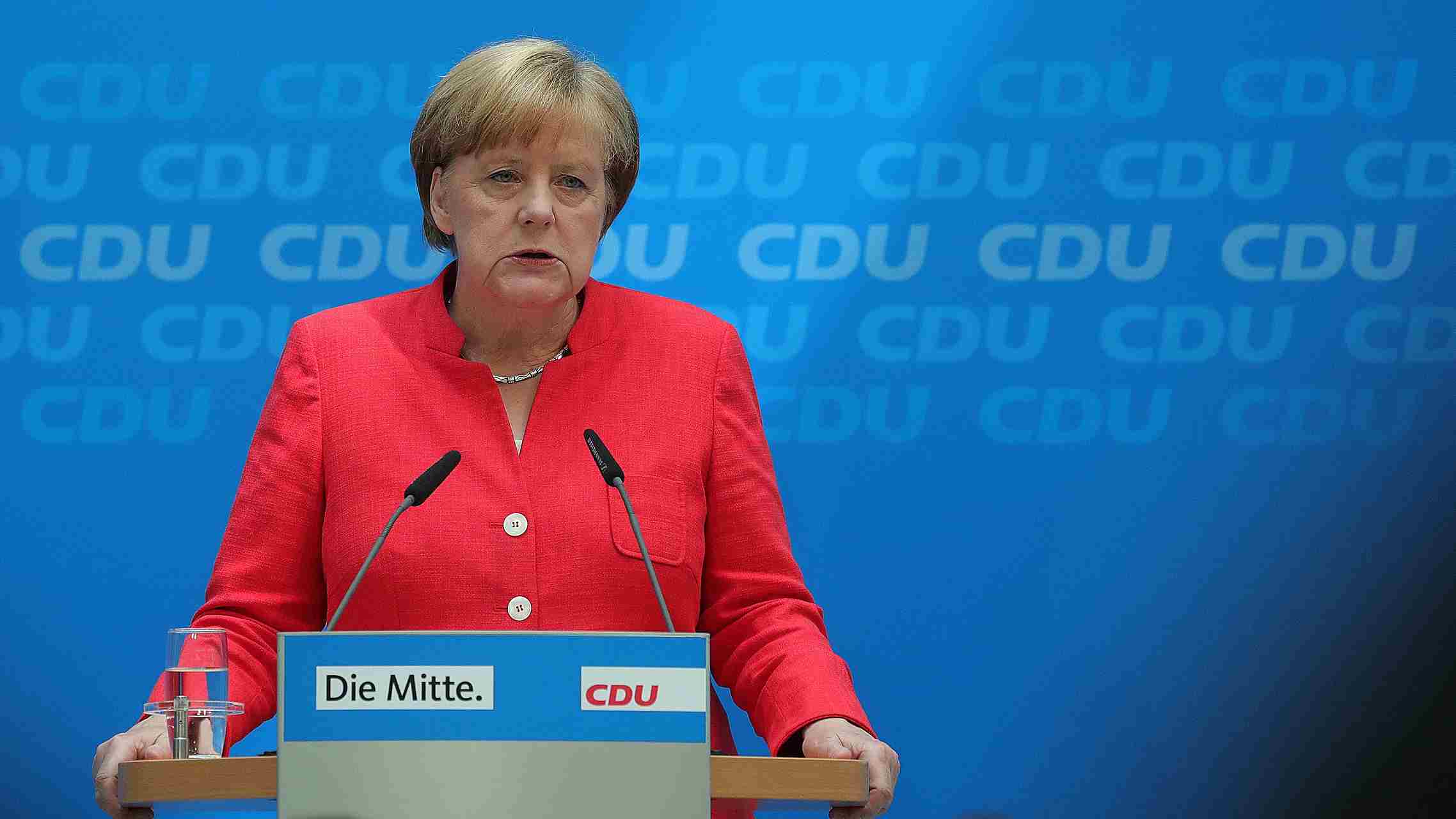
Angela Merkel, Germany's chancellor and leader of the Christian Democratic Union (CDU) party, speaks during a news conference at the CDU headquarters in Berlin, Germany, on June 18, 2018. /VCG Photo
Angela Merkel, Germany's chancellor and leader of the Christian Democratic Union (CDU) party, speaks during a news conference at the CDU headquarters in Berlin, Germany, on June 18, 2018. /VCG Photo
"Turning away migrants at our borders at the heart of Europe will lead to negative domino effects that could hurt Germany and put into question European unity," she warned on Monday. She has previously voiced concern that refusing entry to asylum seekers could undermine passport-less movement in the Schengen area.
Merkel and Macron agree that countries on the EU's external borders need more support, and that the EU's Frontex border force must receive more funding. The French president has also backed the creation of asylum processing centers in Africa.
It is less clear how well supported the proposals will be by other member states. Italy and Austria have taken increasingly hardline stances, while Eastern European countries have been resistant to existing migration agreements.
Eurozone reforms
Macron's plans to reform the eurozone are also likely to be high on the agenda; to-date little of his vision to revitalize the bloc has been realized.
The French president set out proposals to "rebuild Europe" when elected, but has struggled to gain the support of the German chancellor for his more ambitious plans.
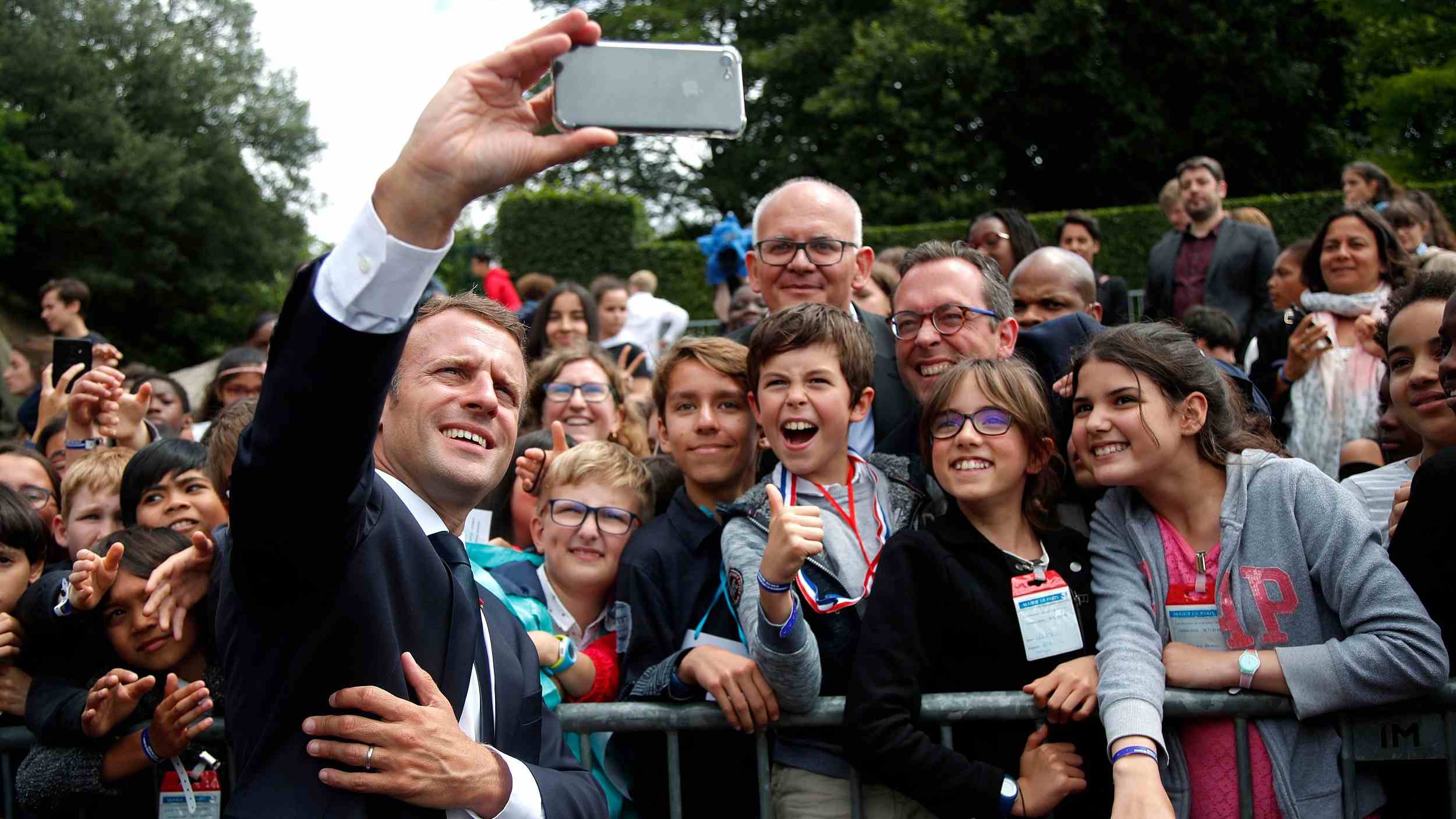
French President Emmanuel Macron (C) takes a selfie as he leaves after a ceremony commemorating General Charles De Gaulle's June 1940 appeal for French resistance against Nazi Germany, on the outskirts of Paris on June 18, 2018. /VCG Photo
French President Emmanuel Macron (C) takes a selfie as he leaves after a ceremony commemorating General Charles De Gaulle's June 1940 appeal for French resistance against Nazi Germany, on the outskirts of Paris on June 18, 2018. /VCG Photo
Merkel was weakened by a drop in support in the September 2017 elections, and little progress was made on a coordinated response during six months of coalition talks in Germany. She is reported to be reluctant to move ahead without strong support from other member states.
The German chancellor has not backed the French president's most eye-catching proposal, the establishment of a eurozone finance minister post and budget.
However, the Elysee Palace said on Monday it hoped for "a substantial agreement" with Berlin on reform of the 19-member common currency area, AFP reported, with a specific budget on a "safety net" to save banks in trouble.
The news agency also reported that Merkel has agreed on a common investment budget for the bloc, but says it should be worth several tens of billions of euros, not the hundreds of billions suggested by Macron.
France and Germany may also strike a deal aimed at harmonizing corporate taxes across the bloc, to stop multinationals from taking advantage of low-tax regimes. Merkel has said she is "favorable" to Macron's demand for a common rapid reaction defense force, though they differ on its make-up.
7368km