
Opinions
15:00, 23-Apr-2018
China’s progress in 40 years: Strong leadership the foundation
 ["china"]
Share







Copied
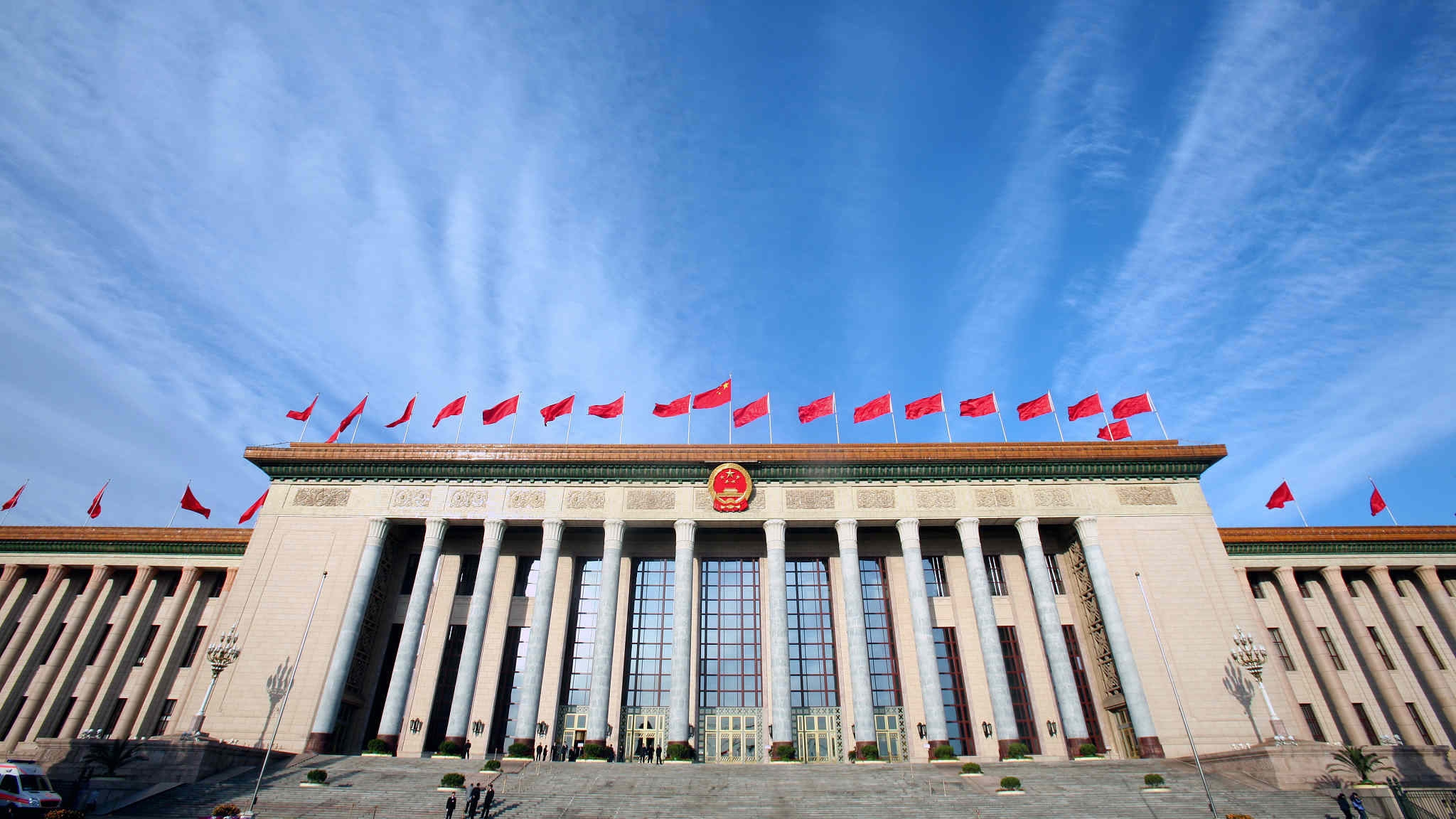
CGTN note: This year marks the 40th anniversary of China’s reform and opening up. To help you better understand the significance of this milestone, CGTN guest commentator, Dr Summer, shares his findings of China's major achievements during the past four decades. To cut a long story short, he has chosen the country’s progress in political, economic, social and diplomatic fields. Here’s part one of his article.
In his keynote speech at the 2018 Boao Forum for Asia, Chinese President Xi Jinping announced that China will open “wider and wider” to the world because “human history shows that openness leads to progress, while seclusion leaves one behind.”
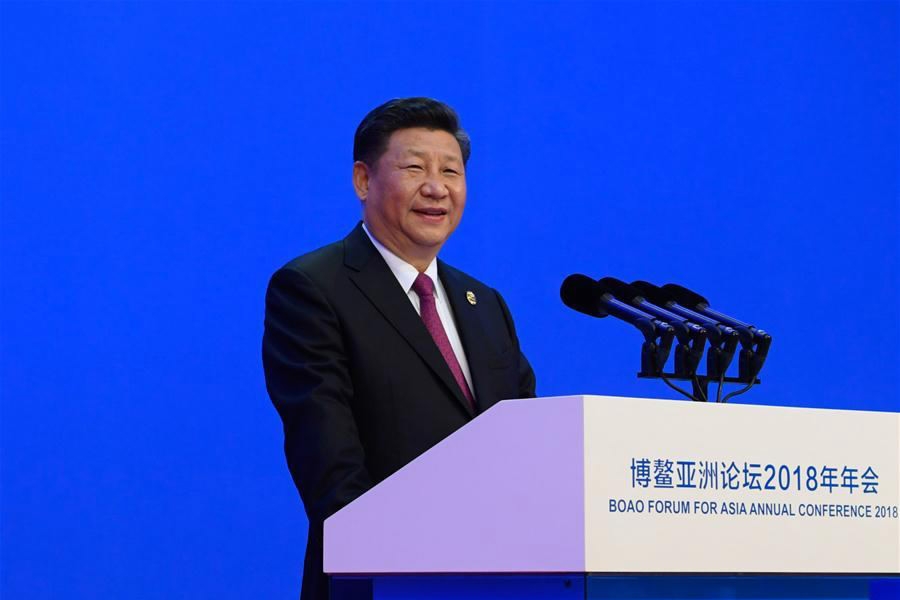
Chinese President Xi Jinping delivers a keynote speech at the opening ceremony of the Boao Forum for Asia annual conference in Boao, south China's Hainan Province, April 10, 2018. /Xinhua Photo
Chinese President Xi Jinping delivers a keynote speech at the opening ceremony of the Boao Forum for Asia annual conference in Boao, south China's Hainan Province, April 10, 2018. /Xinhua Photo
I think it’s necessary to take a glance at contemporary China in order to fully understand what Xi Jinping said in Boao. To cut a long story short, the country’s contemporary history can be summarized into three giant leaps.
The first giant leap took place when the People’s Republic of China (PRC) was founded in 1949: Mao Zedong made the Chinese nation stand up after ending domestic chaos and fights as well as invasions and oppression by foreign powers. The following three decades of socialist reconstruction laid a basic foundation for the country’s future development.
The second giant leap came as a result of the country’s modernization drive powered by the reform and opening up initiated by Deng Xiaoping in the late 1970s. After two decades of fast economic growth, Deng Xiaoping’s policy had made the Chinese nation rich by increasing the country’s GDP and per capita disposable income for urban residents by 23 times and 16 times, respectively. China’s ranking among the world economies also moved up from 15th place in 1978 to seventh in 1998.
The third giant leap was ushered in over the past five years as China maintained its second place among the world’s economic powers with a record-high GDP of 82,712.2 billion RMB and a per capita disposable income for urban residents of 36,396 RMB in 2017 – 9.7 and 6.7 times, respectively, the numbers for 1998. Under the leadership of Xi Jinping, China is now on its way to becoming a strong and responsible major country on the world stage, contributing 30 percent of the world economy despite a slow economic recovery worldwide in the wake of the global financial crisis and rising trade protectionism.

A freighter at Qingdao Port, Shandong Province, China, April 15, 2018. /VCG Photo
A freighter at Qingdao Port, Shandong Province, China, April 15, 2018. /VCG Photo
Xi Jinping’s Thought on Socialism with Chinese Characteristics for a New Era, together with his Belt and Road Initiative and his proposal to build a community of shared future for mankind, have not only changed the fate of the Chinese people, but also shed light on a new path for social development and global governance when countries around the world are overwhelmed by the fast changes and big challenges brought about by globalization.
According to studies on work reports by the Chinese government over the past four decades, four words have popped up with the highest rate of usage in the documents: reform, economy, construction and development. After days of my own research, I’ve found out that these words coincide with the major achievements made by China in political, economic, social and diplomatic fields during the same period.
I think the most significant changes have occurred in China’s political system under the leadership of the Communist Party of China (CPC), best illustrated by the smooth transfer of powers from Deng Xiaoping to Jiang Zemin to Hu Jintao and to Xi Jinping. Meanwhile, the CPC has been working hard and earnestly to improve its leadership through both internal and external measures.
Internally, the CPC has boosted party-building by adopting stricter inner-party supervision and self-correction measures so as to maintain its political and organizational superiority. Externally, the CPC has been working closely with the non-communist parties to improve the country’s legislation, multi-party consultation and democratic supervision systems, such as the National People’s Congress (NPC) and the Chinese People’s Political Consultative Conference (CPPCC).
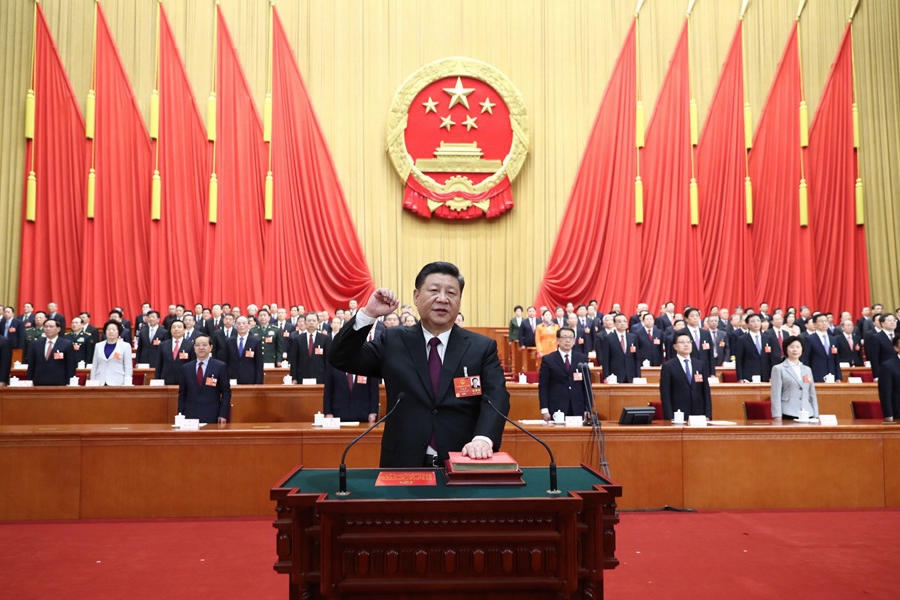
Xi Jinping takes a public oath of allegiance to the Constitution in the Great Hall of the People in Beijing, March 17, 2018. /Xinhua Photo
Xi Jinping takes a public oath of allegiance to the Constitution in the Great Hall of the People in Beijing, March 17, 2018. /Xinhua Photo
The NPC, composed of deputies from different administrative regions across China, reflects the wishes and wisdom of the people from different areas and ethnic nationalities. The CPPCC, constituted with members from different walks of life, collects advice and opinions from the different social circles. They are the symbols of national unity (to identify common goals) based on democratic consultation (to adopt differentiated policies) and multi-party supervision (to ensure effective implementation).
The Chinese political system is designed to work for the basic interests of the majority and to cover the widest possible scope with the most tangible results. It has ensured an effective coordination between short-term development and gains with long-term planning and strategic goals, which reflect the common will and true interests of the majority of the Chinese people. The process has laid a solid foundation not only for the country’s consistent reforms and opening up but also for its rapid economic and social development. As a result, the CPC has gained nationwide support for its leadership.
(The author, who has a doctorate in communications from the Communication University of China, has been working in the field of international journalism for 30 years. The article reflects his opinion, and not necessarily the views of CGTN.)