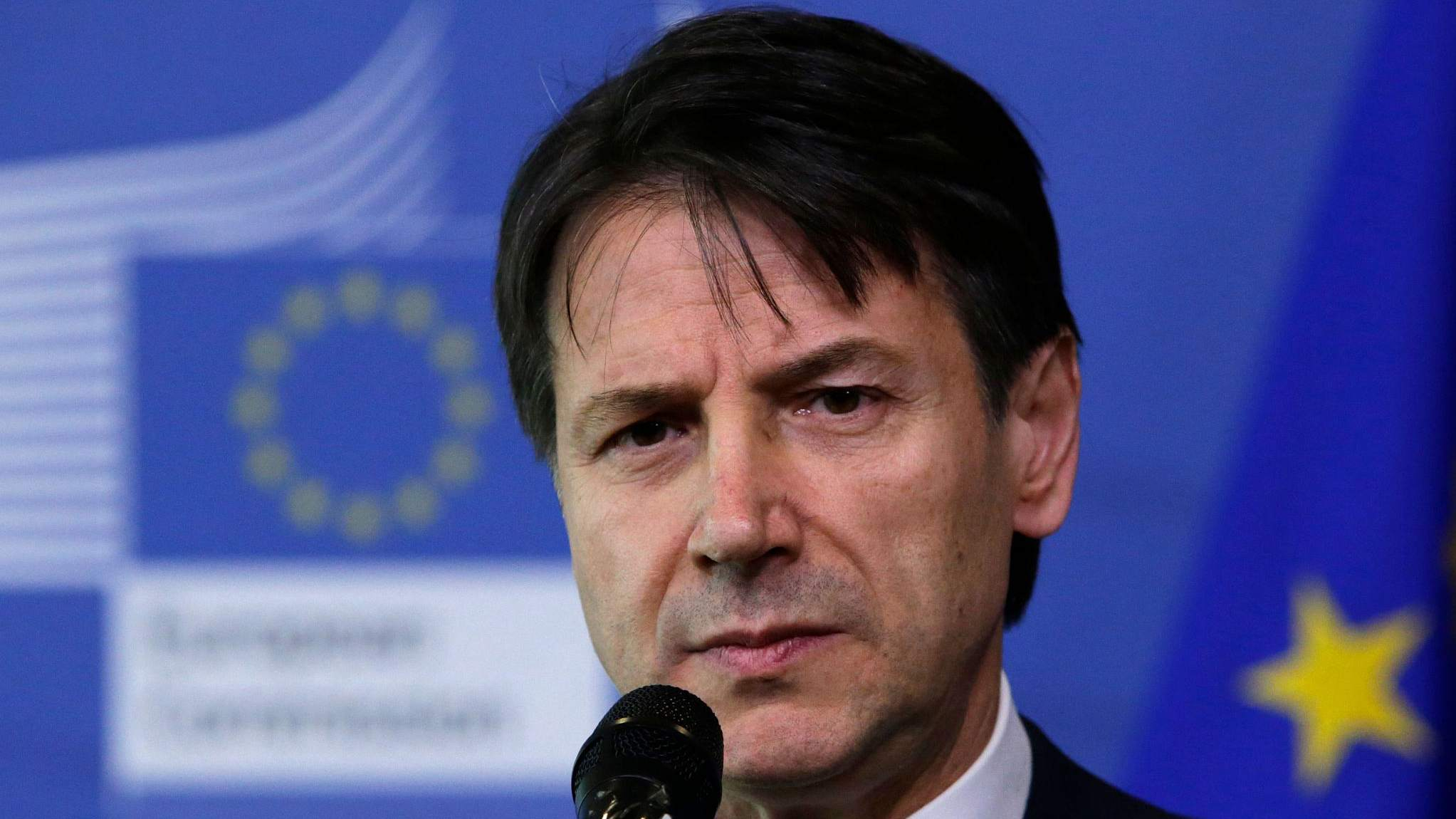
Italy's populist new premier held an EU summit hostage on Thursday in a bid to get reluctant European leaders to share responsibility for asylum seekers landing on Italian shores, with the bloc's future deemed at stake.
Prime Minister Giuseppe Conte, who heads Italy's month-old populist and anti-immigration government, took the rare step of blocking the joint conclusions from the meeting in Brussels, as tensions boiled over.
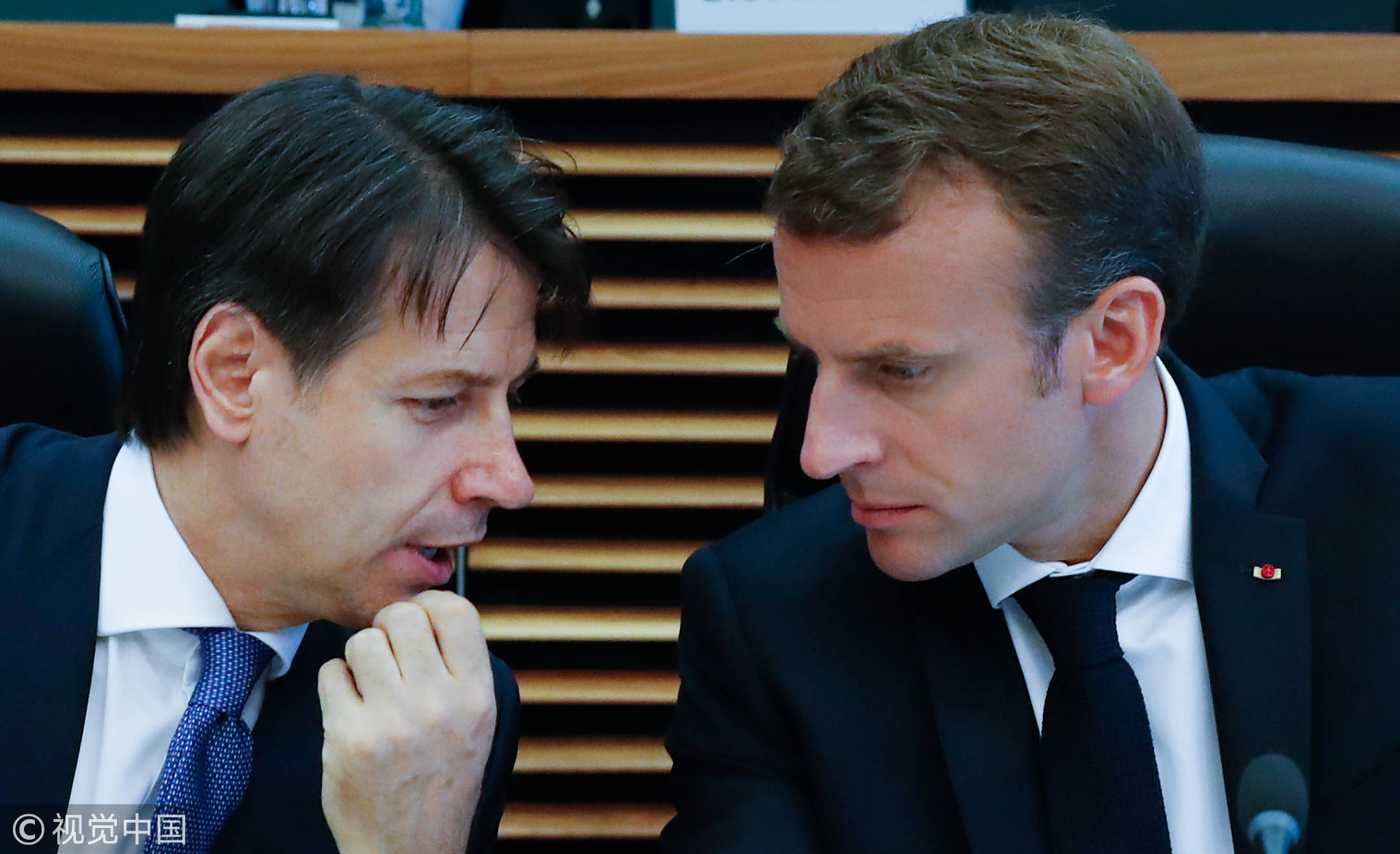
Italian Prime Minister Giuseppe Conte (L) speaks with French President Emmanuel Macron during an informal EU summit on migration at the EU commission in Brussels, June 24, 2018. /VCG Photo
Italian Prime Minister Giuseppe Conte (L) speaks with French President Emmanuel Macron during an informal EU summit on migration at the EU commission in Brussels, June 24, 2018. /VCG Photo
But, after midnight Thursday, European sources told journalists a deal to share responsibility may be emerging.
Read more:
Italy has refused to let several migrant rescue boats dock at Italian ports, reopening EU divisions on the issue despite the fact that arrivals have dipped sharply since Europe's migration crisis erupted in 2015.
"Italy does not need more words, but concrete actions," Conte told reporters as he arrived at the summit, adding that if EU leaders did not offer more help "we will not have shared conclusions."
Italy wants the responsibility for migrants on ships arriving on its shores across the Mediterranean to be shared out across the 28-nation European Union.
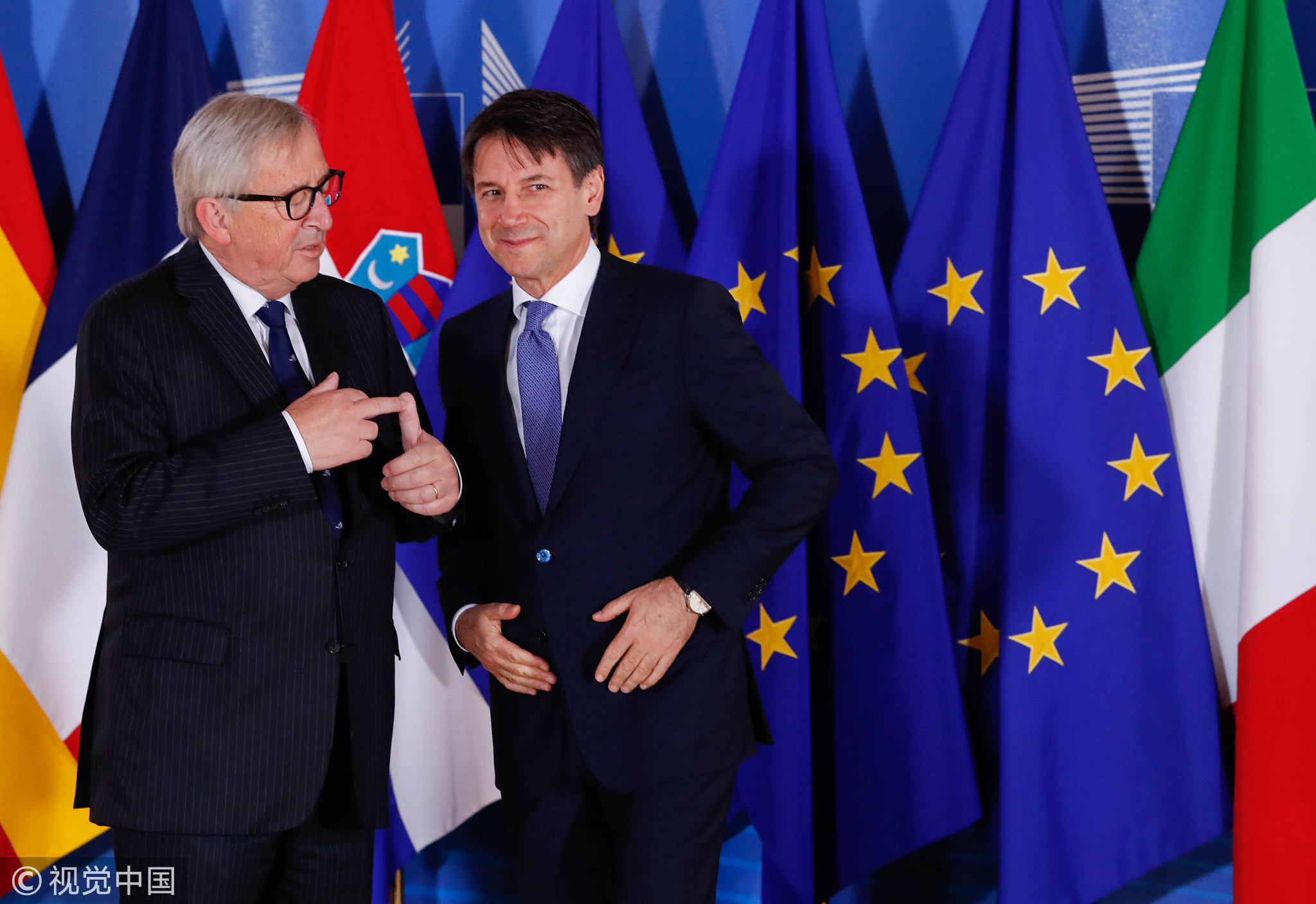
Italian Prime Minister Giuseppe Conte (R) is welcomed by European Commission President Jean-Claude Juncker ahead of an informal EU summit on migration at the EU commission in Brussels, June 24, 2018. /VCG Photo
Italian Prime Minister Giuseppe Conte (R) is welcomed by European Commission President Jean-Claude Juncker ahead of an informal EU summit on migration at the EU commission in Brussels, June 24, 2018. /VCG Photo
It noted how other governments had offered to help after Italy refused to admit the rescue ship Aquarius, which docked later in Spain, and Lifeline, which went to Malta.
Former law professor Conte, until recently a virtual political unknown, comes to Brussels emboldened by the announcement of an upcoming visit to US President Donald Trump, who has hailed Rome's tough stance, and who himself blocked the conclusions of a recent G7 leaders meeting on trade.
European Council spokesman Preben Aamann said that after several hours of talks, conclusions on all issues from the summit – which is also dealing with trade and defense in addition to the core subject of migration – had been blocked.
"Nothing is agreed until everything is agreed," an Italian source added.
A European source said the other 27 EU leaders were "astonished" and unhappy over Italy hardening its position.
"It was a very virulent discussion and everyone jumped on the Italian," a European source said.
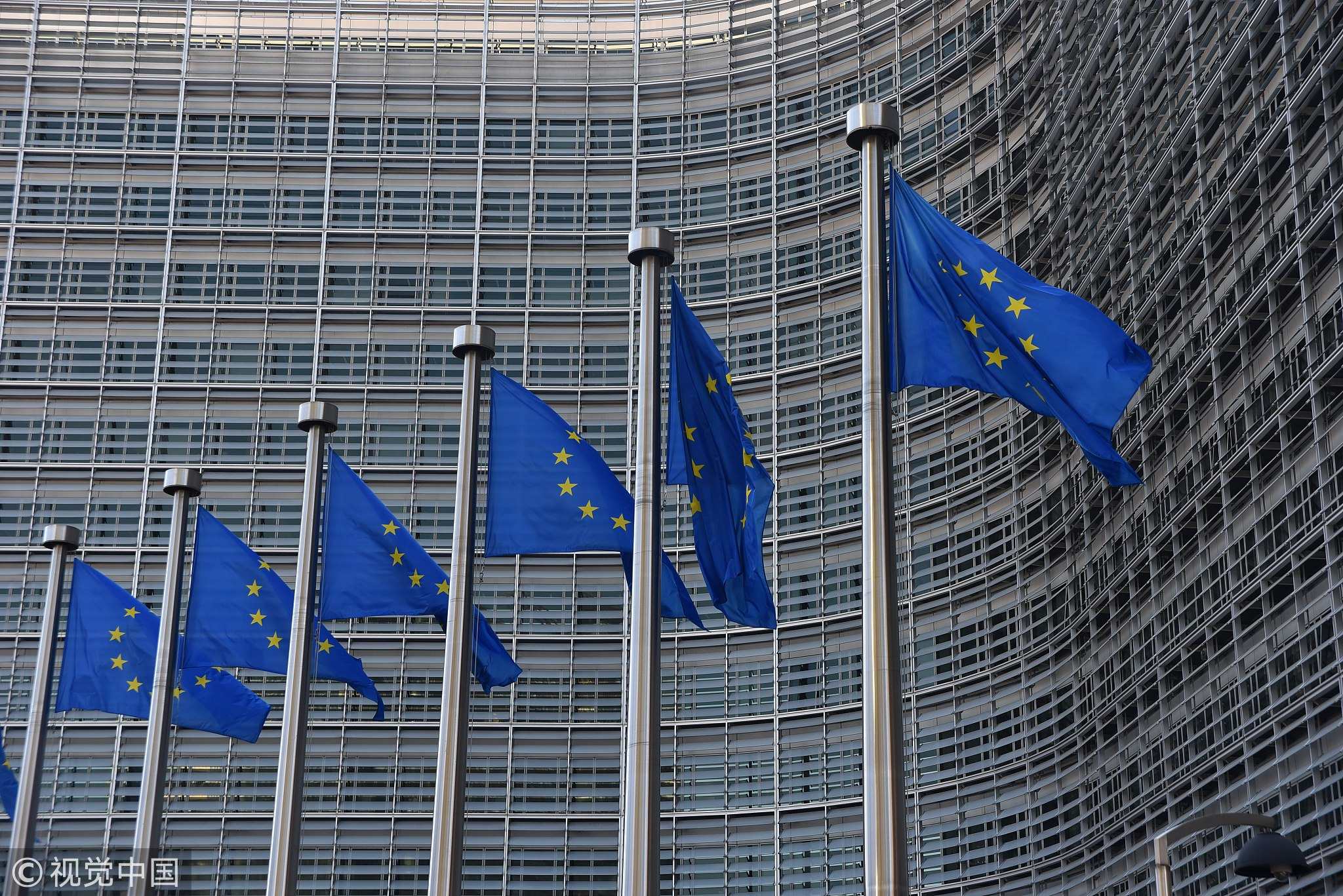
View of the European Commission and the European Quarter, on the first day of the European Council Summit, Brussels, June 28, 2018. /VCG Photo
View of the European Commission and the European Quarter, on the first day of the European Council Summit, Brussels, June 28, 2018. /VCG Photo
'Europe's destiny'
Failure to issue a joint statement at the end of the summit on Friday would be a catastrophic show of disunity for the EU leaders, who are meeting amid warnings that authoritarian and "anti-European" movements will take advantage of their failure to tackle migration.
Merkel's political future at home also hangs in the balance over the migrant issue, and she issued a rallying call to the other European leaders to back her stance.
"Europe has many challenges but migration could end up determining Europe's destiny," Merkel told German lawmakers hours ahead of the summit.
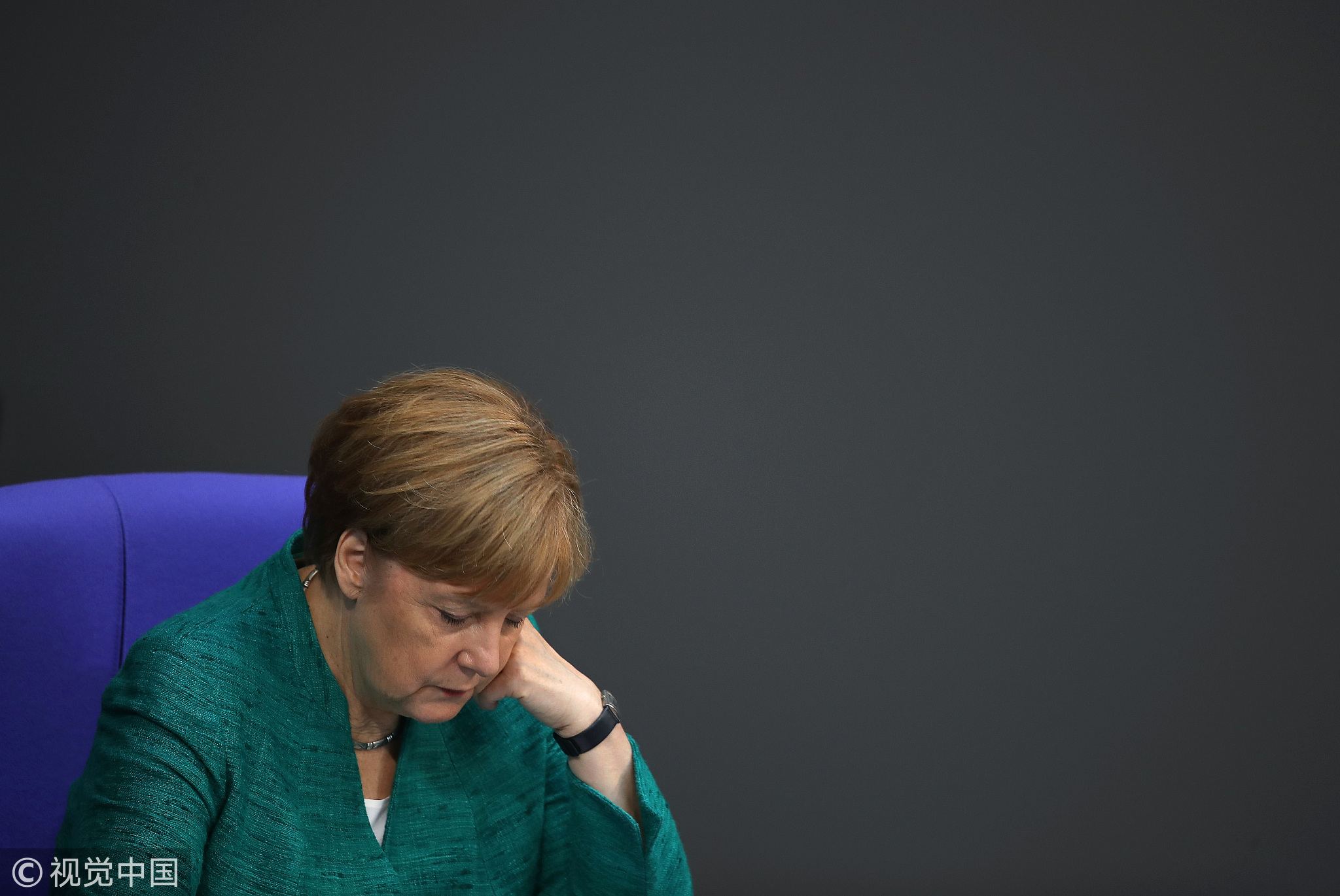
German Chancellor Angela Merkel sits down after she gave a government declaration at the Bundestag ahead of the upcoming EU and NATO summits on June 28, 2018, in Berlin, Germany. /VCG Photo
German Chancellor Angela Merkel sits down after she gave a government declaration at the Bundestag ahead of the upcoming EU and NATO summits on June 28, 2018, in Berlin, Germany. /VCG Photo
For years Europe's most powerful leader, Merkel risks seeing her fragile coalition collapse if she cannot reach deals with Italy and other countries to stop migrants initially arriving in those countries from moving on to Germany.
After allowing more than 1 million asylum seekers into Germany since 2015, Merkel faces an end-of-month deadline from her own interior minister to seal pacts to curb so-called secondary migration.
Italy has insisted on getting help for dealing with new arrivals before making any further deals.
European sources said several countries, including France, Italy and Spain, had proposed centers to process asylum seekers arriving on European shores.
Those eligible for asylum would then be sent to other European countries willing to take them.
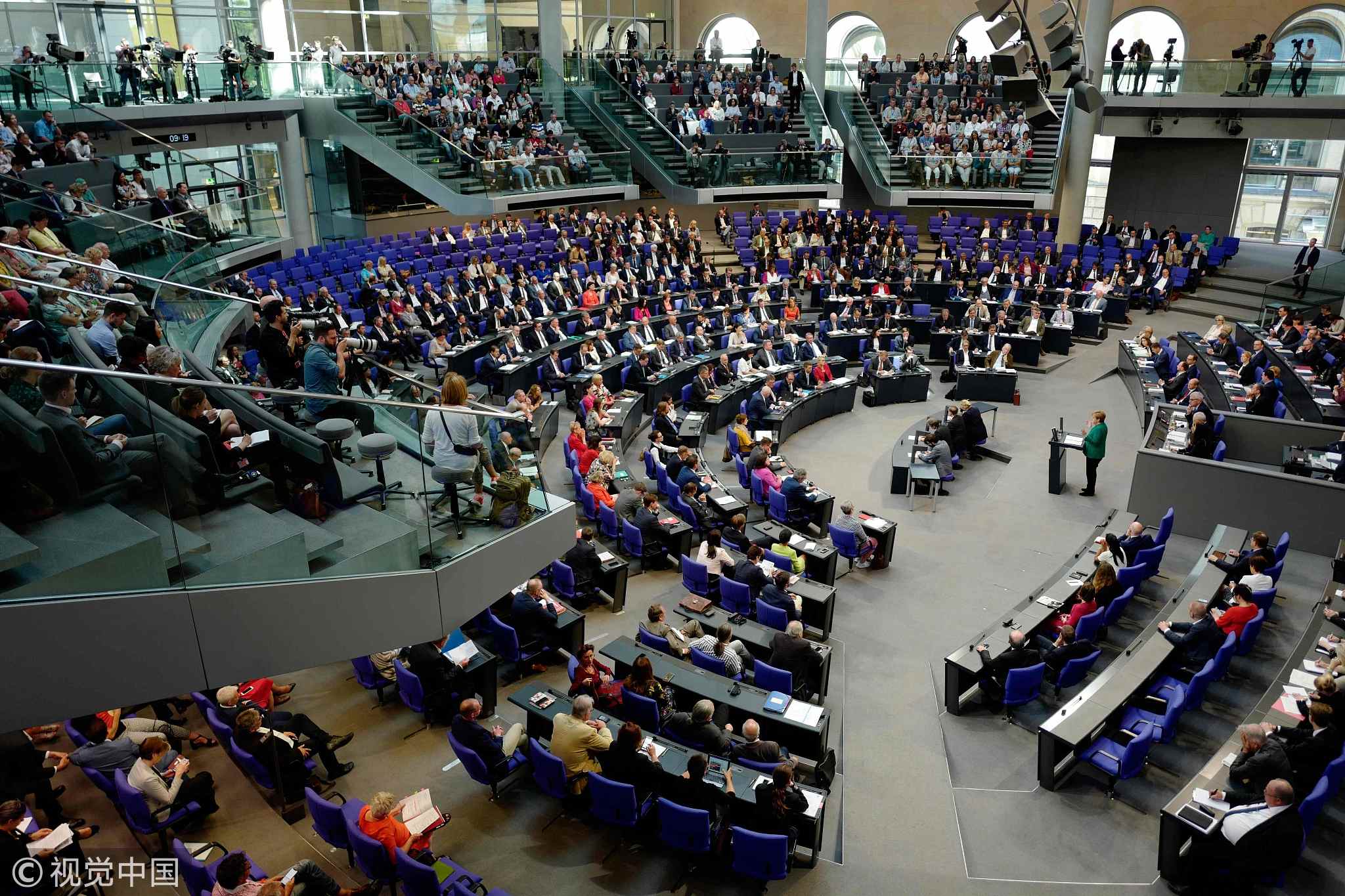
German Chancellor Angela Merkel (C) gives a speech during a session at the Bundestag (lower house of parliament), June 28, 2018. /VCG Photo
German Chancellor Angela Merkel (C) gives a speech during a session at the Bundestag (lower house of parliament), June 28, 2018. /VCG Photo
European Council President Donald Tusk, the summit host, meanwhile issued a fresh warning on the need for action on migration to stave off rising populism and authoritarianism, saying that "the stakes are high and time is short."
"Some may think I am too tough in my proposals on migration, but trust me, if we don't agree on them, then you'll see some really tough proposals from some really tough guys," the former Polish premier added.
World Cup surprise
Tusk has proposed that the leaders approve work on migrant "disembarkation platforms" in countries outside Europe, most likely in Africa, according to a draft summit statement.
But long-mulled plans for a permanent scheme to share migrants arriving in Italy and Greece around other EU countries appear doomed to fail for now.
The leaders will on Friday discuss largely French and German proposals, many watered down, to reform the euro, but notably absent is any overt support for French President Emmanuel Macron's plans for a eurozone budget.
Brexit has meanwhile been largely relegated to the sidelines of this summit, with British Prime Minister Theresa May set to update leaders after admitting the need to make "faster" progress as she arrived at the venue.
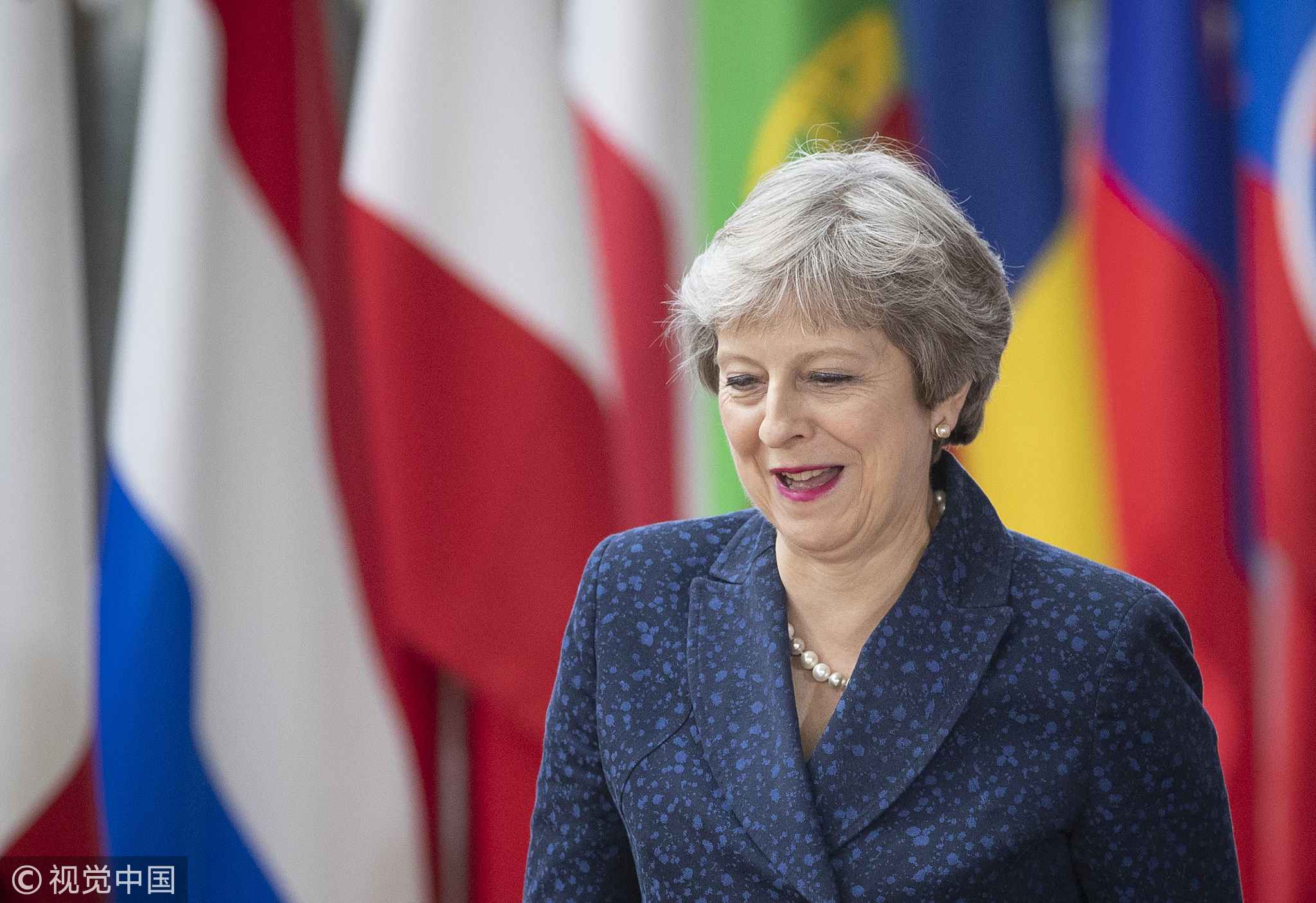
Theresa May, UK prime minister, arrives for a European Union (EU) leaders summit in Brussels, Belgium, June 28, 2018. /VCG Photo
Theresa May, UK prime minister, arrives for a European Union (EU) leaders summit in Brussels, Belgium, June 28, 2018. /VCG Photo
EU leaders are expected on Friday to say that talks, which have stalled on the issue of the Irish border, are running out of time to get a deal.
But in a light-hearted bid to ease tensions, Belgian premier Charles Michel surprised May with a gift of a Belgian football shirt, as a World Cup clash between Belgium and England coincides with the summit on Thursday night.
Source(s): AFP

 ["china"]