
Politics
20:01, 03-Jul-2018
China to strengthen 'soft' connectivity in legal infrastructure, rules and regulations
Updated
19:19, 06-Jul-2018
 ["china"]
Share







Copied
02:41

The Forum on the Belt and Road Legal Cooperation has concluded in Beijing. Over 350 delegates from governments, international and regional organizations, the private sector and academic institutions attended the meeting.
Chinese Vice Foreign Minister, Kong Xuanyou, and the Executive Vice-President of the China Law Society, Chen Jiping, co-chaired the event, and issued a statement at the closing ceremony.
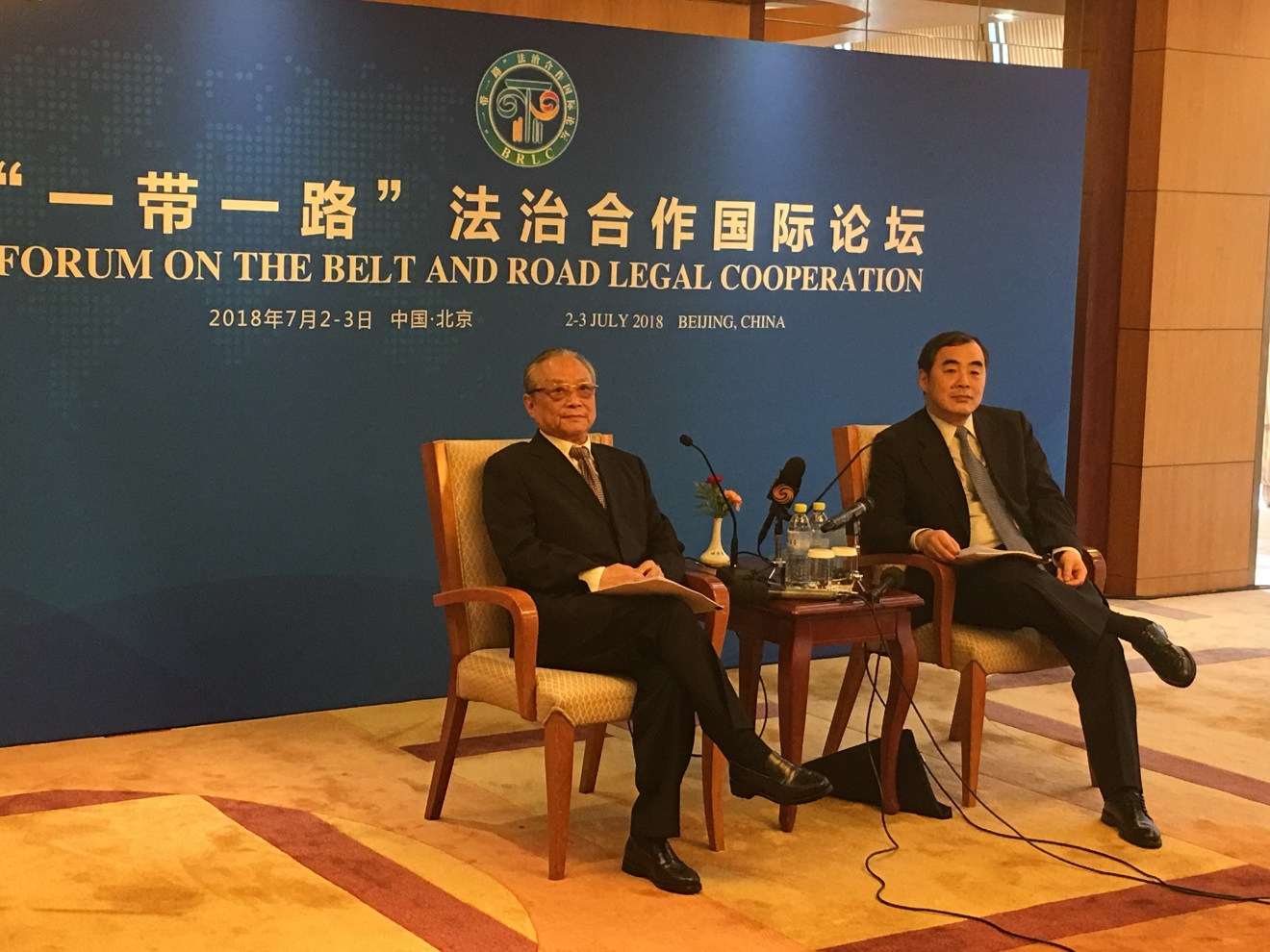
Chinese Vice Foreign Minister Kong Xuanyou (R) and the Executive Vice-President of the China Law Society, Chen Jiping, co-chaired the Forum on the Belt and Road Legal Cooperation on July 3, 2018 in Beijing. /VCG Photo
Chinese Vice Foreign Minister Kong Xuanyou (R) and the Executive Vice-President of the China Law Society, Chen Jiping, co-chaired the Forum on the Belt and Road Legal Cooperation on July 3, 2018 in Beijing. /VCG Photo
"We welcome China’s provision of funding to implement the Belt and Road Legal Cooperation Research and Training Program, in order to support legal exchange and capacity building among the parties participating in the Belt and Road Initiative (BRI), " Kong said.
"The parties participating in the BRI are encouraged to develop mechanisms to exchange legal information and practical data, such as establishing an online platform for foreign law ascertainment and sharing, and an exchange platform on judicial cases," he said. "They are also encouraged to jointly establish a database, for public access, of bilateral and multilateral treaties concluded and acceded to by the parties participating in the BRI."
The statement calls for respect for the purposes and principles of the UN Charter and international law, and for the advancement of legal cooperation under the BRI framework on the basis of extensive consultation, joint contributions and shared benefits.
It also calls for concerted efforts to uphold the multilateral trading system and avoid and oppose any form of unilateralism and trade protectionism.
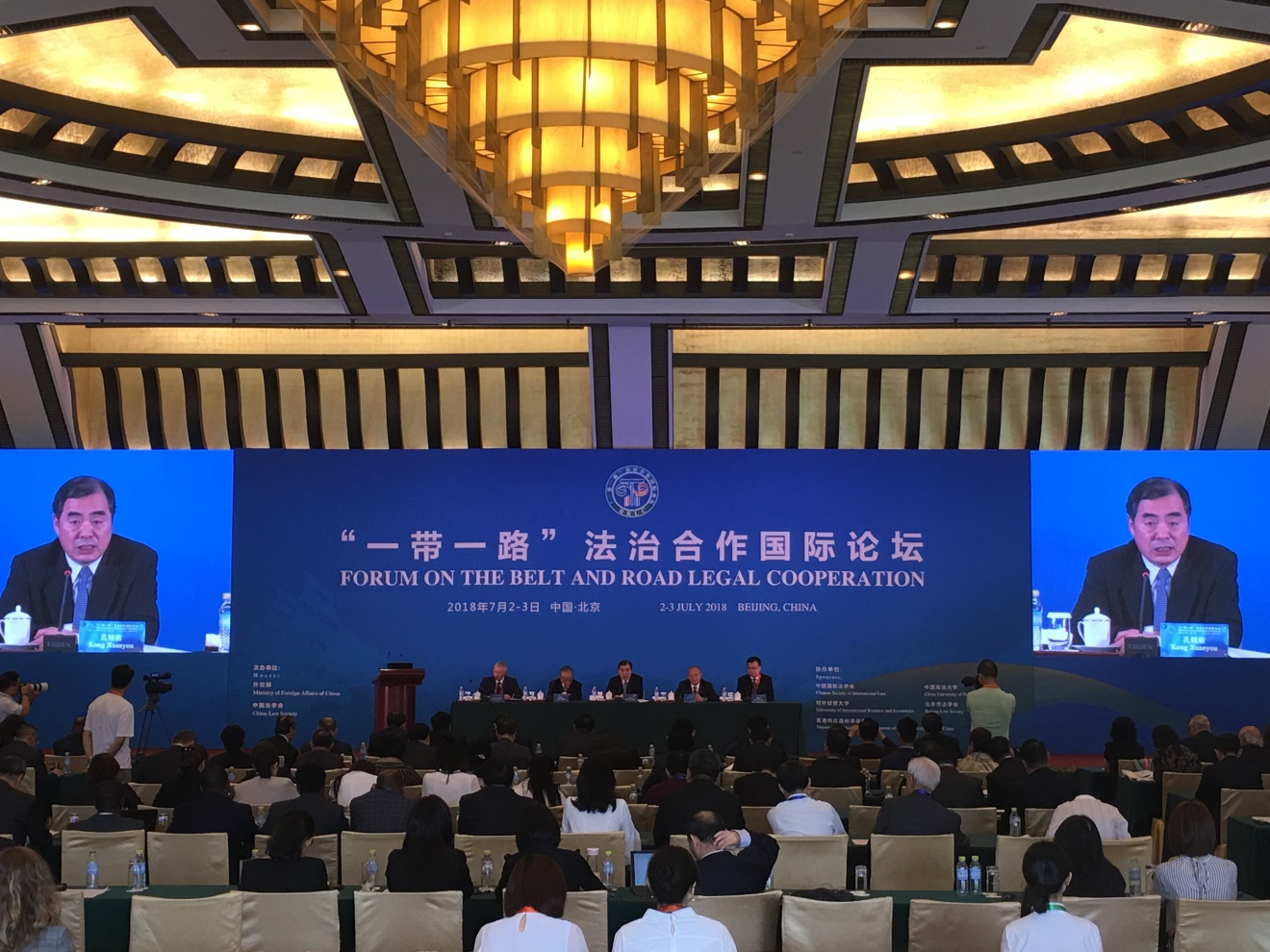
The Forum on the Belt and Road Legal Cooperation concluded in Beijing on July 3, 2018. /VCG Photo
The Forum on the Belt and Road Legal Cooperation concluded in Beijing on July 3, 2018. /VCG Photo
Many say the Belt and Road Initiative is a Chinese proposal for the world. It has become a platform which is open and inclusive; and a solid legal foundation for the BRI is important.
Former Deputy Prime Minister of Thailand Surakiart Sathirathai said: "Because we are not talking about infrastructure development only, when we talk about the Belt and Road, to me, it creates jobs and income, SMEs, small enterprises, farmers, fishermen...So there are lots of laws and regulations in those countries as well. So this is really a good start, this is very important, and I hope there will be lots of follow-ups, small group discussions, and getting the immigration, customs, security people, foreign ministries, legal departments, together. This is a very important task."
As the BRI continues to develop, in addition to strengthening “hard” connectivity in physical infrastructure, there is a growing need for “soft” connectivity in legal infrastructure, rules and regulations. Officials say it is necessary to come together to discuss issues concerning legal cooperation, in order to provide better legal support and safeguards for the initiative.