
Business
13:31, 31-Aug-2018
A stronger factory PMI doesn't rule out further monetary easing
Updated
13:01, 03-Sep-2018
 ["china"]
Share







Copied
Editor's Note: Jimmy Zhu is chief strategist at Fullerton Markets. The article reflects the author's opinion, and not necessarily the views of CGTN.
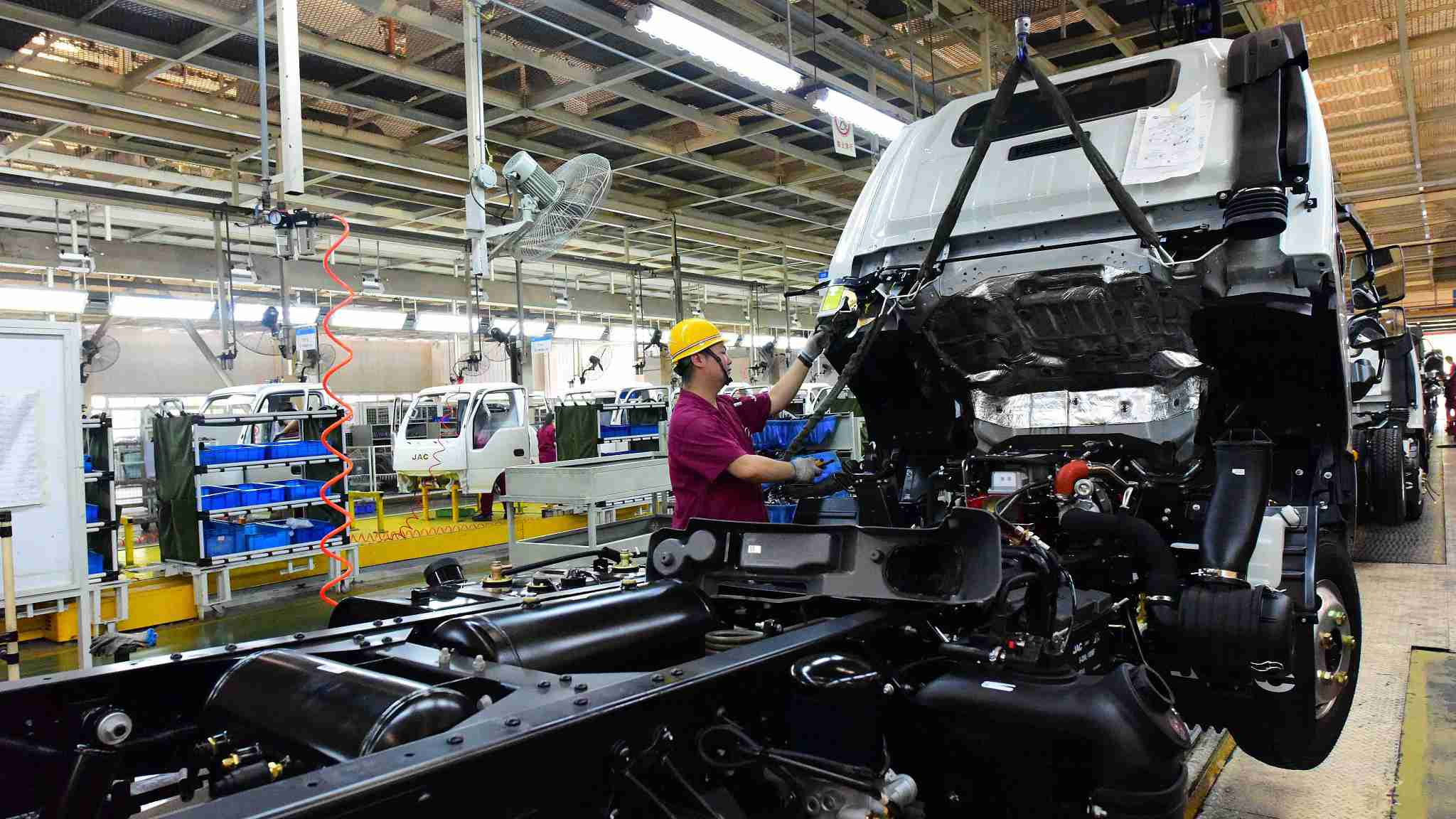
China's manufacturing PMI (purchasing managers' index) unexpectedly rose to 51.3 this month. The positive data suggest external uncertainties, such as rising global trade tensions, have yet to have a significant impact on domestic growth.
Pro-growth measures in past months have boosted the business sentiment among small enterprises. Still, further slowdowns in new orders and new export orders are likely to encourage further measures supportive of growth towards the end of the year.
VCG photo
VCG photo
Targeted monetary measures and a softer yuan may boost small companies' sentiment
China's manufacturing PMI for small companies rose to 50 this month, while larger companies' PMI dropped 0.3 to 52.1. This is very different to past patterns, when monetary stimulus measures usually benefited big enterprises first.
There are possibly two reasons behind that:
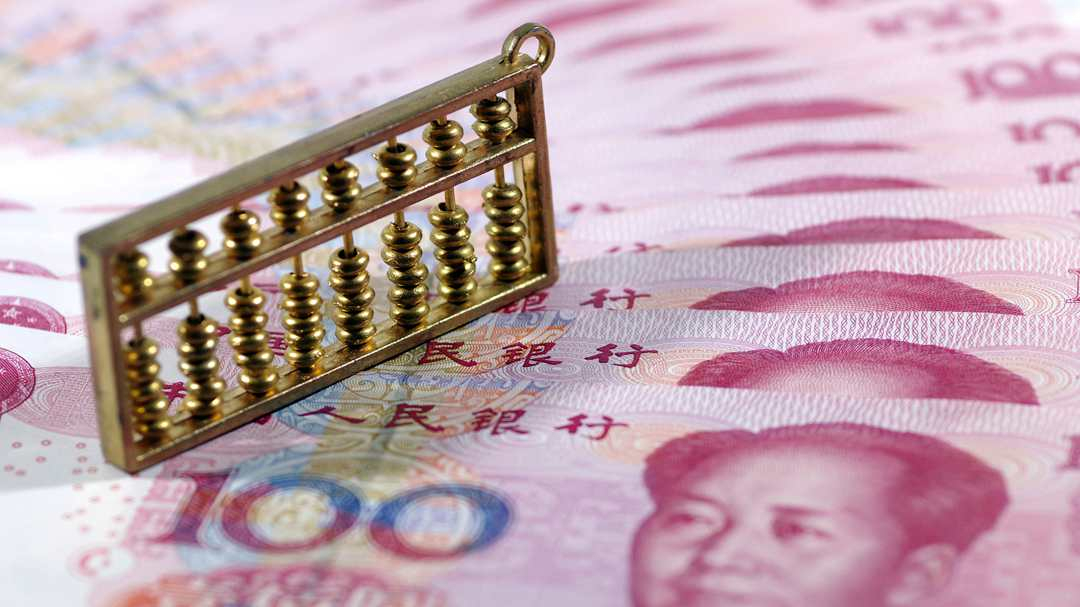
Firstly, the People's Bank of China (PBOC) cut the required reserve ratio for certain banks in July, a move that aimed to increase credit channels for private companies.
The PMI data show that business sentiment among smaller companies is improving, which is also reflected in recent money supply data.
Broad M2 money supply growth rose by 8.5 percent in July, up from record-low levels of expansion in June. This shows that obstacles for smaller companies to access credit may have been reduced.
Secondly, a weaker Chinese currency recently may have also improved sentiment among smaller firms, as many of those companies' business nature is export-oriented.
The onshore yuan has dropped for a fifth consecutive month against the dollar, and this would be the longest losing streak in history. A weaker yuan may help to counter some negative impact.
VCG photo
VCG photo
August PMI shows export outlook may become more challenging in coming months
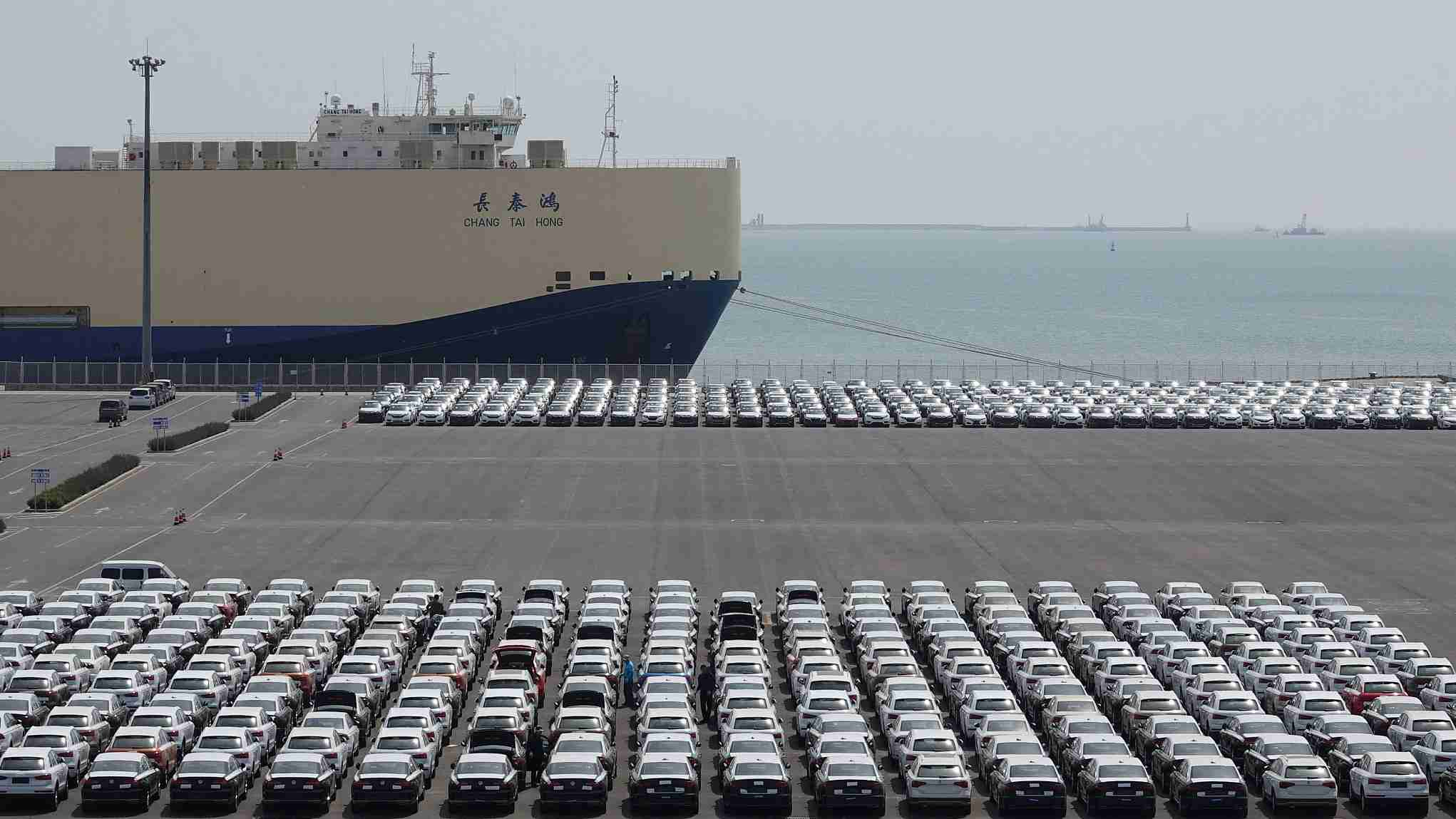
The new export orders component slid to 49.4 this month, below the key 50-level threshold for a third consecutive month, from 49.8 in July.
China's monthly export figures remained largely stable in the second quarter, while the PMI's export orders kept falling, reflecting the fact that front-loading activities are underway before products become more expensive in the latter half of the year, with the potential arrival of more tariffs.
That being said, monthly trade data in the coming months may turn softer if there is no visible improvement in external demand.
Also, China's major trading partners' demands are waning.
For the US – China's biggest trading partner – the ISM manufacturing PMI new orders component fell to 60.2 in July from 63.5 in the previous month, the biggest drop since April 2017.
The slowdown in US manufacturing activity signals increasing weakness to come in the second half of the year, with the Fed recently vowing to continue tightening monetary policy.
Japan, as the second-largest destination of Chinese exports, also faces a likely slowdown in growth as speculation grows over a possible cut in bond purchases by the Bank of Japan.
Expectations of a more hawkish central bank have rapidly pushed Japanese bond yields higher since the end of the second quarter.
If borrowing costs continue to rise, Japanese firms will likely slow their pace of investment, which will bring a negative impact to Chinese exporters as well.
VCG photo
VCG photo
Monetary, fiscal policies expected to stay accommodative even with stronger PMI data
Various pro-growth measures in recent months have helped stabilize China's growth outlook despite rising trade tensions.
A further moderation in new orders and new export orders suggests more pro-growth measures will arrive in the coming months.
The new order component in PMI, which serves as a leading indicator for domestic demand, dropped to 52.2 in August, falling for a third month and reaching its lowest level since February this year.
In the past five years, the new order PMI index has been moving in tandem with China's short-term market rates, such as the one-year interest rate swap. That being said, softer domestic demand signals that the PBOC's monetary policy is likely to stay accommodative in the coming months.
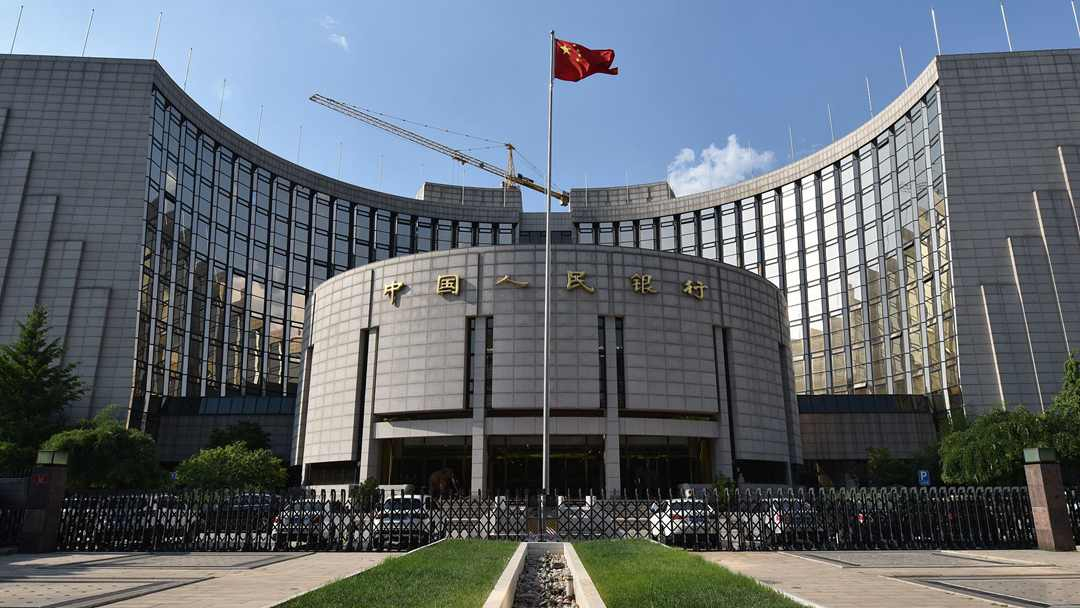
On the other hand, a rapid currency depreciation is also not favored by the PBOC, as shown by its recent resumption of the counter-cyclical factor in the yuan's fixing rate.
Against such a backdrop, further monetary easing may come along with certain measures to support the currency.
A stable manufacturing PMI today actually increases the PBOC's policy room in the near term. The monetary authority may continue to inject liquidity into the financial system, such as another targeted RRR cut in the fourth quarter.
In order to counter the side effect of monetary easing and to maintain the yuan's stability, the PBOC may opt to raise market interest rates in September, once the Fed hikes its policy rate.