
Tech & Sci
11:56, 24-Aug-2018
China's first spallation neutron source goes into operation
Updated
11:50, 27-Aug-2018
 ["china"]
Share







Copied
00:58
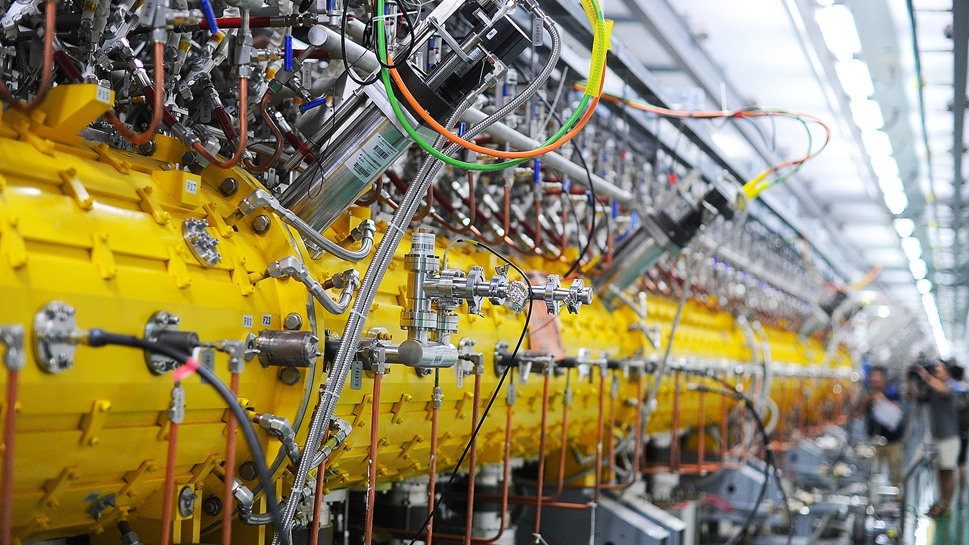
China's first spallation neutron source (SNS) has officially begun operating on Thursday, making the country the fourth in the world to possess such a facility. The other three are Britain, Japan and the US.
The China Spallation Neutron Source, or CSNS, is considered a "super microscope" that can provide the most intense pulsed neutron beams for scientific research. The facility consists of a powerful linear proton accelerator, a rapid circling synchrotron, a target station and three neutron instruments.
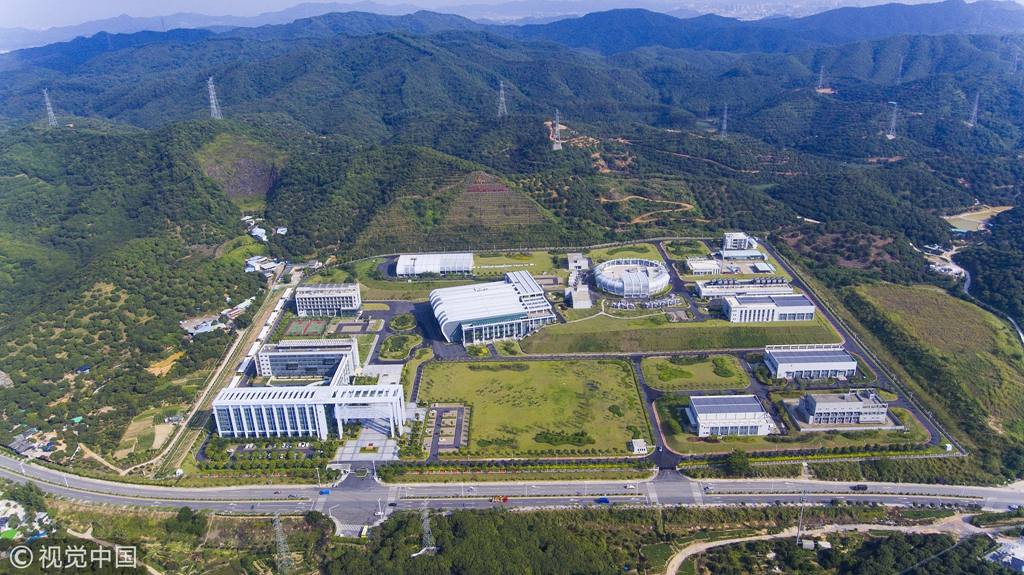
An aerial view of the CSNS. /VCG Photo
An aerial view of the CSNS. /VCG Photo
Since its trial operation in March 2018, the device has been running stable. The first three spectrometers have completed 21 sample experiments and achieved the first batch of important scientific results.
"What matters most is the proton beam-power. We achieved 120 percent more than the acceptance index, which is 2.2 times. That means we have completed the construction of the project. It can be officially opened," said Chen Hesheng, manager of the CSNS project.
Neutrons are small particles with no charge. Thanks to their neutrality, these freed neutrons are good at penetrating materials. When such free neutrons interact with nuclei of the target, some will pass directly, and some might rebound and deviate their flight direction. By examining the route of the neutrons via a spectrometer, researchers can deduce the internal structure of the material, thus conducting scientific research.
"Taking the study of fuel ice, for example. We need to simulate the pressure of deep water below 1000 meters. It requires a very thick container wall, and only freed neutrons from the spallation neutron source can penetrate it. Given the neutron is sensitive to light elements such as carbon, hydrogen, oxygen and nitrogen, it can tell the structure of the fuel ice. After figuring out the nature of fuel ice, we can safely make use of it," Chen explained.
The "super microscope" is ideal for studying the microstructure of materials and can be used for researching residual stress of large metal parts, which is vital for improving the performances of key parts of high-speed trains, aircraft engines, and nuclear power plants, according to the manager.
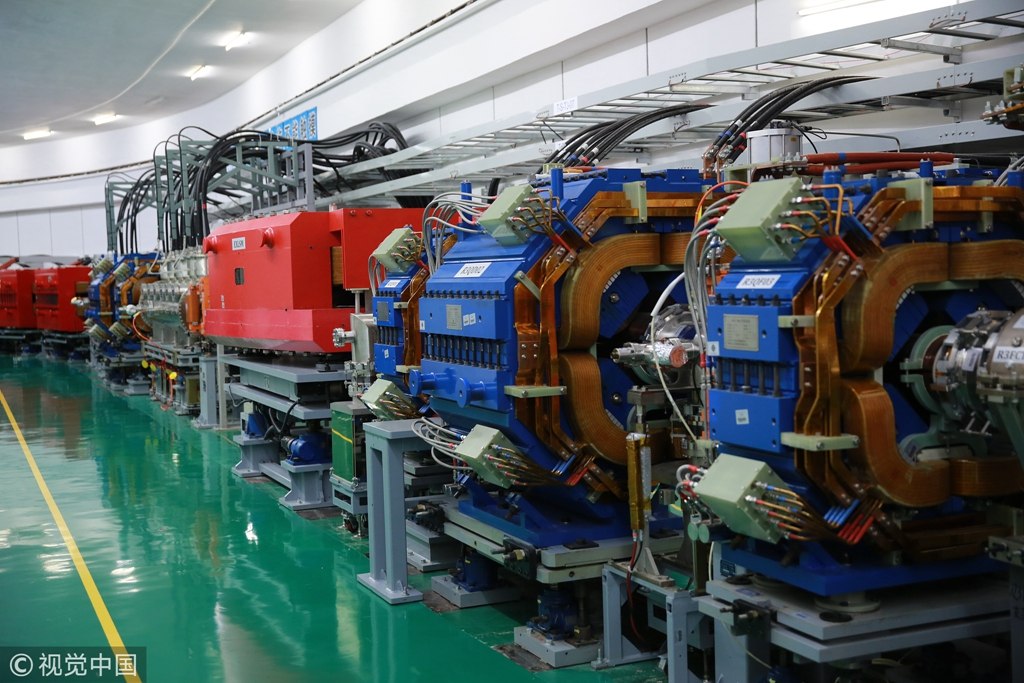
More than 90 percent of the equipment was based on independent research and development and can be domestically produced. /VCG Photo
More than 90 percent of the equipment was based on independent research and development and can be domestically produced. /VCG Photo
More than 90 percent of the equipment was based on independent research and development and can be domestically produced.
Construction of the CSNS project in China started in 2011 in Dongguan City, south China's Guangdong Province, with a total investment of around 2.3 billion yuan (364 million US dollars).
As one of the largest science and technology infrastructure projects in China, the facility is expected to have positive effects in promoting the sciences, high-tech development, and national security.
Currently, CSNS is planning a second phase of construction and upgrades, aiming to accelerate its power to five times that of now.
[Top image via VCG]
(With input from Xinhua.)