
Tech & Sci
14:25, 02-May-2018
Solar Summit 2018: Industry future amid rising trade tensions
 ["china"]
Share







Copied
01:04

The Solar Summit in San Diego is bringing together some of the world’s foremost experts on solar power and many of the companies leading the way in renewable energy innovation.
But the topic on everyone’s mind is the solar panel tariff. In fact, one of the main sessions is actually entitled: “Solar in the Trump era.”
In February 2018, President Donald Trump decided to place a 30-percent tariff on imported solar panels. That tariff decreases by 5-percent a year over the next four years.
But the administration made some concessions actually allowing for the first 2.5 gigawatts of imported solar cells to be brought in tariff-free.
CGTN Photo
CGTN Photo
That prompted many companies to import as much as they could – in essence, stock up on imported supplies.
Is the solar tariff having the intended impact?
Bryan Birsic says no. “It’s not a big enough of a tariff to make US manufacturing competitive. So if they were to have a really, really big tariff which I think would be a very bad idea, you may actually spark some growth in domestic manufacturing. Because if you had a 100-percent tariff, the domestic manufacturers could actually compete."
He’s the CEO and Co-founder of Wunder Capital, a technology-enabled lending platform for solar projects.
"The truth is a 10-percent impact or a 15-percent impact even that still doesn’t allow American-made solar panel manufacturers to compete. So you didn’t really help the panel manufacturers. I think you’ll see that not a lot of manufacturing jobs were created. But then they slowed down the growth of where the real job sector is, which is installation.”
CGTN Photo
CGTN Photo
One of the biggest targets of the solar tariff is undoubtedly China, the world’s largest solar power producer.
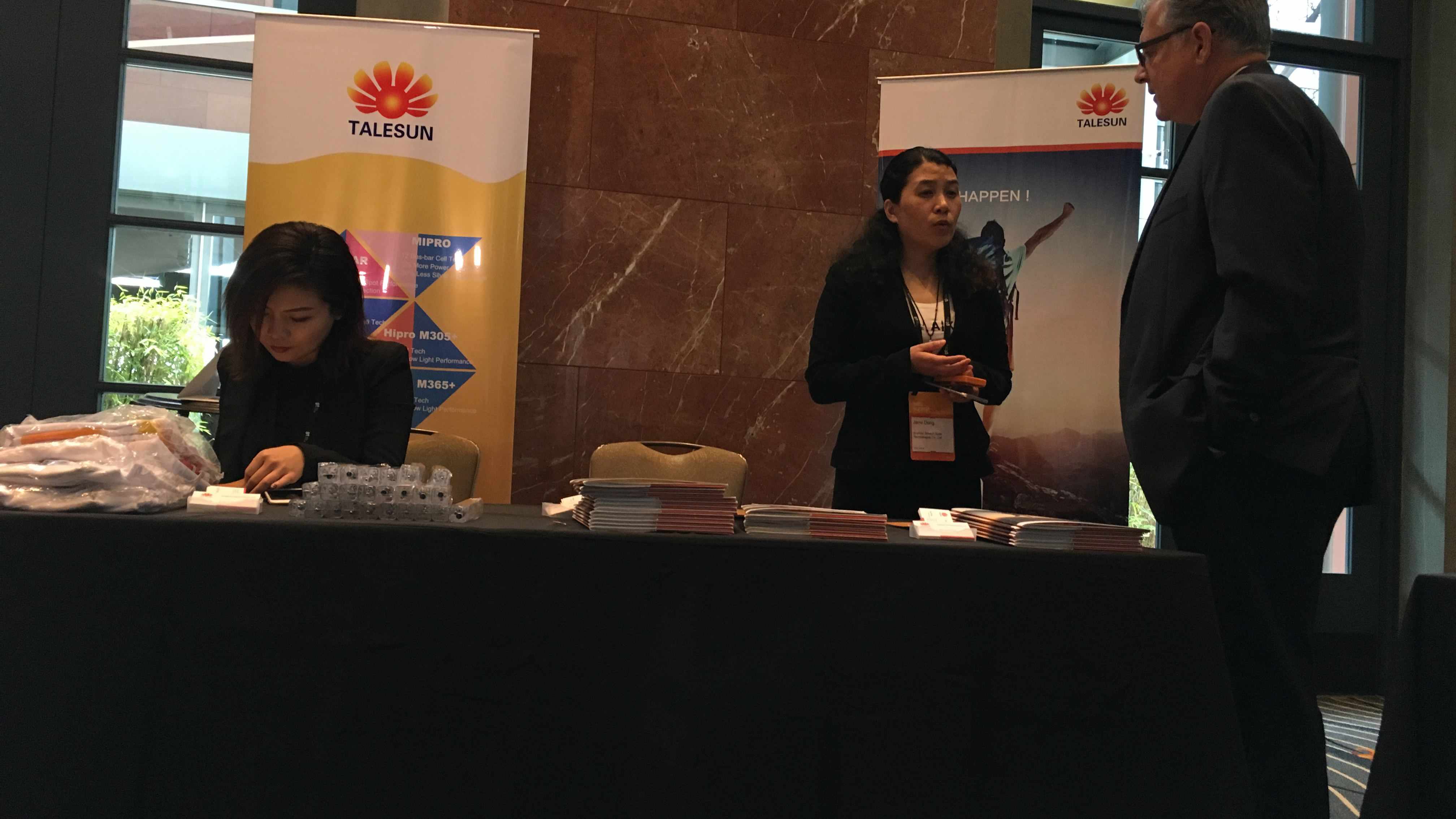
At Solar Summit, a number of Chinese companies are attending, everyone from global leader JinKo to up-and-coming Talesun.
Longi ranks in the top seven solar panel makers worldwide. The company believes the tariffs will only have a minor impact on its business.
“We are not fond of, not a fan of having trade restrictions in the country," Hongbin Fan, Product Marketing Director of Longi Solar said.
"[Who suffers are the] customers. What we are trying to do is focus on what we can do in terms of technological innovation. How to bring down the cost of our product so no matter whether you have the tariff or not have the tariff, we still bring the best value to our customers."